|
Cost Segregation for Commercial & Short-Term Rental Owners
|
Request a free estimate [email protected] |
Property Types
FREE Estimate Is there a first-year deduction sitting in your building? No cost, no obligation. Request Yours »Minimum ROIOur study identifies at least 20x its fee in first-year deductions on commercial property, or at least 30x on a short-term rental, or it is free. |
Does Cost Segregation Work on Small Multifamily Properties?Quick answer Yes. A small multifamily property, generally 5 to 50 units, depreciates on the 27.5-year residential rental schedule rather than the 39-year commercial schedule, but the same reclassification applies: unit flooring, appliances, and cabinetry move to 5-year property, and site amenities and common-area improvements move to 15-year. Per-unit repetition, the same finishes repeated across dozens of units, is what makes the engineering efficient on a property this size, since one unit's classification largely applies to the next. See this applied to your building. A few questions, 30 seconds. You see which tests matter and the first-year deduction range a study would look for. No email to see the range. Run the 30-second check »Key takeaways
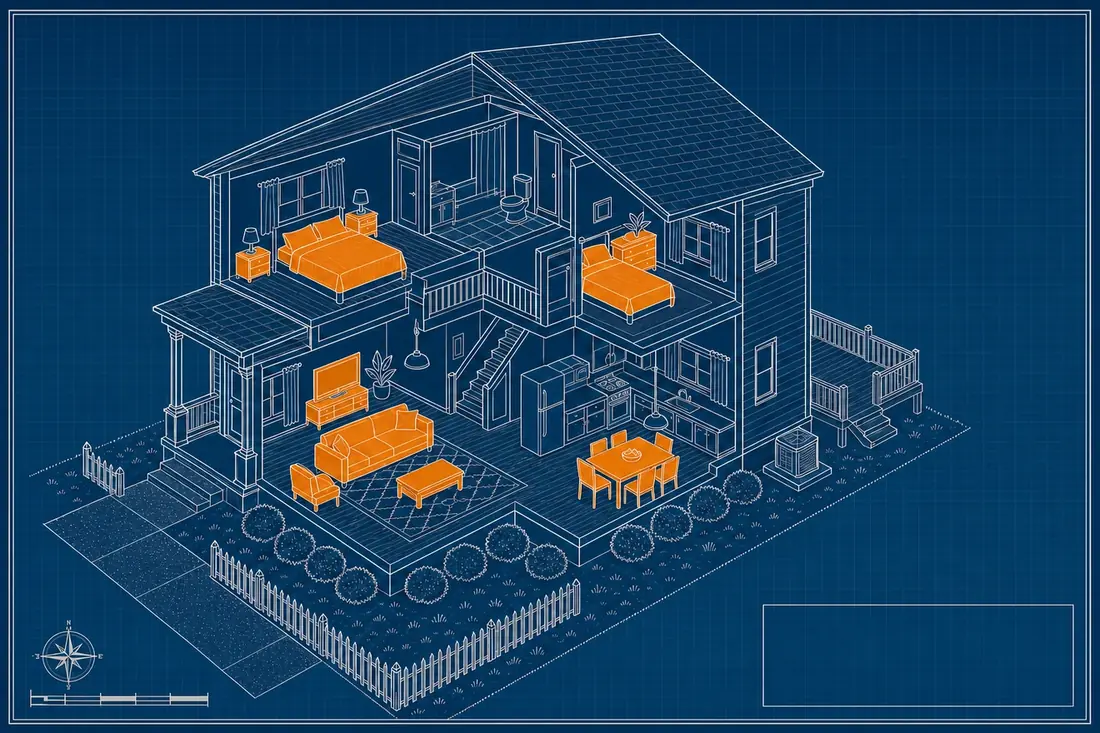
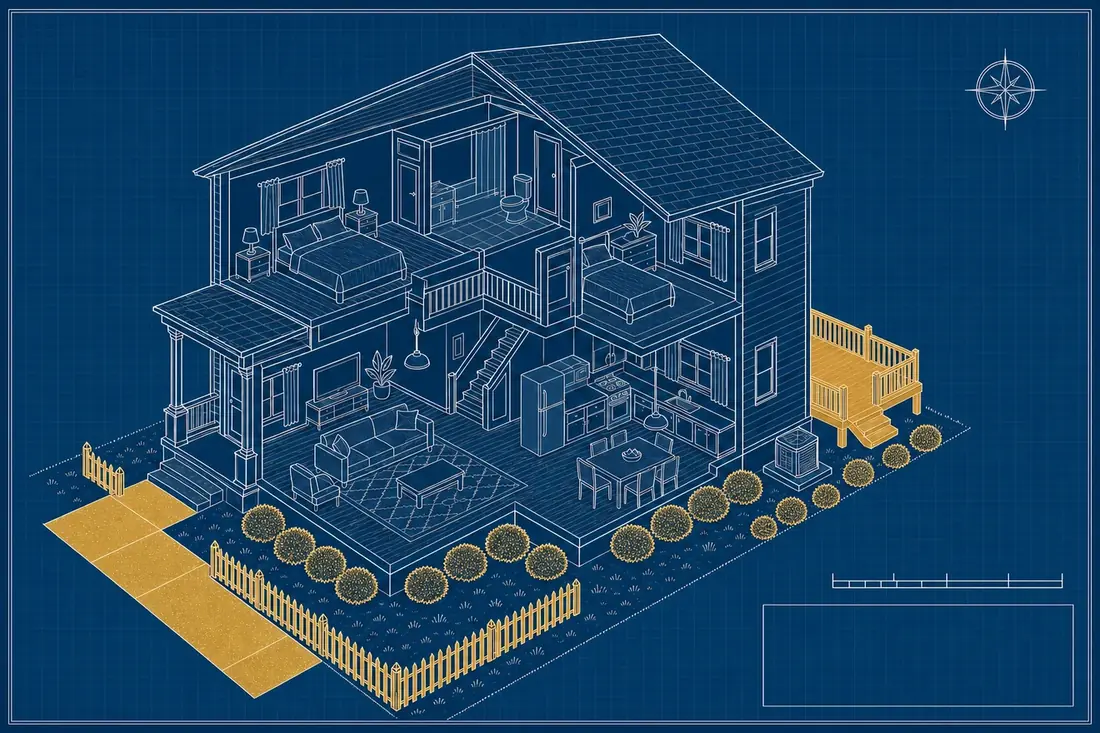
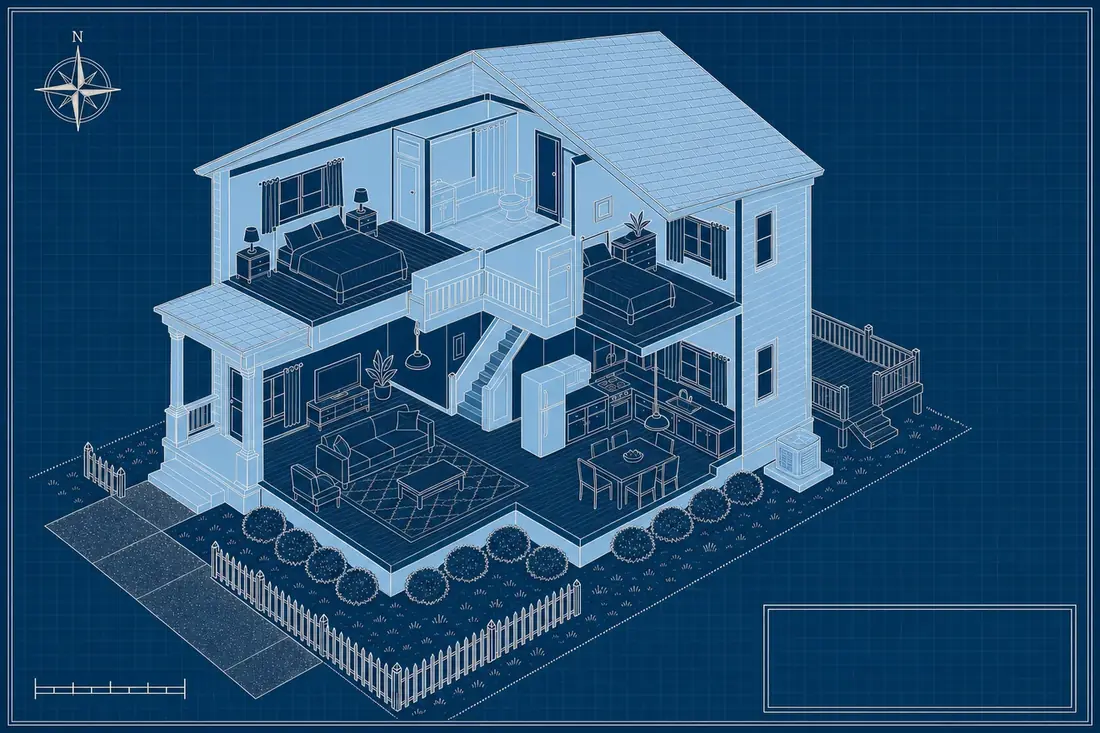
Watch a garden apartment community get built and classified A hypothetical $5.7 million, 24-unit garden apartment community goes up piece by piece, from the parking and the foundations to the kitchens, the clubhouse and the pool. Every component lands on its depreciation schedule as it is installed, and the year-one depreciation adds up on screen. Watch the 90-second walkthrough »The 27.5-Year World: How Multifamily Differs from CommercialAn apartment building of 5 to 50 units is residential rental property for depreciation purposes, which puts the structural shell on a 27.5-year schedule instead of the 39-year schedule that applies to office, retail, and industrial buildings. That difference matters for one specific mechanic: section 179 for qualified real property, the provision that lets an owner expense a roof or HVAC replacement on nonresidential property, does not apply to residential rentals at all. A multifamily owner doing a roof or HVAC job still has partial asset disposition available on the old component, just not the 179 expensing option a commercial building owner would have. The IRS lost the argument that a building is one undifferentiated asset in Hospital Corporation of America v. Commissioner (109 T.C. 21, 1997), and the agency's own Cost Segregation Audit Techniques Guide (Publication 5653) describes how a proper study separates components on any building, residential or commercial. Every dollar a study reclassifies to 5, 7, or 15-year property also becomes eligible for bonus depreciation under section 168(k), which is restored to 100% and made permanent for qualified property placed in service after January 19, 2025 under the 2025 tax law; property acquired between 2023 and that date sits on the prior phase-down schedule. 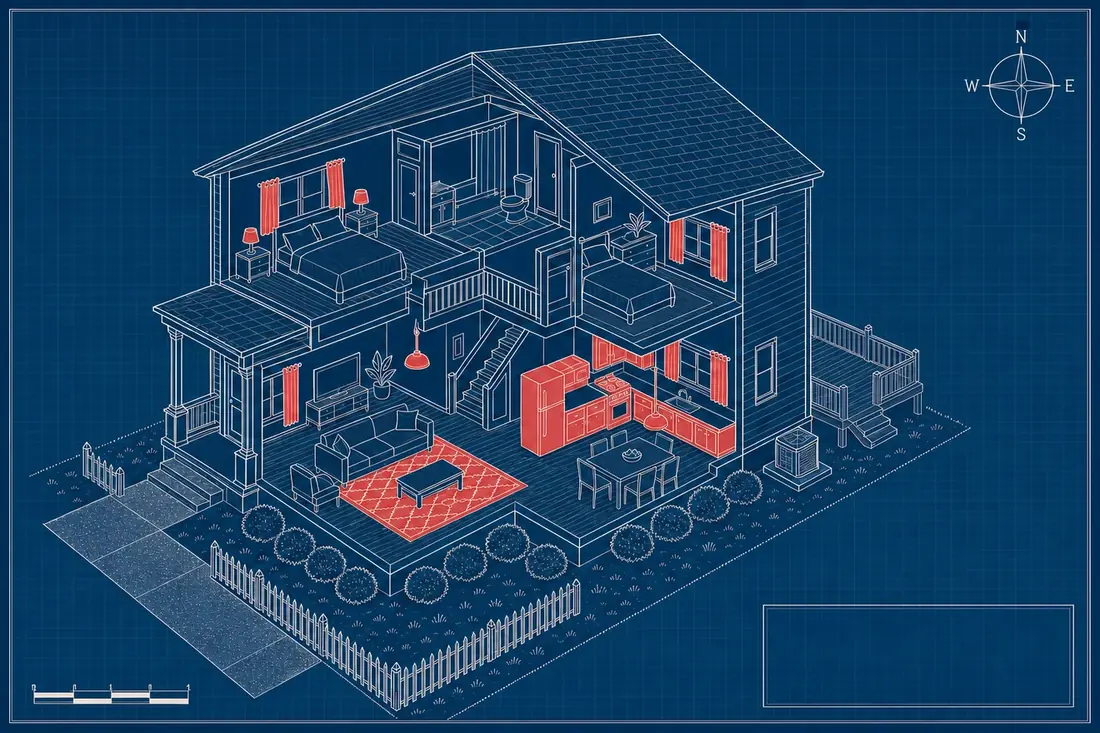
5-Year: carpet and flooring, cabinets, appliances, light fixtures, curtains 7-Year: furniture 15-Year: driveway, fencing, landscaping, deck 27.5/39-Year Shell: roof, load-bearing walls, foundation, central HVAC Get your free Preliminary Benefit Estimate Run the numbers on your multifamily property with a free preliminary benefit estimate. Request Your Free Estimate »What Repeats Across UnitsUnit interiors are where a multifamily study finds most of its 5-year property, and the same finish package usually repeats unit after unit: carpet and vinyl flooring, kitchen and bath cabinetry, appliances, window treatments, and certain electrical fixtures dedicated to a unit's kitchen or bath. That repetition is exactly what makes engineering a 30-unit building efficient. Once the study's team classifies one representative unit's finish package, the same components carry across the rest of the building with the same logic applied consistently. A property with 40 nearly identical one-bedroom units takes proportionally less engineering time per unit than a property with 40 units that were each renovated on a different schedule with different finishes, since a mixed-vintage property requires more individual review to get the classification right unit by unit. A value-add owner who renovated units in phases over several years, new kitchens in half the building one year, new flooring throughout the next, ends up with layered finish vintages that a study has to track separately rather than treat as one uniform package. Common Areas and Site AmenitiesBeyond the units themselves, common areas and site work carry their own faster-life components: a leasing office's furniture and fixtures, a clubhouse's kitchen equipment, a pool and its surrounding decking, parking lot paving, fencing, and landscaped common grounds. These are 15-year land improvements, separate from both the 27.5-year unit structures and the 5-year unit finishes. On a garden-style property spread across several buildings, the connecting sidewalks, site lighting, and shared trash enclosures add up across the whole footprint rather than sitting inside any single building, which is why a site-wide walk of the property is part of how a study prices and scopes the work. The 60-Second Qualifier Four questions. Our engineering team's model shows the estimated first-year acceleration a study of your property would target, free, before you commit to anything. Take the Qualifier »A Table of the ClassesA simplified view of where a multifamily property's basis lands:
A structural roof and a multifamily building's central HVAC system stay in that 27.5-year row, not the 5-year row, the same misconception that shows up on commercial properties. Being new does not move a roof or a central system into a faster class; what a new roof does create is a partial asset disposition opportunity on the old roof's remaining basis, in the year the old roof comes off. When the Economics Work on a Smaller PropertySmaller multifamily properties are exactly where the fee-to-benefit ratio tends to work hardest, since studies here are priced on the property's basis and complexity, not a flat commercial rate card. A single-family rental case study delivered on a 2013-built, 4,946 square foot property in Montgomery County, Pennsylvania showed $160,242 of basis (15.4% of a $1,040,000 depreciable basis) accelerated, with $174,905 in estimated first-year depreciation against a $1,295 fee, roughly 135 to 1. A multifamily property with more units and more per-unit repetition scales that same math up, since the underlying reclassification percentage tends to hold steady across a larger unit count even as the dollar total grows. See the full mechanics on the residential rental property hub. Look-Back Studies on a Property You Already OwnThe mechanics work the same whether the property was bought last month or a decade ago. On a multifamily building owned for years and never studied, a study becomes a look-back study, claimed through Form 3115 (an automatic accounting method change, no amended returns needed) with the missed depreciation arriving as a single section 481(a) catch-up deduction in the current tax year. This is often where the numbers work hardest on a smaller multifamily property, since years of unclaimed acceleration on unit finishes and site work compound into one lump-sum deduction rather than trickling in a few percentage points at a time on the standard 27.5-year schedule. A free preliminary benefit estimate is available before any commitment, and it works the same way on a multifamily property as on any other: a modeled projection of the likely first-year acceleration, based on the property's purchase price or basis, unit count, and construction type, before an owner pays for the full engineered study. That estimate is what turns the general 15 to 35% range into a number specific enough to compare against a study's fee, since every study is priced custom to the property rather than off a flat rate card. Frequently asked questionsIs a 10-unit apartment building residential or commercial for cost segregation? Residential. Any rental property with dwelling units, regardless of whether it is a single-family home or a 200-unit complex, depreciates on the 27.5-year residential schedule. Commercial's 39-year schedule applies to office, retail, industrial, and other non-dwelling property types. Does section 179 apply to a multifamily roof replacement? No. Section 179 for qualified real property, which lets a nonresidential building owner expense a roof, HVAC, fire protection, or security system replacement, does not extend to residential rentals. A multifamily owner replacing a roof can still use partial asset disposition to write off the old roof's remaining basis, in the year of replacement. Do common areas like a clubhouse or leasing office qualify separately? Yes. A clubhouse, leasing office, or maintenance building on a multifamily site gets its own review, the same way a standalone small commercial building would, with its interior finishes and equipment-serving systems separated into 5 and 7-year property from the structure's own 27.5-year shell. How small can a multifamily property be and still make sense for a study? There is no unit-count floor built into the mechanics. Every study is custom priced to the property's basis and complexity, and a free preliminary benefit estimate models the likely result before any commitment, which is the fastest way to see whether the numbers work on a specific property. Do all the units need the same finishes for a study to work efficiently? No, but consistency helps. When most units share a similar finish package, carpet, cabinetry, appliances, one unit's classification logic extends efficiently to the rest. Properties with mixed renovation vintages across units still qualify; they just take more individual review. Does a small multifamily property need a site visit for a cost segregation study? Commercial and multifamily studies generally involve a site visit as part of the engineered review. A residential rental of a different kind, a short-term rental leased on Airbnb or VRBO, can instead be studied from listing photos alone with no site visit required, which is a distinction worth knowing when comparing property types. Keep readingGet your free Preliminary Benefit Estimate Send the address or the listing link. We model the number first; you decide with it in hand. Request Your Free Estimate »Educational information, not tax advice. This page describes how federal
depreciation rules and tests work in general. Whether any rule fits your facts is a determination for
you and your CPA. Our study gives your CPA the engineering and the numbers to make that call.
|