|
Cost Segregation for Commercial & Short-Term Rental Owners
|
Request a free estimate [email protected] |
STR Guides
Free Listing SEO Audit Paste your Airbnb or VRBO listing. Get a scored audit in 90 seconds. Audit My Listing »FREE Estimate Is there a first-year deduction sitting in your building? No cost, no obligation. Request Yours »Minimum ROIOur study identifies at least 20x its fee in first-year deductions on commercial property, or at least 30x on a short-term rental, or it is free. |
How Cost Segregation Works for Airbnb and Short-Term RentalsQuick answer Cost segregation on an Airbnb or other short-term rental reclassifies parts of the building, like flooring, cabinetry, appliances, and the driveway, into 5, 7, and 15-year property instead of the default 27.5-year schedule. That shifted basis is bonus-depreciation eligible, meaning 100% of it can be deducted in the year the property is placed in service. Whether the resulting loss offsets wages or other income depends on separate passive-activity tests, not on the study itself. See this applied to your building. A few questions, 30 seconds. You see which tests matter and the first-year deduction range a study would look for. No email to see the range. Run the 30-second check »Key takeaways
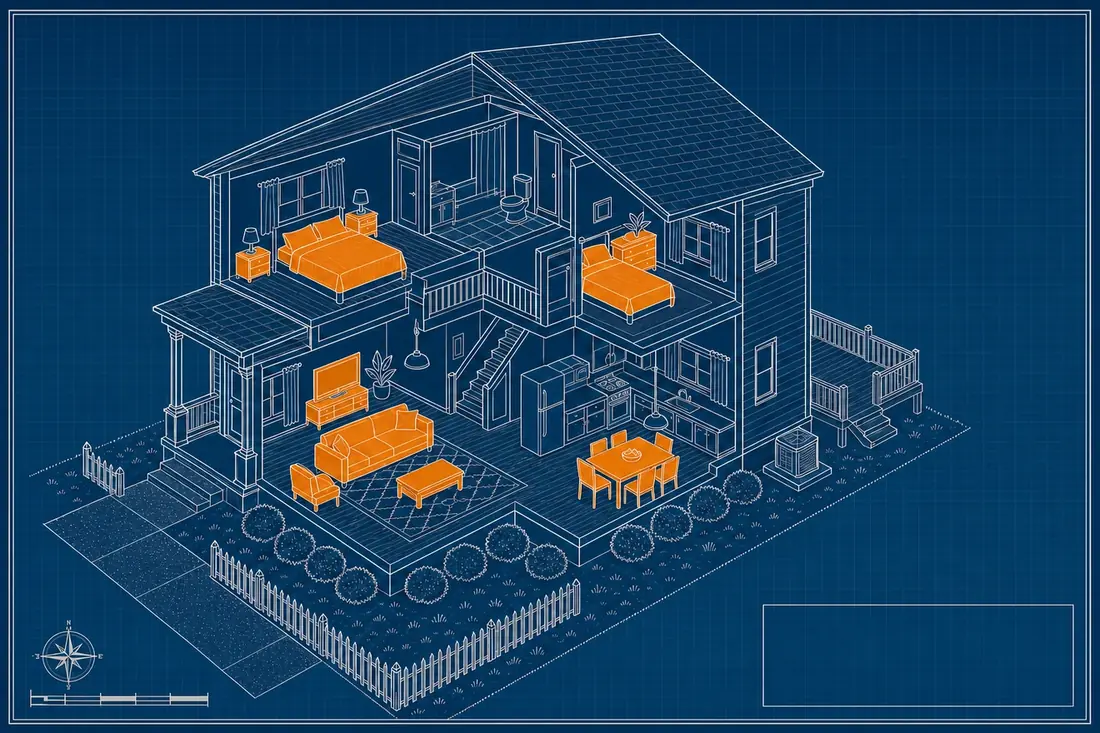
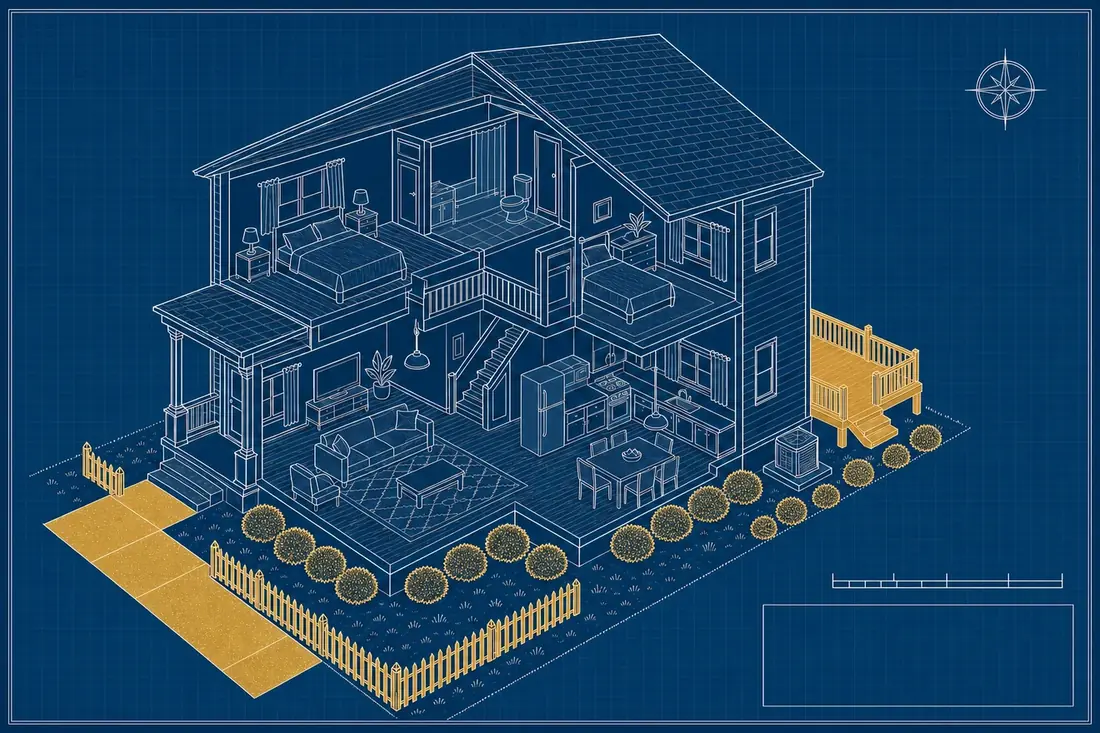
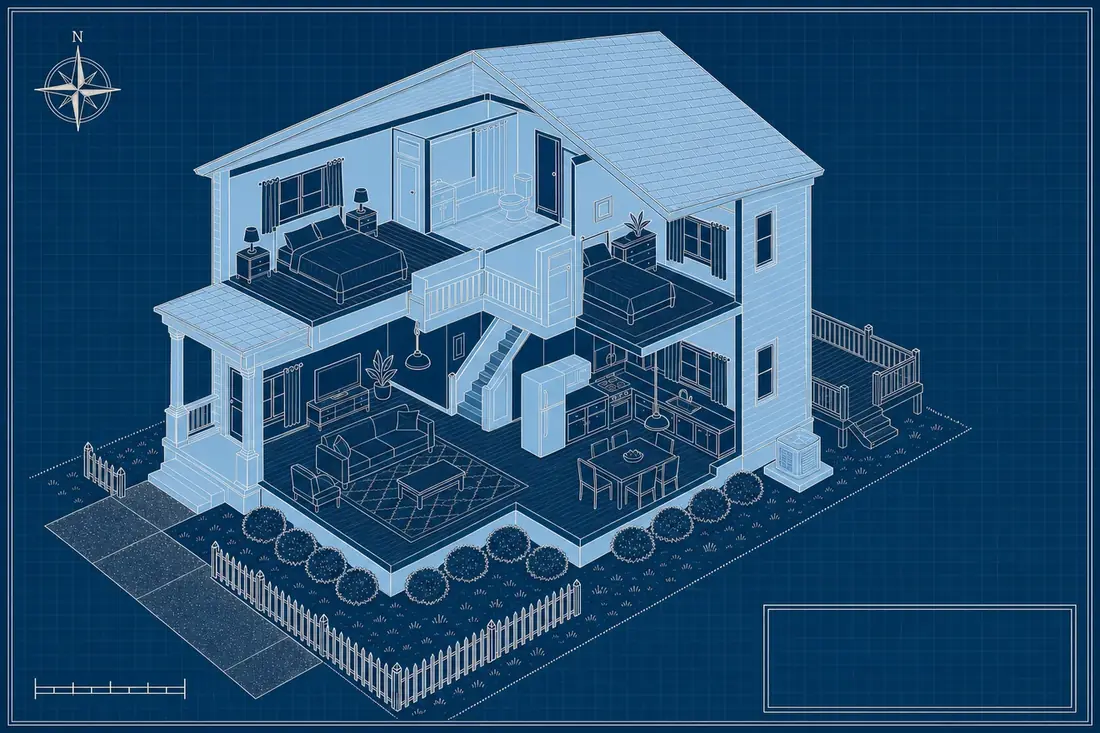
Steven's Take I built the STR process to run on the same photos you already have on Airbnb. No site visit, no owner homework, because I was not going to build a business that asks a host managing their own turnovers to also become an amateur engineer. The mechanics still do the real work: flooring, cabinetry, appliances, the driveway, reclassified into faster schedules. Whether the resulting loss offsets your other income is a separate question for your CPA, and I would rather you know that up front than find out after you pay someone. Steven Ellis, Founder Watch a log cabin rental get built and classified A hypothetical $600,000 three-bedroom log cabin goes up floor by floor, from the gravel drive and foundation to the game loft and the hot tub on the deck. Every component lands on its depreciation schedule as it is installed, and the year-one depreciation adds up on screen. Watch the 90-second walkthrough »What a Cost Segregation Study Actually Does to an AirbnbA cost segregation study looks inside a rental building and re-sorts what is already there. Instead of depreciating the whole structure on one 27.5-year residential rental schedule, the study pulls out the pieces that wear out faster and puts them on their real schedule: flooring, cabinetry, and appliances at 5 years, certain fixtures and furniture at 7 years, and site work like the driveway, fencing, and outdoor lighting at 15 years. Everything else, the walls, the roof structure, the framing, stays on the 27.5-year schedule where it belongs. Land value comes off the top first. Only the building and what is built on the land depreciates, so the study starts by separating land from improvements before it classifies anything. For a short-term rental, the classification work runs off the listing itself. The estimate starts with a 60-second qualifier, and from there our engineering team works from the Airbnb or VRBO listing photos to identify and count components. No site visit, no owner homework, no crawling under the house with a tape measure. The IRS lost Hospital Corporation of America v. Commissioner (109 T.C. 21, 1997), and it now publishes its own Audit Techniques Guide (Publication 5653) describing exactly how a proper study is done. A study follows that guide, component by component. This holds whether the property is a single unit or part of a larger portfolio, and whether it is managed personally or through a manager. The building's construction, size, and finish level decide what a study finds; the platform it is booked through and how it is managed do not enter into the study's own analysis. 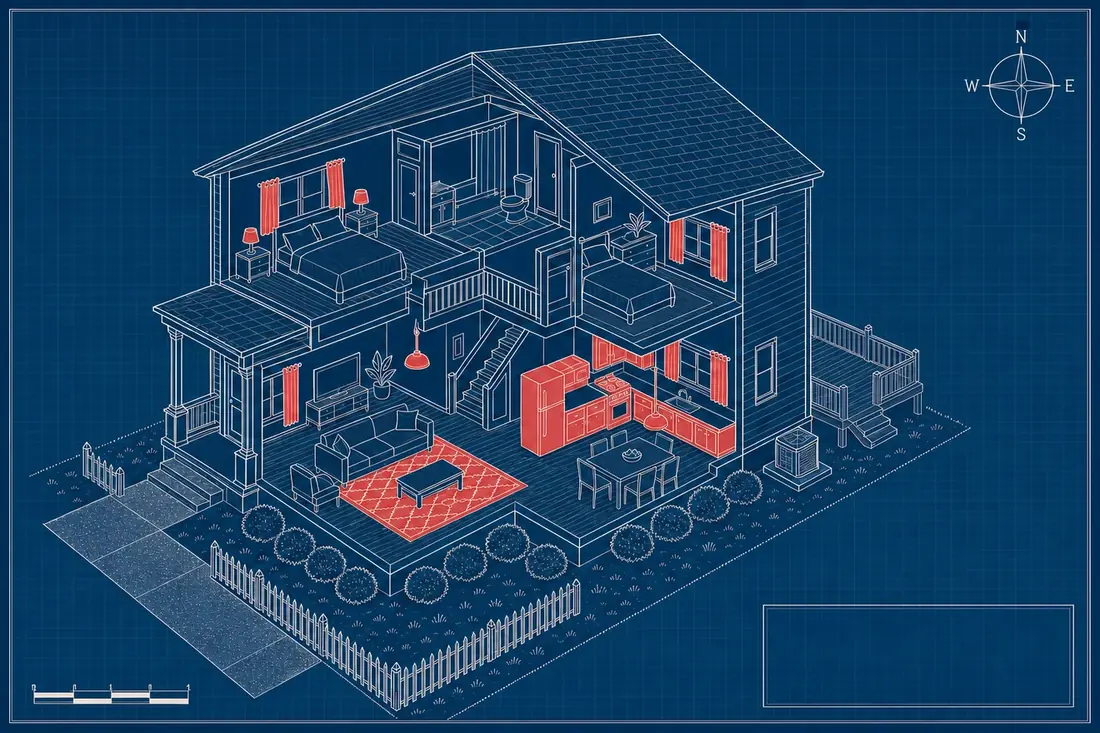
5-Year: carpet and flooring, cabinets, appliances, light fixtures, curtains 7-Year: furniture 15-Year: driveway, fencing, landscaping, deck 27.5/39-Year Shell: roof, load-bearing walls, foundation, central HVAC Get your free Preliminary Benefit Estimate See what a study would likely find on your own short-term rental with the free Preliminary Benefit Estimate. Request Your Free Estimate »The Two Gates That Decide Whether Losses Offset Other IncomeReclassifying the building is only half the question. The other half is whether the resulting deduction can offset income outside the rental, including wages. That runs through section 469, the passive activity rules, which treat rental losses as passive by default and limit them to offsetting passive income only. A short-term rental has a separate exception. Under Treas. Reg. 1.469-1T(e)(3)(ii), a property whose average guest stay is 7 days or less is not treated as a rental activity for section 469 purposes at all. That test runs on the property's actual average stay length across the year, a mechanic we walk through on the average-stay test page. Clearing that gate does not finish the job. Once a property is out of the rental-activity bucket, the owner still needs material participation, meaning real, regular, and substantial involvement in running it, for the loss to be non-passive. The common tests are 500 or more hours in the year, substantially all the participation in running the property, or 100 or more hours combined with more participation than any other individual. We break down what counts as participation on the material participation page. There is a third rule that gets confused with these two gates: real estate professional status, which requires 750 or more hours and more than half the owner's working time in real property trades. That is a separate, harder exit from section 469, and it is not required for the short-term rental exception above. An owner with a full W-2 job who could never clear the real estate professional test can still clear the average-stay and material participation gates on a specific property. See how the two paths differ and what this can mean against wage income. Both gates are tests, not guarantees. An owner who meets them can generally treat the loss as non-passive. Whether a specific property's facts clear both gates is a question for the owner's CPA, working from the year's actual booking and hours records. A Delivered Study: Montgomery County, PennsylvaniaNumbers make this concrete. We delivered a study on a single-family rental in Montgomery County, Pennsylvania, built in 2013, 4,946 square feet. The property's depreciable basis was $1,040,000. The study identified $160,242 of that basis, 15.4%, as 5, 7, and 15-year property instead of 27.5-year structure. Combined with 100% bonus depreciation, the estimated first-year depreciation came to $174,905, 16.8% of basis. The fee was $1,295, so the first-year deductions ran about 135 times the fee. $174,905first-year depreciation identified 16.8%of building basis, year one 135:1deductions to fee This is also where the guarantee applies. On a short-term rental, our study identifies at least 30x its fee in first-year deductions, or it is free. On this property, the actual multiple ran well past that floor. That is one delivered result on one property, and every study is priced and modeled on the specific building, not a rate card. The free Preliminary Benefit Estimate at the qualifier exists so an owner sees the likely number before paying anything. Where Owners Get Disqualified: The Property Manager ProblemThis is the part most short-term rental content skips. The 100-hour material participation test does not just count the owner's hours. It counts everyone's hours, including cleaners, co-hosts, and the property manager, and compares the owner's hours to the highest of any other individual. A full-service property manager usually breaks the 100-hour test before the owner ever gets close to it. A full-service manager typically handles guest messaging, booking coordination, pricing adjustments, cleaning scheduling, and the first call on maintenance issues. Those hours accumulate fast across a busy calendar, often faster than an owner checking in occasionally realizes, which is exactly why the comparison test trips up owners who assumed hiring help was purely an operating decision rather than a tax-mechanics one. That does not affect whether the property clears the 7-day average-stay gate. It affects whether the owner clears material participation, the second gate. Self-managed properties, or properties where the owner still handles guest communication and scheduling directly even with help on turnovers, sit in a different position. We walk through the specific hour math, including the "more than any other individual" comparison and the two tests that do not depend on it, on the property manager page. The 60-Second Qualifier Four questions. Our engineering team's model shows the estimated first-year acceleration a study of your property would target, free, before you commit to anything. Take the Qualifier »Personal Use, the 14-Day Rule, and Other GuardrailsSection 280A limits deductions once an owner's personal use of the property crosses a threshold: the greater of 14 days or 10% of the days the property was actually rented in the year. Personal use is broader than the owner's own stays. It generally includes use by family members, whether or not they pay rent, and use by anyone paying below a fair rental price. A repair day, meaning a day spent mainly fixing or maintaining the property rather than vacationing, generally does not count toward that total. These are counting rules, not verdicts. We lay out how the days are counted, including edge cases like repair trips and family stays, on the personal-use page. An owner's actual day count for the year is a question for their CPA, working from their calendar and booking records. Every Kind of Short-Term Rental PropertyThe mechanics above apply to any short-term rental, but the specific components on the list change with the property type. A cabin typically adds a well, a septic system, and a gravel driveway to the land-improvement bucket, alongside a deck and an outdoor hot tub. See the cabin page. A lake house adds waterfront site work, a dock and a bulkhead, to that same bucket. See the lake house page. A ski condo carries its own mix of site work and finish level, often heavier on furnishings than a beach rental. See the ski condo page. A condo-hotel or condotel structure sits closer to the commercial side of the mechanics described below. See the condotel page. A property booked for stays longer than a typical Airbnb night but shorter than a standard lease, a mid-term rental, runs its own version of the average-stay math. See the mid-term rental page. And a property the owner also vacations in regularly carries the heaviest personal-use considerations of the group. See the vacation-home page. The same components run differently market to market, from mountain cabins to beach houses. See the vacation rental markets guide for the full list. Commercial Short-Term Rental Portfolios: A Different ScaleNot every short-term rental is a single house. Boutique hotels, condotels, and small-portfolio operators run on commercial building schedules (39-year instead of 27.5-year), and the same reclassification mechanics apply at a different scale.
The multiple looks smaller than a $1,295 residential fee against $174,905, because the fee scales with the size and complexity of the building, not with the deduction. The dollars are bigger. A commercial short-term rental operator is looking at a smaller multiple and a far bigger number, and the guarantee reflects that difference: our study identifies at least 20x its fee in first-year deductions on commercial property, or at least 30x on a short-term rental, or it is free. The Process, the Guarantee, and What It CostsEvery study starts with the free Preliminary Benefit Estimate, a modeled first-year number built before the owner commits to anything. From there, an owner chooses between two tiers, a full engineered study or a budget engineered study, and both deliver the same 70-page engineered report, aligned to the IRS's own Audit Techniques Guide (Publication 5653), the guide examiners use to check a study's work. Pricing is custom to the property. There is no flat fee and no rate card, though the published examples give a sense of range: the delivered single-family rental study was quoted at $1,295, and our commercial benchmark runs used fees of $9,000 to $12,000. If an examiner ever questions the study, our team defends the report itself, meaning the engineers who built it answer the technical questions an examiner raises, in writing, through the owner's CPA. That is defense of the report, not representation of the taxpayer; the owner's CPA still represents the owner in any exam and still files the return. The study is built to work with the owner's CPA, not around them. For a look-back, meaning a study on a property owned for years, the section 481(a) computation is part of the deliverable, and our team takes technical questions directly from the owner's CPA on methodology and classifications. The missed depreciation is claimed through Form 3115, an automatic-consent method change, with no amended returns required. Turnaround typically runs 4 to 6 weeks during tax season, often 2 to 3 weeks in January and February. See how the engineering team builds a study or read why owners work with us for the fuller picture. Whichever tier fits, the estimate at the qualifier is free and comes with no obligation to move forward. Every guide in this series
Frequently asked questionsDoes an Airbnb need a site visit for a cost segregation study? No. Our engineering team works from the listing photos already up on Airbnb or VRBO to identify and count components like flooring, cabinetry, appliances, and outdoor site work. There is no site visit and no owner homework required for a short-term rental study. How much does a cost segregation study cost for a short-term rental? Every study is custom-priced to the specific property; there is no flat fee or rate card. As an example only, a recent single-family rental study was quoted at $1,295. The free Preliminary Benefit Estimate shows the likely number for a specific property before any commitment. What happens if I already own the Airbnb and never did a cost segregation study? A property already owned for years qualifies for a look-back study. The missed depreciation is claimed through Form 3115, an automatic-consent method change, producing a section 481(a) catch-up deduction in the current tax year. No amended returns are required. Can I do cost segregation on a rental I bought this year? Yes. Cost segregation applies to purchases, new construction, and renovations. A property bought this year is studied the same way as one owned for years, without the look-back mechanics since there is no prior depreciation to catch up. Does cost segregation trigger recapture when I sell the Airbnb? Gain attributable to the 5- and 7-year personal property is recaptured at ordinary rates on sale, and straight-line depreciation on the real property is unrecaptured section 1250 gain, taxed up to 25%. A 1031 exchange can defer both when the replacement-property rules are met. Is short-term rental cost segregation legal? The IRS lost Hospital Corporation of America v. Commissioner in 1997, and it publishes its own Audit Techniques Guide describing how a proper study is done. A study follows that guide. Keep readingGet your free Preliminary Benefit Estimate Send the address or the listing link. We model the number first; you decide with it in hand. Request Your Free Estimate »Educational information, not tax advice. This page describes how federal
depreciation rules and tests work in general. Whether any rule fits your facts is a determination for
you and your CPA. Our study gives your CPA the engineering and the numbers to make that call.
|