|
Cost Segregation for Commercial & Short-Term Rental Owners
|
Request a free estimate [email protected] |
STR Guides
Free Listing SEO Audit Paste your Airbnb or VRBO listing. Get a scored audit in 90 seconds. Audit My Listing »FREE Estimate Is there a first-year deduction sitting in your building? No cost, no obligation. Request Yours »Minimum ROIOur study identifies at least 20x its fee in first-year deductions on commercial property, or at least 30x on a short-term rental, or it is free. |
Do You Need Real Estate Professional Status for a Short-Term Rental?Quick answer No. The short-term rental exception under Treas. Reg. 1.469-1T(e)(3)(ii) is a separate exit from the passive activity rules and does not require real estate professional status. Real estate professional status requires 750 or more hours and more than half of the owner's working time in real property trades, on top of material participation in the rentals. The short-term rental path only requires the property's average stay to run 7 days or less, plus material participation in that specific property. That is one of the tests. The check asks the rest. What you own, who runs it, average guest stay, when you bought. Four questions, 30 seconds, and you see the first-year deduction range a study would look for on your rental. No email to see the range. Run the 30-second check »Key takeaways
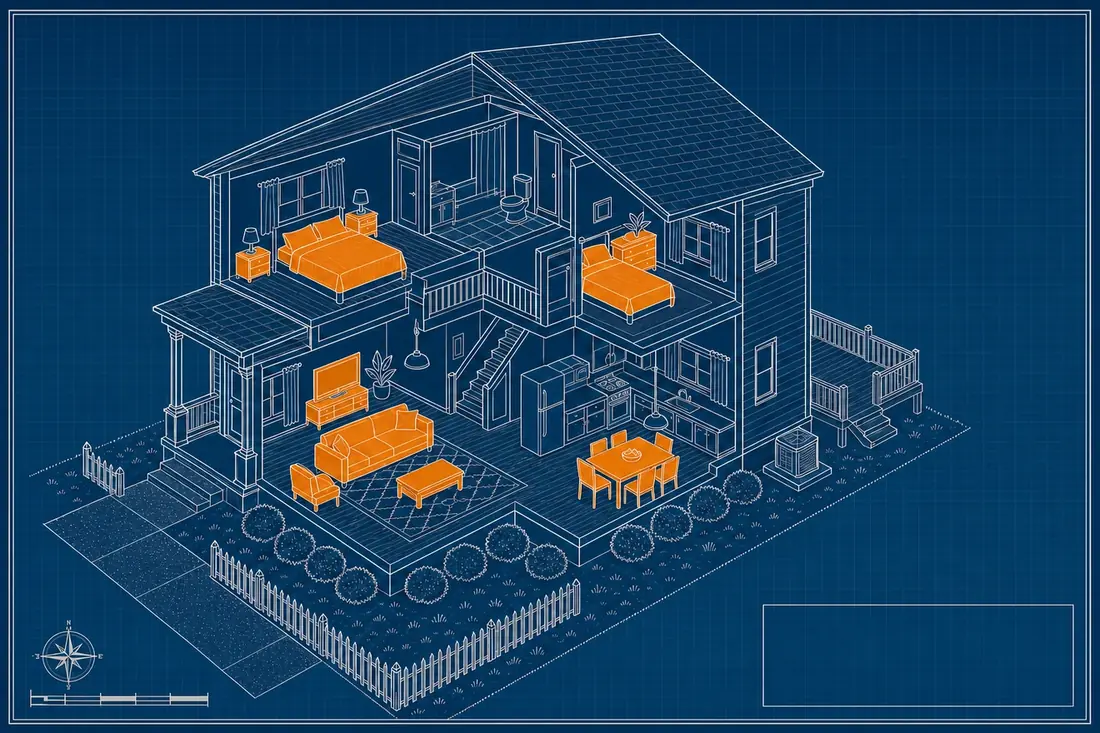
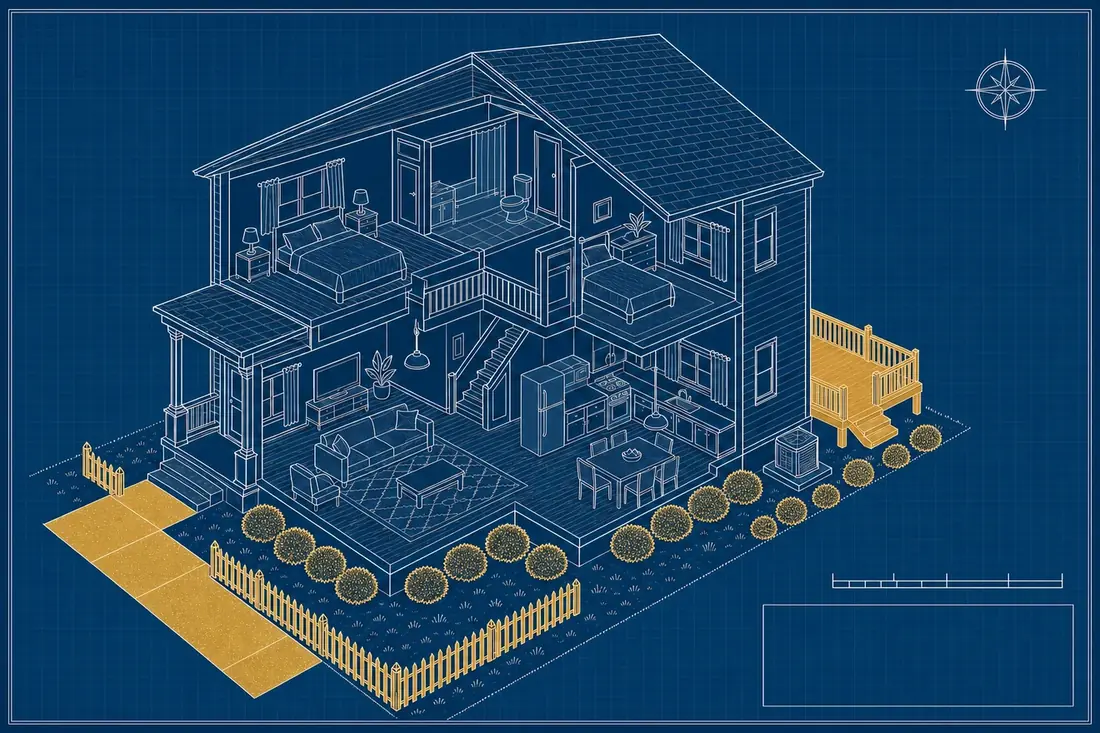
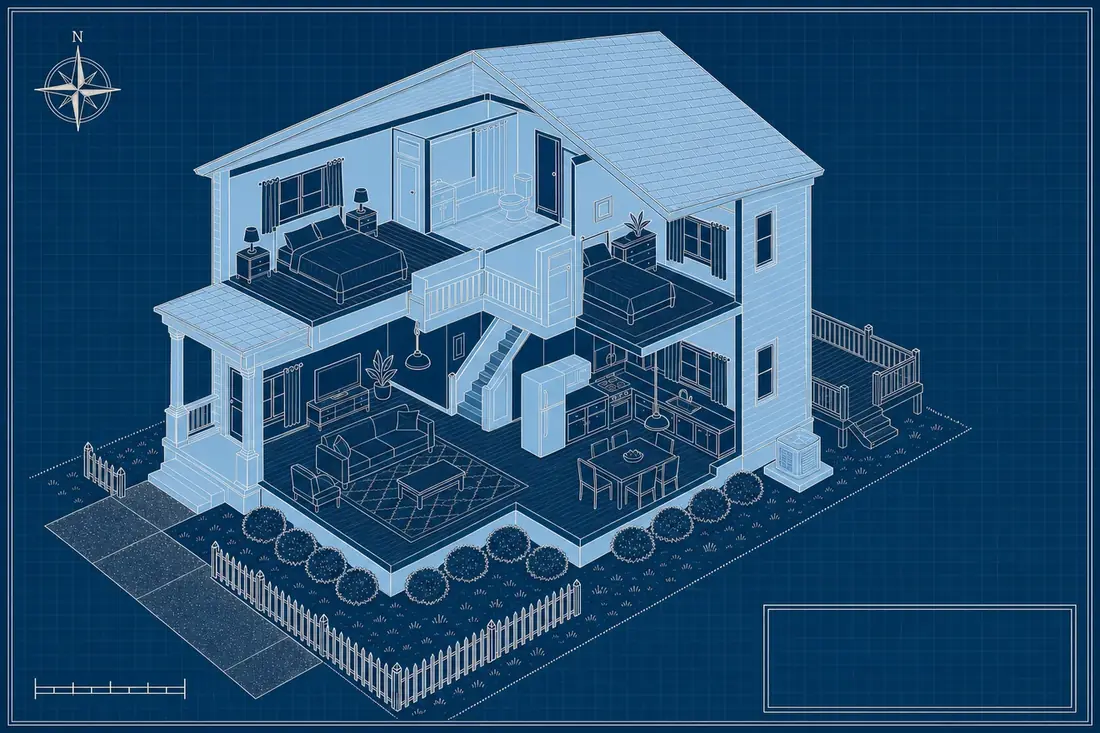
Watch a log cabin rental get built and classified A hypothetical $600,000 three-bedroom log cabin goes up floor by floor, from the gravel drive and foundation to the game loft and the hot tub on the deck. Every component lands on its depreciation schedule as it is installed, and the year-one depreciation adds up on screen. Watch the 90-second walkthrough »What Happens If Neither Path FitsAn owner who clears neither path is not without options; the losses are not lost, only suspended. Passive losses that cannot offset current income generally carry forward to future years and are typically released in full when the activity is disposed of in a taxable sale. A property that does not fit the short-term rental exception, average stay running well over 7 days, and where real estate professional status is out of reach, still benefits from the deductions eventually, just on a different timeline than an owner who clears one of the two exits. This is a reason to run the cost segregation numbers regardless of which passive-activity path, if any, currently fits. The deduction exists either way; only the timing of when it becomes usable against other income actually changes. An owner in this position, neither exit currently open, is usually better served by getting the study done now and letting the CPA track the suspended loss forward, rather than waiting on a future year that may or may not change the passive-activity picture. 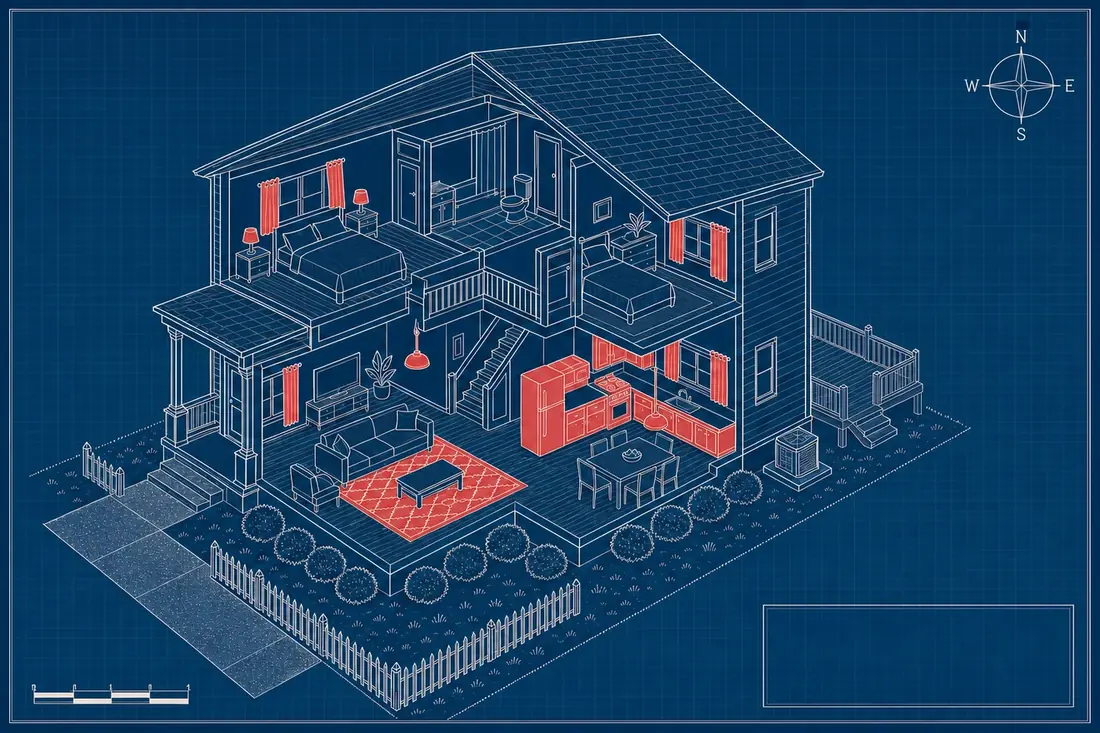
5-Year: carpet and flooring, cabinets, appliances, light fixtures, curtains 7-Year: furniture 15-Year: driveway, fencing, landscaping, deck 27.5/39-Year Shell: roof, load-bearing walls, foundation, central HVAC Get your free Preliminary Benefit Estimate Whichever exit fits, see the reclassification math on the property with a free Preliminary Benefit Estimate. Request Your Free Estimate »Two Different Exits From the Passive Activity RulesSection 469, the passive activity rules, treats rental losses as passive by default, usable only against passive income, unless an owner clears one of two separate exits. Real estate professional status is one exit. The short-term rental exception is a different one entirely. An owner only needs one of them to apply, not both. Long-term rental owners generally only have real estate professional status available to them as an exit, since a typical long-term lease runs far longer than the 7-day average that the short-term rental exception requires. That is the main reason the two rules get discussed together so often, even though they serve different property types. Neither exit is automatic or permanent; a change in the owner's job, hours, or the property's booking pattern from one year to the next can move which path, if either, actually applies. What Real Estate Professional Status Actually RequiresReal estate professional status requires two things in the same year: more than 750 hours in real property trades or businesses, and more than half of the owner's total working time, across every job and business, spent in those real property trades. On top of that, the owner still needs material participation in the specific rental activity for its losses to be non-passive. For most owners with a full-time job outside real estate, the "more than half of working time" prong is the one that rules this path out immediately, since a 40-hour-a-week job outside real estate already claims more than half the working year. The hours also need to be logged contemporaneously or reconstructed by a reasonable method, not estimated after the fact from a general sense of how busy the year was. That documentation standard applies the same way whether the owner is trying to clear real estate professional status or material participation on a short-term rental. The 60-Second Qualifier Four questions. Our engineering team's model shows the estimated first-year acceleration a study of your property would target, free, before you commit to anything. Take the Qualifier »What the Short-Term Rental Exception Requires InsteadThe short-term rental exception does not touch either of those two requirements. Under Treas. Reg. 1.469-1T(e)(3)(ii), a property whose average guest stay across the year runs 7 days or less is not a "rental activity" for section 469 purposes at all, regardless of the owner's other work or how many hours they spend in real estate generally, a test covered in depth on the average-stay page. The owner still needs material participation in that specific property, through one of the standard tests (500 hours, substantially all the participation, or 100 hours and more than any other individual), see what counts toward material participation, but nothing about hours in "real property trades" broadly, and nothing about the owner's primary job. Nothing about the short-term rental exception depends on the owner's other business or employment structure, whether that is a corporation, a partnership, or straightforward W-2 employment. The test looks only at the property's booking pattern and the owner's involvement in that specific property, a distinction we cover more broadly on the short-term rental tax rule page. Why This Confusion Is So CommonThe confusion happens because most online discussion of passive-loss offsets is written for long-term rental investors, where real estate professional status is the main path available, since a typical long-term rental does not clear the average-stay test at all (most tenants stay far longer than 7 days on average). Short-term rental owners read that content and assume the same 750-hour, majority-of-working-time requirement applies to them. It does not, because they are using a different rule entirely. Podcasts and forum posts about the "short-term rental loophole" often cite real estate professional hour requirements out of habit, carried over from long-term rental discussions, which only compounds the mix-up for owners searching for a clear answer. This mix-up shows up frequently in real estate investing communities, where advice aimed at buy-and-hold long-term landlords gets applied wholesale to short-term rental owners without adjusting for the different rule each group actually relies on. When Each Path Actually FitsReal estate professional status tends to fit owners already working substantially in real estate, whether as agents, developers, property managers, or full-time investors managing a larger portfolio. The short-term rental exception tends to fit an owner who works a W-2 job or runs an unrelated business and could never clear the "majority of working time" test, but who personally runs, or heavily participates in running, one or more short-term rental properties. We cover what that offset can look like against W-2 income specifically on the W-2 employee page. A portfolio owner running several short-term rentals, each clearing its own average-stay test, still needs to establish material participation property by property, or through whichever combined approach their CPA determines applies to their specific structure. Neither exit requires giving up a career; real estate professional status is demanding specifically because of the majority-of-working-time test, not because the hour count itself is unusual for a side business, and the short-term rental exception never carried a requirement to leave a job in the first place. Frequently asked questionsCan I use the short-term rental exception if I have a full-time job? Yes. The short-term rental exception does not require real estate professional status or any minimum share of working time in real estate. It runs on the property's average stay length and the owner's material participation in that specific property instead. Does the 750-hour real estate professional test apply to short-term rentals? It only applies if the owner is pursuing real estate professional status specifically. The short-term rental exception is a separate rule that does not use the 750-hour or majority-of-working-time tests at all. Can I qualify for both real estate professional status and the short-term rental exception? It is possible in theory, but only one is needed. Meeting either path's requirements is enough to potentially treat a rental's losses as non-passive; qualifying for both does not provide any additional benefit. Does owning multiple short-term rentals help me qualify as a real estate professional? Hours spent on multiple short-term rental properties can count toward the real estate professional hour tests, but the majority-of-working-time requirement still runs against all of an owner's work, not the rental hours alone. Which path is easier for a W-2 employee, real estate professional status or the short-term rental exception? The short-term rental exception avoids the majority-of-working-time hurdle that a full-time W-2 job usually blocks, since it does not require any minimum share of the owner's total working time to be in real estate. Keep readingGet your free Preliminary Benefit Estimate Send the address or the listing link. We model the number first; you decide with it in hand. Request Your Free Estimate »Educational information, not tax advice. This page describes how federal
depreciation rules and tests work in general. Whether any rule fits your facts is a determination for
you and your CPA. Our study gives your CPA the engineering and the numbers to make that call.
|