|
Cost Segregation for Commercial & Short-Term Rental Owners
|
Request a free estimate [email protected] |
STR Guides
Free Listing SEO Audit Paste your Airbnb or VRBO listing. Get a scored audit in 90 seconds. Audit My Listing »FREE Estimate Is there a first-year deduction sitting in your building? No cost, no obligation. Request Yours »Minimum ROIOur study identifies at least 20x its fee in first-year deductions on commercial property, or at least 30x on a short-term rental, or it is free. |
Cost Segregation on a CabinQuick answer A cost segregation study on a cabin reclassifies the same categories of components any short-term rental does, plus items common to cabin properties specifically: a well and septic system, a gravel driveway, and a deck typically classify as 15-year land improvements, while a hot tub and the furnished appliances and cabinetry typically classify as 5-year property. All of it is bonus-depreciation eligible at 100% once the study identifies it, based on listing photos with no site visit required. See this applied to your building. A few questions, 30 seconds. You see which tests matter and the first-year deduction range a study would look for. No email to see the range. Run the 30-second check »Key takeaways
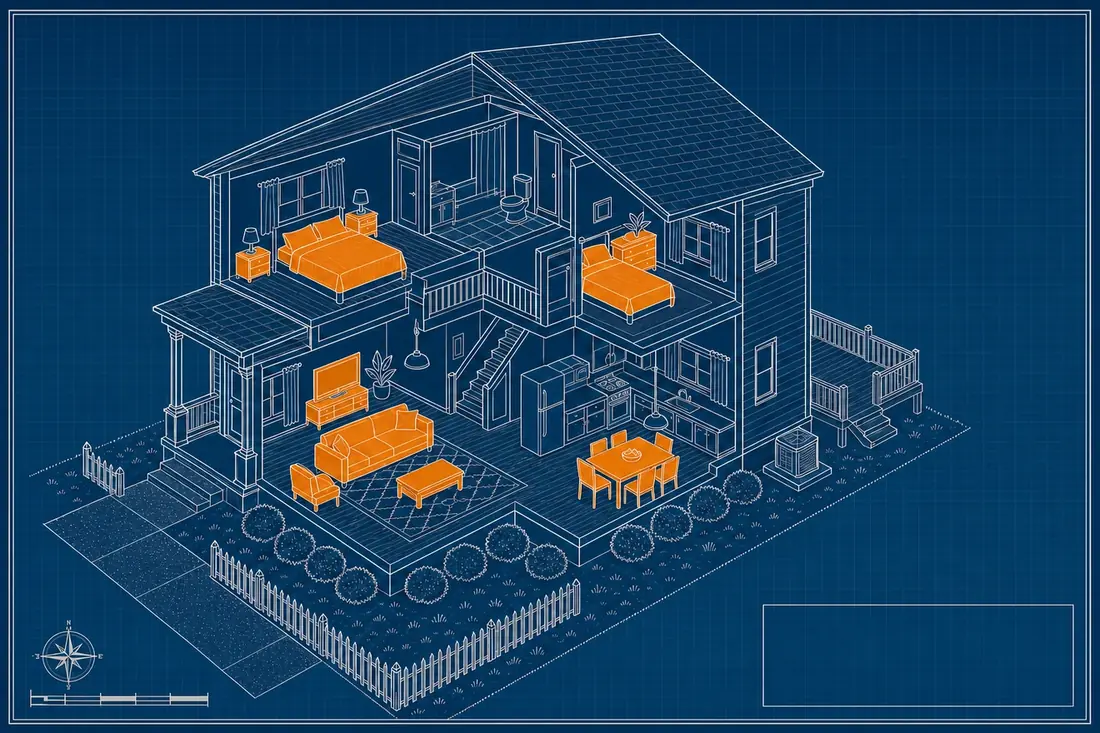
Watch a log cabin rental get built and classified A hypothetical $600,000 three-bedroom log cabin goes up floor by floor, from the gravel drive and foundation to the game loft and the hot tub on the deck. Every component lands on its depreciation schedule as it is installed, and the year-one depreciation adds up on screen. Watch the 90-second walkthrough »What a Cabin Study Actually ReclassifiesA cabin studies the same way any short-term rental does: land value comes off first, then the building and its improvements sort into faster schedules where they belong. What changes with a cabin is which real components show up on the list: a well and septic system instead of municipal water and sewer, a gravel or dirt-and-gravel driveway instead of poured concrete, and often more outdoor living space relative to the interior square footage than a typical suburban rental. The classification process itself does not change for a rural or wooded setting. Our engineering team works from the listing photos already used to book the property, exterior shots included, to identify and count the components that show up. A cabin's remote location does not change the mechanics either. Whether the property sits at the end of a long gravel road or in a lakeside development, the same land-versus-building split and the same component categories apply. 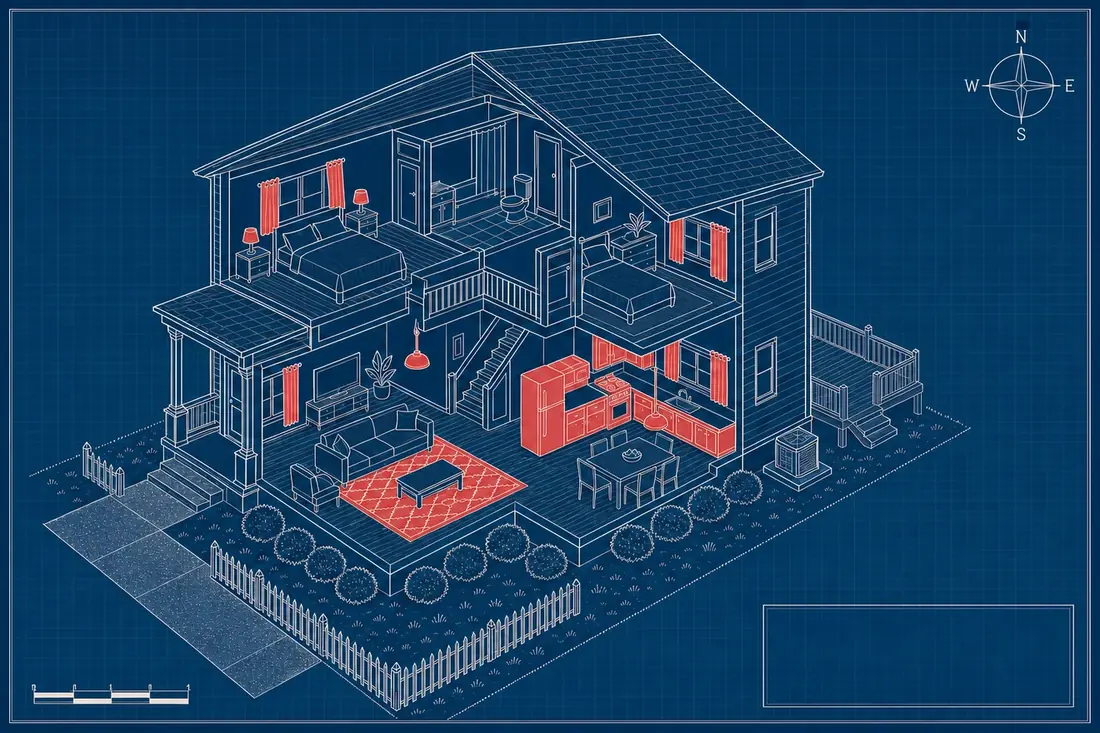
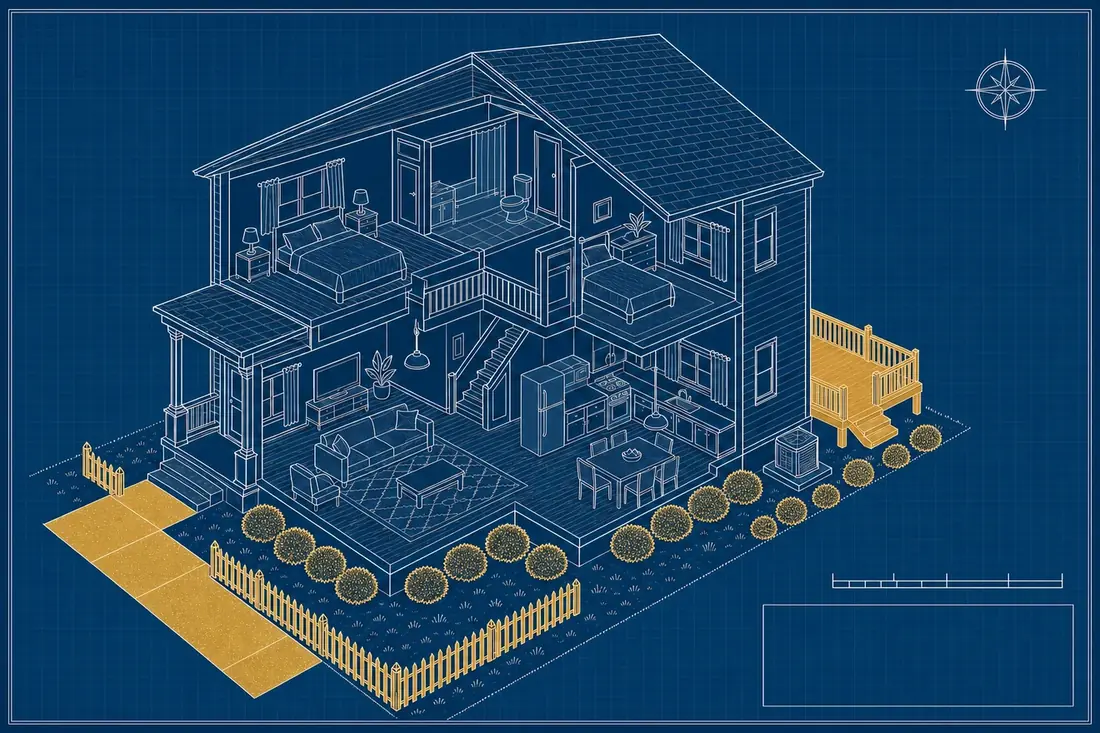
5-Year: carpet and flooring, cabinets, appliances, light fixtures, curtains 7-Year: furniture 15-Year: driveway, fencing, landscaping, deck 27.5/39-Year Shell: roof, load-bearing walls, foundation, central HVAC Get your free Preliminary Benefit Estimate See what the well, septic, deck, and finish work are likely worth with a free Preliminary Benefit Estimate on the cabin itself. Request Your Free Estimate »Land Improvements Specific to a Cabin PropertyLand improvements, the 15-year bucket, cover site work rather than the structure itself: paving, fencing, landscaping, site utilities, and outdoor lighting. On a cabin, that typically includes the well and septic system serving the property, the gravel or aggregate driveway, and any retaining walls or drainage work cut into a sloped lot. None of this is part of the 39 or 27.5-year structural shell; it is site work, and the study separates it out. A cabin on a larger wooded lot does not change this. Land value is always excluded first, regardless of how much acreage comes with the property. Only the building and the site improvements built on that land depreciate at all. Interior and Outdoor Finishes: Hot Tubs, Decks, FurnishingsInterior finishes follow the standard 5-year and 7-year categories: cabinetry, appliances, most flooring, and decorative lighting at 5 years, certain fixtures and furniture at 7 years. A cabin's outdoor living space often adds to this list directly: a deck, an outdoor hot tub, and outdoor furnishings typically classify alongside the interior finish work rather than as part of the structural shell. A cabin's outdoor space is often as reclassifiable as its kitchen. A structural roof and the cabin's central heating system are not part of this faster-schedule list; those stay on the 27.5-year structural schedule along with the framing and walls, a distinction that trips up owners who assume anything replaceable qualifies for a faster schedule. A wood stove or a fireplace insert, common in a cabin, is generally treated as part of the structural heating system rather than a faster-schedule item, the same way the cabin's central HVAC would be, unless it is a standalone, non-structural unit. The same goes for the foundation and structural framing, whatever the exterior material, log, timber frame, or standard framing, the load-bearing structure itself depreciates over 27.5 years like any other rental property's shell. What a Cabin Study Does Not ReclassifyA structural roof and a cabin's central heating system are a common misconception worth correcting directly. Even though a metal roof or a new furnace might feel like an upgrade project, the structural roof itself and central heating and cooling equipment stay on the 27.5-year residential schedule, not a faster one. 5-year treatment applies to finish-level items like flooring and cabinetry, not to the structural systems that make up the shell. The 60-Second Qualifier Four questions. Our engineering team's model shows the estimated first-year acceleration a study of your property would target, free, before you commit to anything. Take the Qualifier »Renovating an Older CabinCabins bought as older properties often get renovated before the first booking: a new deck replacing a rotted one, new appliances, a septic system upgrade. When an old component is replaced rather than repaired, its remaining basis can potentially be written off in the tax year of replacement under partial asset disposition, Treas. Reg. 1.168(i)-8. Miss that year and the old component's remaining basis stays buried in the building, depreciating for decades, while the new one stacks on top. See how partial asset disposition works. A cabin already owned for years, not just one recently purchased, qualifies for the same look-back treatment as any other property: the missed depreciation on components never separately classified is claimed through Form 3115, with no amended returns required. Why a Simple Cabin Shell Runs at the Lower EndA study typically shifts about 15 to 35% of a building's basis into faster schedules, and where a specific property lands in that range depends on how much finish work it carries relative to its structural shell. Restaurants, dense with kitchen equipment and finish work, run at the high end. A simple cabin shell, heavier on structure and lighter on finish per square foot, tends to run closer to the lower end of that range, though the well, septic, deck, and hot tub still add real dollars beyond the structure itself. A more finished cabin, higher-end cabinetry, more built-in furniture, a larger deck and outdoor kitchen, shifts a larger share of its basis than a simple one-room shell with a wood stove and a sleeping loft. The range exists precisely because cabins vary this much from property to property. The Same Tests Apply: Average Stay and Personal UseThe same passive-activity tests apply to a cabin as any short-term rental: the average-stay test, whether the property's average guest stay across the year runs 7 days or less, covered on the average-stay page, and material participation once that gate clears. Cabins also see heavier personal use than a typical urban rental, since owners often use a family cabin themselves between bookings, which brings section 280A's personal-use threshold into play. See the personal-use page for how those days get counted. A cabin with a large personal-use share often sits closer to the vacation-home page's territory than a pure rental; owners splitting their time meaningfully between personal use and paying guests should read the vacation-home page alongside this one. Frequently asked questionsDoes a well and septic system count in a cabin cost segregation study? Typically yes. A well and septic system serving the property are site work rather than part of the structure, so they generally classify as 15-year land improvements alongside paving, fencing, and other site utilities. Can I do cost segregation on a cabin I built myself? Yes. Cost segregation applies to new construction the same way it applies to a purchase. The study works from the finished building's components and depreciable basis regardless of who built it. What if my cabin sits on a large wooded lot? Land value is always excluded first regardless of acreage; only the building and its improvements depreciate. Other site work on the lot, like a driveway or retaining walls, is still classified and reclassified where it applies. Do I need a site visit for a cabin cost segregation study? No. Our engineering team works from the listing photos already used to book the property to identify and count components, the same process used for any short-term rental study. How is a rustic cabin different from a luxury cabin for a cost segregation study? A luxury cabin with more finish work, high-end cabinetry, more fixtures, more outdoor amenities, typically shifts a larger percentage of its basis into faster schedules than a simple, rustic shell with less finish work per square foot. Keep readingGet your free Preliminary Benefit Estimate Send the address or the listing link. We model the number first; you decide with it in hand. Request Your Free Estimate »Educational information, not tax advice. This page describes how federal
depreciation rules and tests work in general. Whether any rule fits your facts is a determination for
you and your CPA. Our study gives your CPA the engineering and the numbers to make that call.
|