|
Cost Segregation for Commercial & Short-Term Rental Owners
|
Request a free estimate [email protected] |
STR Guides
Free Listing SEO Audit Paste your Airbnb or VRBO listing. Get a scored audit in 90 seconds. Audit My Listing »FREE Estimate Is there a first-year deduction sitting in your building? No cost, no obligation. Request Yours »Minimum ROIOur study identifies at least 20x its fee in first-year deductions on commercial property, or at least 30x on a short-term rental, or it is free. |
How Does the Average Stay 7-Day Rule Actually Work?Quick answer The 7-day average stay test looks at a property's average period of customer use for the year: total nights rented divided by the number of separate reservations, not the length of any one guest's visit. If that average comes out to 7 days or less, the property is not a "rental activity" under Reg. 1.469-1T(e)(3)(ii), which opens the short-term rental exception to the passive activity rules. One long booking can pull the average up fast. That is one of the tests. The check asks the rest. What you own, who runs it, average guest stay, when you bought. Four questions, 30 seconds, and you see the first-year deduction range a study would look for on your rental. No email to see the range. Run the 30-second check »Key takeaways
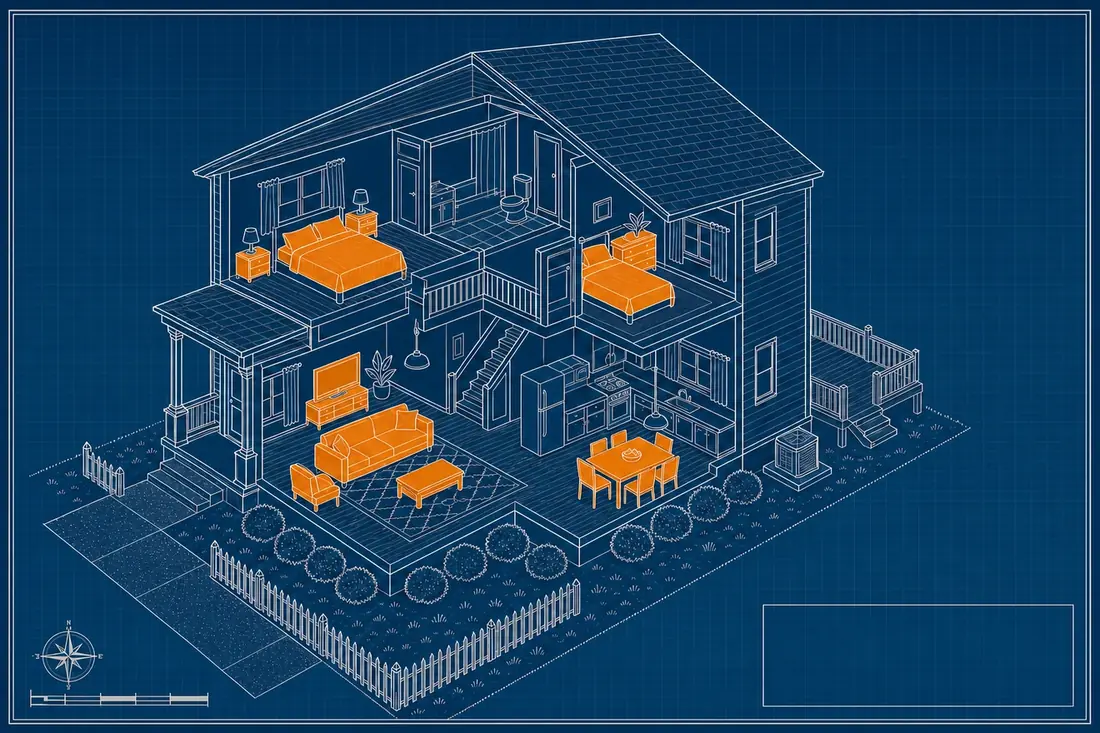
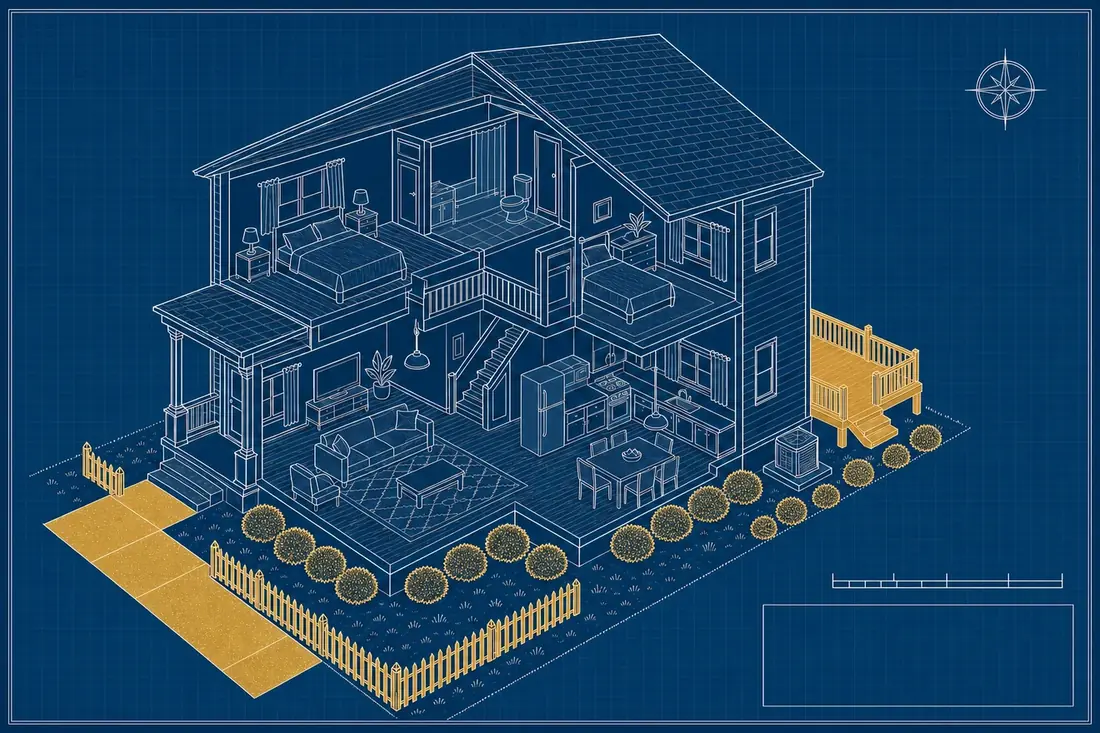
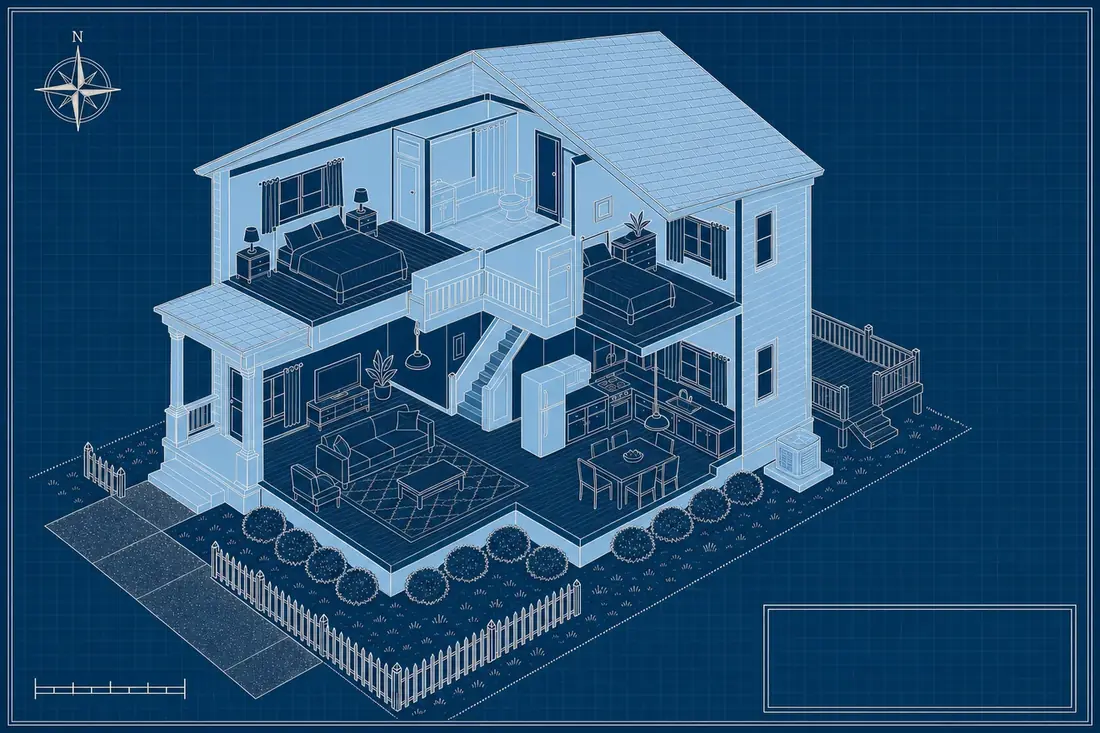
Watch a log cabin rental get built and classified A hypothetical $600,000 three-bedroom log cabin goes up floor by floor, from the gravel drive and foundation to the game loft and the hot tub on the deck. Every component lands on its depreciation schedule as it is installed, and the year-one depreciation adds up on screen. Watch the 90-second walkthrough »What the average stay test actually measuresSection 469 treats a rental as a "rental activity" by default, meaning losses are passive and can only offset other passive income. Reg. 1.469-1T(e)(3)(ii) carves out an exception: a rental is not a rental activity if the average period of customer use for the property, across the whole year, is 7 days or less. This is a property-level, year-level number. It does not ask how long any single guest stayed. It asks, across every reservation the property had that year, what the average length worked out to. A property that had one 3-night guest and one 11-night guest does not automatically fail; it depends on the mix of every booking in the year. This test exists for a reason: it is the line the regulation draws between a property that functions more like a hotel, with constant nightly turnover, and a property that functions more like a long-term rental with occasional short gaps. Nightly and weekend-stay Airbnbs sit clearly on the hotel side of that line in most years; furnished monthly rentals sit clearly on the other side. The test exists for the properties in between, and it is the reason short-term rental owners talk about this specific number more than almost any other in their tax planning. 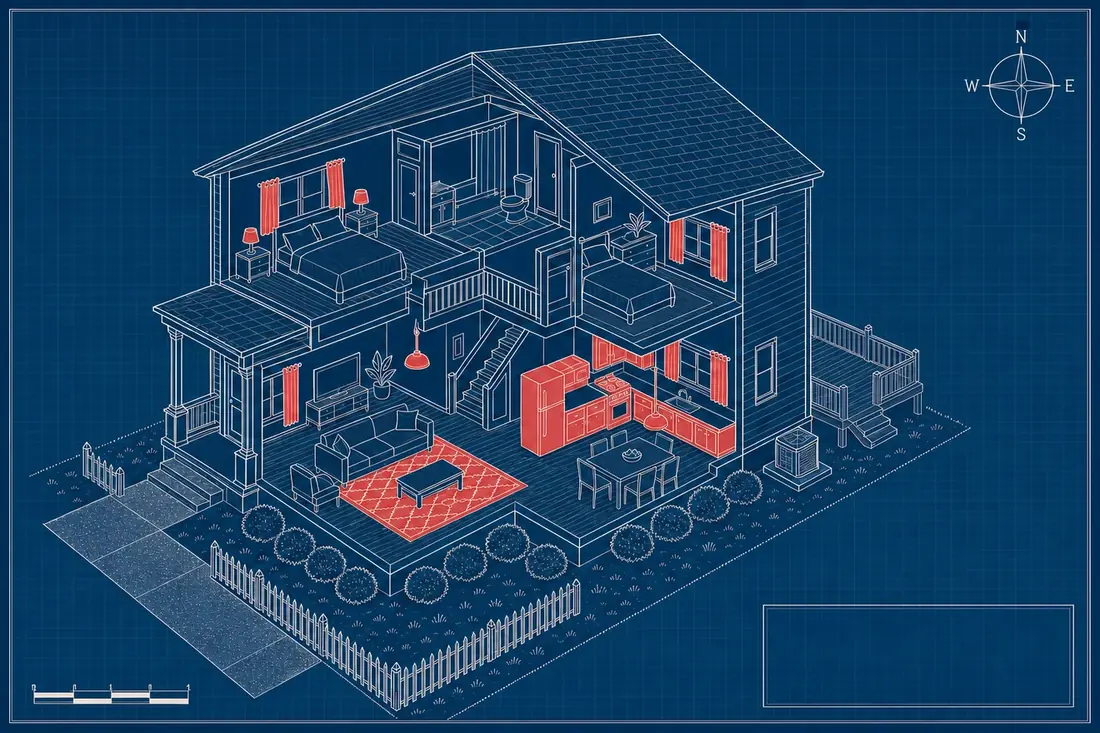
5-Year: carpet and flooring, cabinets, appliances, light fixtures, curtains 7-Year: furniture 15-Year: driveway, fencing, landscaping, deck 27.5/39-Year Shell: roof, load-bearing walls, foundation, central HVAC Get your free Preliminary Benefit Estimate Run the free estimate on the study side while you or your CPA total up this year's reservations to check where your average actually lands. Request Your Free Estimate »The exact math: how to compute it yourselfAdd up the total nights rented across every reservation for the year, then divide by the number of separate reservations. That gives the average period of customer use.
That property clears the test comfortably. Change the mix and the number moves fast, which is the point of running the actual math rather than eyeballing a booking calendar. Most booking platforms export a reservation report with check-in and check-out dates for the year, which is the raw material for this calculation. The two numbers that matter are the count of reservations and the sum of nights across them; everything else in the export (guest names, nightly rates, cleaning fees) is irrelevant to this specific test. Weekly rental markets sit close to the lineMarkets built around Saturday-to-Saturday weekly rentals, common in beach and shore towns, run their reservations at exactly 7 nights. A property that rents almost entirely in 7-night blocks lands right at the boundary the regulation sets, and "7 days or less" passes, while a handful of 8-night or 10-night bookings mixed in can push the yearly average over the line. Owners in these markets should not assume a pass just because "everyone books by the week." The actual average across every reservation in the year decides it, and a few off-pattern bookings, an owner comping a longer stay for family, or a slow-season stretch where the property sat with fewer, longer reservations, can move the number more than expected. A property that runs 30 weekly reservations at exactly 7 nights each has an average of exactly 7.0, which meets "7 days or less" on the nose. Add two off-season reservations at 10 nights each, and the average moves to (210 + 20) / 32 = 7.2, over the line. In a market where nearly every booking is the same length, a small number of exceptions can be the whole ballgame, which is why the actual count for the year matters more than the market's general pattern. The 60-Second Qualifier Four questions. Our engineering team's model shows the estimated first-year acceleration a study of your property would target, free, before you commit to anything. Take the Qualifier »What one long booking does to the averageThe average is pulled per reservation, not weighted by how many nights each guest stayed relative to total nights available. That means a single long reservation adds a lot of nights to the numerator while only adding one to the denominator. Take a property with 40 nightly-stay reservations averaging 3 nights each (120 nights total). Add one 30-night mid-term booking and the math becomes 150 nights across 41 reservations, an average of 3.7 nights, still comfortably under 7. But a property with fewer total reservations feels the same booking far more. Ten reservations averaging 4 nights (40 nights) plus one 30-night booking becomes 70 nights across 11 reservations, an average of 6.4 nights, close enough to the line that a single additional longer stay could tip it over. See how mid-term, 30-day-plus rentals interact with this test when they make up a meaningful share of the calendar. The lesson scales in both directions. A high-volume nightly rental can absorb an occasional long booking without much effect on its yearly average, simply because the denominator is large. A property with a thinner reservation count, common in a slower shoulder season or a newly listed property still building a booking history, feels every long stay much more sharply, and that is exactly the property where running the actual numbers matters most. Why this test is only gate oneClearing the average-stay test does not, by itself, make a loss non-passive. It removes the property from the default "rental activity" category, which then requires the owner to separately show material participation, real, documented involvement in running the property, for a loss to offset other income like wages. See the material participation tests for what that second gate requires and why a full-service property manager complicates it. A cost segregation study itself does not depend on either test passing. Any depreciable rental property can be studied; the average-stay and material participation tests only decide when the resulting deduction can be used against other income versus carried forward as a suspended passive loss. See how a property manager affects the second gate even on a property whose average stay is comfortably under 7 days. Frequently asked questionsDoes the average stay calculation reset every calendar year? Yes. The test is computed year by year using that year's reservations, so a property can pass in one year and fail in another if the booking mix changes, for example shifting from mostly nightly stays to a stretch of monthly corporate bookings. If a guest checks out early, does the original reservation length count? The test looks at actual nights rented, so a shortened stay lowers the nights that reservation contributes to the total. A 14-night booking that ends after 5 nights (with a refund or rebooking of the remaining days) contributes 5 nights to that reservation's count, not 14. Do I combine the average across all my rental properties? The test generally applies property by property, or by class of similar properties, not across an owner's entire portfolio combined. A nightly-stay beach condo and a monthly furnished apartment are typically evaluated separately unless a specific grouping election applies, which is a question for your CPA on your specific properties. Does a mid-term corporate rental automatically fail the test? Often yes. A property that rents primarily in 30-day-or-longer blocks usually lands well above a 7-day average for the year, which takes the short-term rental exception off the table. Real estate professional status or passive income from other sources become the remaining paths for those losses, and both are separate tests worth understanding before assuming the short-term rental exception is closed off entirely. Where does this average-stay rule actually come from? It comes from Treas. Reg. 1.469-1T(e)(3)(ii), part of the temporary regulations under section 469 that define what counts as a "rental activity." A property whose average period of customer use is 7 days or less falls outside that definition, which is what opens the short-term rental exception. Keep readingGet your free Preliminary Benefit Estimate Send the address or the listing link. We model the number first; you decide with it in hand. Request Your Free Estimate »Educational information, not tax advice. This page describes how federal
depreciation rules and tests work in general. Whether any rule fits your facts is a determination for
you and your CPA. Our study gives your CPA the engineering and the numbers to make that call.
|