|
Cost Segregation for Commercial & Short-Term Rental Owners
|
Request a free estimate [email protected] |
STR Guides
Free Listing SEO Audit Paste your Airbnb or VRBO listing. Get a scored audit in 90 seconds. Audit My Listing »FREE Estimate Is there a first-year deduction sitting in your building? No cost, no obligation. Request Yours »Minimum ROIOur study identifies at least 20x its fee in first-year deductions on commercial property, or at least 30x on a short-term rental, or it is free. |
Can You Do Cost Segregation on a Vacation Home You Use Yourself?Quick answer Yes, a vacation rental you also use personally can be studied; a cost segregation study still identifies which components belong in faster depreciation classes. The complication is section 280A: once personal use exceeds the greater of 14 days or 10% of the days the property is rented, deductions get limited and the property is treated as a personal residence for part of the year, which changes how much of the depreciation is even available to deduct. See this applied to your building. A few questions, 30 seconds. You see which tests matter and the first-year deduction range a study would look for. No email to see the range. Run the 30-second check »Key takeaways
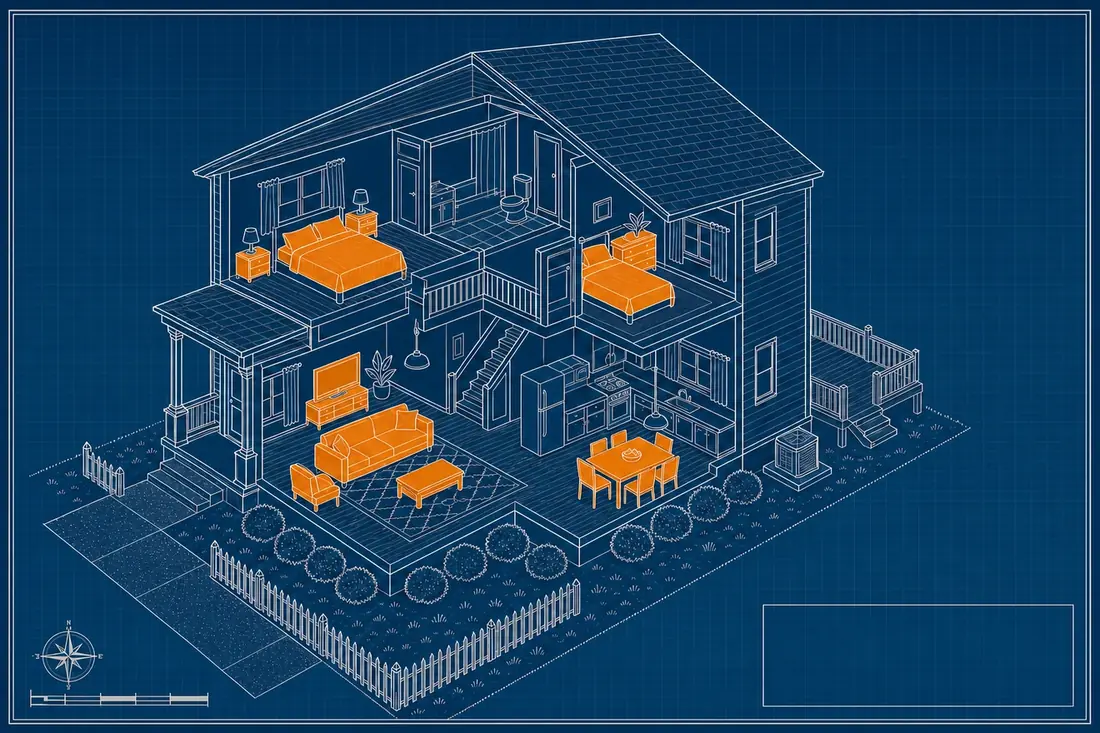
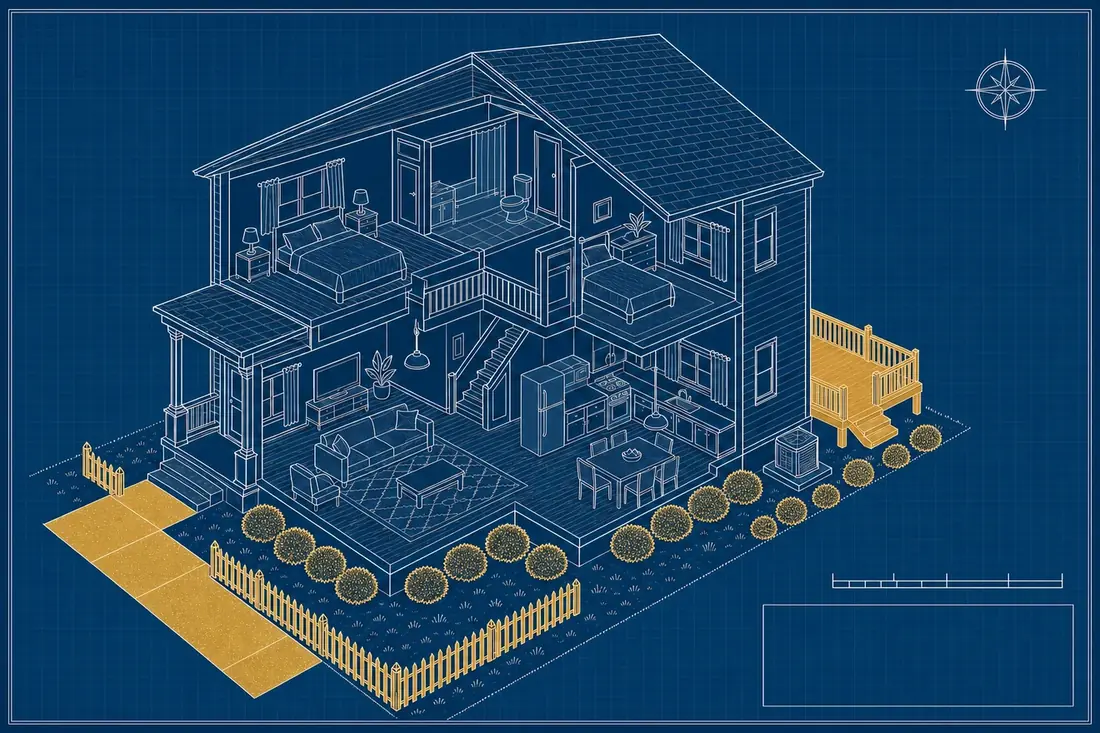
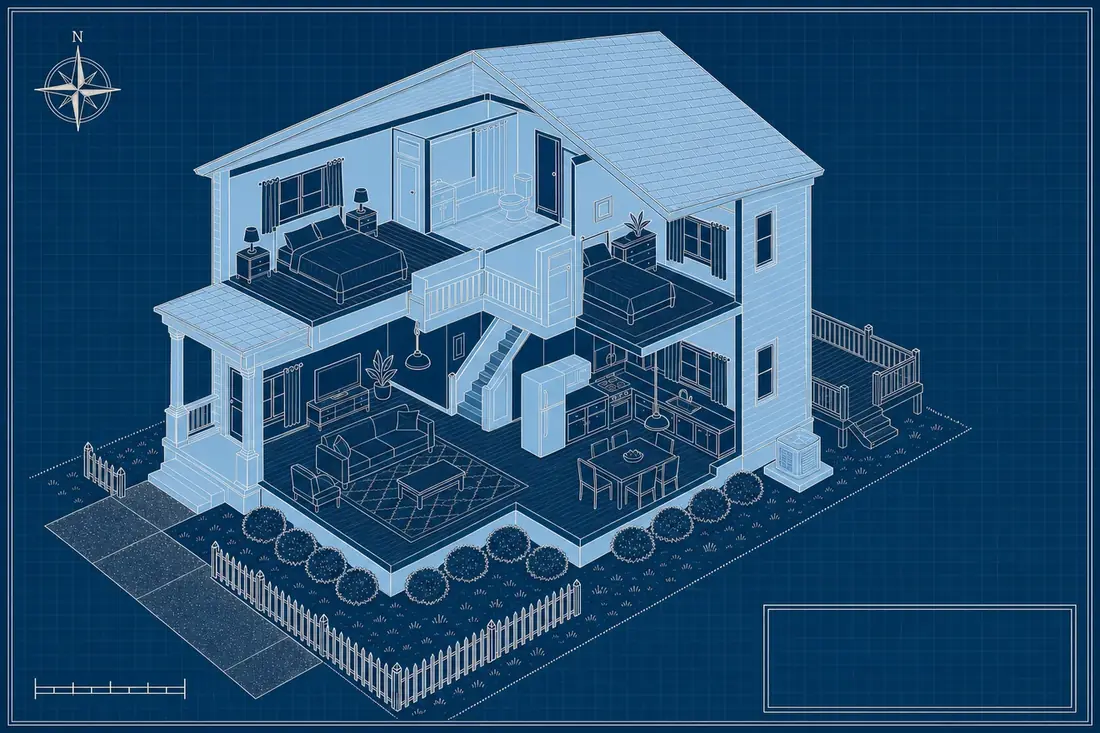
Watch a log cabin rental get built and classified A hypothetical $600,000 three-bedroom log cabin goes up floor by floor, from the gravel drive and foundation to the game loft and the hot tub on the deck. Every component lands on its depreciation schedule as it is installed, and the year-one depreciation adds up on screen. Watch the 90-second walkthrough »Two separate questions on a property you also useA vacation home an owner also stays in raises two distinct questions. The first: does the property qualify for a cost segregation study? Almost always yes, since any depreciable rental building supports a study regardless of who else uses it. The second: how much of the resulting deduction can actually be claimed, and that is where personal use starts to matter. Section 280A governs the second question. It sets a threshold for personal use days that, once crossed, limits how expenses (including depreciation) can be deducted against rental income, and can reclassify the property as a dwelling used as a residence for part of the tax year. These two questions get confused often enough that it is worth stating plainly: nobody loses the components a study finds because they used the property for a few weeks. What changes is the ordering and timing of when those components' depreciation gets deducted, not whether they were ever properly classified in the first place. 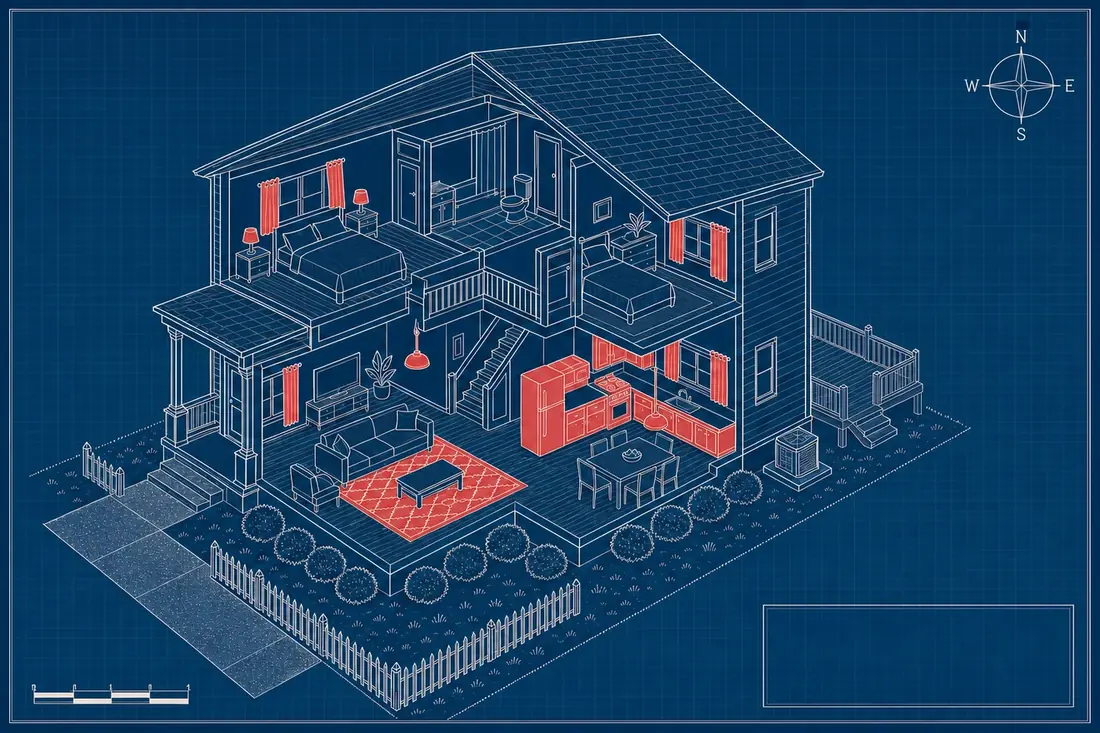
5-Year: carpet and flooring, cabinets, appliances, light fixtures, curtains 7-Year: furniture 15-Year: driveway, fencing, landscaping, deck 27.5/39-Year Shell: roof, load-bearing walls, foundation, central HVAC Get your free Preliminary Benefit Estimate Personal-use days and the 14-day rule decide this one. The 60-second quiz walks you through the test for your property. Request Your Free Estimate »The 14-day / 10% thresholdPersonal use is measured against the greater of 14 days or 10% of the number of days the property was rented at a fair rental. A property rented 200 days a year has a 20-day threshold (10% of 200), higher than the flat 14-day floor. A property rented only 60 days has a 14-day threshold, since 10% of 60 is only 6, and the rule uses whichever number is larger.
Cross the governing threshold and the property is treated as a residence for that year, which limits deductible rental expenses to rental income (no rental loss) under the section 280A ordering rules. The threshold recalculates every year based on that year's actual rental days, which means a property can be a straightforward rental one year and cross into residence treatment the next simply because it rented fewer days, lowering the 10% side of the comparison and making the flat 14-day floor the binding number. Owners who rent inconsistently, heavily in peak season and rarely otherwise, should recheck the math annually rather than assuming last year's answer still holds. What counts as a personal-use day, and what does notA day generally counts as personal use if the owner, a family member, or anyone paying less than fair rental value stays at the property, with narrow exceptions. Days spent principally on repair and maintenance, where the owner is there to work on the property rather than enjoy it, are generally excluded from the personal-use count, though the work has to be the actual purpose of the trip. Days the property sits vacant do not count as either personal or rental days. A week between guests where nobody stays there is simply not counted toward the threshold in either direction. Renting the property to a friend or relative at a genuine fair rental rate, one comparable to what an unrelated guest would pay for the same dates, is generally treated as a rental day rather than personal use, provided that price is real and the arrangement is documented the same way any other booking would be. The 60-Second Qualifier Four questions. Our engineering team's model shows the estimated first-year acceleration a study of your property would target, free, before you commit to anything. Take the Qualifier »How the allocation actually plays outWhen a property stays under the threshold, it is treated as a rental property with some personal use, and expenses (including the depreciation a cost segregation study creates) are allocated between rental and personal days, with the rental share deductible against rental income and potentially as a loss subject to the passive activity rules described in the material participation tests. Cross the threshold, and the property becomes a residence for the year. Rental expenses are still deductible, but only up to the amount of rental income; no loss carries out to offset other income that year. The building still depreciates and a study still identifies the faster-class components; the limitation is on how much of that deduction reaches the current year's return, not on whether the components exist. Some owners deliberately manage their personal-use days to stay under the governing threshold precisely because it preserves rental-loss treatment. That is a scheduling decision made with a CPA looking at the actual rental calendar; it keeps the property on one side of a line the regulation already draws. Where the STR tests fit on topPersonal use and the short-term rental exception are separate layers. A property comfortably under the 7-day average stay test and passing material participation still has to clear the 280A personal-use threshold before those non-passive losses are fully usable in a given year. Owners who split time between renting a cabin and using it themselves for a few weeks a year should run both the average-stay math and the 280A day count, not just one. See how the 14-day threshold is counted in practice for the mechanics of tracking days across a booking calendar and personal stays. A cabin rented to guests most of the year with the owner using it for a two-week ski trip is a common shape for this exact overlap: the average-stay math and material participation decide whether the loss is non-passive at all, and the 280A day count decides how much of it is available once that determination is made. Both calculations run off the same booking calendar, which is why keeping one clean record of every stay, guest and owner alike, pays off twice: once for the tests that decide non-passive treatment, and again for the 280A count that decides how much of that treatment is actually usable. Frequently asked questionsDoes a cost segregation study cost more if I use the property myself part of the year? The study itself is priced on the building, not on personal-use days, since the engineering work classifies components regardless of who occupies the property. What changes is how much of the resulting deduction can be claimed in the current year, which is a separate allocation question your CPA works through using your actual day counts. If I stay at my rental for a week to do repairs, does that count against the 14-day limit? Generally no. Days spent principally on repair and maintenance activities are typically excluded from the personal-use day count, provided the trip's actual purpose was the repair work rather than a vacation that happened to include some maintenance. Documentation of the work performed supports this distinction. Can family members stay at my rental without it counting as personal use? Use by family members generally counts as personal use unless they pay a fair rental price, similar to what an unrelated guest would pay. A discounted family stay at a fraction of the going rate is typically treated as personal use of the owner's, not as a rental day. What happens to unused depreciation if my personal use limits the deduction this year? Depreciation and expenses disallowed under the 280A limitation in a given year generally carry forward and can be deducted in a future year when rental income is higher relative to expenses, subject to the same allocation rules applying again in that later year. Keep readingGet your free Preliminary Benefit Estimate Send the address or the listing link. We model the number first; you decide with it in hand. Request Your Free Estimate »Educational information, not tax advice. This page describes how federal
depreciation rules and tests work in general. Whether any rule fits your facts is a determination for
you and your CPA. Our study gives your CPA the engineering and the numbers to make that call.
|