|
Cost Segregation for Commercial & Short-Term Rental Owners
|
Request a free estimate [email protected] |
STR Guides
Free Listing SEO Audit Paste your Airbnb or VRBO listing. Get a scored audit in 90 seconds. Audit My Listing »FREE Estimate Is there a first-year deduction sitting in your building? No cost, no obligation. Request Yours »Minimum ROIOur study identifies at least 20x its fee in first-year deductions on commercial property, or at least 30x on a short-term rental, or it is free. |
Does Cost Segregation Work on a Mid-Term Rental?Quick answer Yes, a mid-term rental (typically 30-day-plus furnished stays for travel nurses, relocating employees, or corporate housing) can be studied like any other depreciable rental. The complication is section 469: a property renting mostly in 30-day-or-longer blocks usually has an average period of customer use well above 7 days, which fails the short-term rental exception's first gate. Real estate professional status or passive income from elsewhere become the remaining paths for the loss. See this applied to your building. A few questions, 30 seconds. You see which tests matter and the first-year deduction range a study would look for. No email to see the range. Run the 30-second check »Key takeaways
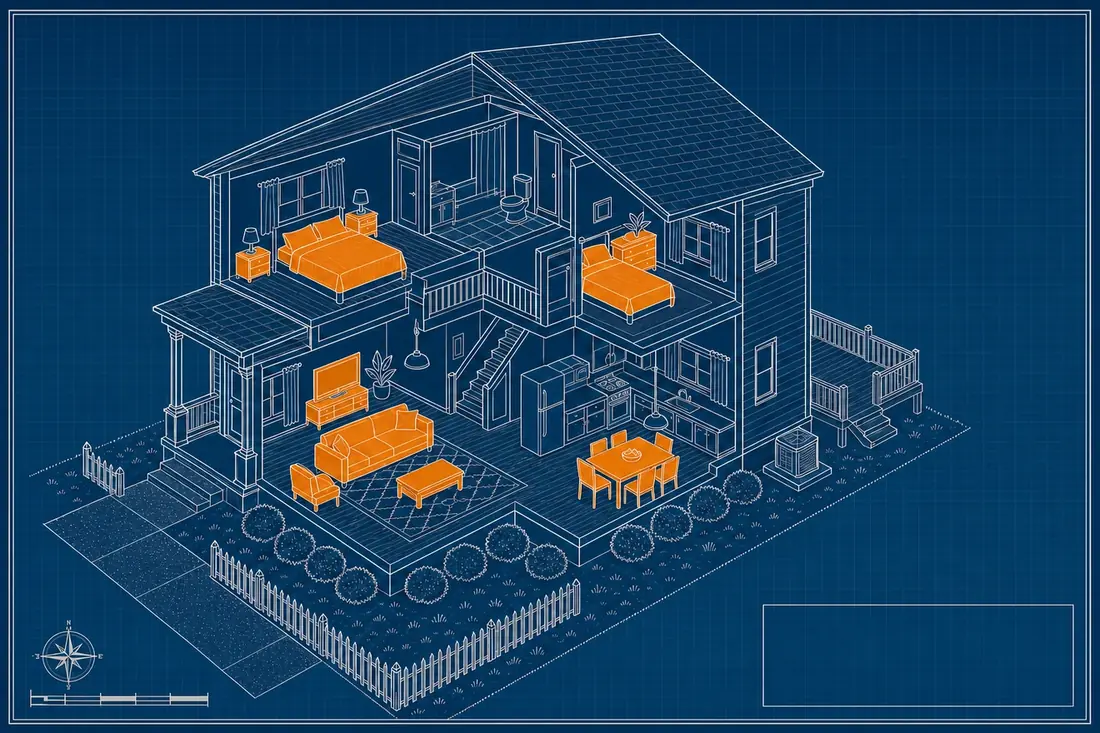
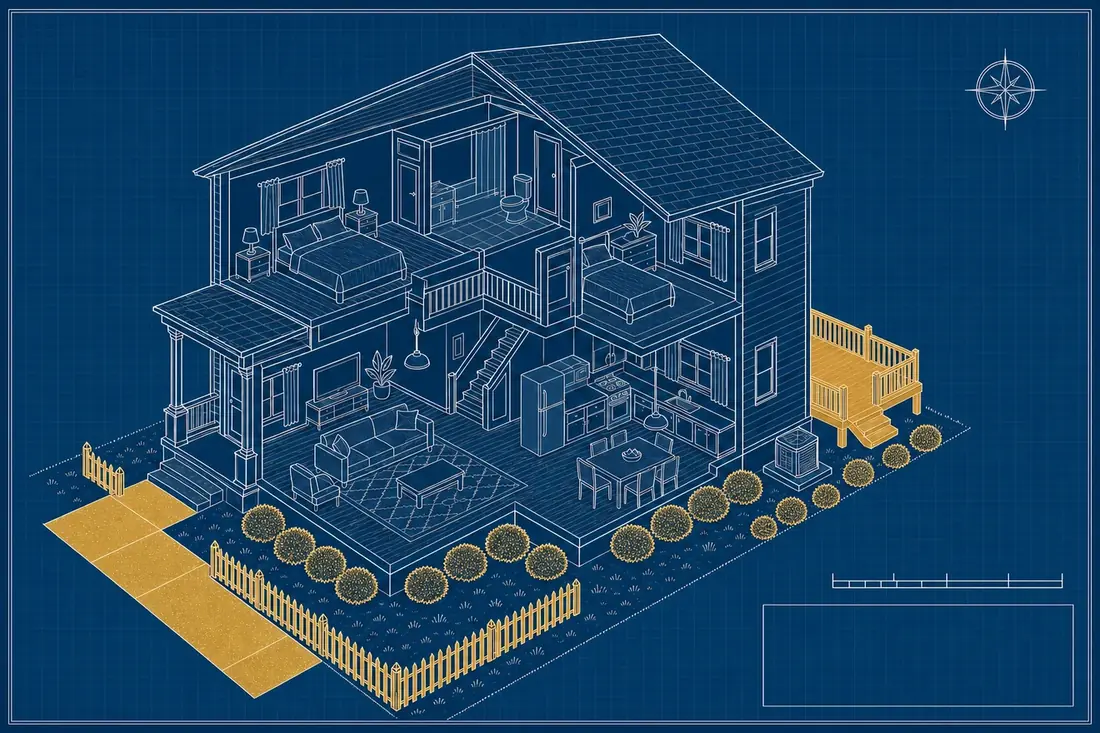
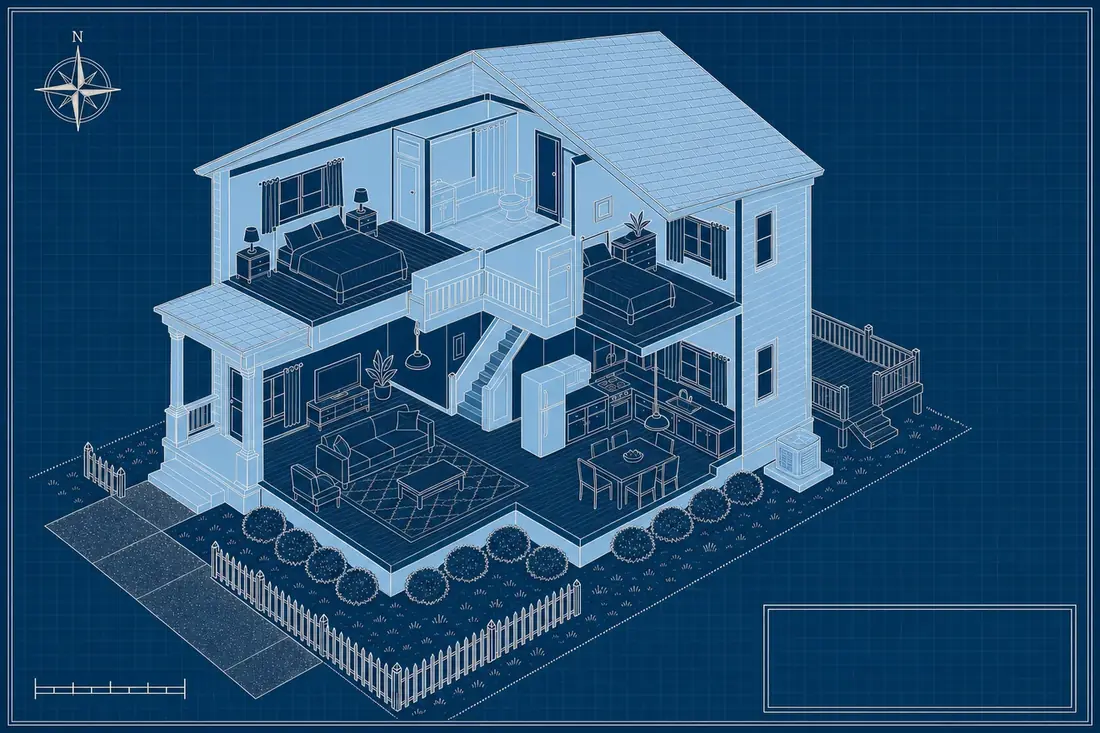
Watch a log cabin rental get built and classified A hypothetical $600,000 three-bedroom log cabin goes up floor by floor, from the gravel drive and foundation to the game loft and the hot tub on the deck. Every component lands on its depreciation schedule as it is installed, and the year-one depreciation adds up on screen. Watch the 90-second walkthrough »What a mid-term rental actually isMid-term rentals sit between nightly Airbnb-style stays and traditional 12-month leases: furnished units booked for 30 days to several months, often to travel nurses, relocating employees on temporary assignment, or contractors between projects. They are a real and growing category, and nothing about the depreciation mechanics is different for them. Land is carved out first, and the building's components (flooring, cabinetry, appliances, site improvements) still sort into 5-, 7-, 15-, and 27.5-year classes the same way they would in any residential rental. Owners often choose the mid-term model deliberately: fewer turnovers than nightly Airbnb, less wear on furnishings, and a tenant pool (traveling professionals with employer-paid housing budgets) that tends to pay reliably. None of that changes how a study values the property. The engineering work looks at what is actually installed, not at who is renting it or for how long. A furnished two-bedroom mid-term unit and a nightly Airbnb of the same square footage with similar finishes will typically come back from a study with a similar reclass share of building basis, even though their guest patterns look nothing alike. 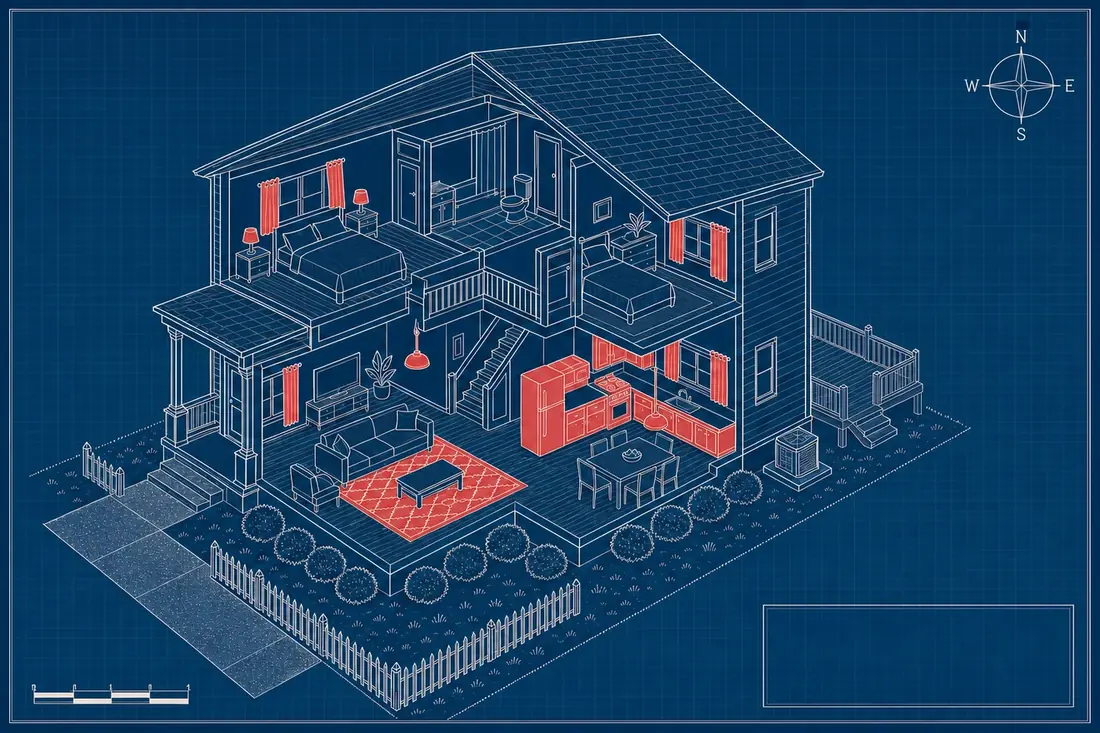
5-Year: carpet and flooring, cabinets, appliances, light fixtures, curtains 7-Year: furniture 15-Year: driveway, fencing, landscaping, deck 27.5/39-Year Shell: roof, load-bearing walls, foundation, central HVAC Get your free Preliminary Benefit Estimate See what a study identifies on your mid-term property with the free estimate, then work the 469 path that fits your situation with your CPA. Request Your Free Estimate »Where the math usually landsThe short-term rental exception under Reg. 1.469-1T(e)(3)(ii) requires an average period of customer use of 7 days or less for the year. A property renting almost entirely in 30-day blocks does not come close. Ten reservations at 30 nights each is an average of exactly 30, more than four times the threshold. See the exact average-stay math for how the calculation is run and where it can shift. This does not disqualify the property from anything except the specific short-term rental exception. The rental is still a legitimate rental activity; it simply falls under the default passive activity treatment rather than the STR carve-out.
The paths that remain when the average-stay test failsTwo main routes stay open for an owner whose mid-term rental fails the average-stay test. Real estate professional status requires 750 or more hours in real property trades in the year and more than half of the owner's total working time spent there, plus material participation in the rental itself; it is a real bar, built for owners with a real estate-heavy work life rather than a side rental. See how that test actually works. The more common route for owners with a regular job is passive income from elsewhere: other rental properties, or K-1 income from a syndication, that the mid-term rental's losses can offset. A loss that cannot offset wages this year is not lost; it suspends and carries forward, or releases at a future sale. A third, less common route is grouping the mid-term rental with other real property trades or businesses the owner materially participates in, which is an election with its own rules and consequences and belongs in a conversation with a CPA who can see the owner's full return, not a decision made off a single property's numbers. The 60-Second Qualifier Four questions. Our engineering team's model shows the estimated first-year acceleration a study of your property would target, free, before you commit to anything. Take the Qualifier »Can mixing in nightly stays change the outcome?Sometimes. If a mid-term property also takes shorter nightly or weekly bookings during gaps between longer tenants, those shorter stays pull the yearly average down. Whether that brings the average under 7 days depends entirely on the mix; a handful of nightly stays folded into a calendar dominated by 60-day corporate bookings usually will not move the number enough to matter. The test runs on the whole year's bookings, not on the owner's intent for the property. An owner deliberately building a hybrid calendar (some nightly, some monthly) should run the actual average, not assume a mixed strategy automatically qualifies. The math in how one long booking moves the average works the same in reverse: a handful of nightly stays added to a mostly-monthly calendar rarely moves the needle far enough. There is also a practical operating cost to consider separately from the tax math: running a genuinely hybrid calendar, some 60-night corporate stays and some 3-night weekend bookings, adds turnover complexity that many mid-term operators specifically built their business to avoid. The tax outcome should not be the only reason to reshape a booking strategy that otherwise works. The honest read on mid-term rentalsA mid-term rental is a good property to study for the deduction itself, since the timing and dollar value of the depreciation are unaffected by which exit from section 469 an owner takes. What it is usually not is a shortcut to the short-term rental exception. Owners choosing the mid-term model for its own reasons (steadier occupancy, less turnover, a different tenant pool) should plan around passive treatment as the likely default, with real estate professional status or other passive income as the paths to non-passive use, rather than assuming the property behaves like a nightly Airbnb for tax purposes. The study itself remains worth doing regardless of which path applies. A furnished mid-term rental typically carries meaningful 5-year property (furniture packages, appliances, window treatments) and often 15-year site improvements, and those buckets are bonus-eligible under current law the moment the study identifies them, whether the resulting loss lands against wages this year or sits as a suspended loss until a passive-income year or a sale releases it. Owners choosing between a mid-term and a nightly strategy for the same unit should weigh that operating decision on its own merits and treat the depreciation number as a constant either way. Frequently asked questionsIs a 30-day minimum stay automatically disqualifying for cost segregation? It does not disqualify the study itself; any depreciable rental supports a study regardless of stay length. What a 30-day-plus pattern usually rules out is the short-term rental exception to the passive activity rules, since the yearly average period of customer use lands well above the 7-day threshold that exception requires. Do travel nurse housing rentals get any special tax treatment? No. A furnished unit rented to a travel nurse for a 13-week assignment is treated the same as any other mid-term rental under the tax code. The 13-week length simply makes the average-stay math land well outside the 7-day exception in most cases, the same as any other 30-day-plus rental pattern would. If my mid-term rental's loss suspends, do I lose it permanently? No. A suspended passive loss carries forward indefinitely and offsets passive income in a future year, or releases in full when the activity is disposed of in a taxable sale. The depreciation the study identified still exists; the passive activity rules only govern when it becomes usable against other income. Should I do a cost segregation study before deciding between mid-term and short-term rental strategy? The study's dollar value does not change based on that choice, since it depends on the building's components, not the rental strategy. The choice between mid-term and nightly rental is better made on the strategy's own merits (occupancy, turnover, tenant pool) with the passive-activity treatment planned around whichever model is chosen. Keep readingGet your free Preliminary Benefit Estimate Send the address or the listing link. We model the number first; you decide with it in hand. Request Your Free Estimate »Educational information, not tax advice. This page describes how federal
depreciation rules and tests work in general. Whether any rule fits your facts is a determination for
you and your CPA. Our study gives your CPA the engineering and the numbers to make that call.
|