|
Cost Segregation for Commercial & Short-Term Rental Owners
|
Request a free estimate [email protected] |
STR Guides
Free Listing SEO Audit Paste your Airbnb or VRBO listing. Get a scored audit in 90 seconds. Audit My Listing »FREE Estimate Is there a first-year deduction sitting in your building? No cost, no obligation. Request Yours »Minimum ROIOur study identifies at least 20x its fee in first-year deductions on commercial property, or at least 30x on a short-term rental, or it is free. |
Can You Do a Cost Segregation Study on an Airbnb?Quick answer Yes. Any depreciable rental property, including a short-term rental booked on Airbnb, qualifies for a cost segregation study the same way a long-term rental or commercial building does. The study itself has no test tied to how the property is used. What differs for a short-term rental is whether the resulting loss can offset other income, including wages, which depends on separate passive-activity tests under section 469, not on study eligibility. See this applied to your building. A few questions, 30 seconds. You see which tests matter and the first-year deduction range a study would look for. No email to see the range. Run the 30-second check »Key takeaways
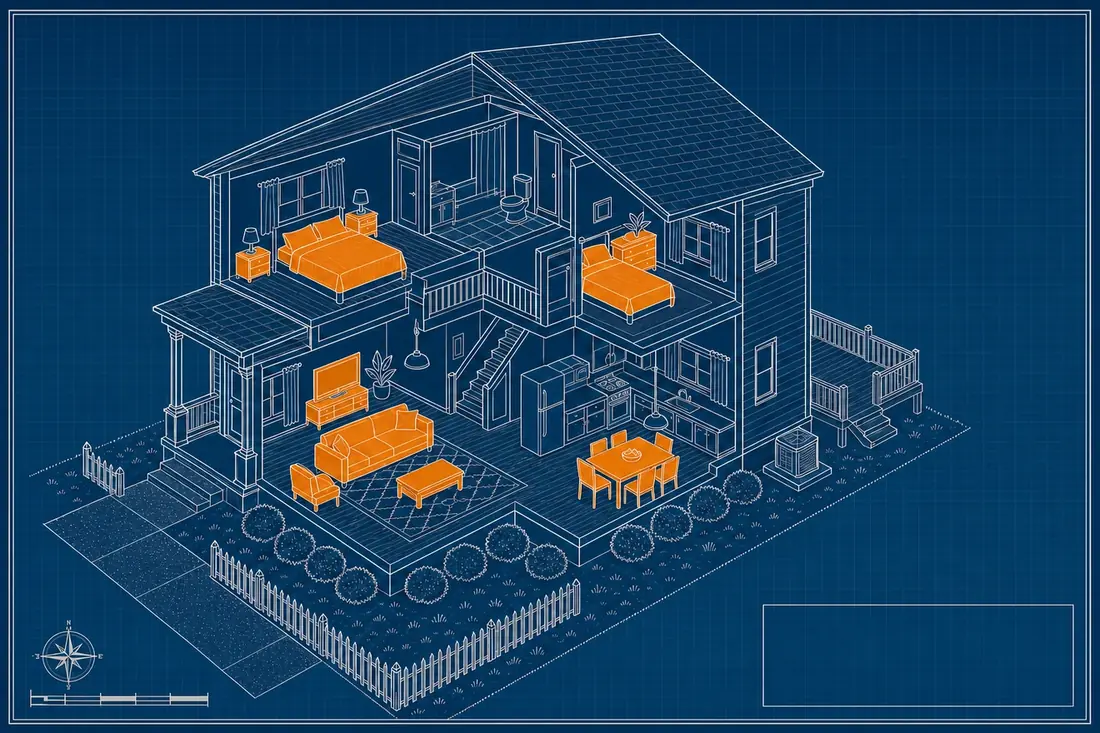
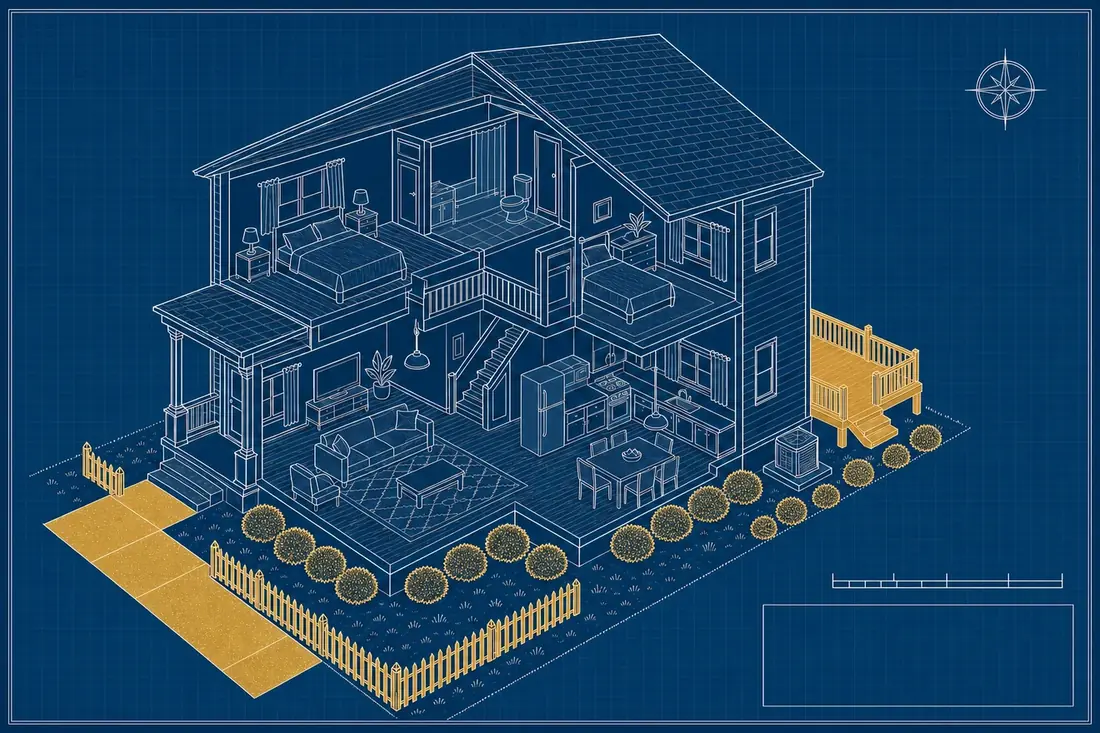
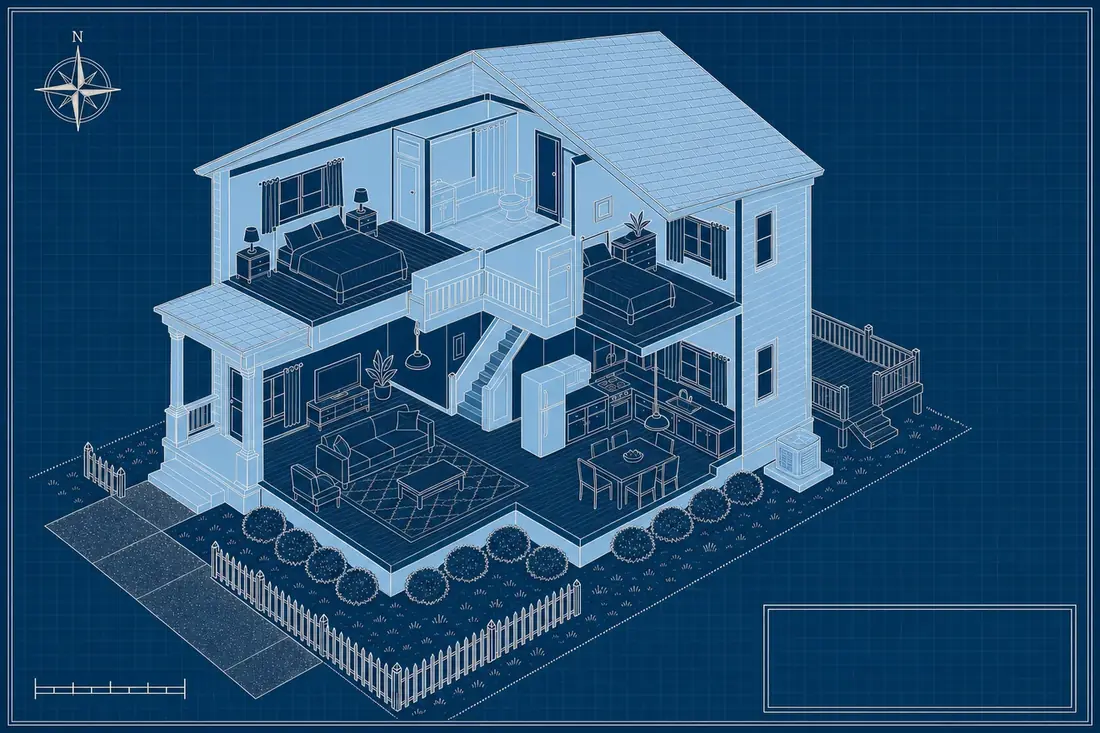
Watch a log cabin rental get built and classified A hypothetical $600,000 three-bedroom log cabin goes up floor by floor, from the gravel drive and foundation to the game loft and the hot tub on the deck. Every component lands on its depreciation schedule as it is installed, and the year-one depreciation adds up on screen. Watch the 90-second walkthrough »The Study Itself Has No Special-Use TestYes. A cost segregation study works on the building, not on how the building is booked. Any depreciable rental property qualifies: a single-family Airbnb, a condo on VRBO, a duplex rented long-term, or a commercial building. The study separates land value first, since land never depreciates, then classifies what is left into faster schedules: 5-year property like flooring and cabinetry, 7-year property like certain fixtures, and 15-year land improvements like the driveway and fencing. Everything structural, the roof, the framing, the walls, stays on the standard 27.5-year residential (or 39-year commercial) schedule. See what a cost segregation study actually is for the full mechanics. Nothing in that process asks whether the property is a short-term rental, a long-term rental, or a building the owner runs a business out of. Eligibility for the study runs off the depreciable basis, not the booking calendar. This holds whether the property is a single unit or part of a larger portfolio, and whether it is self-managed or run through a manager; the building's own components decide what the study finds. 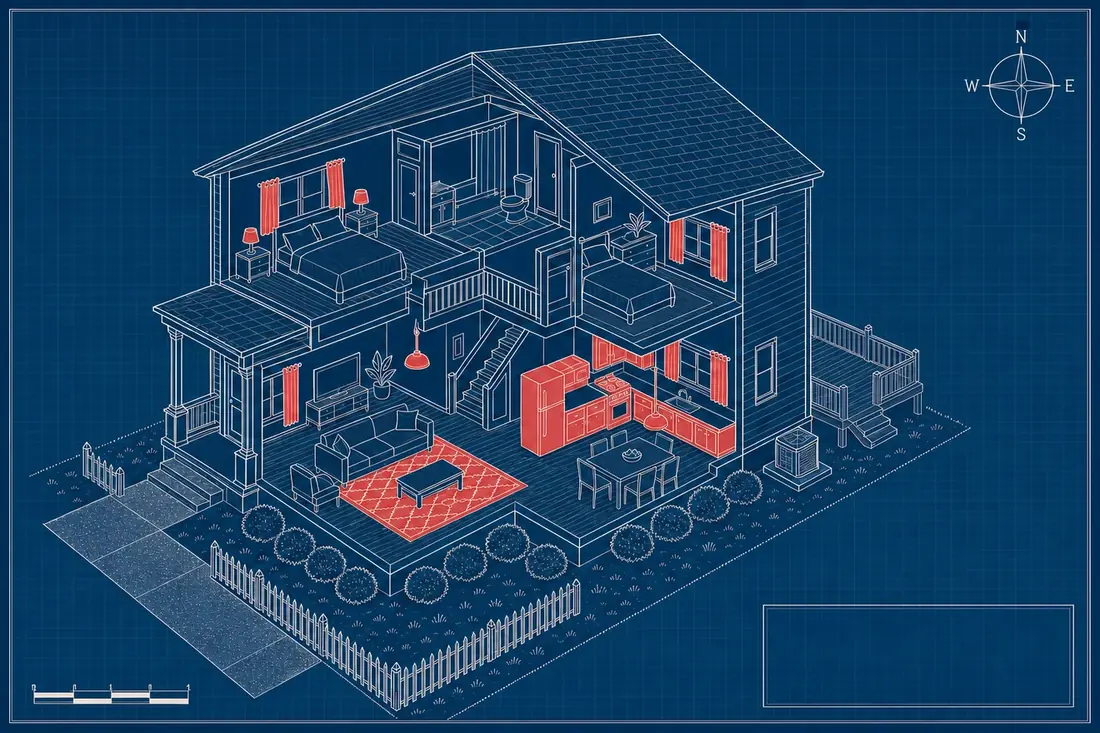
5-Year: carpet and flooring, cabinets, appliances, light fixtures, curtains 7-Year: furniture 15-Year: driveway, fencing, landscaping, deck 27.5/39-Year Shell: roof, load-bearing walls, foundation, central HVAC Get your free Preliminary Benefit Estimate If an Airbnb is up and generating income, see what a study would likely find with the free Preliminary Benefit Estimate. Request Your Free Estimate »Where the Real Question Sits: Can the Loss Offset Other IncomeThe question that actually varies by property type is not "can I do a study." It is "can the resulting loss offset income outside the rental." That question runs through section 469, the passive activity rules, which treat rental losses as passive by default, only able to offset other passive income. Short-term rentals get a separate exception. A property whose average guest stay runs 7 days or less is not treated as a rental activity for section 469 at all, a test we walk through on the average-stay page. Clearing that gate then requires material participation, meaning real and regular involvement in running the property, for the loss to be non-passive. We unpack the full framing of this exception, including the regulation behind it, on the STR tax rule page. This is also the point where owners often bring up real estate professional status, assuming it is required to use losses from a short-term rental. It is not. Real estate professional status is a separate, harder path under section 469 requiring 750 or more hours and more than half of the owner's working time in real property trades. The short-term rental exception does not touch either requirement. See how the two paths differ. An owner who meets both the average-stay test and material participation can generally treat the resulting loss as non-passive. Whether a specific property's booking pattern and hours meet both tests is a question for that owner's CPA. New Purchase, New Construction, or a Property You Have Owned for YearsCost segregation applies to a purchase, new construction, or a renovation. All three create or add to a depreciable basis, and all three can be studied. A property just closed on this year is studied the same way as a property built from the ground up, based on the depreciable basis established at purchase or completion. A property already owned for years does not miss out. That is a look-back study, meaning a study done on a property the owner already holds, and it is claimed through Form 3115, an automatic consent method change, with the missed depreciation arriving as a single section 481(a) catch-up deduction in the current tax year. No amended returns required, no reopening prior filings. The 60-Second Qualifier Four questions. Our engineering team's model shows the estimated first-year acceleration a study of your property would target, free, before you commit to anything. Take the Qualifier »What a Study Looks Like on an Airbnb SpecificallyFor an Airbnb or VRBO specifically, the study runs off the listing itself. Our engineering team works from the listing photos, meaning the same photos already up on the booking platform, to identify and count components: the kitchen appliances, the flooring, the outdoor deck, the driveway. No site visit, no owner homework, no measuring tape. Two tiers exist depending on the property's complexity: a full engineered study and a budget engineered study, both delivering the same 70-page engineered report aligned to the IRS Audit Techniques Guide. Turnaround typically runs 4 to 6 weeks during tax season, often 2 to 3 weeks in January and February. What Would Actually Stop a StudyVery little does. A study needs a depreciable basis to work with, meaning the property is placed in service as a rental, or otherwise used in a trade or business, not purely a personal residence with zero rental activity. A property still under construction and not yet placed in service does not have a depreciable basis to study yet, though the study can typically be built once it is placed in service. Beyond that, the study does not ask about occupancy rate, booking platform, management style, or the owner's other income. What does vary property to property is how much a study is worth finding. A small basis produces a smaller number than a large one, which is exactly why the free Preliminary Benefit Estimate exists: to show the likely number for a specific property before any commitment, rather than assuming the answer from a generic checklist. A Real Number: The Montgomery County StudyA delivered example: a single-family rental in Montgomery County, Pennsylvania, built 2013, 4,946 square feet, depreciable basis $1,040,000. The study identified $160,242 of that basis, 15.4%, into faster schedules. With 100% bonus depreciation, estimated first-year depreciation came to $174,905, 16.8% of basis, against a $1,295 fee, about 135 times the fee. A commercial building runs a different scale entirely. Our four commercial benchmark runs came in at 24:1 to 67:1 in first-year deductions against fee, smaller multiples on bigger buildings with bigger fees. A short-term rental at a lower residential fee is what produces the much larger multiple. Every property is different and every study is priced on the specific building. The free Preliminary Benefit Estimate at the 60-second qualifier models the likely number before any commitment. Frequently asked questionsDoes an Airbnb need to be a certain size to qualify for cost segregation? There is no minimum size requirement in the tax code. In practice, a study identifies real dollars once a property has a meaningful depreciable basis, and the free Preliminary Benefit Estimate shows what a specific property is likely to produce before any commitment. Can I do cost segregation on an Airbnb I manage through a co-host? Yes, using a co-host does not affect study eligibility. It can affect the material participation test, since a co-host's hours count as another individual's hours in the 100-hour comparison test used to determine whether a loss is non-passive. Do I need to be a real estate professional to do a cost segregation study on my Airbnb? No. Real estate professional status is a separate, harder path under section 469 that most short-term rental owners never need. The short-term rental exception runs on the average-stay test and material participation instead, independent of professional status. What happens to the depreciation if I sell the Airbnb? Gain tied to the 5- and 7-year personal property is recaptured at ordinary rates on sale; gain tied to straight-line real property depreciation is unrecaptured section 1250 gain, taxed up to 25%. A 1031 exchange can defer both when the replacement-property rules are met. How is a short-term rental study different from a regular rental cost segregation study? The study mechanics are identical for both. The difference sits in the passive-activity tests: a short-term rental can qualify for a separate exception based on average stay length, while a typical long-term rental usually cannot clear that same test. Keep readingGet your free Preliminary Benefit Estimate Send the address or the listing link. We model the number first; you decide with it in hand. Request Your Free Estimate »Educational information, not tax advice. This page describes how federal
depreciation rules and tests work in general. Whether any rule fits your facts is a determination for
you and your CPA. Our study gives your CPA the engineering and the numbers to make that call.
|