|
Cost Segregation for Commercial & Short-Term Rental Owners
|
Request a free estimate [email protected] |
Vacation Markets
Free Listing SEO Audit Paste your Airbnb or VRBO listing. Get a scored audit in 90 seconds. Audit My Listing »FREE Estimate Is there a first-year deduction sitting in your building? No cost, no obligation. Request Yours »Minimum ROIOur study identifies at least 20x its fee in first-year deductions on commercial property, or at least 30x on a short-term rental, or it is free. |
Does Cost Segregation Work on a Poconos Rental Property?Quick answer Yes. A Poconos rental, whether a cabin in Monroe or Pike County, a chalet near a Wayne County lake, or a mountain house in Carbon County, has the same real components any vacation property does: a hot tub, a game room, decks, a furnished interior, all candidates for 5- or 7-year depreciation instead of the building's 27.5/39-year schedule. The region's four-season pattern, weekly summer rentals and nightly ski-season stays, also puts the property squarely into the average-stay math that determines which passive-loss rules apply. Own a Poconos rental? See the first-year deduction range a study would look for. 30 seconds, no email to see the range. Start the check ↓Key takeaways
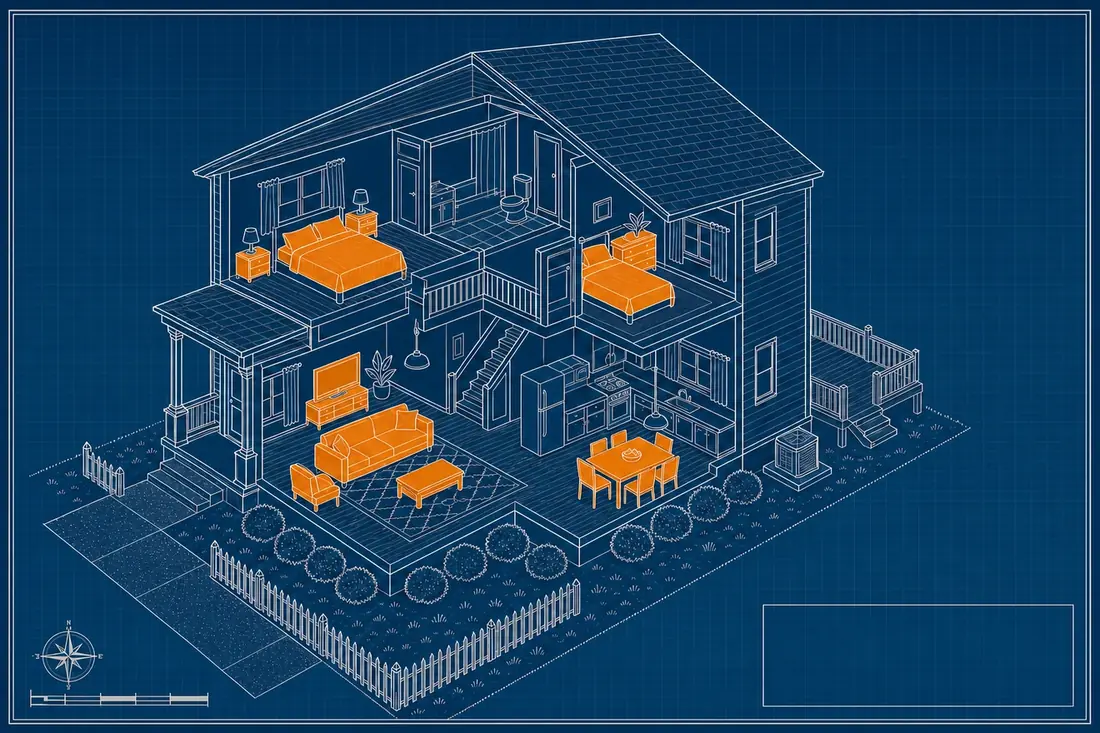
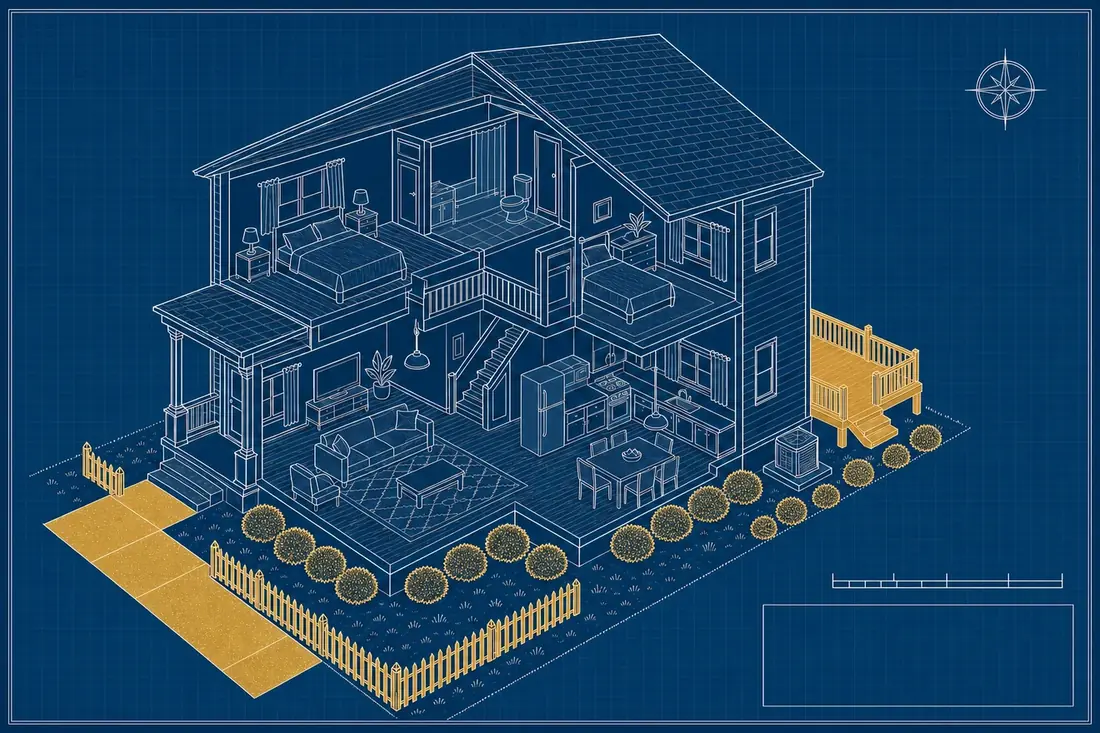
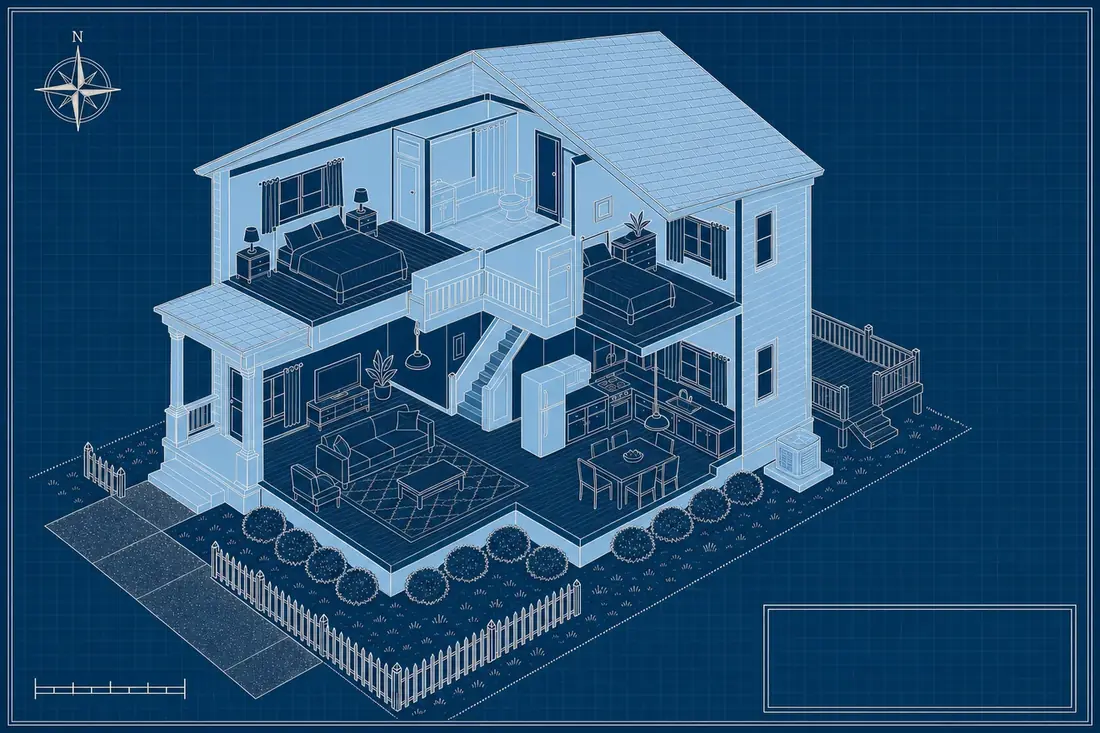
Watch a log cabin rental get built and classified A hypothetical $600,000 three-bedroom log cabin goes up floor by floor, from the gravel drive and foundation to the game loft and the hot tub on the deck. Every component lands on its depreciation schedule as it is installed, and the year-one depreciation adds up on screen. Watch the 90-second walkthrough »The Poconos as a rental marketThe Poconos region covers Monroe, Pike, Wayne, and Carbon counties in northeastern Pennsylvania, a mountain area that draws rental traffic as a drive-to destination from both New York City and Philadelphia, close enough for a weekend without a flight. That drive-to position is a big part of why the region built up such a dense stock of cabins, chalets, and mountain houses in the first place, and why so much of that stock operates as short-term rental property rather than long-term housing. The area runs on four-season demand: lakes, hiking, and summer traffic through the warmer months, ski resorts and winter sports traffic once the snow comes in. That combination, drive-to accessibility plus a genuine second season, is what makes the Poconos a real cost segregation candidate: a lot of property, furnished for guests, running on a rental pattern the short-term rental tax rules were built around. It's a different shape of market than a single-season beach town or a Western ski resort reachable mainly by flight, the same way a Smoky Mountains cabin serves a similar drive-to, mountain-cabin role for a different metro base further south. The underlying depreciation mechanics don't change from one mountain market to the next; what changes is which metro area feeds the traffic and which season carries the property. Whether the structure itself sits on 27.5 or 39 years turns on the 80% dwelling-unit test, and a short-term rental averaging stays of 7 days or less generally lands on 39 (see the 27.5 or 39 years guide). 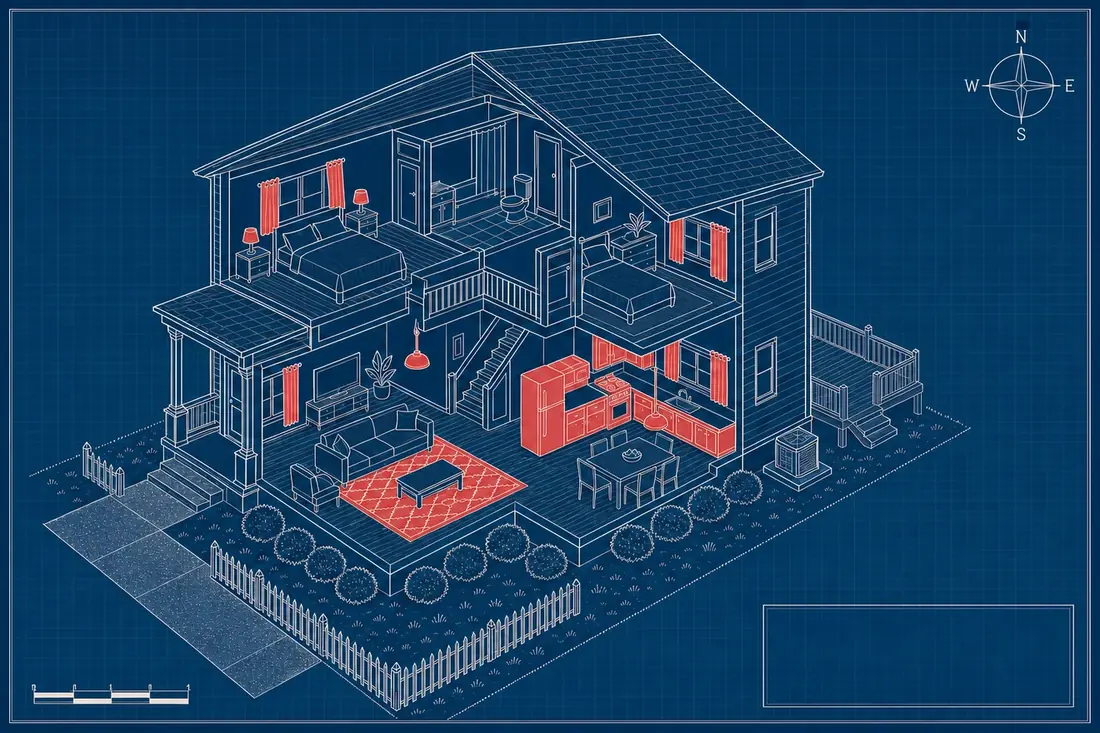
5-Year: carpet and flooring, cabinets, appliances, light fixtures, curtains 7-Year: furniture 15-Year: driveway, fencing, landscaping, deck 27.5/39-Year Shell: roof, load-bearing walls, foundation, central HVAC Get your free Preliminary Benefit Estimate See what your Poconos rental's amenities could add up to with the free 60-second estimate at /qualify. Request Your Free Estimate »What a Poconos cabin actually has to reclassifyA typical Poconos rental, whether a rustic cabin or a newer mountain chalet, tends to carry the amenity list that defines this kind of property:
The cabin's foundation, framing, roof structure, and any central HVAC or wood-stove-supplemented heating system stay on the 27.5/39-year schedule regardless of how many amenities sit around them. A common misconception treats a roof or central heating system as fast-depreciating equipment; on a Poconos cabin it's structural, the same as anywhere else. Weekly summer, nightly winter, and the 7-day mathA property whose average guest stay across the year is 7 days or less falls under the short-term rental exception in Reg. 1.469-1T(e)(3)(ii), taking it out of the standard passive rental-activity framework under section 469. A four-season Poconos property tends to run two very different booking patterns in the same calendar year: full-week bookings through the summer lake season, and shorter, often weekend-length stays through ski season. The test looks at the average across the whole year, not one season in isolation, so a heavy run of short winter weekends can pull the yearly average down even in a property that also books full summer weeks, and a summer dominated by long weekly stays can pull it back up. A property leaning harder into winter weekend traffic than a long summer-week calendar sits differently on that average than one running the opposite mix. Where a specific property's full-year mix actually lands is a computation based on that property's real booking pattern, not something to assume from the regional pattern alone. From there, the owner still needs material participation, commonly 500-plus hours, substantially all the participation, or 100-plus hours and more than any other individual, including a cleaner or co-host, for the resulting losses to be non-passive. Many Poconos owners handle their own turnover cleaning and guest coordination between the drive-to trips that make the market work, which is directly relevant to that test, the same dynamic covered on the vacation rental markets hub for self-managed properties generally. A close-enough drive for a weekend turnover run is itself part of why this region lends itself to hands-on ownership more than a market that requires a flight for every visit. Estimate the first-year deduction on a property hereA few questions and the building value give a preliminary first-year deduction range, using the same rule as our free calculator. The breakdown can be emailed to you, or you can book a 15-minute call. Step 1 of 3 What kind of property?
Who runs it day to day?
What is the average guest stay?
When did you buy it?
How many rentals do you own?
Across all of them, does your rental portfolio show taxable income overall?
Any of them likely to sell in the next few years?
Prefer to talk it through? Book straight from here. No form needed.
A Pennsylvania firm on a Pennsylvania marketBasis Property Group is based in Pennsylvania. That's not a marketing line for this specific page, it's the honest reason the Poconos is a market this firm has real familiarity with: the county records, the building stock, the seasonal rental pattern all sit close to home rather than being researched from a distance the way a firm based elsewhere might approach the same region. That familiarity doesn't change the engineering method, which follows the same IRS-aligned process everywhere, but it does mean fewer surprises when a study runs into something specific to how Monroe or Pike County properties are typically built and permitted. The process for a Poconos propertyThe study runs on the same hands-off process used across any residential or short-term rental: interior and listing photos, the same photos already posted to Airbnb or VRBO, feed the component classification directly, no site visit, no owner homework list. Every study is custom-priced against the specific cabin's size, age, and amenity mix, and turnaround runs 4 to 6 weeks during tax season, typically 2 to 3 weeks in January and February. On a short-term rental, Basis guarantees at least 30 times the fee in first-year deductions, or the study is free. A free Preliminary Benefit Estimate at /qualify models the likely number for a specific cabin's amenity mix before anyone commits to a fee. Frequently asked questionsWhat counties does the Poconos region cover for a rental property? The Poconos generally spans Monroe, Pike, Wayne, and Carbon counties in northeastern Pennsylvania, a mountain region positioned as a drive-to destination from both New York City and Philadelphia. Do hot tubs and game rooms in a Poconos cabin get faster depreciation? Generally yes. Hot tubs, spa equipment, and game room furnishings like pool tables typically fall into 5- or 7-year property, adding to the accelerated basis a study identifies beyond the standard cabinetry, flooring, and appliance list. My cabin rents by the week in summer and by the night in winter. Does that matter for taxes? It can. The short-term rental exception depends on the average guest stay across the full tax year, not one season alone, so a mix of weekly summer stays and nightly winter stays both factor into that yearly average. The actual result depends on the specific property's booking pattern. Do I need to be in Pennsylvania for my study to make sense? No, the process works the same wherever the owner lives, since it runs on photos rather than a site visit. Basis being based in Pennsylvania is a familiarity advantage with the region's building stock and county records, not a requirement for the owner's location. Is a Poconos cabin study any different from a study anywhere else? The engineering mechanics are identical everywhere. What differs is the amenity mix common to this market, hot tubs, game rooms, furnished mountain-house interiors, and the four-season booking pattern that shapes the average-stay math for the short-term rental exception. Keep readingGet your free Preliminary Benefit Estimate Send the address or the listing link. We model the number first; you decide with it in hand. Request Your Free Estimate »Educational information, not tax advice. This page describes how federal
depreciation rules and tests work in general. Whether any rule fits your facts is a determination for
you and your CPA. Our study gives your CPA the engineering and the numbers to make that call.
|