|
Cost Segregation for Commercial & Short-Term Rental Owners
|
Request a free estimate [email protected] |
Vacation Markets
Free Listing SEO Audit Paste your Airbnb or VRBO listing. Get a scored audit in 90 seconds. Audit My Listing »FREE Estimate Is there a first-year deduction sitting in your building? No cost, no obligation. Request Yours »Minimum ROIOur study identifies at least 20x its fee in first-year deductions on commercial property, or at least 30x on a short-term rental, or it is free. |
Cost Segregation for a Jersey Shore Rental: How the Numbers WorkQuick answer Cost segregation on a Jersey Shore rental works exactly like it does anywhere: an engineering study reclassifies parts of the shore house, the deck, the outdoor shower, the driveway, off the standard depreciation schedule and into faster ones, front-loading deductions. What makes the Jersey Shore different is the rental pattern. Cape May, Ocean, Atlantic, and Monmouth County rentals run Saturday-to-Saturday, a full week at a time, which lands the short-term rental tax test right on its own dividing line. Own a Jersey Shore rental? See the first-year deduction range a study would look for. 30 seconds, no email to see the range. Start the check ↓Key takeaways
Watch a beach house rental get built and classified A hypothetical $1.4 million four-bedroom oceanfront house goes up on timber pilings, from the shell driveway and the parking level to the living floor, the porches and the terrace. Every component lands on its depreciation schedule as it is installed, and the year-one depreciation adds up on screen. Watch the 90-second walkthrough »Why the Saturday-to-Saturday market matters for the tax mathThe short-term rental exception (Reg. 1.469-1T(e)(3)(ii)) turns on one number: the average period of customer use across the tax year. If that average is 7 days or less, the rental is not a "rental activity" under section 469, which means the owner then needs material participation, not passive-loss workarounds, to treat losses as non-passive. Most rental markets land well under 7 days or well over it. A weekly beach market lands right on the line, because a full week is exactly 7 days. Cape May, Ocean, Atlantic, and Monmouth County rentals still run largely on the traditional Saturday-to-Saturday turnover: check-out Saturday morning, cleaning crew through, check-in Saturday afternoon. When every booking in a season is a full week, the math is not an estimate. It is exact. 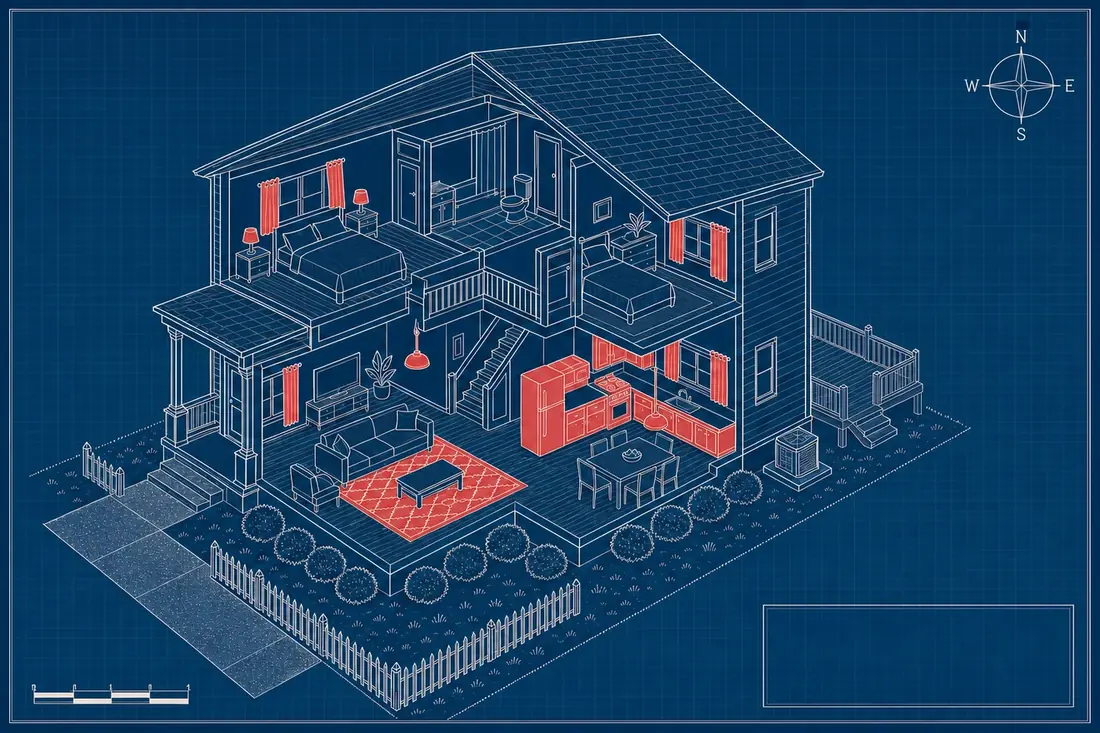
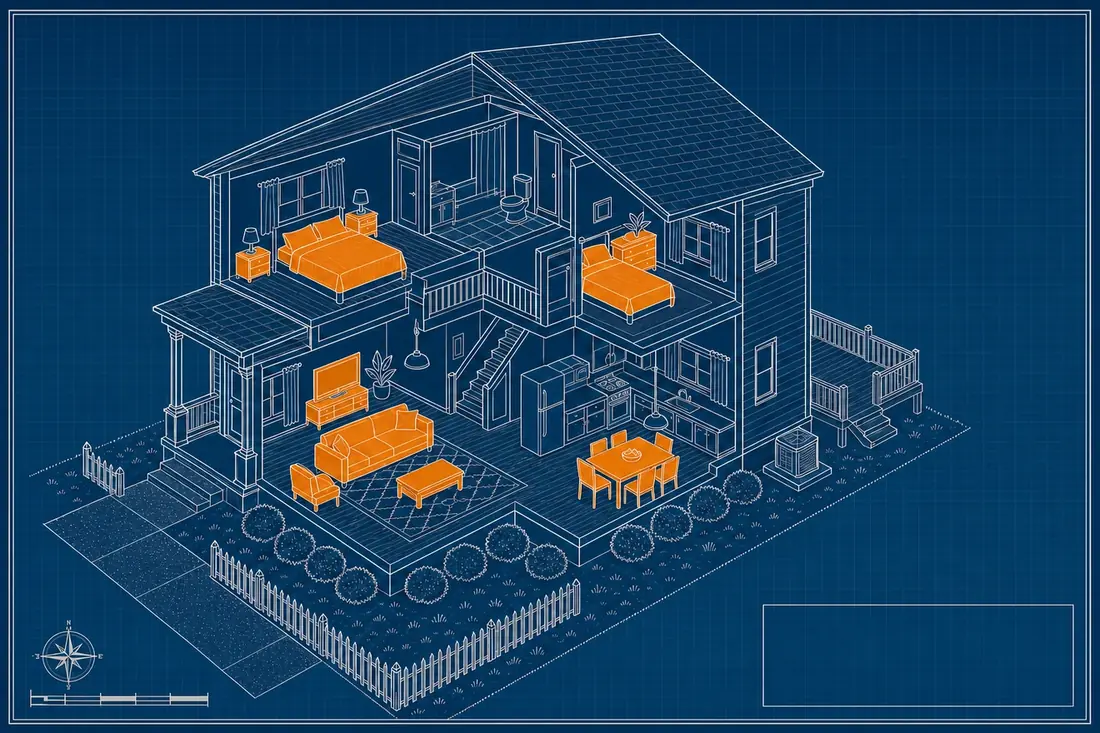
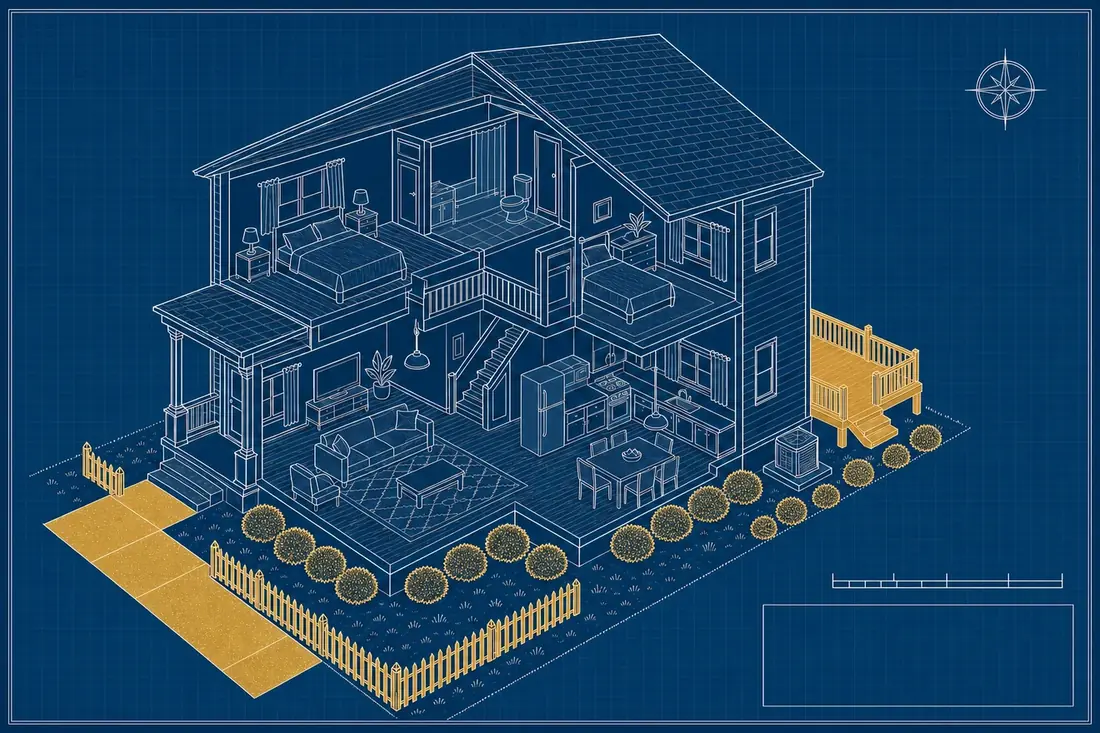
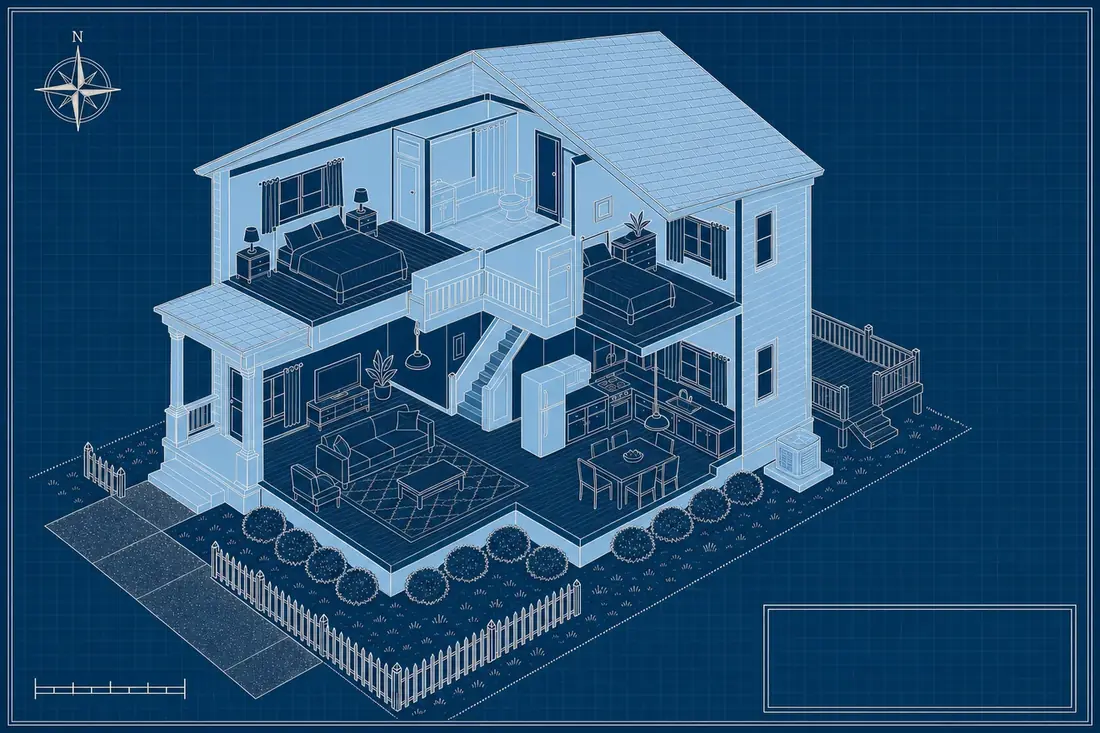
5-Year: carpet and flooring, cabinets, appliances, light fixtures, curtains 7-Year: furniture 15-Year: driveway, fencing, landscaping, deck 27.5/39-Year Shell: roof, load-bearing walls, foundation, central HVAC Get your free Preliminary Benefit Estimate Get the free estimate for a specific shore property at /qualify before the next Saturday turnover, no site visit needed. Request Your Free Estimate »The exact-7 problem: doing the math on a full season of weekly bookingsHere is how the average period of customer use is actually computed: total tenant-days across all rental periods in the year, divided by the number of rental periods. Say a shore house completes 16 weekly bookings across a Memorial Day-to-Labor Day season, each one Saturday to Saturday, 7 nights. That is 16 rental periods and 112 tenant-days (16 x 7). 112 divided by 16 is exactly 7.0. Not "under 7." Exactly 7, which the test's "7 days or less" language still covers. 16weekly bookings, illustrative 112tenant-days, illustrative 7.0average days, exactly at the line These are illustrative figures, meant to show how the arithmetic works, not a claim about occupancy at any property. The point is structural: a market built entirely around 7-night weeks does not sit safely under the threshold. It sits on it. What one off-season rental can do to that averageA pure weekly season keeps the average at exactly 7. Add one rental period that runs longer, and the average moves, sometimes further than an owner expects, because the test averages across every rental period, not just the typical one. Take that same 16-week summer and add a single 30-day off-season rental, a fall or spring long-term tenant. Now there are 17 rental periods and 142 tenant-days (112 + 30). 142 divided by 17 is about 8.35, over the 7-day line. Sixteen weeks at exactly 7 days each still averages to 7. One 30-day rental added to that same year pushes the whole season's average past it. That is the mechanical wrinkle a lot of Jersey Shore owners do not expect. The test looks at the whole tax year's rental periods together, not the peak-season pattern alone. An owner weighing a shoulder-season long-term rental against a string of summer weeks is not just making a cash-flow decision. Whether that combination keeps the average at 7 days or less is a question for the owner's CPA, since it depends on every rental period in the year, not the summer weeks by themselves. The same math cuts the other way, too. Add a couple of short off-season weekend rentals instead of one long one, say two 3-night stays in the fall, and the average moves down, not up: 18 periods, 118 tenant-days, an average around 6.6. A market built entirely on 7-night weeks does not have a lot of room on either side of the line, which is exactly why the shape of a specific year's bookings, not just the summer pattern, is worth running through with a CPA before assuming either way. Estimate the first-year deduction on a property hereA few questions and the building value give a preliminary first-year deduction range, using the same rule as our free calculator. The breakdown can be emailed to you, or you can book a 15-minute call. Step 1 of 3 What kind of property?
Who runs it day to day?
What is the average guest stay?
When did you buy it?
How many rentals do you own?
Across all of them, does your rental portfolio show taxable income overall?
Any of them likely to sell in the next few years?
Prefer to talk it through? Book straight from here. No form needed.
What a shore house actually contains, component by componentSeparately from the section 469 test above, cost segregation is a depreciation question: which parts of the shore house get their own faster schedule instead of riding the standard 27.5-year residential rental schedule (or 39-year if the property is held as a small commercial building). A typical shore house splits out roughly like this:
A raised shore house, common along the barrier islands from Long Beach Island down through Cape May County, adds site work that an inland rental does not have in the same volume: bulkheads, elevated decking, exterior stairs, under-house parking areas. That site-level work is exactly the category the 15-year bucket is built for. Personal use and the family-week realitySection 280A caps deductions once an owner's personal use exceeds the greater of 14 days or 10% of the days the property is actually rented. A shore house is a common place to bump into this, because the whole reason a lot of families bought at the shore was to use it themselves, not only to rent it. A family that rents the house 16 weeks and also spends 3 weeks there in July and August is well within a description of the test; whether that specific mix crosses the personal-use line is a question for the owner's CPA, who can run the actual day count against the actual rental days for that year. Getting the number for a specific shore propertyNone of the math above requires an owner to guess. A free Preliminary Benefit Estimate models the likely first-year deduction for a specific shore house before anyone pays anything, using the listing photos, no site visit required. The guarantee behind that estimate is fixed: our study identifies at least 30 times its fee in first-year deductions on a short-term rental, or the study is free. For an owner who has held the property for years already, a look-back study run through Form 3115 catches up the missed depreciation in the current year instead of amending old returns. A property specifically in Cape May County has its own page with county-level detail; see the Cape May page for that. For the broader vacation-rental picture across every market Basis studies, start at the vacation rental hub. To see the actual number for one property, the 60-second qualifier at /qualify is the place to start. Frequently asked questionsDoes a shore house need a site visit for a cost segregation study? No. Short-term and residential rental studies work from listing photos, the same photos used on Airbnb or VRBO, which feed the component classification. There is no site visit and no homework list for the owner, start to finish. What counts as a rental period for the 7-day average test? Each separate booking or lease term during the tax year counts as one rental period. The test divides total tenant-days across every period in the year by the number of periods, so a single unusually long booking can shift the average more than it might seem. Can a shore house owner still use section 179 on the roof or HVAC? No. Section 179's expensing option for a replaced roof, HVAC, or fire and security system applies only to nonresidential property. A shore house rented as a residence does not qualify for that particular provision, though the roof and HVAC still depreciate on the standard schedule. Does owning the house through an LLC change any of this? The entity holding title does not change the depreciation mechanics or the section 469 material participation tests described here. Those questions turn on how the property is used and rented, and on the owner's involvement, which an owner's CPA evaluates against the entity structure. How long does a shore rental study take? Turnaround runs 4 to 6 weeks during the busy tax season, typically 2 to 3 weeks in January and February. A short-term rental study, working from listing photos, does not require scheduling a site visit around the rental calendar. Keep readingGet your free Preliminary Benefit Estimate Send the address or the listing link. We model the number first; you decide with it in hand. Request Your Free Estimate »Educational information, not tax advice. This page describes how federal
depreciation rules and tests work in general. Whether any rule fits your facts is a determination for
you and your CPA. Our study gives your CPA the engineering and the numbers to make that call.
Related guides: How Does Cost Segregation Work in Vacation... · Does Cost Segregation Work on a Poconos... · Cost Segregation for a Pigeon Forge Cabin... · Cost Segregation for a Gatlinburg Rental... · Cost Segregation for a Smoky Mountain...
More Mid-Atlantic Shore markets: Cost Segregation for Cape May County Shore... · Cost Segregation for a Deep Creek Lake... · Cost Segregation for a Long Beach Island... · Cost Segregation for an Ocean City, New... · Cost Segregation for an Ocean City... · Cost Segregation Services in Delaware... · All vacation markets
|