|
Cost Segregation for Commercial & Short-Term Rental Owners
|
Request a free estimate [email protected] |
Vacation Markets
Free Listing SEO Audit Paste your Airbnb or VRBO listing. Get a scored audit in 90 seconds. Audit My Listing »FREE Estimate Is there a first-year deduction sitting in your building? No cost, no obligation. Request Yours »Minimum ROIOur study identifies at least 20x its fee in first-year deductions on commercial property, or at least 30x on a short-term rental, or it is free. |
Cost Segregation for Hilton Head Island RentalsQuick answer Hilton Head short-term rentals run through Beaufort County, South Carolina, and split between villas inside a resort complex and single-family homes inside one of the island's gated plantations. Both qualify for a cost segregation study that reclassifies interior finishes and site improvements out of 27.5-year depreciation into 5-, 7-, and 15-year schedules. A villa's study is scoped to what the owner holds title to; a plantation home's study covers the full structure and the land improvements around it, private pool decking, docks, and driveways included. Own a Hilton Head rental? See the first-year deduction range a study would look for. 30 seconds, no email to see the range. Start the check ↓Key takeaways
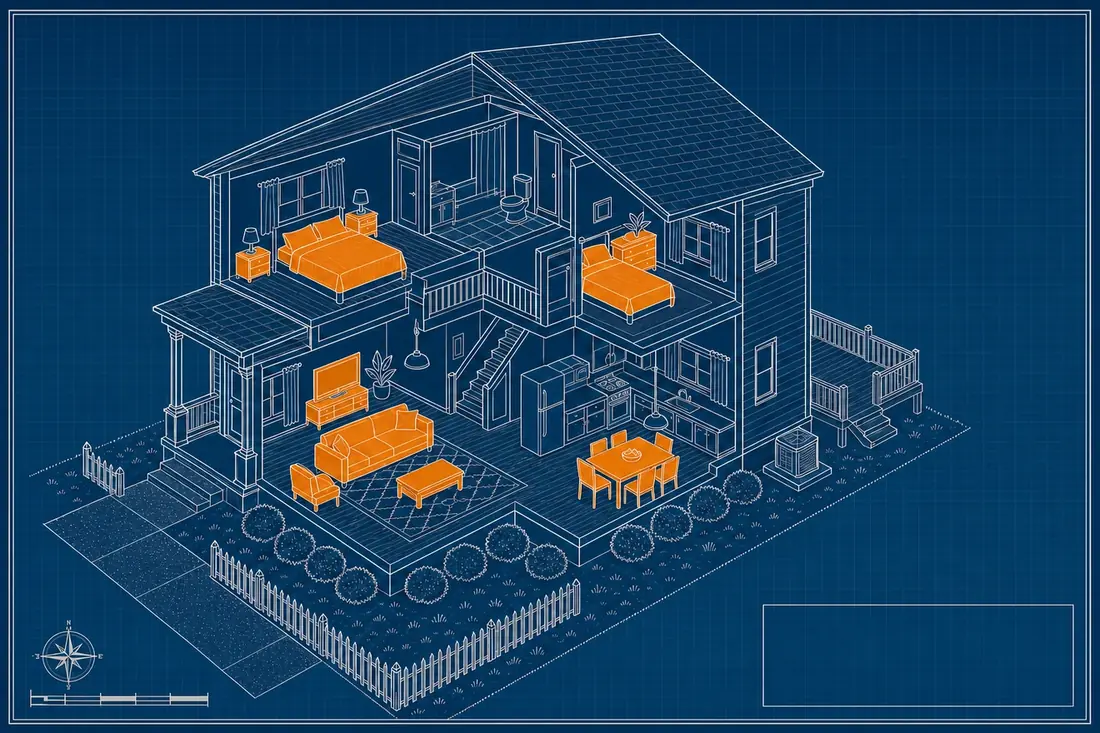
Watch a log cabin rental get built and classified A hypothetical $600,000 three-bedroom log cabin goes up floor by floor, from the gravel drive and foundation to the game loft and the hot tub on the deck. Every component lands on its depreciation schedule as it is installed, and the year-one depreciation adds up on screen. Watch the 90-second walkthrough »Villas and plantation homes are two different studiesHilton Head Island sits in Beaufort County, South Carolina, a short drive from Savannah and Bluffton and a longer one from Atlanta. Inside that market are two distinct property types that rent short-term. A villa is a unit inside a resort complex, sold as an interest in a building the owner shares with other unit owners. A plantation home is a detached single-family house inside one of the island's private gated communities, Sea Pines, Palmetto Dunes, and similar, often with golf course frontage or a lagoon view as part of the draw. Both qualify for cost segregation. The mechanic is the same as anywhere else: reclassify parts of the building out of the standard depreciation schedule and into faster ones. What differs between a villa and a plantation home is scope, and to a lesser degree, how personal use and rental use get tracked given the seasonal pattern. 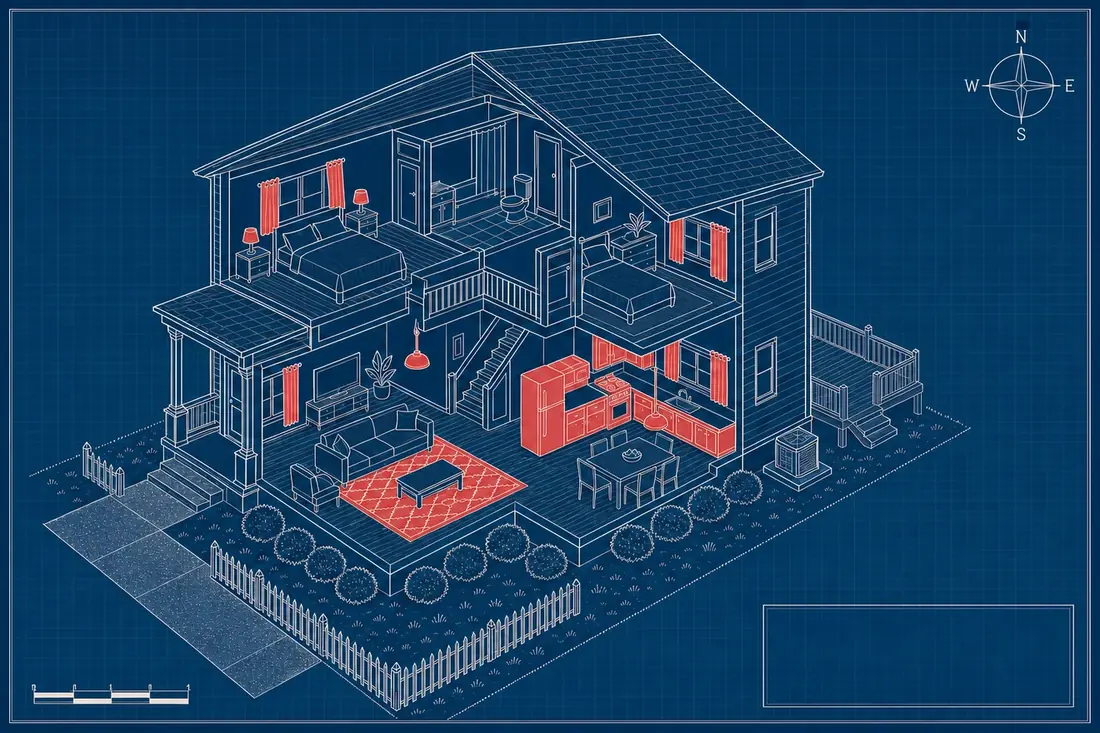
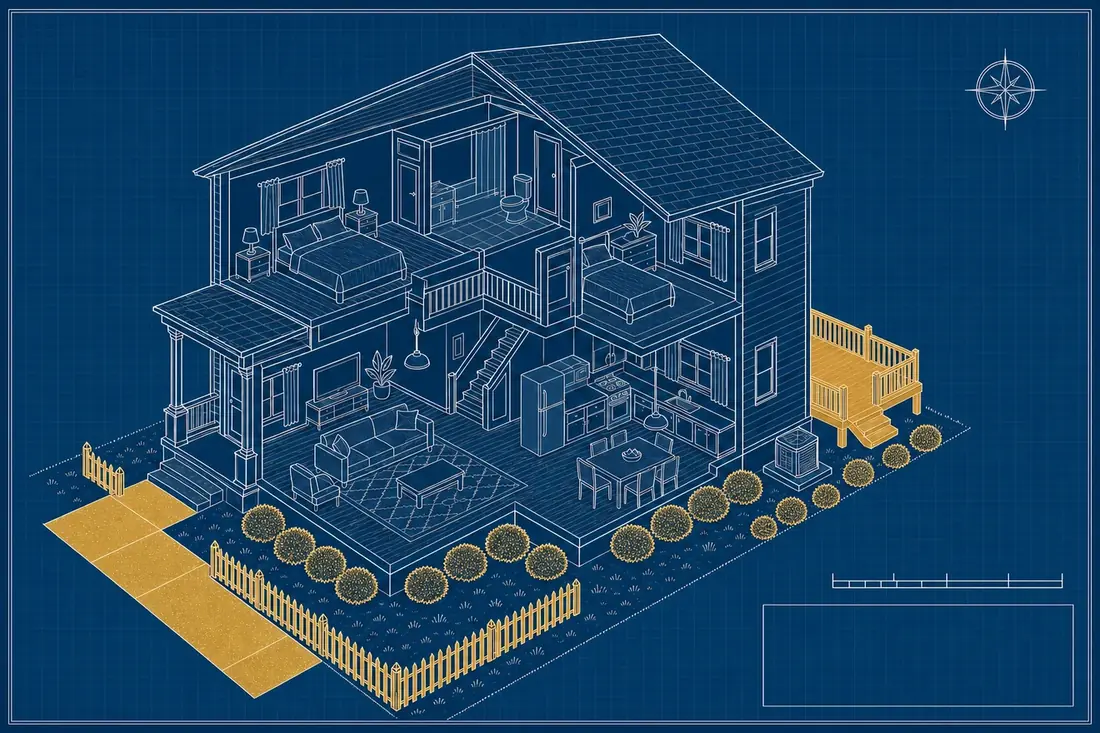
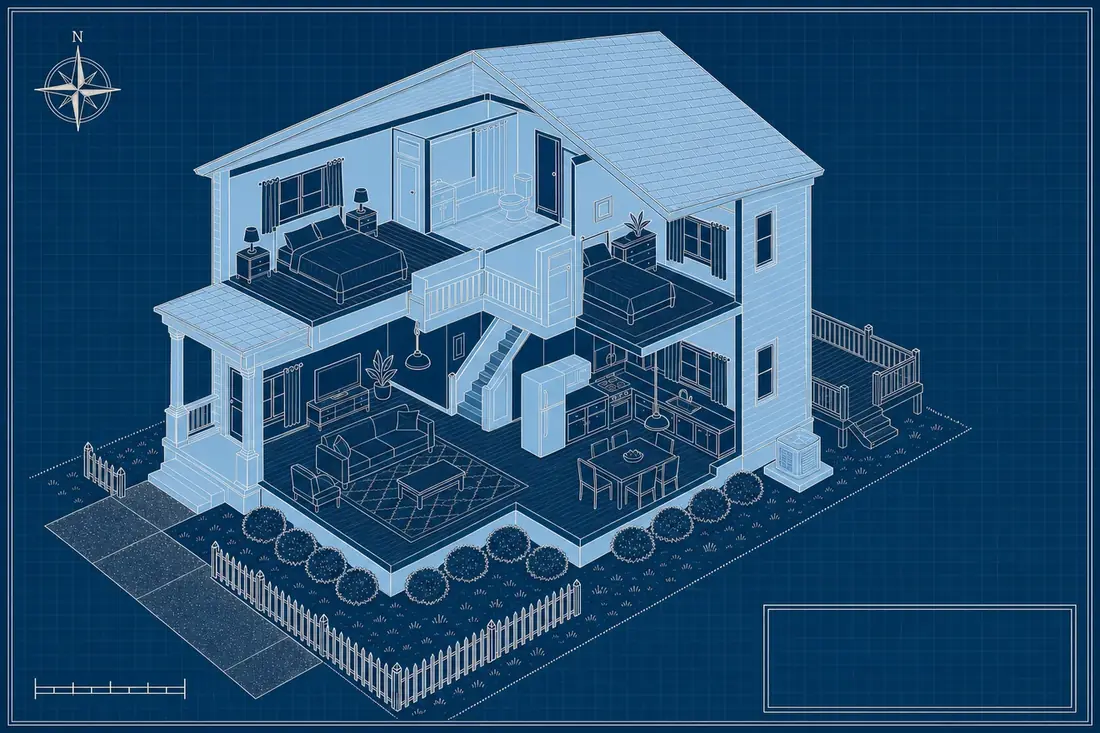
5-Year: carpet and flooring, cabinets, appliances, light fixtures, curtains 7-Year: furniture 15-Year: driveway, fencing, landscaping, deck 27.5/39-Year Shell: roof, load-bearing walls, foundation, central HVAC Get your free Preliminary Benefit Estimate Get a free estimate for your Hilton Head villa or plantation home at /qualify before you commit to a study. Request Your Free Estimate »What a villa study coversA villa owner typically holds an interest in the unit itself, not the building's structure, common hallways, elevators, or the resort's shared pool and clubhouse. A study for a villa is scoped to what the deed actually conveys: the interior. Cabinetry, flooring, window treatments, and appliances inside the unit reclassify into 5-year property. Any furniture the owner supplies for the rental program can fall into 7-year property. The building's structural shell, the roof, and central HVAC serving the unit stay on the standard schedule, since roof structure and central HVAC are structural components regardless of how new or replaced they are, a distinction worth stating plainly since it gets misread often. What a plantation home study covers, and why the land improvements matter more here
These are 15-year land improvements, and a detached plantation home typically carries more of them than a villa does, since the owner controls the whole lot rather than a shared building footprint. Golf course access, community tennis, and the plantation's amenity center are not on the owner's property and never enter the study; they belong to the plantation's property owners association. The weekly summer calendar and the 7-day averageHilton Head's rental calendar peaks in the summer with Saturday-to-Saturday weekly bookings, the same pattern that shows up across most Southeastern beach markets. A full season of 7-night stays averages to exactly the 7-day line the STR exception draws under Reg. 1.469-1T(e)(3)(ii). Shoulder-season nightly bookings in spring and fall, common on Hilton Head given its milder winters compared to markets further north, can pull that average either direction depending on their length, so an owner mixing weekly summer stays with shorter spring golf-trip bookings is watching a different number than an owner who only rents by the week. Whether a specific year's booking mix keeps a property's average at or under 7 days is a calculation for that owner and their CPA, using the actual guest-night records for the year. Material participation is the second half of the test. An owner using a full-service local property manager, common on Hilton Head given how many owners live off-island, is comparing their own hours against everyone else touching the property, including that manager and any cleaning crew, under the 100-hour-and-more-than-anyone-else test. Estimate the first-year deduction on a property hereA few questions and the building value give a preliminary first-year deduction range, using the same rule as our free calculator. The breakdown can be emailed to you, or you can book a 15-minute call. Step 1 of 3 What kind of property?
Who runs it day to day?
What is the average guest stay?
When did you buy it?
How many rentals do you own?
Across all of them, does your rental portfolio show taxable income overall?
Any of them likely to sell in the next few years?
Prefer to talk it through? Book straight from here. No form needed.
What the numbers look likeOn a benchmark run for a medical clinic, a $1,404,500 building basis produced $241,839 in first-year deductions for a $10,000 fee, a 24.2-to-1 ratio. That is a commercial example, offered here as a scale reference rather than a claim about residential property. On the residential side, a delivered study on a single-family rental in Montgomery County, Pennsylvania, 4,946 square feet with a $1,040,000 basis, produced an estimated $174,905 in first-year depreciation for a $1,295 fee, close to 135 to 1. Plantation homes on Hilton Head, larger and with more land improvements than a typical inland rental, tend to sit closer to that residential case in scale, sometimes with a larger basis given waterfront and golf-frontage lots. First-year deductions on a well-scoped study typically run 16 to 21% of building basis under current bonus rules, and the share of basis a study moves into faster schedules typically runs 15 to 35%, with land-improvement-heavy properties, plantation homes with pools and docks among them, tending toward the higher end. Working with a CPA who is not on the islandMany Hilton Head owners live elsewhere and use a CPA who is not local to Beaufort County either, an accountant in Atlanta, Charlotte, or wherever the owner's primary residence sits. That distance does not complicate a cost segregation study. Since the study works from listing photos rather than a site visit, there is nothing that requires either the owner or the CPA to be physically on the island. For a look-back study on a property owned for years, the section 481(a) computation is built into the study itself, and the team that produces the report takes technical questions directly from the owner's own CPA on methodology and classification. The CPA still prepares and files the return, including Form 3115 where a look-back applies; the study supplies the numbers the return needs. Next step for a Hilton Head propertyEvery Hilton Head study, villa or plantation home, is custom-priced to the specific property, there is no flat rate card. A free Preliminary Benefit Estimate at /qualify models the likely first-year number before any commitment, using listing photos rather than a site visit. For an island property owned for years already, the study runs through Form 3115 with a section 481(a) catch-up, detailed further in the look-back guide, and if a plantation home's roof or dock gets replaced, partial asset disposition is the mechanic for writing off what is left of the old one, in the year of the replacement only. Compare the weekly-turnover pattern against Myrtle Beach's condo-hotel and beach house market or the more compressed Cape May rental season further north. Frequently asked questionsDoes a Hilton Head villa qualify for cost segregation the same way a house does? Yes, but the scope is narrower. A villa study covers the interior components the owner holds title to, since the building's structure and shared amenities usually belong to the resort or the association, not the individual owner. Do golf course views or plantation amenities affect the study? No. The study only covers what the owner's property includes, the structure, interior finishes, and any land improvements on the owner's own lot. Community amenities like a golf course or clubhouse belong to the plantation association. Is a private dock or pool part of the depreciation study? Yes, a private dock, pool, and its surrounding decking are land improvements, generally on a 15-year schedule, separate from the 39- or 27.5-year structural building. These tend to make up a larger share of a plantation home's reclassified basis than they would on an inland rental. How does using a local property manager affect the passive loss rules? The 100-hour material participation test compares the owner's hours to everyone else who works on the property, including a property manager and cleaning staff. That comparison sits alongside, not instead of, the depreciation study, which applies either way. How long does a Hilton Head cost segregation study take? Typically 4 to 6 weeks during the main tax season, often 2 to 3 weeks in January and February, since short-term rental studies work from listing photos and do not require scheduling a site visit. Keep readingGet your free Preliminary Benefit Estimate Send the address or the listing link. We model the number first; you decide with it in hand. Request Your Free Estimate »Educational information, not tax advice. This page describes how federal
depreciation rules and tests work in general. Whether any rule fits your facts is a determination for
you and your CPA. Our study gives your CPA the engineering and the numbers to make that call.
Related guides: How Does Cost Segregation Work in Vacation... · Does Cost Segregation Work on a Poconos... · Cost Segregation for a Jersey Shore Rental... · Cost Segregation for a Pigeon Forge Cabin... · Cost Segregation for a Gatlinburg Rental...
More Southern Appalachians markets: Cost Segregation for a Smith Mountain Lake... · Cost Segregation for a New River Gorge... · Cost Segregation for a Sevierville or Wears... · Cost Segregation for Ellijay, Georgia Cabin... · Cost Segregation for Helen, Georgia Cabins... · Cost Segregation for Hiawassee, Georgia and... · All vacation markets
|