|
Cost Segregation for Commercial & Short-Term Rental Owners
|
Request a free estimate [email protected] |
Vacation Markets
Free Listing SEO Audit Paste your Airbnb or VRBO listing. Get a scored audit in 90 seconds. Audit My Listing »FREE Estimate Is there a first-year deduction sitting in your building? No cost, no obligation. Request Yours »Minimum ROIOur study identifies at least 20x its fee in first-year deductions on commercial property, or at least 30x on a short-term rental, or it is free. |
Cost Segregation for a Smoky Mountain Cabin, Component by ComponentQuick answer Cost segregation on a Smoky Mountain cabin, whether it's in Sevier, Blount, or Cocke County on the Tennessee side, or Swain or Haywood County on the North Carolina side, reclassifies the cabin's components into faster depreciation schedules. The log or timber shell itself stays on the standard 27.5-year (or 39-year) schedule. Nearly everything built into it or around it, the hot tub, the cabinetry, the driveway, the deck, does not, and that's where an engineering study earns its fee. Own a Smoky Mountain rental? See the first-year deduction range a study would look for. 30 seconds, no email to see the range. Start the check ↓Key takeaways
Watch a log cabin rental get built and classified A hypothetical $600,000 three-bedroom log cabin goes up floor by floor, from the gravel drive and foundation to the game loft and the hot tub on the deck. Every component lands on its depreciation schedule as it is installed, and the year-one depreciation adds up on screen. Watch the 90-second walkthrough »One mountain range, five counties, one set of tax rulesGreat Smoky Mountains National Park spans five counties: Sevier, Blount, and Cocke on the Tennessee side, home to Pigeon Forge, Gatlinburg, and the quieter Cosby and Townsend areas, and Swain and Haywood on the North Carolina side, home to Bryson City and the Maggie Valley area. The cabins built to rent short-term across all five counties share the same basic construction style, a log or heavy-timber shell, and the same federal depreciation rules, no matter which side of the state line they sit on. For town-specific detail, see the Pigeon Forge page and the Gatlinburg page. This page covers the component inventory that applies across the whole region. 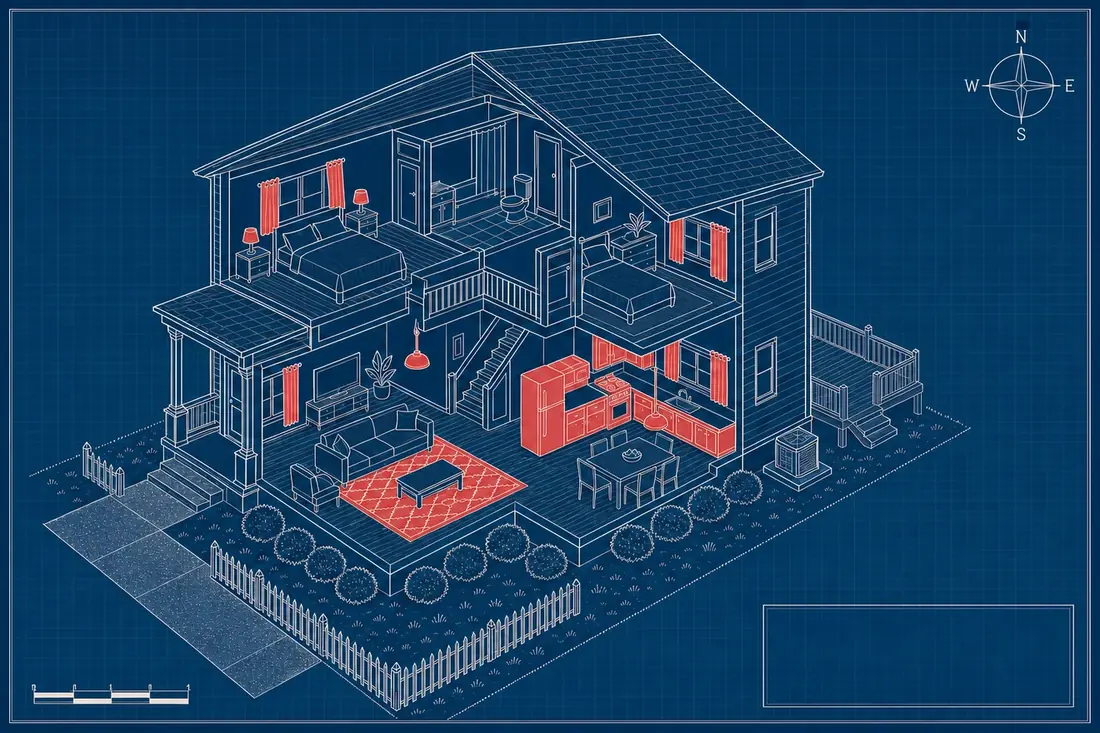
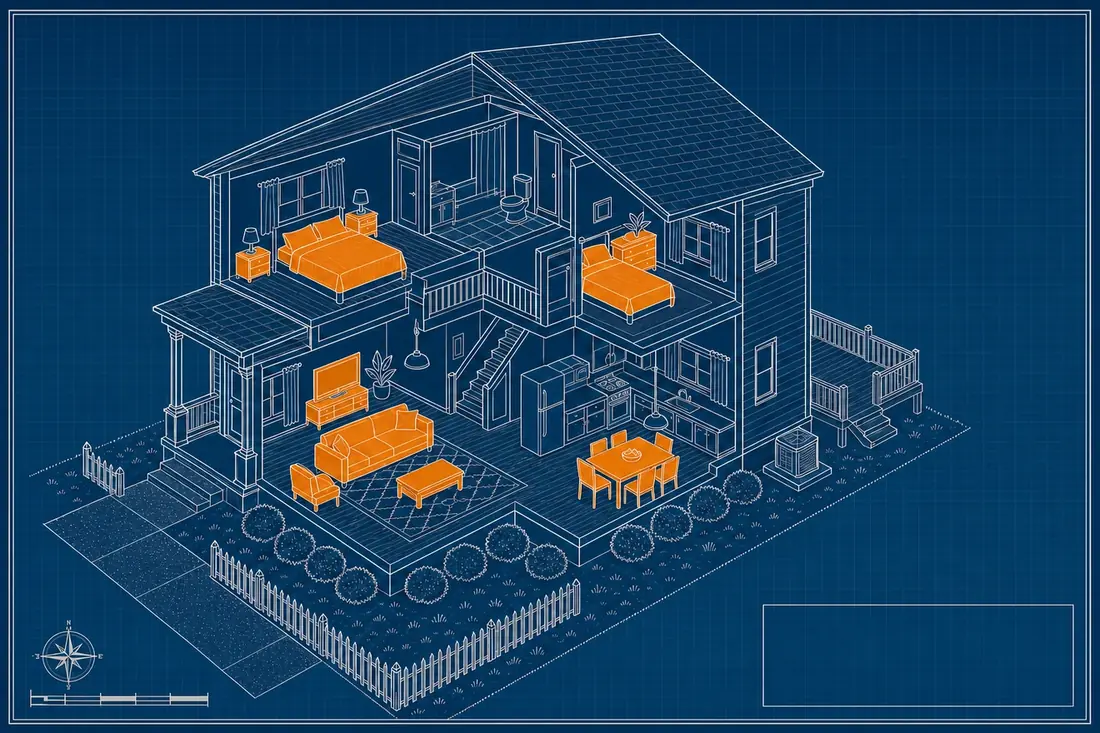
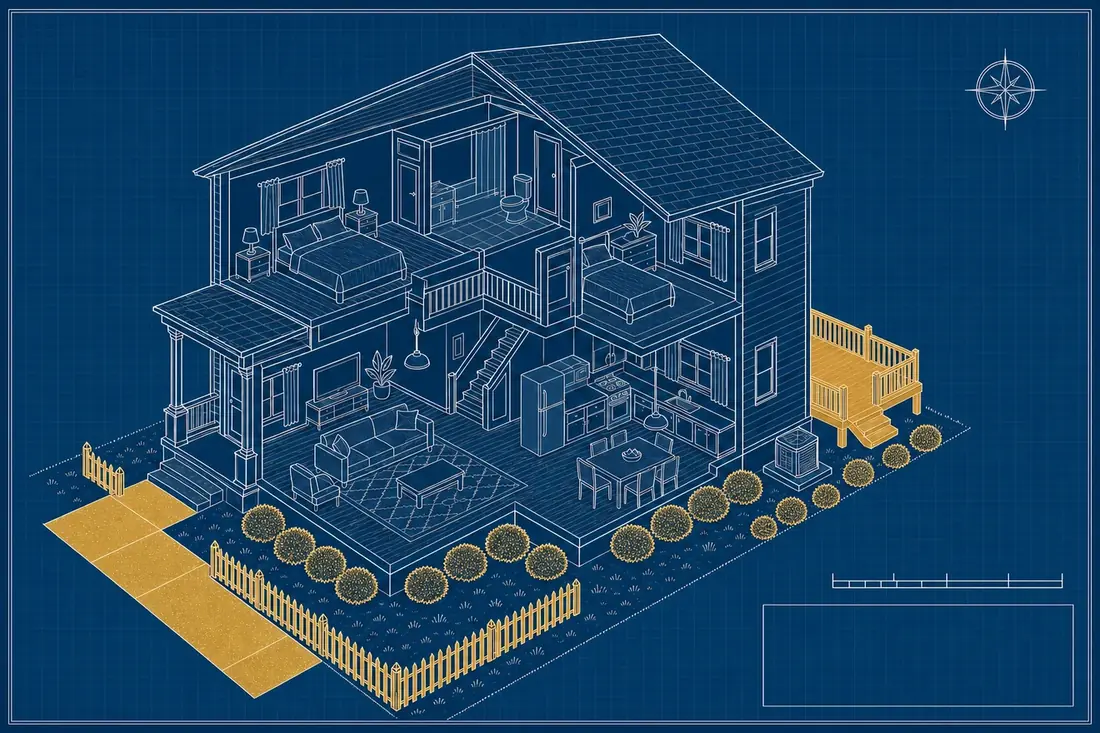
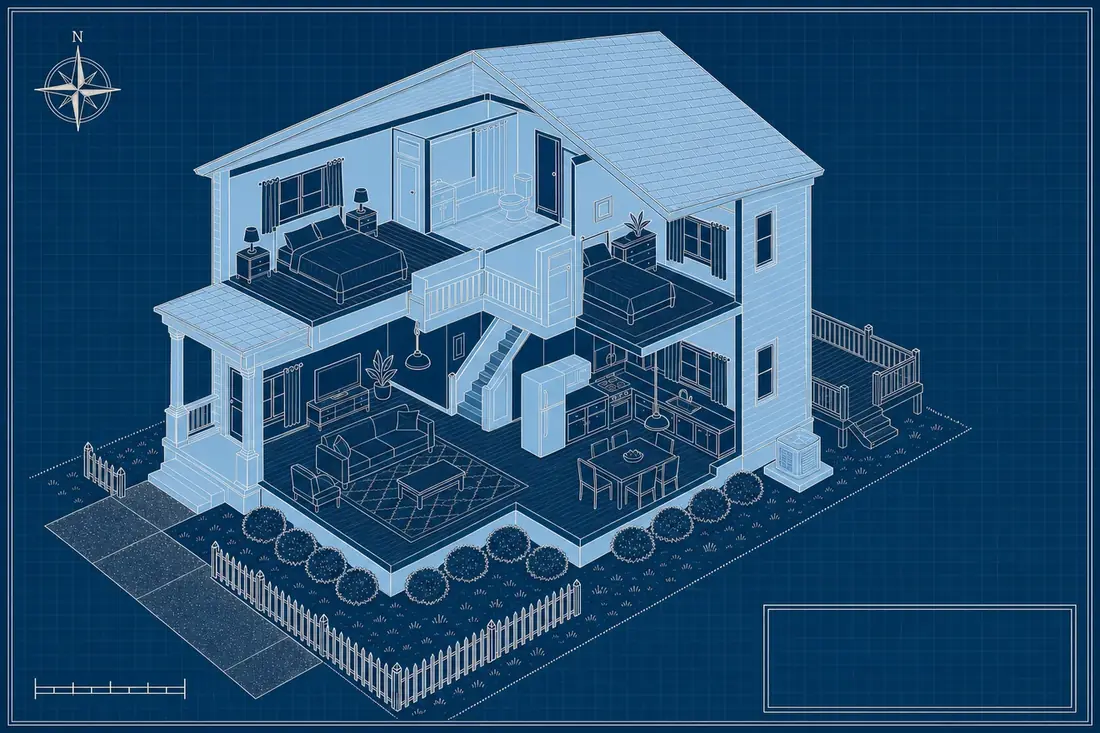
5-Year: carpet and flooring, cabinets, appliances, light fixtures, curtains 7-Year: furniture 15-Year: driveway, fencing, landscaping, deck 27.5/39-Year Shell: roof, load-bearing walls, foundation, central HVAC Get your free Preliminary Benefit Estimate Start the free 60-second qualifier at /qualify to see a specific cabin's likely first-year number. Request Your Free Estimate »What always stays on the long scheduleOne rule holds everywhere in the Smokies, and it corrects a mistake a lot of cabin owners make going in: the log or timber shell itself, along with the roof and the central HVAC system, stays on the long depreciation schedule, 27.5 years for a residential rental, 39 years if the cabin is held as commercial property. That is true even though the roof and HVAC are exactly the kind of big-ticket items an owner assumes must qualify for something faster. They do not. What an engineering study reclassifies is everything built into that shell and around it, not the shell itself. The full component tableHere is how a typical Smoky Mountain cabin's components sort into recovery periods once an engineering study inventories them:
A study typically shifts somewhere between 15 and 35% of a cabin's total basis out of the structural bucket and into these faster schedules, with amenity-heavy cabins, home theaters, arcade rooms, multiple hot tubs, running toward the higher end of that range. A simpler cabin, one or two bedrooms, basic finishes, no pool or theater room, sits closer to the low end of that range, since there is simply less 5- and 7-year property to classify relative to the size of the structural shell around it. Why the split matters: bonus depreciationThe reason the split matters is bonus depreciation under section 168(k). For qualified property acquired after January 19, 2025, under the 2025 law, bonus depreciation is 100% and permanent. Property acquired between 2023 and January 19, 2025 sits on the older phase-down schedule instead, at 80%, 60%, or 40% depending on the year. Either way, that bonus treatment only applies to the 5-, 7-, and 15-year property a study identifies. The 27.5- or 39-year shell never qualifies for bonus depreciation, no matter when it was acquired. Bonus depreciation applies to what the study pulls out of the shell. It never applies to the shell. The IRS lost Hospital Corporation of America v. Commissioner in 1997. The IRS's own Audit Techniques Guide describes how a proper engineering study should be conducted, and a study built to that standard follows the government's own playbook. Estimate the first-year deduction on a property hereA few questions and the building value give a preliminary first-year deduction range, using the same rule as our free calculator. The breakdown can be emailed to you, or you can book a 15-minute call. Step 1 of 3 What kind of property?
Who runs it day to day?
What is the average guest stay?
When did you buy it?
How many rentals do you own?
Across all of them, does your rental portfolio show taxable income overall?
Any of them likely to sell in the next few years?
Prefer to talk it through? Book straight from here. No form needed.
New construction, purchases, and renovations all qualifyCost segregation applies whether a cabin was purchased already built, constructed new for the owner, or renovated after years of ownership. A newly built cabin gets its study the year it is placed in service. A cabin owned for years can run a look-back study through Form 3115, picking up the missed depreciation as a section 481(a) catch-up in the current year rather than amending old returns. A cabin that goes through a renovation, a new deck replacing an old one, a kitchen gutted and rebuilt, can trigger a partial asset disposition on the components removed, but only in the year of the removal. The material participation question every cabin owner eventually asksReclassifying components is a depreciation question. Whether the resulting losses are passive or non-passive is a separate one, governed by section 469. A cabin whose average guest stay is 7 days or less is not treated as a rental activity at all under the short-term rental exception, which means the owner needs material participation instead, tested under standards like 500 hours of involvement, substantially all the participation in the activity, or 100 hours combined with more participation than any other individual, including a cleaning crew or co-host. An owner who lives near the park and handles bookings personally is in a different position than an owner who lives across the country and hands everything to a full-service manager, since the manager's hours count against the owner in that last comparison. Which test fits a specific owner is a question for that owner's CPA. Two towns, two different chapters of this storyPigeon Forge and Gatlinburg sit a few miles apart in the same county and run different versions of this same story: Pigeon Forge's nightly-booking cabin economy built around Dollywood and the parkway, Gatlinburg's steep-lot overnight district right on the park boundary. Both pages work through what changes for each town specifically. The mechanics on this page, the component table, the bonus depreciation rules, apply the same way in Bryson City or Maggie Valley on the North Carolina side. A free Preliminary Benefit Estimate models the likely first-year number for a specific cabin, using listing photos, no site visit required, and it comes with a fixed floor: our study identifies at least 30 times its fee in first-year deductions on a short-term rental, or the study is free. The 60-second qualifier is at /qualify. Frequently asked questionsDoes it matter which state a Smoky Mountain cabin sits in for tax purposes? No. Federal depreciation rules, bonus depreciation, and the section 469 short-term rental tests apply identically whether a cabin sits in Sevier County, Tennessee or Swain County, North Carolina. State tax treatment can differ, but the federal mechanics described here do not. Is the log shell of a cabin ever 5-year property? No. The structural shell, whether log, timber, or conventional framing, stays on the 27.5-year residential schedule (or 39-year for commercial) along with the roof and central HVAC. Only the components built into and around that shell move to faster schedules. What's the difference between a 5-year and a 15-year component in a cabin? 5-year property is generally interior: cabinetry, appliances, flooring, the hot tub. 15-year land improvements are generally exterior and tied to the site itself: the driveway, fencing, retaining walls, exterior lighting, and landscaping. Can a cabin renovation trigger any additional deductions beyond the original study? Yes, through partial asset disposition. When a component is removed and replaced, a deck, a roof section, flooring, the remaining basis of the old component can be written off, but only in the tax year of the replacement. Do amenity-heavy cabins (home theaters, arcades, multiple hot tubs) shift more basis than simple cabins? Generally yes. Those amenities add 5- and 7-year personal property on top of the same structural shell, which tends to push the overall percentage of basis moved into faster schedules toward the higher end of the typical range. Keep readingGet your free Preliminary Benefit Estimate Send the address or the listing link. We model the number first; you decide with it in hand. Request Your Free Estimate »Educational information, not tax advice. This page describes how federal
depreciation rules and tests work in general. Whether any rule fits your facts is a determination for
you and your CPA. Our study gives your CPA the engineering and the numbers to make that call.
Related guides: How Does Cost Segregation Work in Vacation... · Does Cost Segregation Work on a Poconos... · Cost Segregation for a Jersey Shore Rental... · Cost Segregation for a Pigeon Forge Cabin... · Cost Segregation for a Gatlinburg Rental...
More Southern Appalachians markets: Does Cost Segregation Work for a Blue... · Cost Segregation in Myrtle Beach... · Cost Segregation for Hilton Head Island... · Cost Segregation for a Smith Mountain Lake... · Cost Segregation for a New River Gorge... · Cost Segregation for a Sevierville or Wears... · All vacation markets
|