|
Cost Segregation for Commercial & Short-Term Rental Owners
|
Request a free estimate [email protected] |
Vacation Markets
Free Listing SEO Audit Paste your Airbnb or VRBO listing. Get a scored audit in 90 seconds. Audit My Listing »FREE Estimate Is there a first-year deduction sitting in your building? No cost, no obligation. Request Yours »Minimum ROIOur study identifies at least 20x its fee in first-year deductions on commercial property, or at least 30x on a short-term rental, or it is free. |
How Does Cost Segregation Work in Vacation Rental Markets?Quick answer Vacation rental markets, mountain cabins, shore houses, ski condos, lake houses, are where cost segregation and the short-term rental tax tests intersect the hardest. These properties rent nightly or weekly, come furnished with hot tubs, game rooms, and outdoor structures that add real accelerated basis, and are often run hands-on by owners handling their own cleaning and turnovers. That mix of nightly stays, rich components, and owner involvement is what the section 469 short-term rental exception and a cost segregation study are built around. Own a vacation rental? See the first-year deduction range a study would look for. 30 seconds, no email to see the range. Start the check ↓Key takeaways
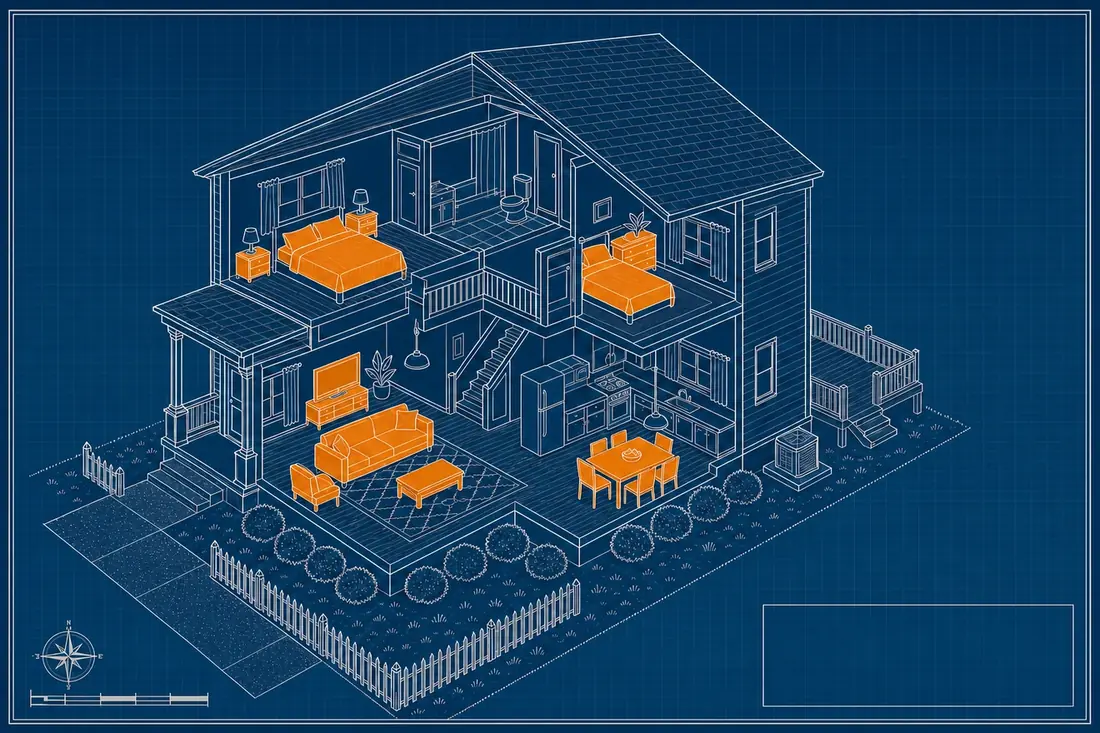
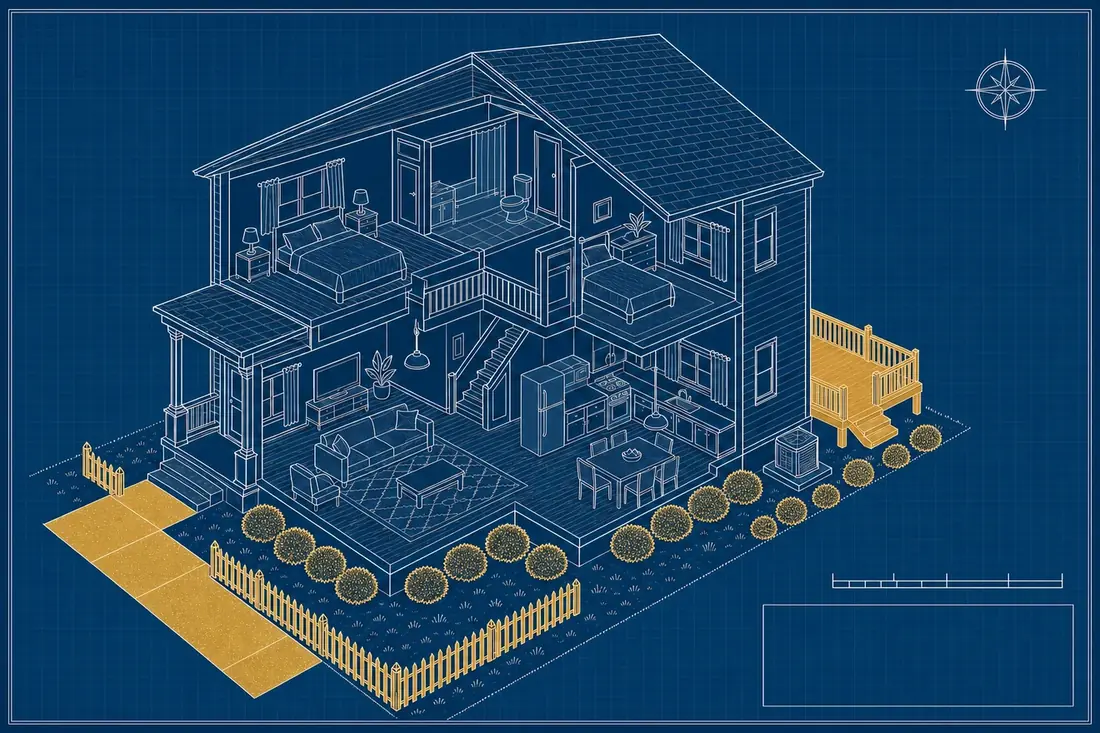
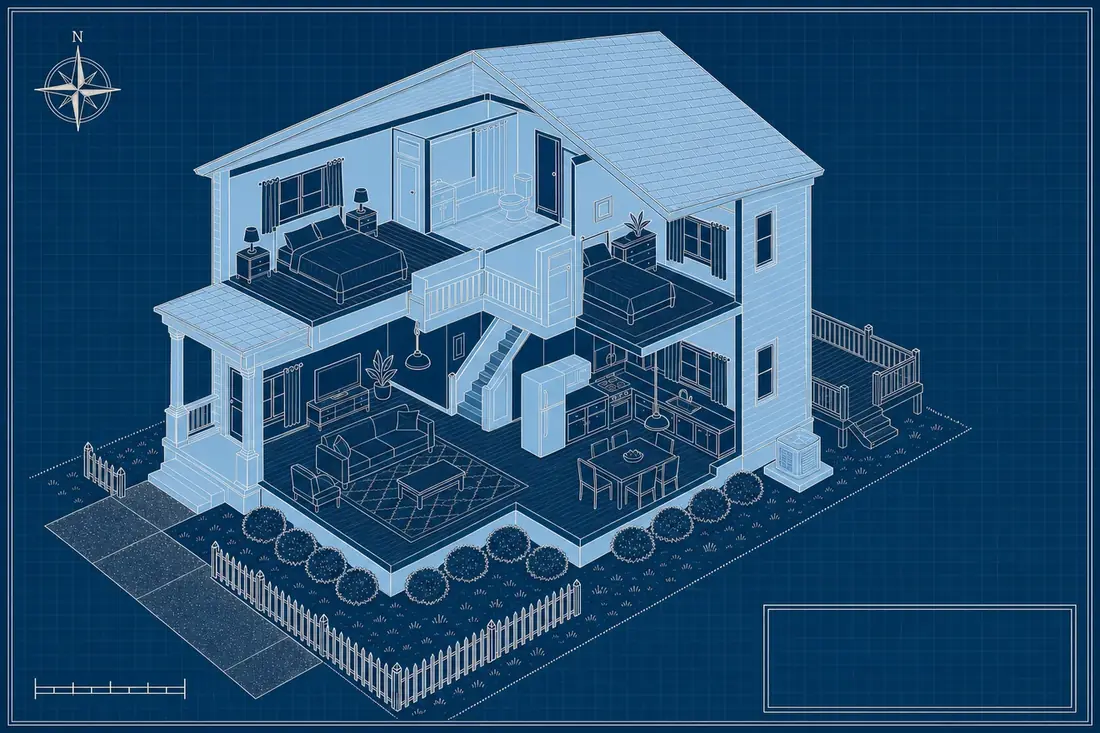
Steven's Take Vacation rentals are where cost segregation and the STR tax rules collide hardest: hot tubs, furnished game rooms, docks, and an owner who is also cleaning the property between guests. I built this cluster market by market because a mountain cabin and a beach house depreciate through the same mechanics but argue through different components. Get the 7-day average and the material participation test right first. The reclassification math only matters once those gates are cleared. Steven Ellis, Founder Watch a log cabin rental get built and classified A hypothetical $600,000 three-bedroom log cabin goes up floor by floor, from the gravel drive and foundation to the game loft and the hot tub on the deck. Every component lands on its depreciation schedule as it is installed, and the year-one depreciation adds up on screen. Watch the 90-second walkthrough »Why vacation markets are a different animalMost residential cost segregation content assumes a standard, year-round lease. Vacation rental markets don't work that way. A cabin in the mountains, a shore house at the coast, a ski condo, a lake house, these properties are usually built and bought to be rented by the night or the week to vacationers, not by the year to a single tenant. That single difference in rental pattern changes which tax rules govern the property's losses, and it usually means more, not fewer, components for a cost segregation study to find. The building mechanics, 5-year property, 7-year property, 15-year land improvements, 27.5/39-year structural shell, don't change based on location or rental pattern. What changes is the mix: a vacation rental tends to be furnished, amenity-heavy, and personally managed in ways a standard long-term rental usually isn't. A standard year-round lease usually comes with a tenant who brings their own furniture and lives with whatever finishes the unit already has; a vacation rental has to sell itself on photos every single booking, which pushes owners toward exactly the kind of upgrades, updated kitchens, new furniture packages, added amenities, that a study is built to find. Whether the structure itself sits on 27.5 or 39 years turns on the 80% dwelling-unit test, and a short-term rental averaging stays of 7 days or less generally lands on 39 (see the 27.5 or 39 years guide). 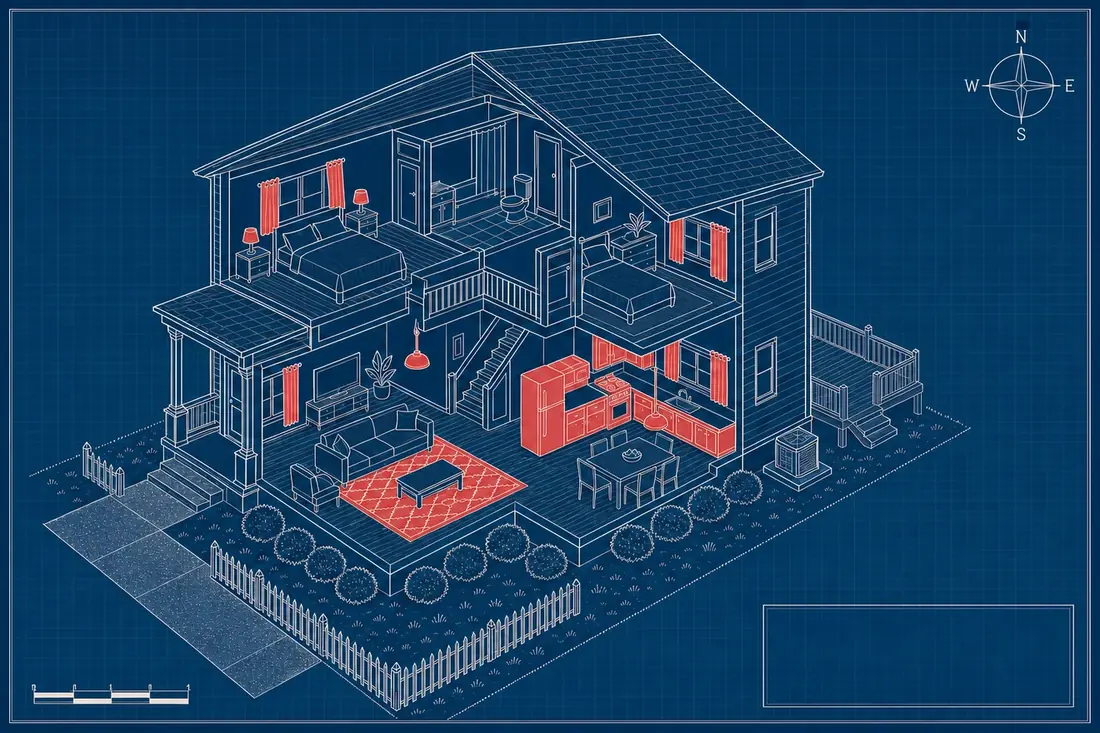
5-Year: carpet and flooring, cabinets, appliances, light fixtures, curtains 7-Year: furniture 15-Year: driveway, fencing, landscaping, deck 27.5/39-Year Shell: roof, load-bearing walls, foundation, central HVAC Get your free Preliminary Benefit Estimate See what a study could find on your vacation rental's furnishings and outdoor amenities with the free 60-second estimate at /qualify. Request Your Free Estimate »The 7-day average and why vacation rentals naturally sit inside itUnder Reg. 1.469-1T(e)(3)(ii), a property whose average guest stay is 7 days or less is not treated as a rental activity for section 469 purposes at all, which takes it out of the default passive-loss framework entirely. From there, the owner needs material participation, commonly measured by 500-plus hours, substantially all the participation, or 100-plus hours and more than any other individual (including a co-host, cleaner, or property manager), for the resulting losses to be non-passive. Vacation markets are where this test comes up constantly, because nightly and weekly stays are simply how these properties operate. A ski condo booked by the week during season, a shore house booked Saturday-to-Saturday all summer, a cabin booked for long weekends, all of these rental patterns tend to produce an average stay well under 7 days across a full year, before anyone has structured anything specifically around the tax rule. That's a structural fact about how vacation rentals are used, not a projection about any specific property's occupancy or income. Weekly summer rentals vs. nightly winter stays, and what mixed seasonality does to the averageFour-season vacation markets, a mountain property that rents by the week all summer and by the night on ski weekends all winter, add a wrinkle worth understanding. The 7-day test looks at the average length of stay across all rentals for the tax year, not season by season. A property with long, week-long summer bookings and short, few-night winter bookings has to average the two together. Heavy nightly winter activity pulls the yearly average down; a summer season dominated by full-week bookings pulls it up. Whether a specific property's full-year mix lands at or under 7 days on average is a computation for that property's own booking pattern and the owner's CPA, not something to assume from the market alone. What doesn't change across that seasonal mix is the underlying depreciation math. A cost segregation study classifies the building's components the same way whether the property is mid-summer full or mid-winter empty. Self-management culture and the material participation testsVacation rental owners are disproportionately hands-on compared to standard landlords. Turnover cleaning between weekend guests, restocking a cabin's hot tub chemicals, coordinating a shore house's linen service, managing the calendar directly through Airbnb or VRBO, a lot of vacation rental owners do this work themselves rather than handing it entirely to a full-service manager. That pattern intersects directly with the material participation tests that determine whether short-term rental losses are non-passive: the 100-hour-and-more-than-anyone-else test specifically counts cleaners, co-hosts, and property managers as competing participants, which is exactly why a fully outsourced, full-service manager tends to break that test for an owner who wants to clear it. An owner who does the turnovers, guest communication, and maintenance coordination themselves is in a materially different position under that test than one who has handed all of it to a management company. The other two paths to material participation, 500-plus hours or substantially all the participation in the activity, come up less often in practice for a single vacation property, since they generally require a bigger time commitment than the 100-hour test relative to how much work a single unit actually generates. An owner with more than one vacation rental, or one who also handles a friend's or family member's property, ends up with a genuinely different hours picture than an owner with a single unit and a hands-off manager. None of this determines any individual owner's outcome. It's a description of which test applies and what it measures, not a promise about how a specific owner's hours or income are treated. What a vacation property actually has to reclassifyBeyond the standard residential list, carpet and flooring, cabinetry, appliances, decorative lighting, a vacation rental typically carries components a standard rental doesn't:
The building's foundation, framing, roof structure, and any central HVAC stay on the 27.5/39-year schedule regardless of how much the vacation-specific amenities add on top. A common misconception treats a roof or central HVAC as fast-depreciating equipment; it is structural on a cabin or shore house exactly as it is on a standard rental. The personal-use question every vacation rental owner runs intoA vacation property is exactly the kind of asset owners also want to use themselves, a week at the shore house, a long weekend at the cabin between guest bookings. Section 280A limits deductions once personal use exceeds the greater of 14 days or 10% of the days the property is actually rented at fair value. Cross that line and the property is treated, at least in part, as a personal residence rather than a pure rental for tax purposes, which affects how expenses and depreciation, including any accelerated depreciation a cost segregation study identifies, can be used. This is a threshold to track, not a number to guess at. A property that sits right at the edge, a family that uses the lake house three weekends a year while renting it out all summer, needs an actual day count against actual rental days to know which side of the line it falls on. That count is a bookkeeping question for the owner and their CPA; the study itself classifies the building's components regardless of how personal use ultimately nets out. Estimate the first-year deduction on a property hereA few questions and the building value give a preliminary first-year deduction range, using the same rule as our free calculator. The breakdown can be emailed to you, or you can book a 15-minute call. Step 1 of 3 What kind of property?
Who runs it day to day?
What is the average guest stay?
When did you buy it?
How many rentals do you own?
Across all of them, does your rental portfolio show taxable income overall?
Any of them likely to sell in the next few years?
Prefer to talk it through? Book straight from here. No form needed.
Selling a vacation rental: recapture and the 1031 optionVacation properties change hands more often than most rental real estate, sold when a family's use of a market shifts or when an owner trades up to a bigger cabin or a better lot. On sale, gain attributable to depreciation on the 5- and 7-year components a study identified is recaptured at ordinary rates, while gain attributable to straight-line depreciation on the structural portion is unrecaptured section 1250 gain, taxed at up to 25%. A 1031 exchange can defer both of those, including on a property that already had a cost segregation study performed on it, when the replacement property rules are met. That makes the interaction between an accelerated depreciation study and a future exchange worth understanding before a sale, not after one is already underway. The economics: a fixed fee against a richer basisEvery study is custom-priced per property, with no flat fee and no rate card, but the general shape of vacation-property economics tends to favor the owner. A delivered single-family rental study, not itself a vacation property but built the same way, produced $174,905 in first-year depreciation on a $1,295 fee, roughly 135 to 1. A furnished vacation property with hot tubs, game rooms, and outdoor structures on top of the standard residential list generally has more, not less, to reclassify than a bare rental of the same size. First-year deductions across our commercial benchmark runs ran 16% to 21% of building basis, and a study typically shifts 15% to 35% of basis into faster schedules overall, with amenity-heavy properties tending toward the higher end of that range rather than the lower. Basis guarantees at least 30 times the fee in first-year deductions on a short-term rental, or the study is free. Why the photos-only process fits vacation rentals especially wellVacation rental owners already have exactly what a residential study needs: professional-quality listing photos, since a strong photo set is how these properties get booked in the first place. Those same Airbnb or VRBO photos feed the engineering team's component classification directly, no site visit, no separate homework list for the owner. A cabin three states away from its owner is no harder to study than one down the road, because the process was never built around physical proximity. How the market pages below fit togetherThe tax mechanics described here, the 7-day average test, material participation, the component list, apply identically in every vacation market. What differs from one market to the next is structural: which county a property sits in, which metro area feeds its weekend and weekly traffic, whether the season runs on summer heat, winter snow, or both, and which property style, cabin, shore house, condo, dominates that specific market. A property in the Poconos, a four-season Pennsylvania mountain market within driving distance of both New York City and Philadelphia, faces a different seasonality shape than a single-season beach market, even though the underlying depreciation rules covering both are the same rules covered on this page. Reading one market page after this one is less about learning new tax mechanics and more about seeing how the same mechanics land on a specific county's building stock and booking calendar. A single-season shore market, a four-season mountain market, a ski-only market each apply the identical 5-, 7-, 15-, and 27.5/39-year buckets; what changes is which buckets end up carrying the most weight for that particular kind of property. Where the background mechanics liveThis page focuses on how the standard cost segregation and short-term rental mechanics play out specifically in vacation markets. For the underlying basics, what a cost segregation study actually is, how a study is priced, and how depreciation recapture works on any rental sale, see what cost segregation is and the related background pages. Getting a number for a specific vacation property doesn't require reading all of that first: a free Preliminary Benefit Estimate at /qualify models the likely first-year deduction for a specific cabin, shore house, or condo directly, based on its size, age, and amenity mix, before anyone commits to a fee. Every guide in this series
Frequently asked questionsDo vacation rentals qualify for the same depreciation rules as any other rental? Yes, the underlying depreciation buckets, 5-year, 7-year, 15-year, and 27.5/39-year structural, apply the same way. What differs is that vacation rentals more often qualify for the short-term rental exception under section 469, based on average guest stay length, rather than the standard long-term rental framework. Do hot tubs and game room equipment count toward accelerated depreciation? Generally yes. Hot tubs, spa equipment, pool tables, and similar furnishings typically fall into 5- or 7-year property, adding to the accelerated basis a study identifies beyond the standard residential list of cabinets, flooring, and appliances. What if my property rents weekly in summer and nightly in winter? The 7-day average-stay test looks at the average across all rentals for the full tax year, not season by season. Whether a specific mix of weekly and nightly stays lands at or under 7 days on average is a computation for that property's actual booking pattern and the owner's CPA. Does self-managing my vacation rental affect the tax treatment of losses? It can. The material participation test that governs whether short-term rental losses are non-passive counts hours from cleaners, co-hosts, and property managers as competing participation, so an owner who handles turnovers and guest communication personally is positioned differently under that test than one using a full-service manager. Do I need to visit my vacation property for the engineers to study it? No. Residential and short-term rental studies run on listing or interior photos, which most vacation rental owners already have from setting up their Airbnb or VRBO listing. There is no site visit and no separate homework list. Are vacation rental studies more expensive because of the extra components? Every study is custom-priced against the specific property's size and finish level, not a flat rate. A richer component mix, hot tubs, game rooms, outdoor structures, tends to mean more accelerated basis identified, which is what the fee is measured against through the deductions-to-fee guarantee, not a separate pricing tier. Keep readingGet your free Preliminary Benefit Estimate Send the address or the listing link. We model the number first; you decide with it in hand. Request Your Free Estimate »Educational information, not tax advice. This page describes how federal
depreciation rules and tests work in general. Whether any rule fits your facts is a determination for
you and your CPA. Our study gives your CPA the engineering and the numbers to make that call.
Related guides: Does Cost Segregation Work on a Poconos... · Cost Segregation for a Jersey Shore Rental... · Cost Segregation for a Pigeon Forge Cabin... · Cost Segregation for a Gatlinburg Rental...
More Vacation Markets by Region markets: Cost Segregation for a Jersey Shore Rental... · Cost Segregation for a Pigeon Forge Cabin... · Cost Segregation for a Gulf Shores or... · Does Cost Segregation Work for a Lake Tahoe... · Cost Segregation for Hocking Hills Cabin... · Does Cost Segregation Work on a Poconos...
|