|
Cost Segregation for Commercial & Short-Term Rental Owners
|
Request a free estimate [email protected] |
Vacation Markets
Free Listing SEO Audit Paste your Airbnb or VRBO listing. Get a scored audit in 90 seconds. Audit My Listing »FREE Estimate Is there a first-year deduction sitting in your building? No cost, no obligation. Request Yours »Minimum ROIOur study identifies at least 20x its fee in first-year deductions on commercial property, or at least 30x on a short-term rental, or it is free. |
Cost Segregation for Lake of the Ozarks Rental HomesQuick answer Lake of the Ozarks spans Camden, Miller, and Morgan counties in Missouri, a lake market that draws its rental crowd from Kansas City and St. Louis on a summer weekly calendar. A cost segregation study on a lake home reclassifies interior finishes into 5-year property and, notably here, the dock, seawall, and lakefront site work into 15-year land improvements. That land improvement share tends to run higher on a lake property than on an inland rental, since so much of a lake home's value sits outside the four walls. Own a Lake of the Ozarks rental? See the first-year deduction range a study would look for. 30 seconds, no email to see the range. Start the check ↓Key takeaways
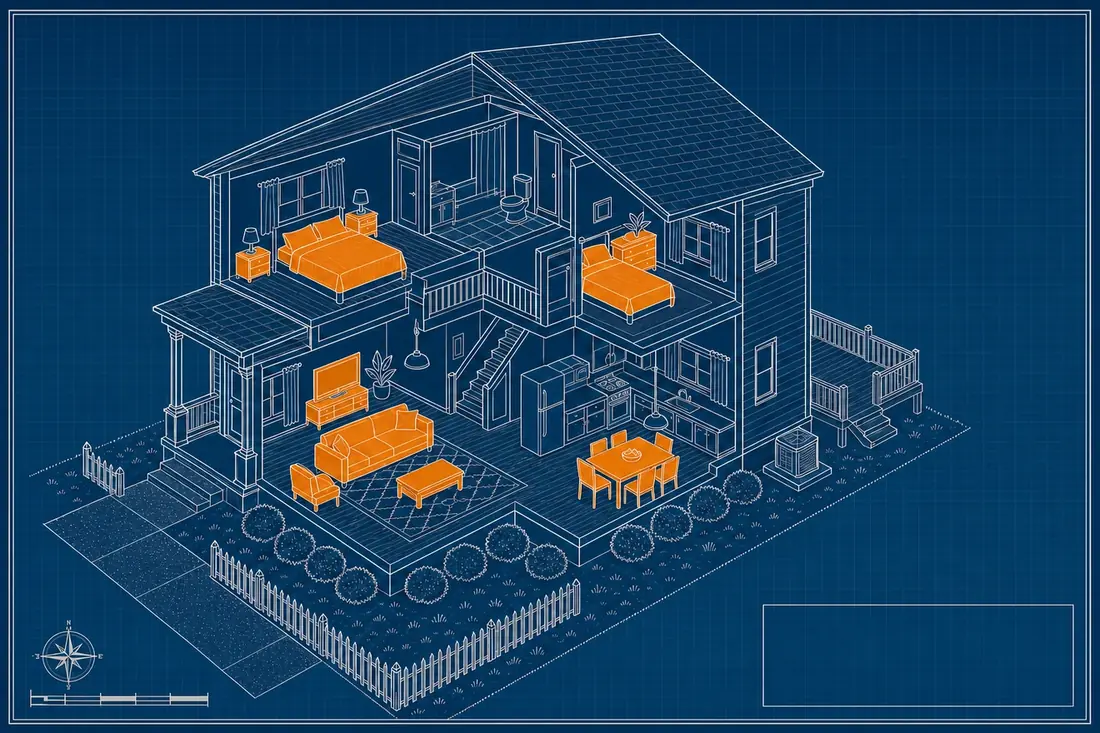
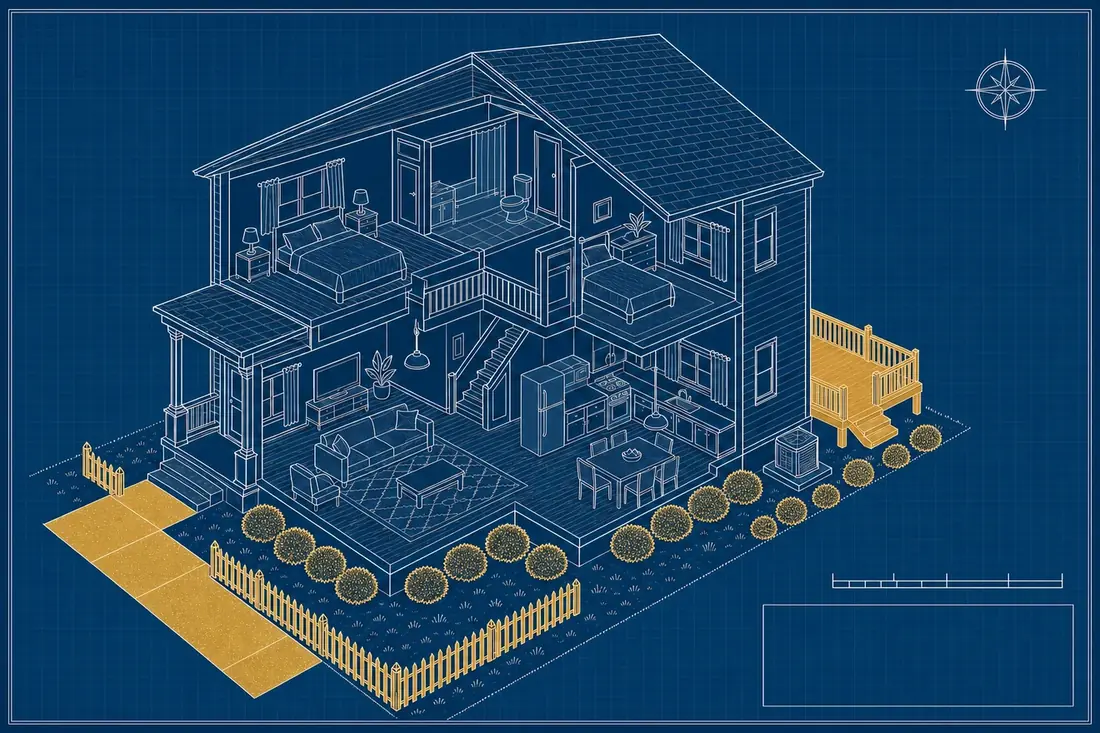
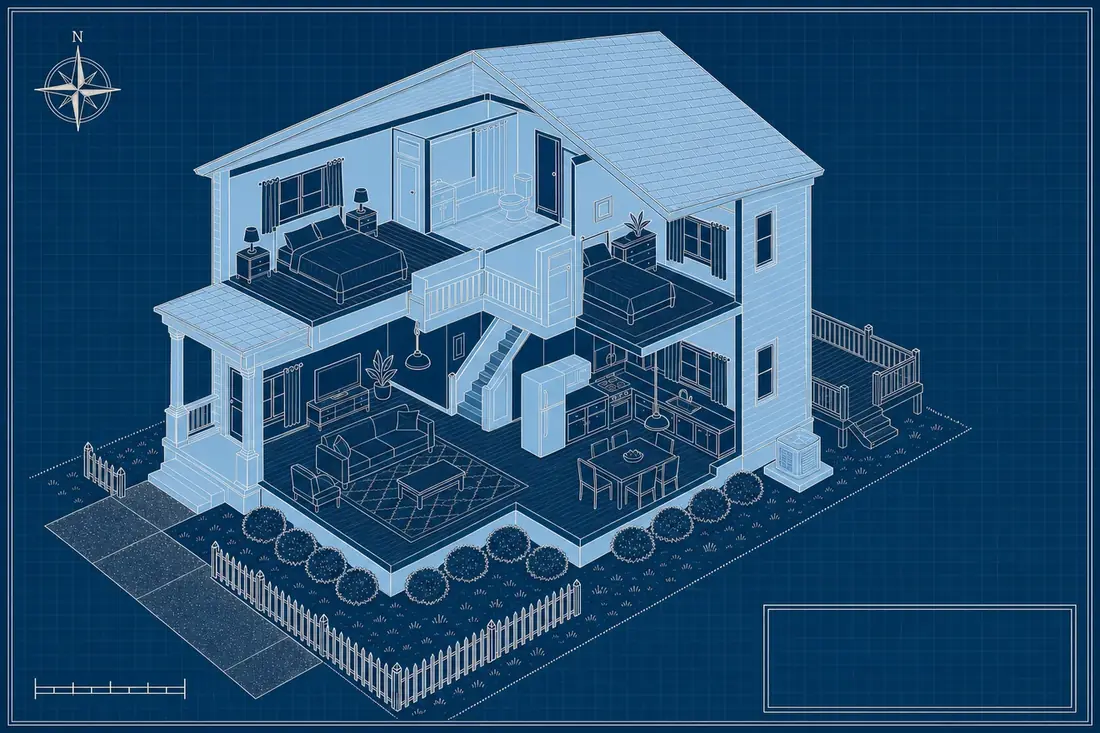
Watch a lake house rental get built and classified A hypothetical $900,000 four-bedroom lake house goes up on a sloping lot, from the driveway and the walkout level to the great room, the screened porch and the covered dock. Every component lands on its depreciation schedule as it is installed, and the year-one depreciation adds up on screen. Watch the 90-second walkthrough »A three-county lake market fed by two citiesLake of the Ozarks stretches across Camden, Miller, and Morgan counties in central Missouri, a reservoir lake with hundreds of miles of shoreline and a rental stock built almost entirely around water access. Kansas City sits a few hours to the northwest and St. Louis a few hours to the east, and both feed the lake's weekend and summer rental crowd. That drive-to pattern shapes a booking calendar heavy on summer weekends and holiday weeks, with a real dropoff outside boating season. A lake home here qualifies for cost segregation the same way any short-term rental does elsewhere. What makes the Lake of the Ozarks study distinct is how much of a typical property's value sits in the land and shoreline improvements rather than the house itself. Whether the structure itself sits on 27.5 or 39 years turns on the 80% dwelling-unit test, and a short-term rental averaging stays of 7 days or less generally lands on 39 (see the 27.5 or 39 years guide). 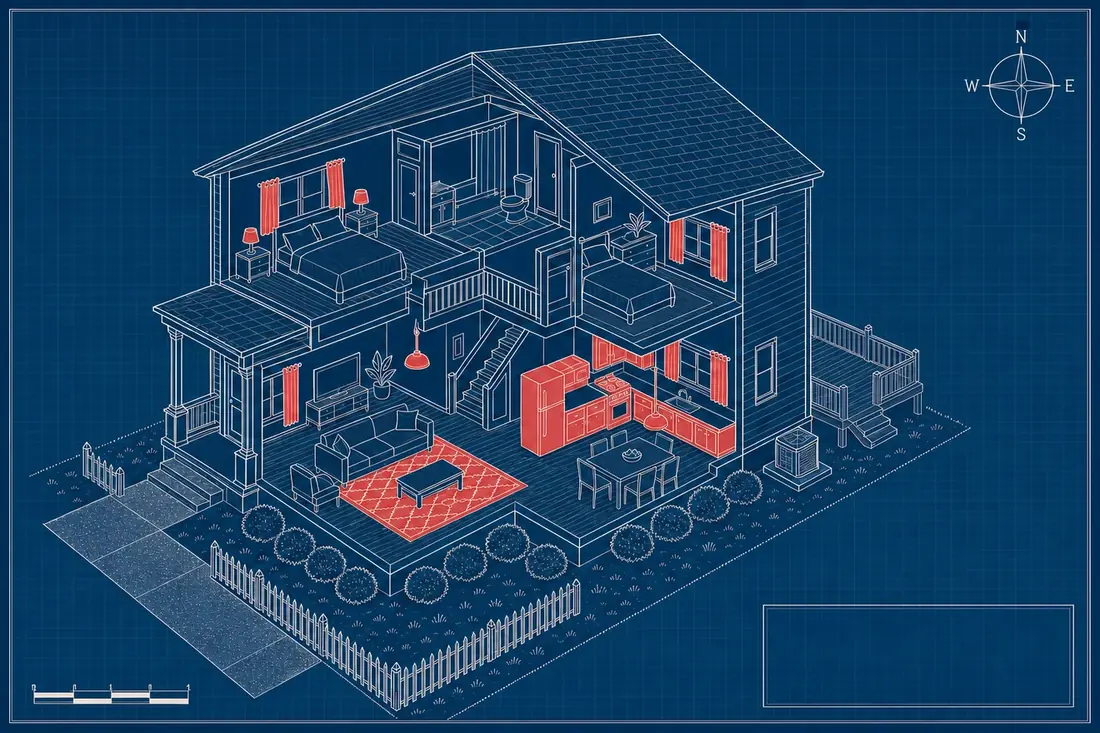
5-Year: carpet and flooring, cabinets, appliances, light fixtures, curtains 7-Year: furniture 15-Year: driveway, fencing, landscaping, deck 27.5/39-Year Shell: roof, load-bearing walls, foundation, central HVAC Get your free Preliminary Benefit Estimate Run the free estimate at /qualify to see what your Lake of the Ozarks house, dock included, could accelerate. Request Your Free Estimate »Why docks and shoreline work matter more here than at most rentals
A typical inland single-family rental has a driveway and maybe a patio as its land improvement inventory. A Lake of the Ozarks house adds a dock, a seawall, and often a boat lift on top of that, which is why the land improvement share of a lake property's basis commonly runs at the higher end of what a study typically finds, a study typically shifts 15 to 35% of building basis into faster schedules, and lakefront properties with substantial shoreline work tend to land in that upper range. What stays on the standard scheduleThe house itself, its structural shell, roof structure, and central HVAC, stays on the 27.5/39-year schedule, the same as any rental. That holds even when a roof or HVAC system gets replaced; a new roof or new HVAC unit is still a structural component, not 5-year property, a distinction worth stating since it is commonly misunderstood. Inside the house, cabinetry, flooring, appliances, and window treatments reclassify into 5-year property just as they would in any other market. The distinction matters practically because it is the boundary a study has to get right. Overclassifying a structural roof as a fast-schedule asset is the kind of error an engineered study, built to the IRS's own Audit Techniques Guide, is designed to avoid, and it is one reason a proper study is worth more than a software-only estimate on a property with this much shoreline and site work to sort through correctly. The summer weekly calendar and the 7-day testLake of the Ozarks rentals run heavily on a weekly summer schedule, Saturday to Saturday during peak boating season, with weekend-only bookings filling shoulder months. A full summer of weekly stays averages to a 7-day stay, at the line the short-term rental exception under Reg. 1.469-1T(e)(3)(ii) draws. Weekend-only bookings in spring and fall, common here given the lake's seasonal boating window, run shorter than 7 nights on average, which pulls the year's overall average down, not up, a detail that differs from markets that rent primarily by the month in the off-season. A lake property's off-season weekend rentals often help the 7-day average rather than threaten it, the opposite of a market that shifts to monthly winter rentals. Material participation still applies separately. An owner who personally manages docking logistics, turnovers, and lake-specific maintenance, common at the Lake of the Ozarks given how hands-on lake home upkeep tends to be, is in a different position under the 100-hour test than one who hands the property to a full-service manager. Estimate the first-year deduction on a property hereA few questions and the building value give a preliminary first-year deduction range, using the same rule as our free calculator. The breakdown can be emailed to you, or you can book a 15-minute call. Step 1 of 3 What kind of property?
Who runs it day to day?
What is the average guest stay?
When did you buy it?
How many rentals do you own?
Across all of them, does your rental portfolio show taxable income overall?
Any of them likely to sell in the next few years?
Prefer to talk it through? Book straight from here. No form needed.
What the numbers look likeA benchmark run on a medical clinic produced $241,839 in first-year deductions on a $1,404,500 building basis for a $10,000 fee, a 24.2-to-1 ratio, a commercial example shown here as a scale reference. On the residential side, a delivered study on a single-family rental in Montgomery County, Pennsylvania, 4,946 square feet with a $1,040,000 basis, produced an estimated $174,905 in first-year depreciation for a $1,295 fee, close to 135 to 1. A Lake of the Ozarks property with a dock, seawall, and boat lift on top of the house itself typically pushes toward a larger reclassified share than that residential baseline, simply because there is more land improvement to find. The guarantee behind a lake property studyBasis guarantees at least 30 times the fee in first-year deductions on a short-term rental property, or the study is free. For a Lake of the Ozarks house, that floor sits underneath every dollar the dock, seawall, and boat lift add to the count, on top of what the house itself contributes. Every study also carries full audit defense of the report by the team that produced it, so if an examiner questions how a dock or a seawall was classified, the engineers who built the study answer the technical questions in writing through the owner's CPA, who continues handling the return itself. Turnaround runs 4 to 6 weeks during the main tax season, typically 2 to 3 weeks in January and February. Getting your numberEvery study is custom-priced to the property, dock and shoreline work included. A free Preliminary Benefit Estimate at /qualify models the likely first-year number before any commitment, using listing photos, no site visit required. If a dock or seawall gets replaced, partial asset disposition is the mechanic that writes off what remains of the old one, but only in the year it comes out. For a property owned for years already, the study runs through Form 3115 with a section 481(a) catch-up, covered in the look-back guide. Frequently asked questionsDoes a boat dock count toward a cost segregation study at Lake of the Ozarks? Yes, a boat dock, boat lift, and shoreline stabilization work are generally land improvements on a 15-year schedule, separate from the house structure. They are often one of the larger reclassified components on a lake property. Does a lake house need a site visit for the study? No, short-term rental studies work from listing photos, so there is no owner homework and no scheduled site visit needed for a Lake of the Ozarks property, dock and shoreline improvements included. Do weekend-only rentals in the off-season hurt the 7-day average test? Generally no, weekend rentals run shorter than 7 nights, which tends to bring a property's yearly average down rather than up. It is longer, monthly-style stays that push the average past the 7-day line. Why does a lake property often reclassify a bigger share of basis than an inland rental? Because so much of a lake property's value sits outside the house itself, in docks, seawalls, decking, and lakefront site work, all of which are land improvements eligible for faster depreciation schedules. Which counties make up the Lake of the Ozarks rental market? The lake spans Camden, Miller, and Morgan counties in central Missouri, fed primarily by Kansas City to the northwest and St. Louis to the east on a drive-to basis, which shapes the market's summer weekend and holiday booking pattern. Keep readingGet your free Preliminary Benefit Estimate Send the address or the listing link. We model the number first; you decide with it in hand. Request Your Free Estimate »Educational information, not tax advice. This page describes how federal
depreciation rules and tests work in general. Whether any rule fits your facts is a determination for
you and your CPA. Our study gives your CPA the engineering and the numbers to make that call.
Related guides: How Does Cost Segregation Work in Vacation... · Does Cost Segregation Work on a Poconos... · Cost Segregation for a Jersey Shore Rental... · Cost Segregation for a Pigeon Forge Cabin... · Cost Segregation for a Gatlinburg Rental...
More Heartland markets: Cost Segregation for a Branson-Area Rental... · Cost Segregation for a Eureka Springs... · Cost Segregation for a Ruidoso Rental Property · Cost Segregation for a Table Rock Lake House · Cost Segregation for a Hot Springs... · Cost Segregation for a Broken Bow Cabin Rental · All vacation markets
|