|
Cost Segregation for Commercial & Short-Term Rental Owners
|
Request a free estimate [email protected] |
Vacation Markets
Free Listing SEO Audit Paste your Airbnb or VRBO listing. Get a scored audit in 90 seconds. Audit My Listing »FREE Estimate Is there a first-year deduction sitting in your building? No cost, no obligation. Request Yours »Minimum ROIOur study identifies at least 20x its fee in first-year deductions on commercial property, or at least 30x on a short-term rental, or it is free. |
Cost Segregation for a Gulf Shores or Orange Beach RentalQuick answer Cost segregation on a Gulf Shores or Orange Beach rental, in Baldwin County, Alabama, reclassifies the property's components, whether it's a beach house or a condo unit, into faster depreciation schedules than the building's 27.5/39-year one. The area's family-oriented weekly rental pattern puts the section 469 short-term rental exception's 7-day average-stay test in play the same way it does at other weekly Gulf Coast markets, and an eventual sale brings a second set of rules, recapture, into the picture. Own a Gulf Shores or Orange Beach rental? See the first-year deduction range a study would look for. 30 seconds, no email to see the range. Start the check ↓Key takeaways
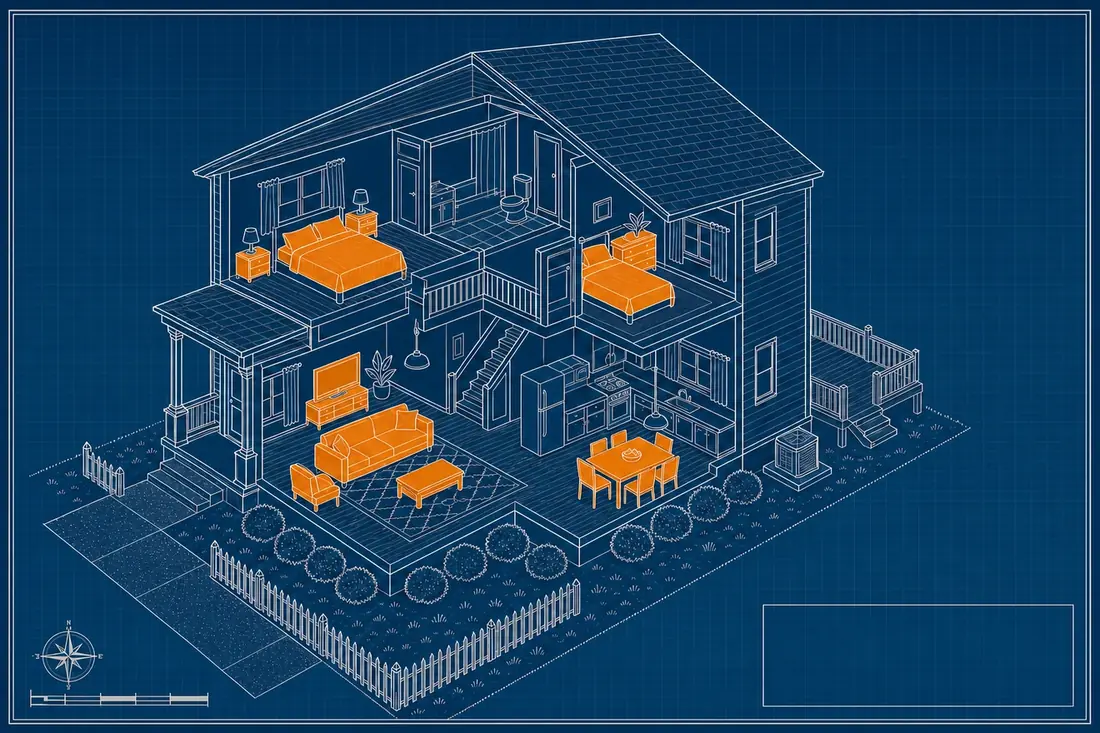
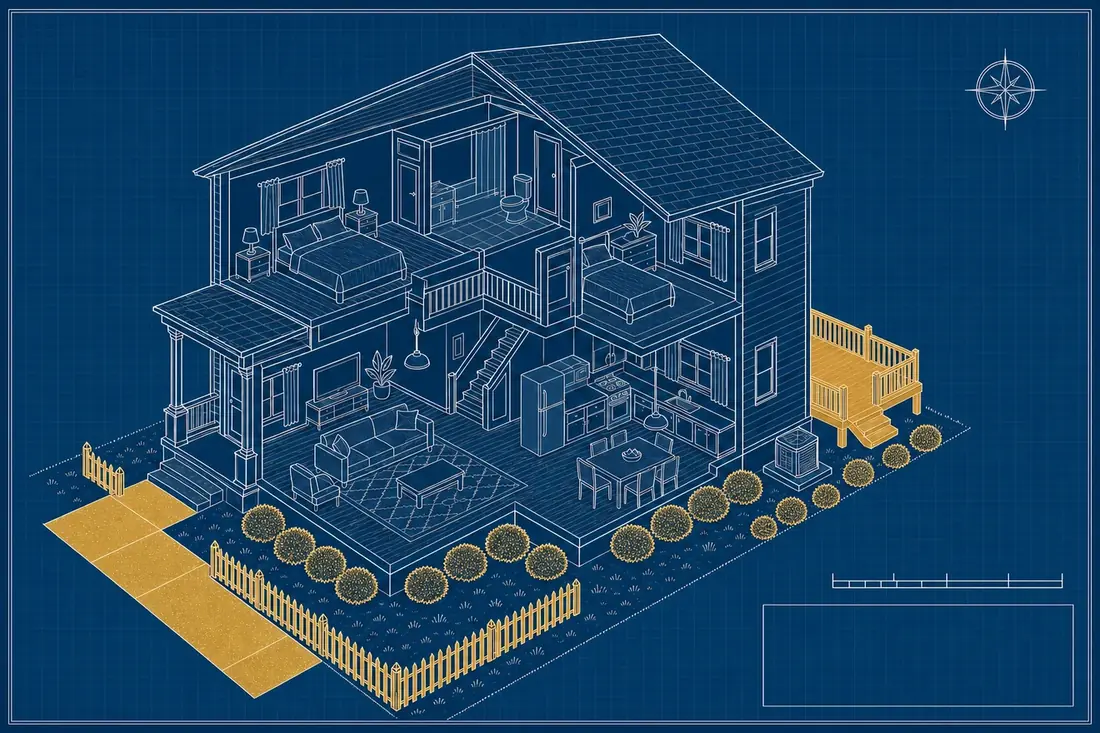
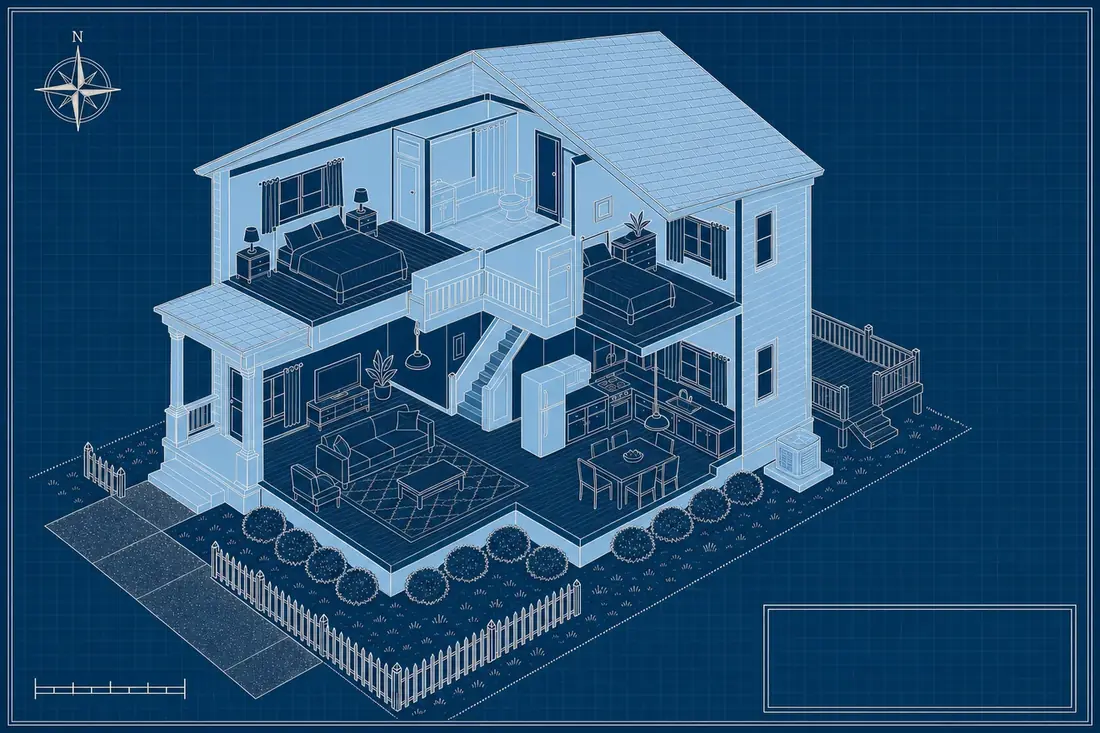
Watch a beach house rental get built and classified A hypothetical $1.4 million four-bedroom oceanfront house goes up on timber pilings, from the shell driveway and the parking level to the living floor, the porches and the terrace. Every component lands on its depreciation schedule as it is installed, and the year-one depreciation adds up on screen. Watch the 90-second walkthrough »A house-and-condo coastlineGulf Shores and Orange Beach both sit in Baldwin County, Alabama, along the same stretch of coastline, and the rental stock mixes single-family beach houses with condominium towers and low-rises, more evenly split between the two than a market like Panama City Beach, which leans almost entirely toward towers. Both property types rent on the same rhythm: a strong summer season built around full-week family bookings, with a quieter, shorter-stay shoulder season on either side of it. That house-and-condo mix means the ownership-boundary question that matters so much in a tower-dominated market shows up here too, just for a smaller share of the inventory. A house's study reaches the whole lot the owner holds. A condo's study reaches the unit interior, since the building shell and common areas belong to the association. Whether the structure itself sits on 27.5 or 39 years turns on the 80% dwelling-unit test, and a short-term rental averaging stays of 7 days or less generally lands on 39 (see the 27.5 or 39 years guide). 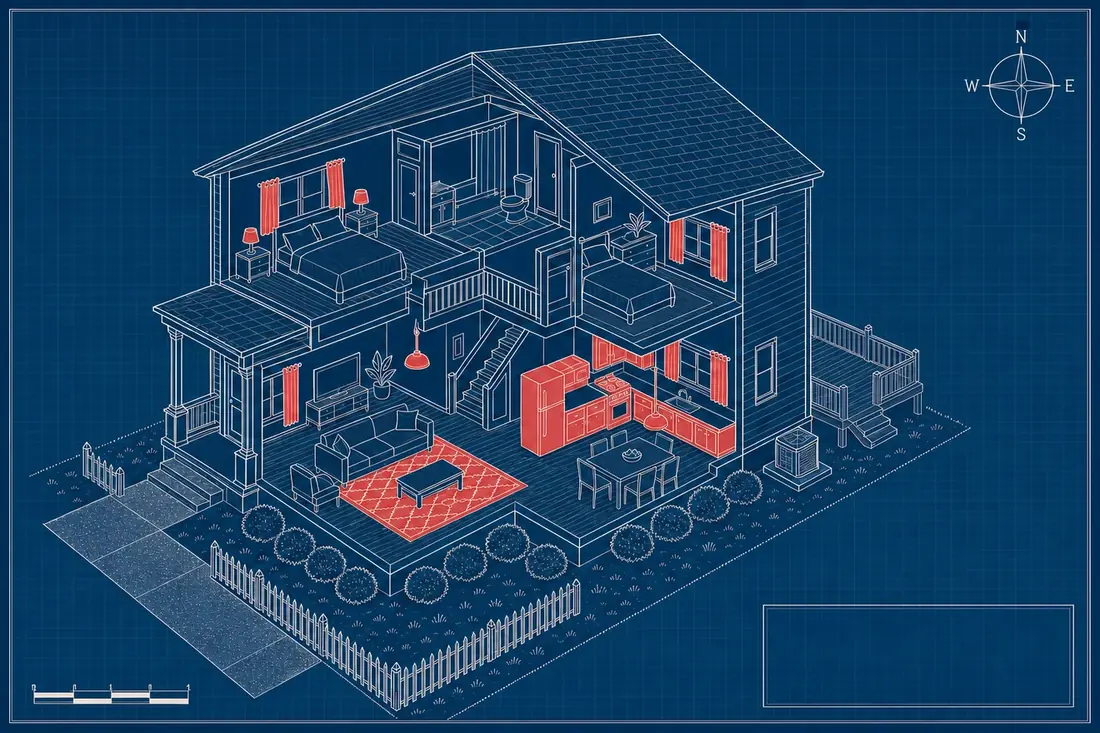
5-Year: carpet and flooring, cabinets, appliances, light fixtures, curtains 7-Year: furniture 15-Year: driveway, fencing, landscaping, deck 27.5/39-Year Shell: roof, load-bearing walls, foundation, central HVAC Get your free Preliminary Benefit Estimate Get the free estimate for a specific Gulf Shores or Orange Beach property at /qualify before you decide anything. Request Your Free Estimate »The weekly math, worked through with fresh numbersThat weekly rhythm puts the section 469 short-term rental exception's average-period-of-customer-use test in the same position it holds at other weekly Gulf Coast and East Coast markets: close to its own 7-day dividing line. Here is the arithmetic, with illustrative numbers, not a claim about any specific property's actual bookings. Say a property completes 20 weekly bookings across the year, 140 tenant-days, plus 2 shorter 3-day weekend stays, 6 more tenant-days. That's 22 rental periods and 146 tenant-days, for an average of about 6.64, under the 7-day line. 22rental periods, illustrative 146tenant-days, illustrative 6.64average days, under the line Now swap one of those short weekend stays for a single longer winter rental, a 45-day stay to a snowbird tenant, a pattern this coastline sees in the off-season alongside the summer weekly market. Recompute: 20 weekly bookings (140 days) plus one 45-day stay is 21 periods and 185 tenant-days. 185 divided by 21 is about 8.8, over the 7-day line. One long winter booking, layered onto an otherwise clean weekly summer season, is enough to flip the result. These numbers illustrate how the test's arithmetic works. They are not occupancy data or a claim about how any specific Gulf Shores or Orange Beach property actually rents.
Family rentals and the personal-use questionGulf Shores and Orange Beach skew toward family ownership, a house or condo bought partly for the owner's own summer weeks and partly to rent the rest of the season. Section 280A caps deductions once an owner's personal use exceeds the greater of 14 days or 10% of the days the property is actually rented. A family that keeps two weeks for itself across a full summer of rental weeks sits within a description of the test; whether that specific mix crosses the line is a question for the owner's CPA to run against the actual count for that year. Estimate the first-year deduction on a property hereA few questions and the building value give a preliminary first-year deduction range, using the same rule as our free calculator. The breakdown can be emailed to you, or you can book a 15-minute call. Step 1 of 3 What kind of property?
Who runs it day to day?
What is the average guest stay?
When did you buy it?
How many rentals do you own?
Across all of them, does your rental portfolio show taxable income overall?
Any of them likely to sell in the next few years?
Prefer to talk it through? Book straight from here. No form needed.
What's inside a Gulf Shores property, component by componentThe component split follows the pattern seen across every Gulf Coast market: the structural shell, framing, roof, and central HVAC (or, in a condo, the unit's own dedicated cooling equipment) stay separate from the interior finishes, cabinetry, appliances, and flooring that generally move to the 5-year bucket, and the exterior site work, driveway, pool decking, fencing, landscaping, that generally moves to the 15-year bucket on a single-family property. A study typically shifts somewhere between 15 and 35% of a property's basis into these faster schedules, and a beach house with a private pool and a good deal of coastal landscaping tends to run toward the higher end of that range, while a simpler condo unit, with less structure and less site work to classify, generally runs lower. Cost segregation applies whether the property was purchased recently, built new, or held for years already. A property an owner has had for a while can run a look-back study through Form 3115, picking up the missed depreciation as a section 481(a) catch-up in the current tax year. Selling later: recapture and the 1031 optionAn eventual sale brings a different set of rules into play. Gain attributable to the depreciation claimed on the 5- and 7-year personal property a study identified is recaptured at ordinary tax rates when the property sells. Gain attributable to straight-line depreciation on the real property itself is taxed as unrecaptured section 1250 gain, at a rate up to 25%. A 1031 exchange can defer both kinds of gain, including on a property that already went through a cost segregation study, when the replacement property rules are met. None of that changes what the study delivers while the property is held; it is simply the other half of the timeline an owner eventually has to think about. Turnaround on the original study runs 4 to 6 weeks in the busy tax season, typically 2 to 3 weeks in January and February, well before any of the sale-side questions above become relevant, and the study works from listing photos with no site visit required. There's a related mechanic worth knowing about too: suspended passive losses, the losses a rental generates that could not offset other income in the years they occurred, carry forward and are generally released when the property is disposed of in a full taxable sale. That release is a separate event from recapture, and it is part of why a lot of owners think about the depreciation question and the eventual-sale question together rather than in isolation. Getting the number nowA free Preliminary Benefit Estimate models the likely first-year number for a specific Gulf Shores or Orange Beach property, built from listing photos, no site visit required. See how depreciation recapture works for more on the sale-side rules described above. The 60-second qualifier at /qualify is the place to start. Frequently asked questionsDo beach houses and condos get the same cost segregation treatment in Gulf Shores? The mechanics are the same, but the scope differs. A house's study reaches the whole lot and structure the owner holds. A condo's study generally reaches the interior unit, since the tower shell and common areas belong to the association. Either way, the same guarantee applies: at least 30 times the fee in first-year deductions on a short-term rental, or the study is free. Fee scope tracks what the study actually reaches, not the property's list price. Can one long winter rental really flip the 7-day average test? Yes, mathematically. The test averages tenant-days across every rental period in the year. A single long booking, a month or more, added to an otherwise all-weekly summer season can pull the yearly average above 7 days, since that one period carries a lot of tenant-days relative to the number of periods. What happens to accelerated depreciation when a property sells? Depreciation claimed on 5- and 7-year personal property is recaptured at ordinary rates on sale. Depreciation on the real property itself is taxed as unrecaptured section 1250 gain, up to 25%. A 1031 exchange can defer both when the replacement property rules are met. Are Gulf Shores and Orange Beach in the same county? Yes. Both are in Baldwin County, Alabama, along the same stretch of Gulf Coast, and both run a similar mix of single-family beach houses and condominium properties renting on the same summer-weekly pattern. Does section 280A apply if a family only uses the property occasionally? The 280A personal-use limit applies once personal use exceeds the greater of 14 days or 10% of the days the property is actually rented, whatever the reason for that personal use. It is a day-count test, not a frequency test. Keep readingGet your free Preliminary Benefit Estimate Send the address or the listing link. We model the number first; you decide with it in hand. Request Your Free Estimate »Educational information, not tax advice. This page describes how federal
depreciation rules and tests work in general. Whether any rule fits your facts is a determination for
you and your CPA. Our study gives your CPA the engineering and the numbers to make that call.
|