|
Cost Segregation for Commercial & Short-Term Rental Owners
|
Request a free estimate [email protected] |
Vacation Markets
Free Listing SEO Audit Paste your Airbnb or VRBO listing. Get a scored audit in 90 seconds. Audit My Listing »FREE Estimate Is there a first-year deduction sitting in your building? No cost, no obligation. Request Yours »Minimum ROIOur study identifies at least 20x its fee in first-year deductions on commercial property, or at least 30x on a short-term rental, or it is free. |
Cost Segregation for a Gatlinburg Rental PropertyQuick answer Cost segregation on a Gatlinburg rental works the same way it does anywhere in Sevier County, Tennessee: an engineering study reclassifies parts of the property into faster depreciation schedules. Gatlinburg's overnight-district condo-and-cabin mix and its steep mountainside lots change which components carry the most weight, particularly the site work, retaining walls, carved-in driveways, exterior stairs, that a flatter market simply does not have as much of. Own a Gatlinburg rental? See the first-year deduction range a study would look for. 30 seconds, no email to see the range. Start the check ↓Key takeaways
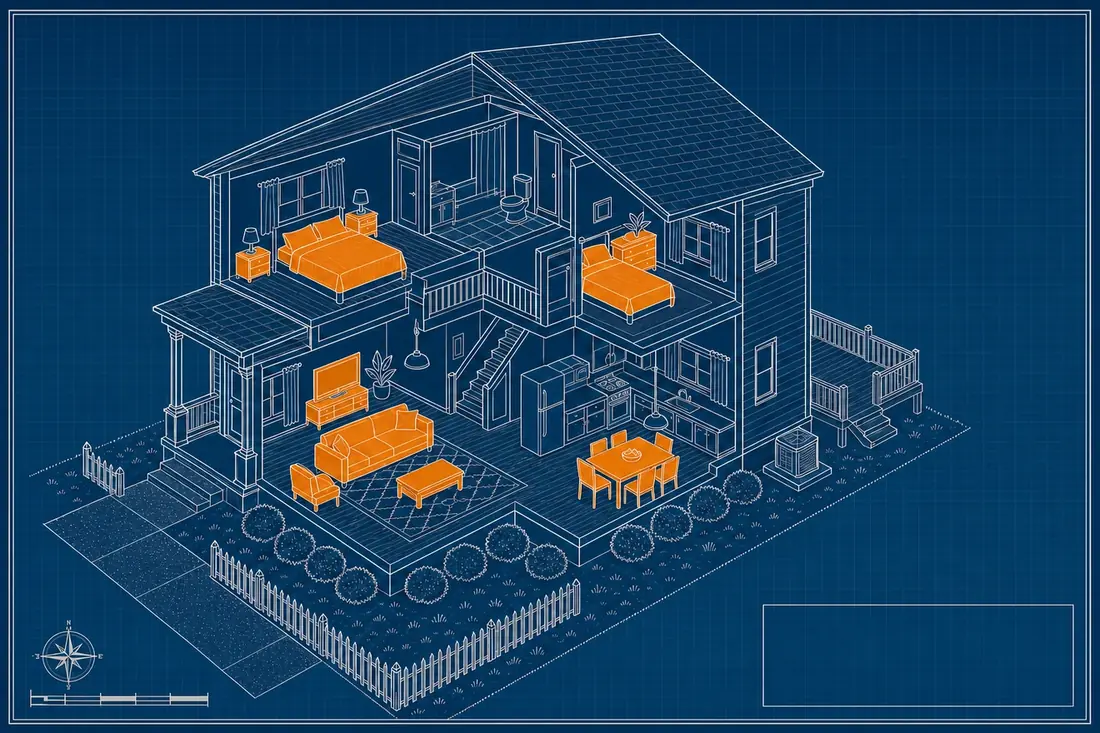
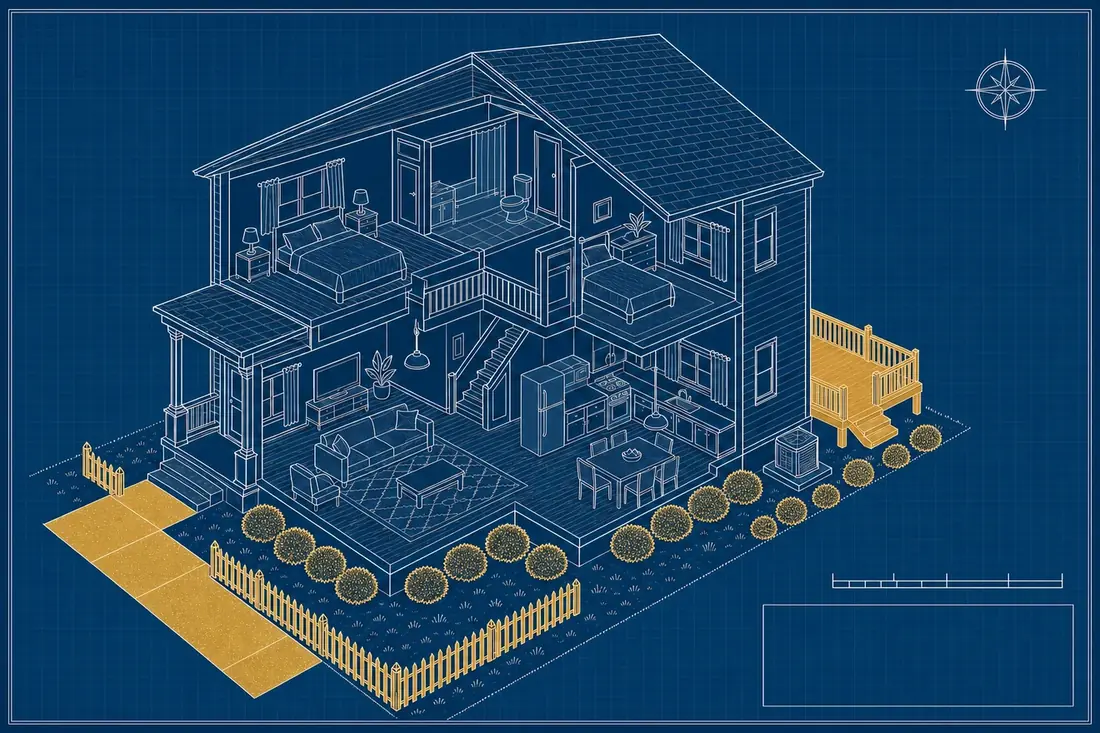
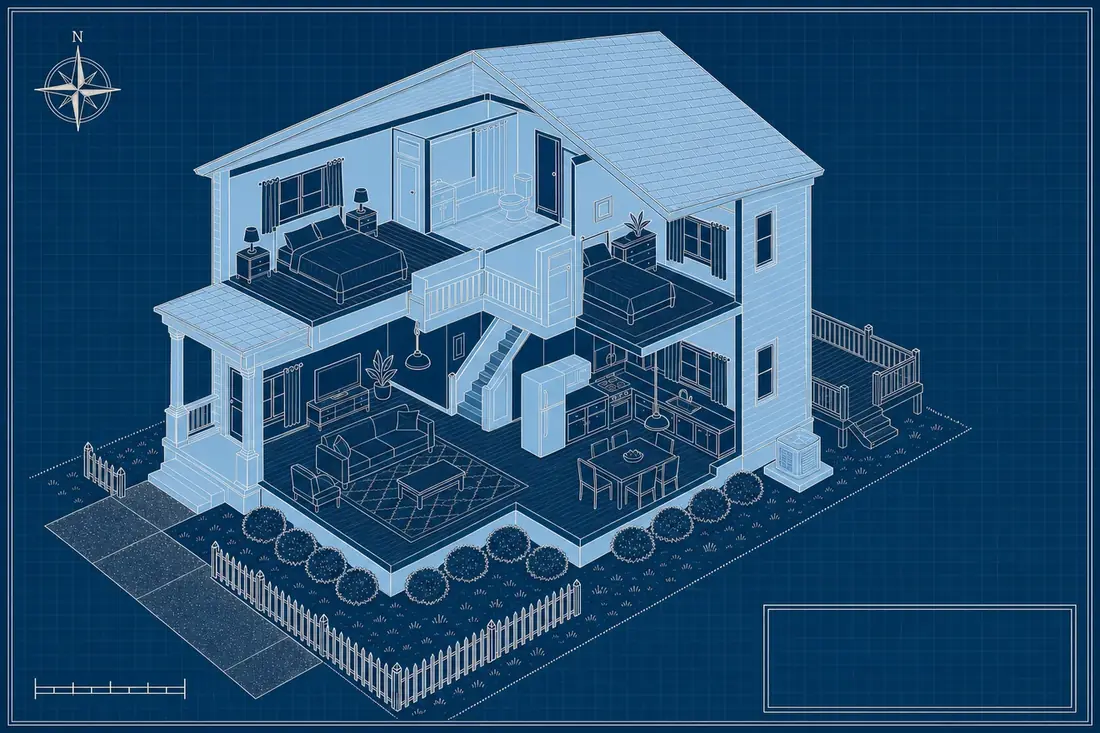
Watch a log cabin rental get built and classified A hypothetical $600,000 three-bedroom log cabin goes up floor by floor, from the gravel drive and foundation to the game loft and the hot tub on the deck. Every component lands on its depreciation schedule as it is installed, and the year-one depreciation adds up on screen. Watch the 90-second walkthrough »A gateway town with a different lot than Pigeon ForgeGatlinburg sits in Sevier County, Tennessee, the same county as Pigeon Forge, but it is a different kind of rental market. Gatlinburg is the gateway town directly on the boundary of Great Smoky Mountains National Park, and its overnight district mixes downtown condo buildings within walking distance of the park entrance with cabins scattered up steep mountainside lots on the roads leading out of town. Pigeon Forge's cabin supply sits mostly on rolling or moderate terrain built around Dollywood and the parkway. Gatlinburg's terrain is the mountain itself. That difference shows up in the rental pattern too. Gatlinburg's overnight-district condos tend to book the same way Pigeon Forge's cabins do, night to night rather than by the week, which keeps the section 469 short-term rental exception's average-period-of-customer-use test comfortably under its 7-day line for most owners, a different math problem than the one a weekly beach market runs. 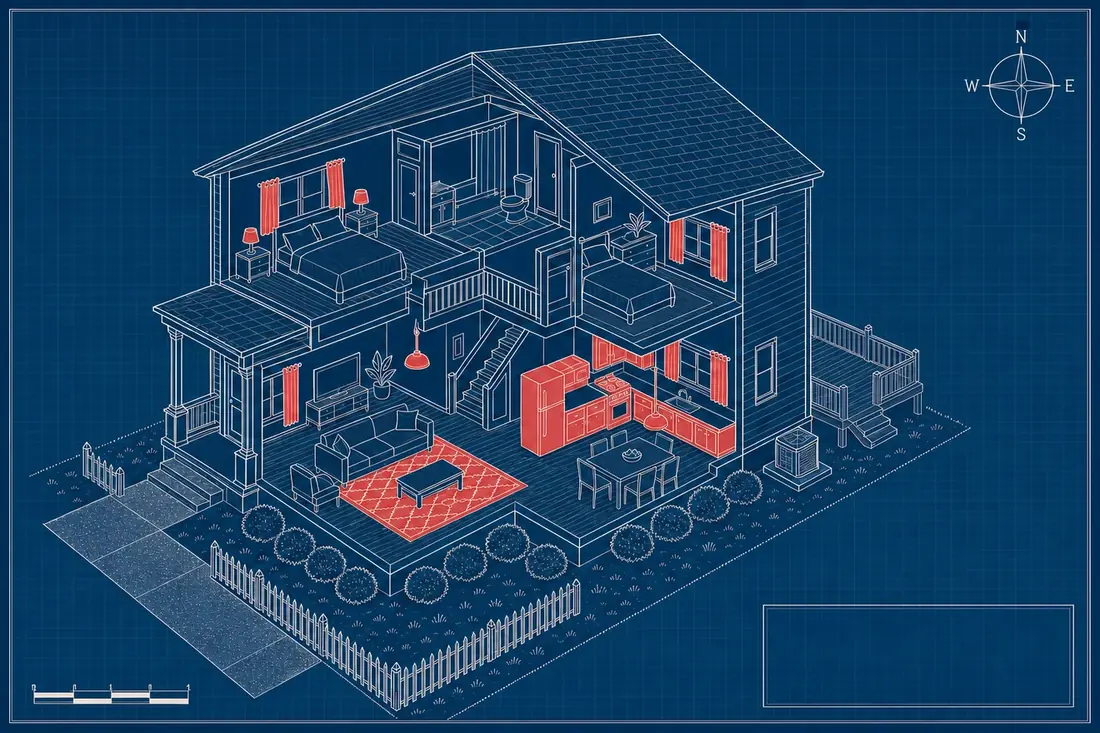
5-Year: carpet and flooring, cabinets, appliances, light fixtures, curtains 7-Year: furniture 15-Year: driveway, fencing, landscaping, deck 27.5/39-Year Shell: roof, load-bearing walls, foundation, central HVAC Get your free Preliminary Benefit Estimate See the likely number for a specific Gatlinburg cabin or condo with the free estimate at /qualify. Request Your Free Estimate »Why steep lots change the component mathThat terrain changes which components carry the most weight in an engineering study. A rolling lot needs a driveway and some landscaping. A steep Gatlinburg lot often needs a retaining wall to hold the building pad, a driveway carved and paved into a grade steep enough to need its own drainage, and exterior stairs or a switchback path from the parking area to the front door. All of that falls into the 15-year land improvement bucket, alongside fencing, exterior lighting, and any patio or fire pit area. A study typically shifts somewhere between 15 and 35% of a building's basis into faster schedules, with the share depending heavily on property type; a simple shell sits at the low end, and a property carrying this much site work sits toward the higher end of that range, before the interior components are even counted. Partial asset disposition: the retaining wall and driveway angleThe steep lot creates a second opportunity beyond the original study: partial asset disposition. Under Treas. Reg. 1.168(i)-8, when a component is replaced, a retaining wall rebuilt, a driveway repaved and re-graded, the remaining basis of the old component can be written off in the year of the replacement. That election is only available in the tax year the old component comes out. Miss that year and the old retaining wall's remaining basis stays buried inside the building's depreciation schedule for decades, while the new one starts depreciating on top of it. A retaining wall torn out and rebuilt is a write-off opportunity that exists for exactly one tax year. After that, it is gone. See how partial asset disposition works for the full mechanic, including how it interacts with a property that already had a cost segregation study. The same election applies to a driveway repaved and re-graded, exterior stairs rebuilt, or a deck torn out and replaced, any time a site-work component this terrain relies on gets removed and rebuilt rather than simply repaired. Estimate the first-year deduction on a property hereA few questions and the building value give a preliminary first-year deduction range, using the same rule as our free calculator. The breakdown can be emailed to you, or you can book a 15-minute call. Step 1 of 3 What kind of property?
Who runs it day to day?
What is the average guest stay?
When did you buy it?
How many rentals do you own?
Across all of them, does your rental portfolio show taxable income overall?
Any of them likely to sell in the next few years?
Prefer to talk it through? Book straight from here. No form needed.
Condos vs cabins in the overnight districtThe overnight district's condo buildings work differently from its cabins on the depreciation side, for a reason that has nothing to do with the terrain: ownership boundaries. A condo owner generally owns the interior of the unit and whatever improvements belong to that unit; the building's exterior walls, the roof, the elevator, and the site work usually belong to the condo association, not any one owner. A study on a condo unit reaches the interior, cabinetry, flooring, electrical serving the unit, and stops there. A study on a standalone cabin reaches the whole lot, including the retaining walls and driveway described above. That is a smaller building envelope than a full house, but the same categories apply inside it: flooring, cabinetry, appliances, and decorative lighting generally move to the 5-year bucket, while the unit's own dedicated cooling equipment, where it is separate from the building's shared systems, is often classified apart from the structural shell as well. A cabin, by contrast, has a much bigger structural envelope than a condo unit does, framing, roof, exterior walls, all owned outright by one person, plus the retaining walls, driveway, and exterior stairs the steep lot requires. That combination of full structural ownership and heavy site work is exactly why a standalone Gatlinburg cabin's study tends to run larger in scope than a comparable condo unit's, even before the interior finishes are counted. Personal use and an owner's own weeks at the cabinA number of Gatlinburg cabins and condos serve double duty, rental income most of the year, a family week or two mixed in. Section 280A caps deductions once an owner's personal use exceeds the greater of 14 days or 10% of the days the property is actually rented. Whether a specific owner's split of personal time and rental nights crosses that threshold is a question for the owner's CPA, who can run the actual day count for the year in question against the property's actual bookings. Turnaround on a study runs 4 to 6 weeks during the busy tax season, typically 2 to 3 weeks in January and February, whether the property in question is a condo unit or a full cabin on a steep lot. Getting a specific numberBoth property types start the same way: a free Preliminary Benefit Estimate, built from listing photos with no site visit, models the likely first-year number before an owner commits to anything. The guarantee behind that estimate holds regardless of terrain or property type: our study identifies at least 30 times its fee in first-year deductions on a short-term rental, or the study is free. For the neighboring nightly cabin market without the steep terrain, see the Pigeon Forge page. For the full component inventory across both sides of the national park, see the Smoky Mountains region page. The qualifier at /qualify takes about 60 seconds. Frequently asked questionsDo steep mountain lots really change the cost segregation numbers? They change the mix, not the mechanics. Extensive site work, retaining walls, carved driveways, exterior stairs, falls into the 15-year land improvement bucket, which tends to make that bucket larger on a steep lot than on a flat one. The underlying depreciation rules are identical everywhere. Can a Gatlinburg condo get a full cost segregation study? Yes, but the scope is different from a standalone cabin. A condo unit owner generally owns the interior and specific improvements, not the building shell, elevator, or site work, which usually belong to the association. The study reaches what the owner actually owns. What happens if a retaining wall is replaced but the owner doesn't claim partial asset disposition that year? The election to write off the old component's remaining basis is only available in the tax year of the replacement. If it is missed, that remaining basis stays on the depreciation schedule for the rest of its recovery period, while the new component depreciates separately on top of it. Is Gatlinburg part of Great Smoky Mountains National Park? Gatlinburg sits directly on the park's boundary in Sevier County, Tennessee, and functions as the main gateway town on the Tennessee side, distinct from Pigeon Forge a few miles down the parkway. How does a study handle a cabin with a lot of exterior site work? An engineering study inventories every component, including retaining walls, driveways, exterior stairs, and landscaping, and assigns each to its correct recovery period. Heavy site work typically increases the 15-year land improvement share of the total basis. Keep readingGet your free Preliminary Benefit Estimate Send the address or the listing link. We model the number first; you decide with it in hand. Request Your Free Estimate »Educational information, not tax advice. This page describes how federal
depreciation rules and tests work in general. Whether any rule fits your facts is a determination for
you and your CPA. Our study gives your CPA the engineering and the numbers to make that call.
Related guides: How Does Cost Segregation Work in Vacation... · Does Cost Segregation Work on a Poconos... · Cost Segregation for a Jersey Shore Rental... · Cost Segregation for a Pigeon Forge Cabin... · Cost Segregation for a Smoky Mountain...
More Southern Appalachians markets: Cost Segregation for a Smoky Mountain... · Does Cost Segregation Work for a Blue... · Cost Segregation in Myrtle Beach... · Cost Segregation for Hilton Head Island... · Cost Segregation for a Smith Mountain Lake... · Cost Segregation for a New River Gorge... · All vacation markets
|