|
Cost Segregation for Commercial & Short-Term Rental Owners
|
Request a free estimate [email protected] |
Vacation Markets
Free Listing SEO Audit Paste your Airbnb or VRBO listing. Get a scored audit in 90 seconds. Audit My Listing »FREE Estimate Is there a first-year deduction sitting in your building? No cost, no obligation. Request Yours »Minimum ROIOur study identifies at least 20x its fee in first-year deductions on commercial property, or at least 30x on a short-term rental, or it is free. |
Does Cost Segregation Work for a Blue Ridge, Georgia Cabin?Quick answer Yes. Cost segregation works on a Blue Ridge, Georgia cabin the same way it works on any residential rental: an engineering study reclassifies the cabin's components, the creek-side deck, the stone fireplace facing, the driveway, into faster depreciation schedules than the building's 27.5/39-year one. Fannin County's four-season rental pattern, leaf season, ski traffic from nearby North Carolina slopes, summer creek tourism, means Blue Ridge cabins do not have one dominant booking shape the way a beach market does. Own a Blue Ridge, GA rental? See the first-year deduction range a study would look for. 30 seconds, no email to see the range. Start the check ↓Key takeaways
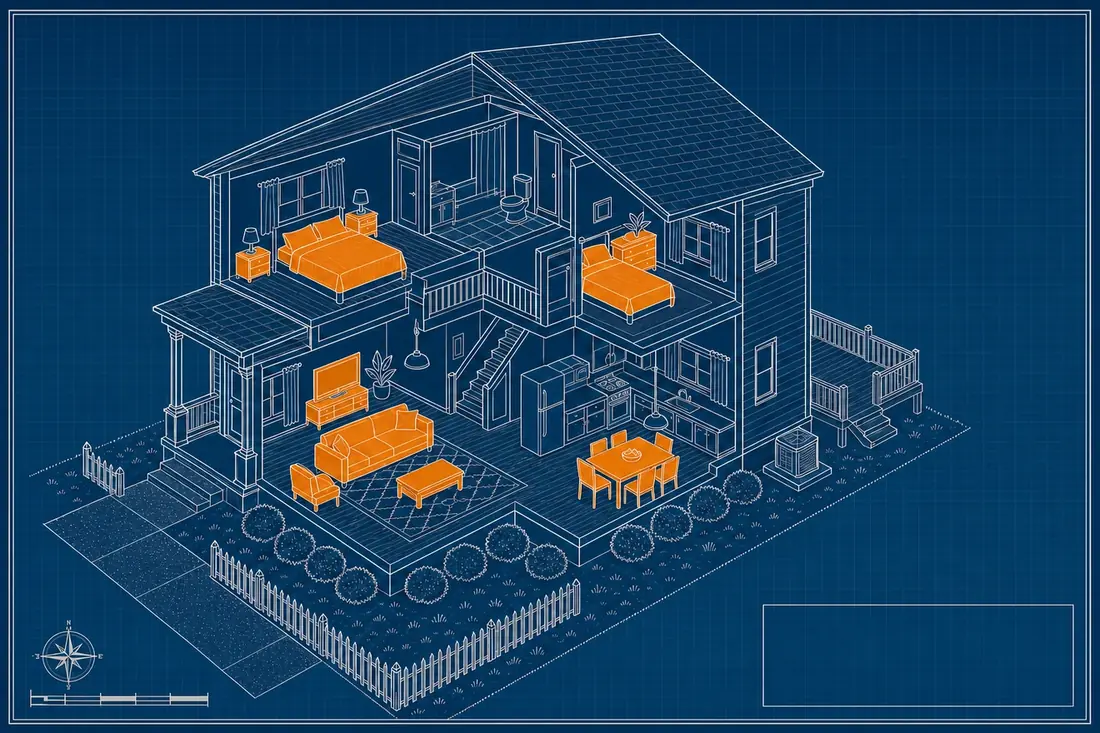
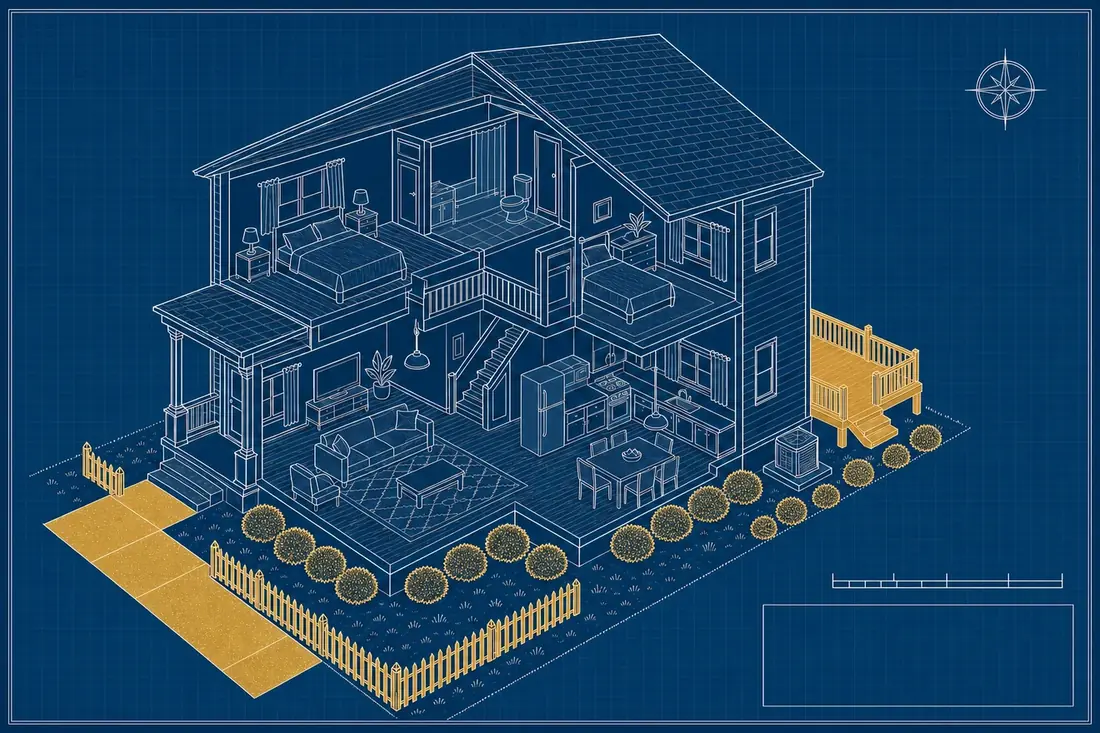
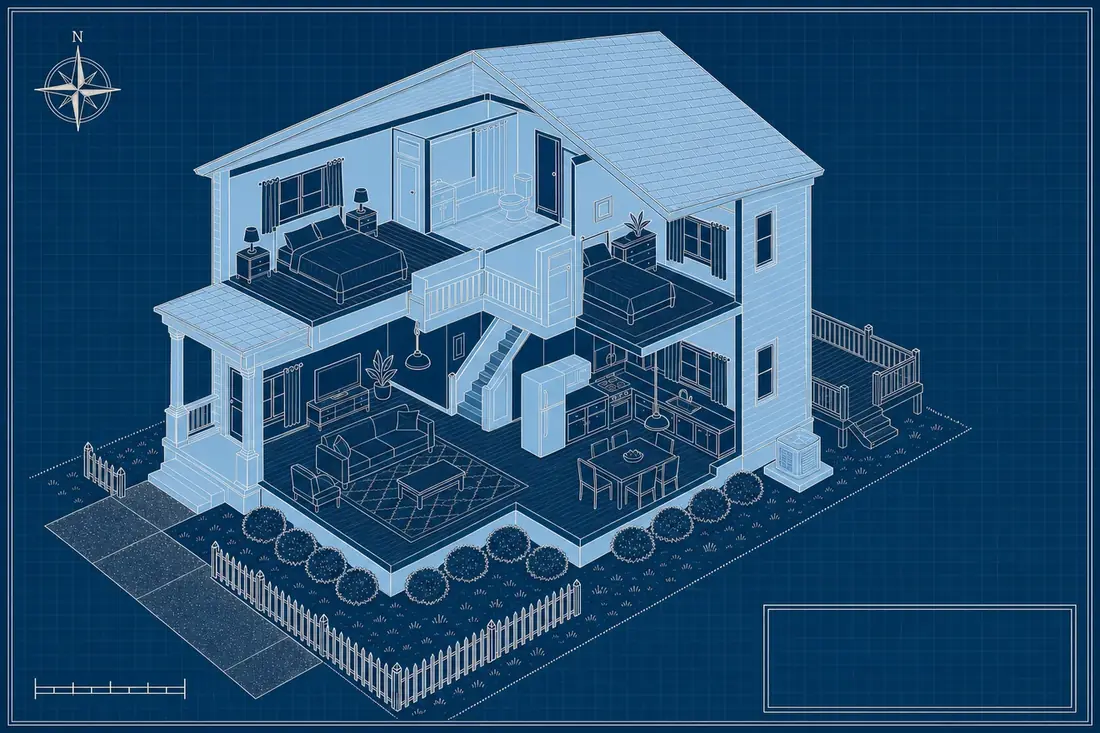
Watch a log cabin rental get built and classified A hypothetical $600,000 three-bedroom log cabin goes up floor by floor, from the gravel drive and foundation to the game loft and the hot tub on the deck. Every component lands on its depreciation schedule as it is installed, and the year-one depreciation adds up on screen. Watch the 90-second walkthrough »Why a four-season market changes the participation questionBlue Ridge sits in Fannin County, in the north Georgia mountains, close enough to Atlanta to draw weekend and week-long traffic year-round. Unlike a beach market that runs almost entirely on a single summer season, Blue Ridge sees fall leaf-season traffic, winter visitors headed toward nearby North Carolina ski areas, and summer visitors drawn to the Toccoa River and the area's creeks and lakes. That spread-out demand means a Blue Ridge cabin's bookings do not sit on one dominant pattern, weekly or nightly, the way a shore house or a Smoky Mountains cabin does. For the section 469 short-term rental exception, that mixed booking pattern usually keeps the average period of customer use comfortably under the 7-day line, since most stays run a few nights rather than a full week. The more interesting question for a lot of Blue Ridge owners is not the average-stay math. It is which door they use to get through the passive activity rules in the first place. Whether the structure itself sits on 27.5 or 39 years turns on the 80% dwelling-unit test, and a short-term rental averaging stays of 7 days or less generally lands on 39 (see the 27.5 or 39 years guide). 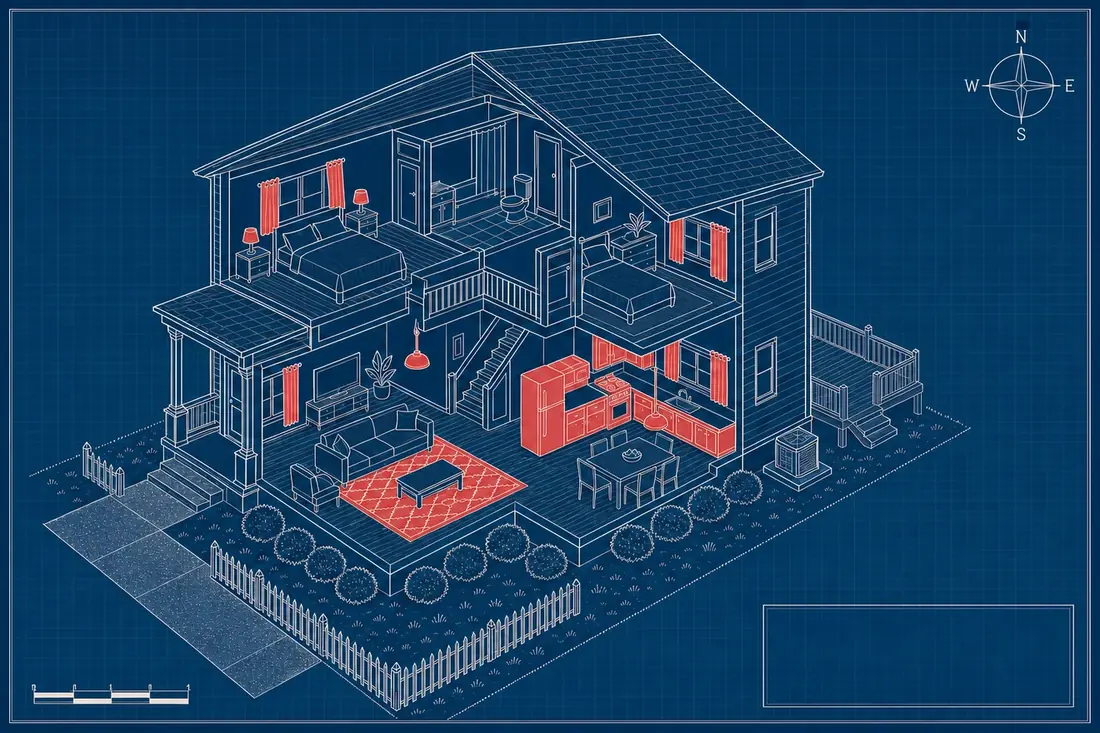
5-Year: carpet and flooring, cabinets, appliances, light fixtures, curtains 7-Year: furniture 15-Year: driveway, fencing, landscaping, deck 27.5/39-Year Shell: roof, load-bearing walls, foundation, central HVAC Get your free Preliminary Benefit Estimate Model a specific Blue Ridge cabin's first-year number with the free estimate at /qualify. Request Your Free Estimate »REPS or the STR exception: two different doors to the same resultSection 469 offers two separate paths out of passive-loss treatment for a rental property, and they fit different kinds of owners. The first is real estate professional status: more than 750 hours and more than half of the owner's working time spent in real property trades, combined with material participation in the specific rental. The second is the short-term rental exception: a property whose average guest stay is 7 days or less is not treated as a rental activity at all under section 469, so the owner instead needs material participation in that specific activity, tested under standards like 500 hours, substantially all the participation, or 100 hours combined with more participation than any other individual. An owner who lives near Blue Ridge and handles bookings, cleaning coordination, and maintenance personally has a realistic shot at clearing a material participation test directly. An owner who lives out of state and relies entirely on a property manager has a harder time clearing that same bar, since the manager's hours count against the owner in the comparison. Which path fits a specific owner's situation, and whether their actual hours clear either test, is a question for that owner's CPA. Neither path changes the depreciation mechanics themselves. A cost segregation study reclassifies the cabin's components the same way regardless of which door an owner uses to get non-passive treatment; the material participation question decides what an owner can do with the resulting losses, not how large the deduction is in the first place. What a creek-front lot adds to the component listA creek-front or riverside lot, common around Blue Ridge's stretch of the Toccoa River and the smaller creeks feeding it, adds site work a plain inland lot does not have: a dock or platform, streambank stabilization or a retaining wall holding the bank, a footbridge, additional site drainage cut into the slope toward the water. All of that generally falls into the 15-year land improvement bucket alongside the driveway, fencing, and landscaping. A stone fireplace's decorative facing, common in these cabins, is often 5-year property in its own right, separate from the structural chimney and firebox behind it. The rest of the cabin sorts the same way it does across every mountain market: the log or timber shell, the roof, and the central HVAC stay on the 27.5/39-year schedule. Cabinetry, appliances, carpet and most flooring, and decorative lighting generally move to the 5-year bucket. Certain built-in furniture and fixtures fall into the 7-year bucket. A study typically shifts somewhere between 15 and 35% of a cabin's basis into these faster schedules, and a creek-front lot's extra site work tends to push that share toward the higher end. None of this requires new construction. Cost segregation applies just as well to a cabin an owner has held for years, through a look-back study claimed on Form 3115, as it does to a recent purchase or a newly built property. Estimate the first-year deduction on a property hereA few questions and the building value give a preliminary first-year deduction range, using the same rule as our free calculator. The breakdown can be emailed to you, or you can book a 15-minute call. Step 1 of 3 What kind of property?
Who runs it day to day?
What is the average guest stay?
When did you buy it?
How many rentals do you own?
Across all of them, does your rental portfolio show taxable income overall?
Any of them likely to sell in the next few years?
Prefer to talk it through? Book straight from here. No form needed.
280A and the cabin a family also usesSection 280A limits deductions once an owner's personal use of the property exceeds the greater of 14 days or 10% of the days it is actually rented. Blue Ridge is a common market for the family-cabin pattern, a property bought as much for the owner's own weekends as for rental income, which makes this threshold worth understanding even before a study is run. Whether a specific owner's mix of personal weekends and rental weeks crosses that line is, again, a question for the owner's CPA to run against the actual day count. None of that changes what a cost segregation study delivers on the depreciation side. The 280A limit governs how rental expenses stack up against rental income; it does not change how the property's components are classified once a study is run. Turnaround on a study runs 4 to 6 weeks during the busy tax season, typically 2 to 3 weeks in January and February, whether the cabin is a family retreat, a pure rental, or some mix of both, and the study works from listing photos rather than a scheduled site visit. Getting the numberA free Preliminary Benefit Estimate models the likely first-year number for a specific Blue Ridge cabin, built from listing photos, no site visit required. See the delivered study for what that looked like on another property, or start at the vacation rental hub for how Blue Ridge compares to other cabin and mountain markets, from the Smokies to the Blue Ridge's own stretch of north Georgia. The qualifier at /qualify takes about 60 seconds. Frequently asked questionsDoes a four-season cabin market change the cost segregation math? No, the depreciation mechanics are identical everywhere. What changes with a four-season market like Blue Ridge is which section 469 test matters most, since the booking pattern does not sit on one clear seasonal peak the way a beach market's does. What's the difference between real estate professional status and the short-term rental exception? Real estate professional status requires 750-plus hours and more than half an owner's working time in real property trades generally, plus material participation in the rental. The short-term rental exception instead depends on the property's average guest stay being 7 days or less, paired with material participation in that specific activity. Does a property manager disqualify an owner from material participation? Not automatically, but it makes one common test harder to clear: 100 hours combined with more participation than any other individual, since the manager's hours count in that comparison. Other tests, like 500 hours total, do not depend on comparing hours to a manager. How is a creek-front dock treated for depreciation? A dock or similar water-access structure is generally treated as a 15-year land improvement, alongside other site work like retaining walls, footbridges, and drainage work tied to the property rather than the building itself. What triggers the section 280A personal-use limit on a family cabin? The limit applies once an owner's personal use exceeds the greater of 14 days or 10% of the days the property is actually rented out during the year. It caps how much of the property's expenses can be deducted against rental income. Keep readingGet your free Preliminary Benefit Estimate Send the address or the listing link. We model the number first; you decide with it in hand. Request Your Free Estimate »Educational information, not tax advice. This page describes how federal
depreciation rules and tests work in general. Whether any rule fits your facts is a determination for
you and your CPA. Our study gives your CPA the engineering and the numbers to make that call.
Related guides: How Does Cost Segregation Work in Vacation... · Does Cost Segregation Work on a Poconos... · Cost Segregation for a Jersey Shore Rental... · Cost Segregation for a Pigeon Forge Cabin... · Cost Segregation for a Gatlinburg Rental...
More Southern Appalachians markets: Cost Segregation in Myrtle Beach... · Cost Segregation for Hilton Head Island... · Cost Segregation for a Smith Mountain Lake... · Cost Segregation for a New River Gorge... · Cost Segregation for a Sevierville or Wears... · Cost Segregation for Ellijay, Georgia Cabin... · All vacation markets
|