|
Cost Segregation for Commercial & Short-Term Rental Owners
|
Request a free estimate [email protected] |
Vacation Markets
Free Listing SEO Audit Paste your Airbnb or VRBO listing. Get a scored audit in 90 seconds. Audit My Listing »FREE Estimate Is there a first-year deduction sitting in your building? No cost, no obligation. Request Yours »Minimum ROIOur study identifies at least 20x its fee in first-year deductions on commercial property, or at least 30x on a short-term rental, or it is free. |
Cost Segregation for Hocking Hills Cabin RentalsQuick answer Hocking Hills cabins sit in Hocking County, Ohio, a drive-to market for Columbus and Cincinnati built almost entirely around smaller, amenity-heavy short-term rentals: hot tubs, decks, and fire pits more than square footage. A cabin here typically carries a smaller building basis than a beach house or a commercial property, which means smaller absolute deductions too. The math still works because the fee scales down with the property, and Basis guarantees at least 30 times the fee in first-year deductions on a short-term rental, or the study is free. Own a Hocking Hills rental? See the first-year deduction range a study would look for. 30 seconds, no email to see the range. Start the check ↓Key takeaways
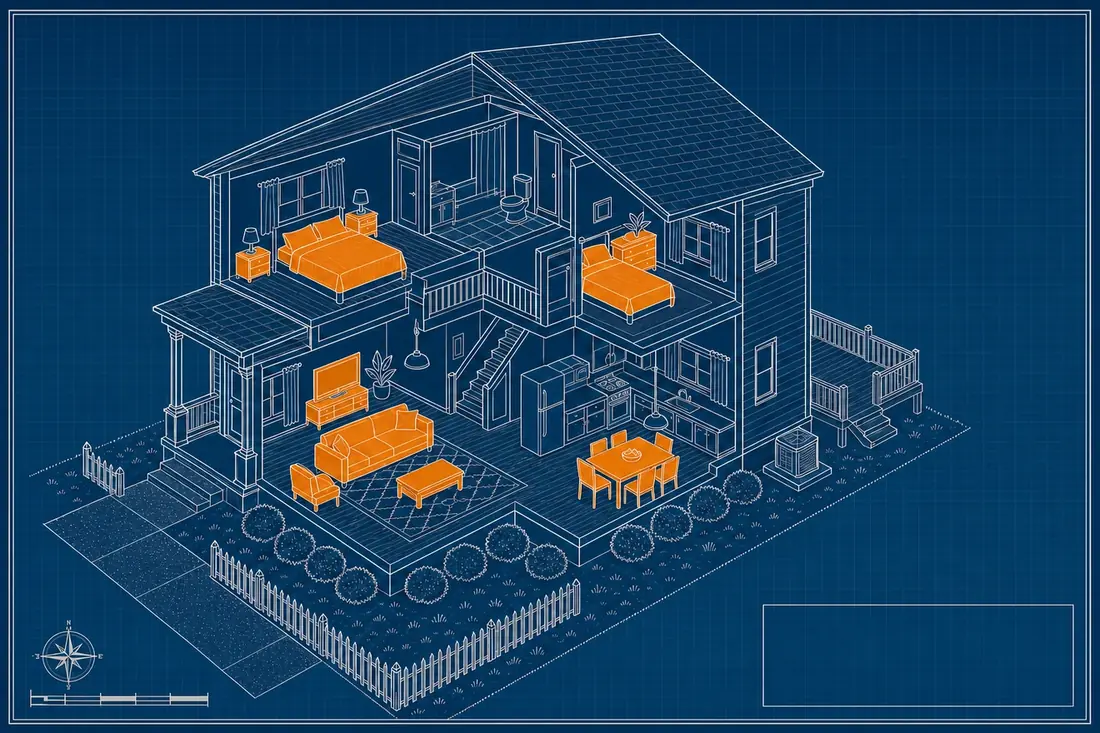
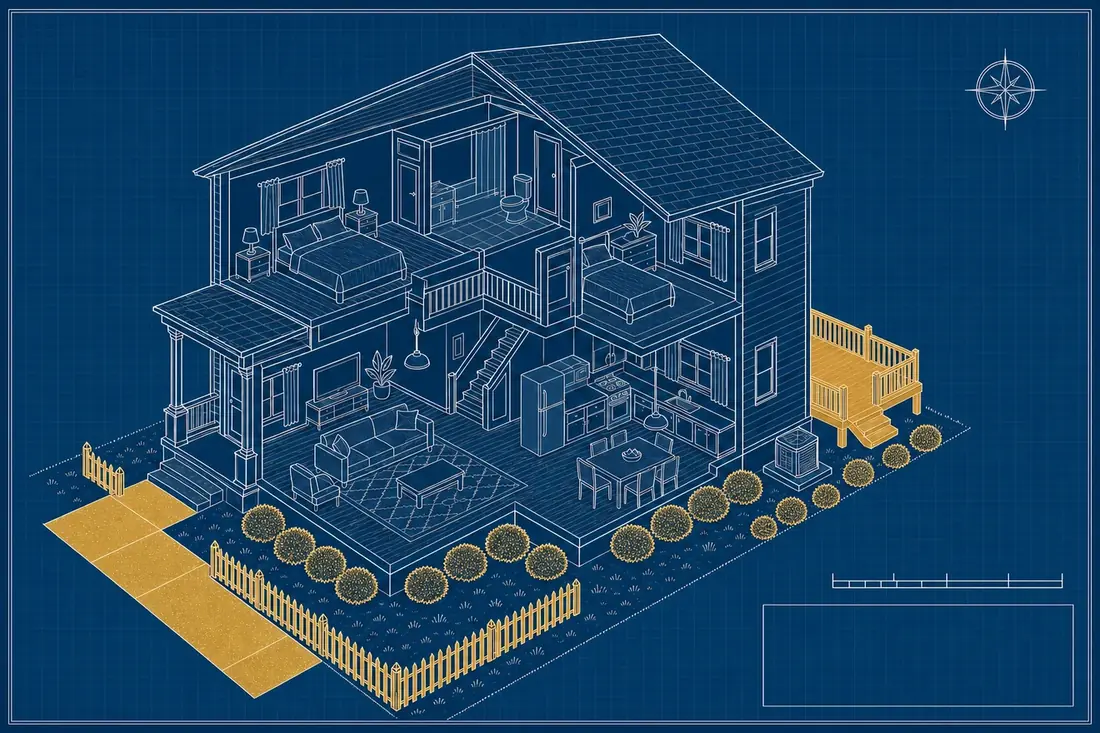
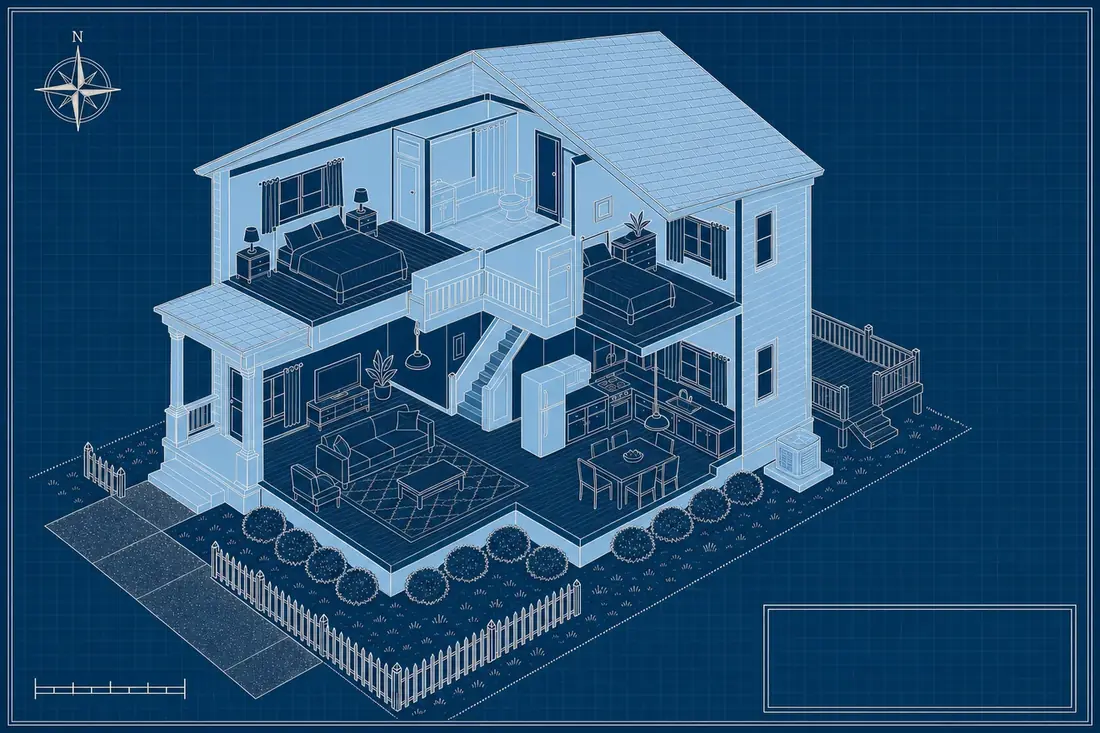
Watch a log cabin rental get built and classified A hypothetical $600,000 three-bedroom log cabin goes up floor by floor, from the gravel drive and foundation to the game loft and the hot tub on the deck. Every component lands on its depreciation schedule as it is installed, and the year-one depreciation adds up on screen. Watch the 90-second walkthrough »A cabin market built on outdoor amenities, not square footageHocking Hills sits in Hocking County, Ohio, roughly an hour from Columbus and about two hours from Cincinnati, close enough for both cities to treat it as a weekend drive-to. The rental stock is dominated by smaller cabins, often one or two bedrooms, built or renovated specifically for the short-term rental market. What makes a Hocking Hills cabin competitive as a listing usually has less to do with its square footage than with what surrounds it: a hot tub, a covered deck, a fire pit, sometimes a small pond or a treehouse structure on the lot. That amenity-heavy design is actually good news for a cost segregation study, since hot tubs, decking, and fire pits are exactly the kind of components that reclassify into faster depreciation schedules. But it is worth being direct about scale here rather than overselling it: a smaller cabin has a smaller building basis than a beach house or a commercial building, and a smaller basis produces a smaller absolute deduction. The ratio can still be excellent. The dollar amount is proportional to the property. Whether the structure itself sits on 27.5 or 39 years turns on the 80% dwelling-unit test, and a short-term rental averaging stays of 7 days or less generally lands on 39 (see the 27.5 or 39 years guide). 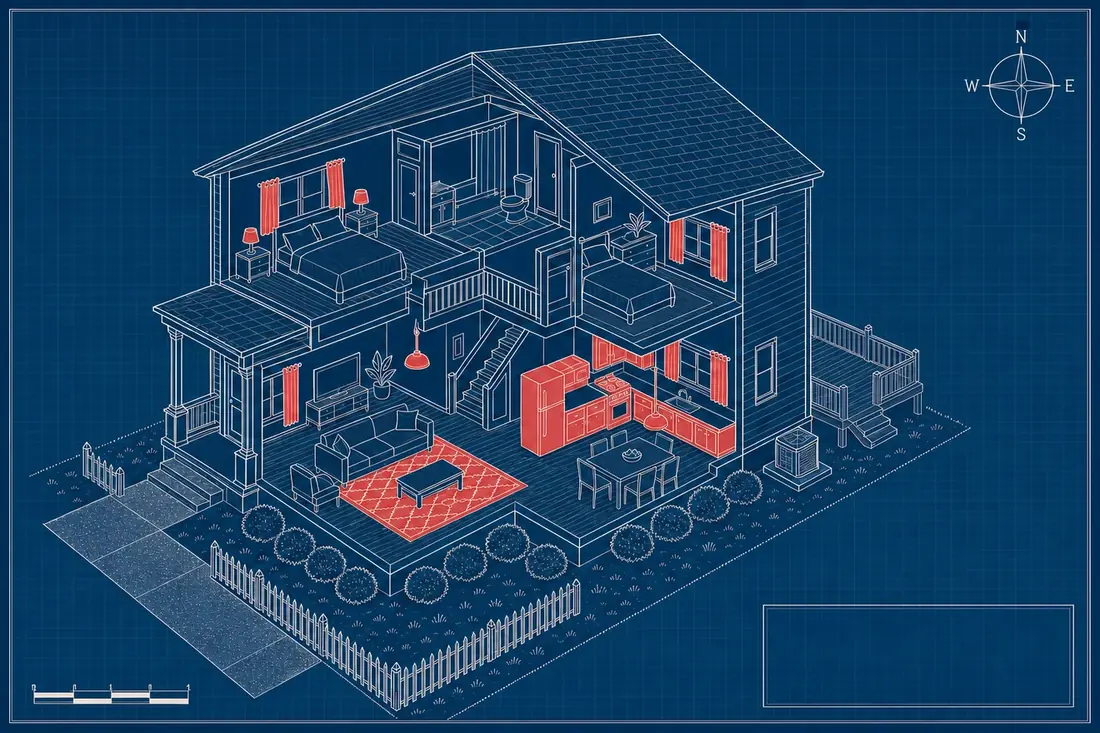
5-Year: carpet and flooring, cabinets, appliances, light fixtures, curtains 7-Year: furniture 15-Year: driveway, fencing, landscaping, deck 27.5/39-Year Shell: roof, load-bearing walls, foundation, central HVAC Get your free Preliminary Benefit Estimate Check the honest number for your cabin with the free estimate at /qualify, no minimum size required. Request Your Free Estimate »What reclassifies in a Hocking Hills cabin
The cabin's log or timber shell, its roof structure, and any central heating system stay on the building's 27.5/39-year schedule, the same as any rental property. A rustic-looking exterior does not change the depreciation rules; the components underneath are classified the same way a suburban rental's would be. The honest fee-versus-basis math at a lower price pointEvery study is custom-priced to the property, and a smaller Hocking Hills cabin is priced lower than a large beach house or a commercial building because the engineering scope is smaller. That is the same logic that produced a $1,295 fee on a delivered study for a single-family rental in Montgomery County, Pennsylvania, a 4,946 square foot property with a $1,040,000 basis that identified an estimated $174,905 in first-year depreciation, close to 135 times the fee. A Hocking Hills cabin, generally smaller in both size and basis than that example, will not produce that same dollar figure. It can still clear a strong ratio, because the fee comes down with it. 30 : 1guaranteed minimum on a short-term rental, or free 16-21%typical first-year deductions as a share of basis That guarantee, at least 30 times the fee in first-year deductions on a short-term rental, or the study is free, is the number worth checking before committing on any smaller property, cabin or otherwise. It is a floor, not a target, and the free Preliminary Benefit Estimate exists specifically so a cabin owner can see the projected number before spending anything. Estimate the first-year deduction on a property hereA few questions and the building value give a preliminary first-year deduction range, using the same rule as our free calculator. The breakdown can be emailed to you, or you can book a 15-minute call. Step 1 of 3 What kind of property?
Who runs it day to day?
What is the average guest stay?
When did you buy it?
How many rentals do you own?
Across all of them, does your rental portfolio show taxable income overall?
Any of them likely to sell in the next few years?
Prefer to talk it through? Book straight from here. No form needed.
Occupancy pattern and the passive loss testHocking Hills runs as a four-season drive-to market rather than a single-peak beach town, weekend bookings year-round with heavier traffic in fall leaf season and summer. Whatever the mix of weekend versus longer stays, the short-term rental exception under Reg. 1.469-1T(e)(3)(ii) turns on the average stay across the year being 7 days or less. A calendar built mostly on 2- and 3-night weekend bookings, common for a Hocking Hills cabin, tends to sit well under that line on its own. An owner who also blocks off weeks for personal use should track that time against the section 280A personal-use threshold, the greater of 14 days or 10% of rental days. Material participation is the separate half of the passive activity question. A smaller Hocking Hills cabin is often self-managed, the owner handling turnovers, cleaning, and guest messages personally rather than through a large-scale rental agency, which can make the 500-hour or the substantially-all-participation tests more straightforward to clear than they would be for an owner who hands the property entirely to a manager. Whether a specific owner's hours actually clear a given test is a question for that owner's CPA using the year's real records. None of the participation calculation changes what the depreciation study itself finds in the cabin. The study and the passive activity question run on separate tracks, and a cabin owner can commission a study regardless of how the participation question eventually resolves for that specific tax year. Why the guarantee matters more, not less, at a lower price pointA smaller cabin is exactly the kind of property where checking the guarantee before committing pays off, since it is easy to assume a modest building is not worth studying. Basis's floor, at least 30 times the fee in first-year deductions on a short-term rental, or the study is free, exists so that assumption never has to be a guess. Every study also carries full audit defense of the report by the team that produced it, the same protection a large commercial building's study gets, regardless of the cabin's size or price point. Turnaround runs 4 to 6 weeks during the main tax season, typically 2 to 3 weeks in January and February, the same window as any other property. Getting a number for your cabinThe free 60-second qualifier at /qualify models a Hocking Hills cabin's likely first-year deduction before any commitment, using listing photos rather than a scheduled visit. If a hot tub or deck gets replaced down the line, partial asset disposition is the mechanic for writing off what remains of the old one, in the year it comes out. Compare how the same mechanics play out on a larger property on the Broken Bow cabin page or read more on how the fee-to-deduction math works generally on the study cost guide. Frequently asked questionsIs cost segregation worth it on a small Hocking Hills cabin? Often yes, since the fee is custom-priced down to match a smaller property's scope. The guarantee floor is at least 30 times the fee in first-year deductions on a short-term rental, or the study is free, which is the number to check rather than assuming a small cabin is too small to bother. Does a hot tub count as part of the depreciation study? Yes, a hot tub and its supporting deck or platform are generally land improvements, typically on a 15-year schedule, separate from the cabin's structure. Fire pits and outdoor fireplaces get the same treatment. Do smaller cabins produce smaller deductions? Generally yes in absolute dollars, since deductions scale with building basis. The ratio between fee and deduction can still be strong because the fee scales down with the property as well. Does a Hocking Hills cabin need a site visit? No, short-term rental studies use listing photos to classify components, so there is no scheduled site visit and no owner homework required, regardless of how small or rustic the cabin is. What is different about Hocking Hills compared to a beach rental market? Hocking Hills runs year-round on weekend bookings rather than a single summer peak, and its rental stock leans on outdoor amenities like hot tubs and fire pits rather than waterfront square footage. Keep readingGet your free Preliminary Benefit Estimate Send the address or the listing link. We model the number first; you decide with it in hand. Request Your Free Estimate »Educational information, not tax advice. This page describes how federal
depreciation rules and tests work in general. Whether any rule fits your facts is a determination for
you and your CPA. Our study gives your CPA the engineering and the numbers to make that call.
|