|
Cost Segregation for Commercial & Short-Term Rental Owners
|
Request a free estimate [email protected] |
Qualification
FREE Estimate Is there a first-year deduction sitting in your building? No cost, no obligation. Request Yours »Minimum ROIOur study identifies at least 20x its fee in first-year deductions on commercial property, or at least 30x on a short-term rental, or it is free. |
What Is Real Estate Professional Status, and Who Meets It?Quick answer Real estate professional status is a section 469 classification that lets an owner's rental losses be treated as non-passive across their whole portfolio. It requires more than 750 hours in real property trades or businesses during the year, and more than half of the owner's total personal working time spent in those trades, plus material participation in each specific rental. It is built for owners whose main work is real estate, not a side rental alongside a full-time job. That is one of the tests. The check asks the rest. What you own, who runs it, average guest stay, when you bought. Four questions, 30 seconds, and you see the first-year deduction range a study would look for on your rental. No email to see the range. Run the 30-second check »Key takeaways
The two hour tests that have to both be trueReal estate professional status under section 469(c)(7) requires two things in the same year, not one or the other:
The second test is why a person with a demanding full-time job outside real estate almost never qualifies, even if they somehow logged 750 real estate hours on top of it. A W-2 job of 2,000-plus hours a year makes it mathematically difficult for real estate hours, however many, to exceed half of total working time. This status is built for owners whose primary occupation is real estate, or who have scaled back other work substantially. Retirees, owners between jobs, and spouses who left the workforce to run a growing rental portfolio full time are the clearest fits, precisely because there is no competing full-time job eating into the more-than-half comparison. A landlord who owns 20 units and treats managing them as their actual job has a real, provable path here; a landlord with 2 units and a demanding unrelated career almost never does, no matter how many weekends go into it. 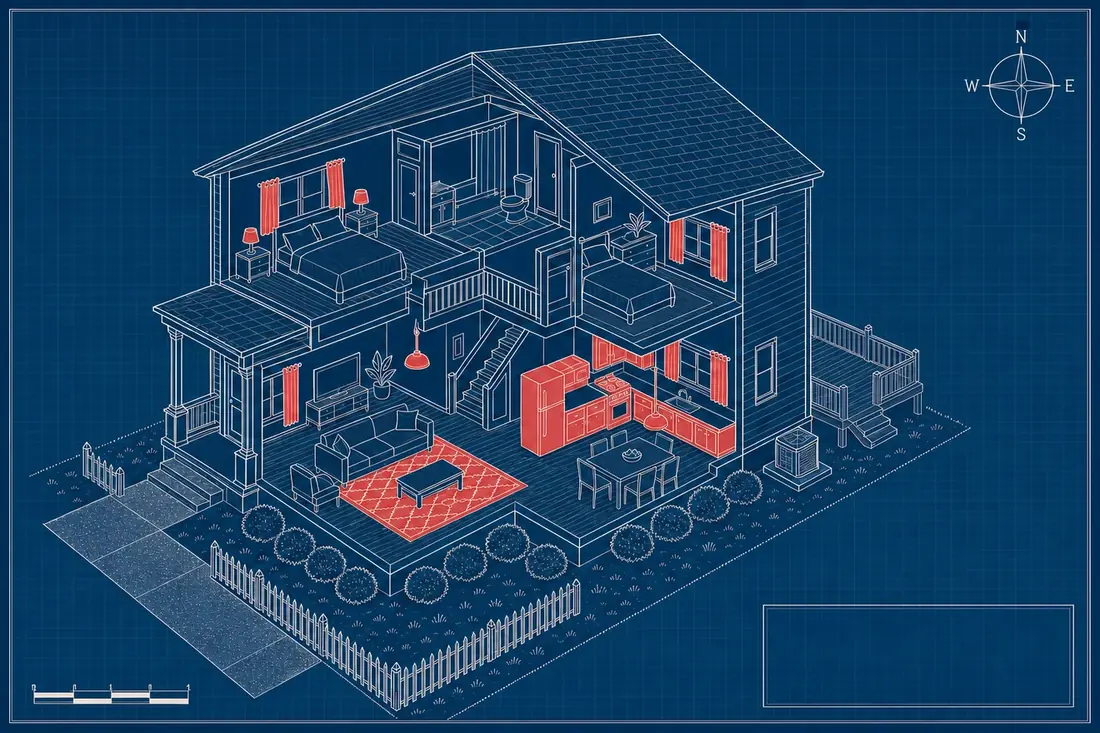
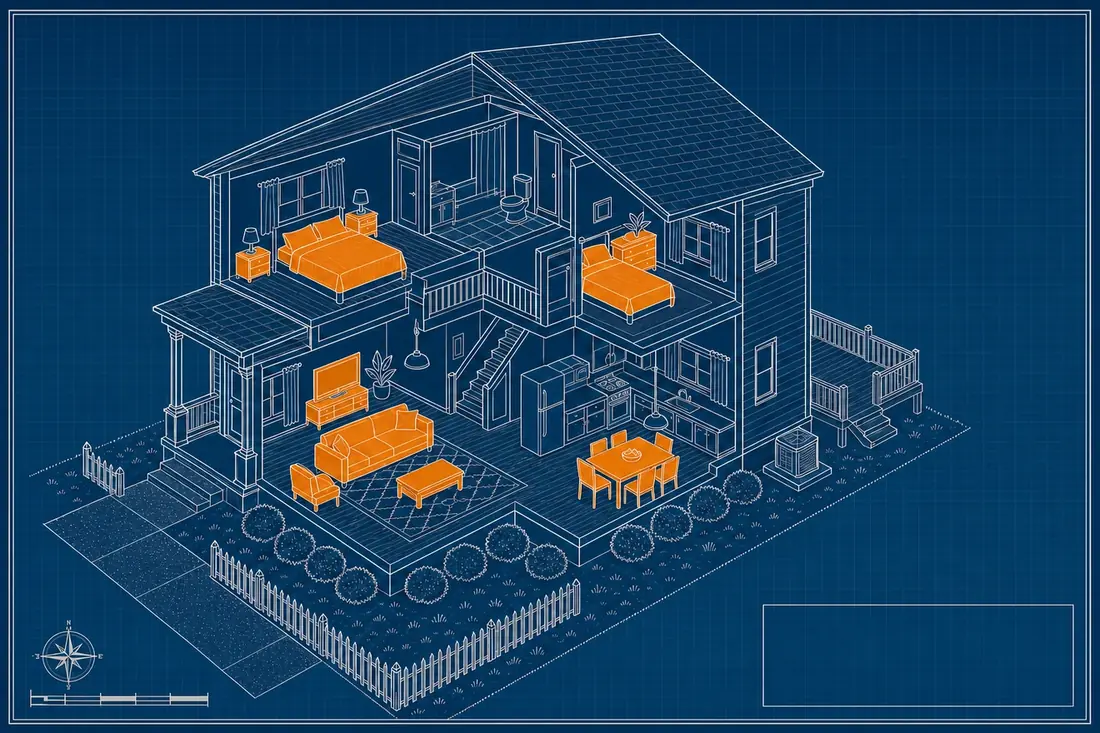
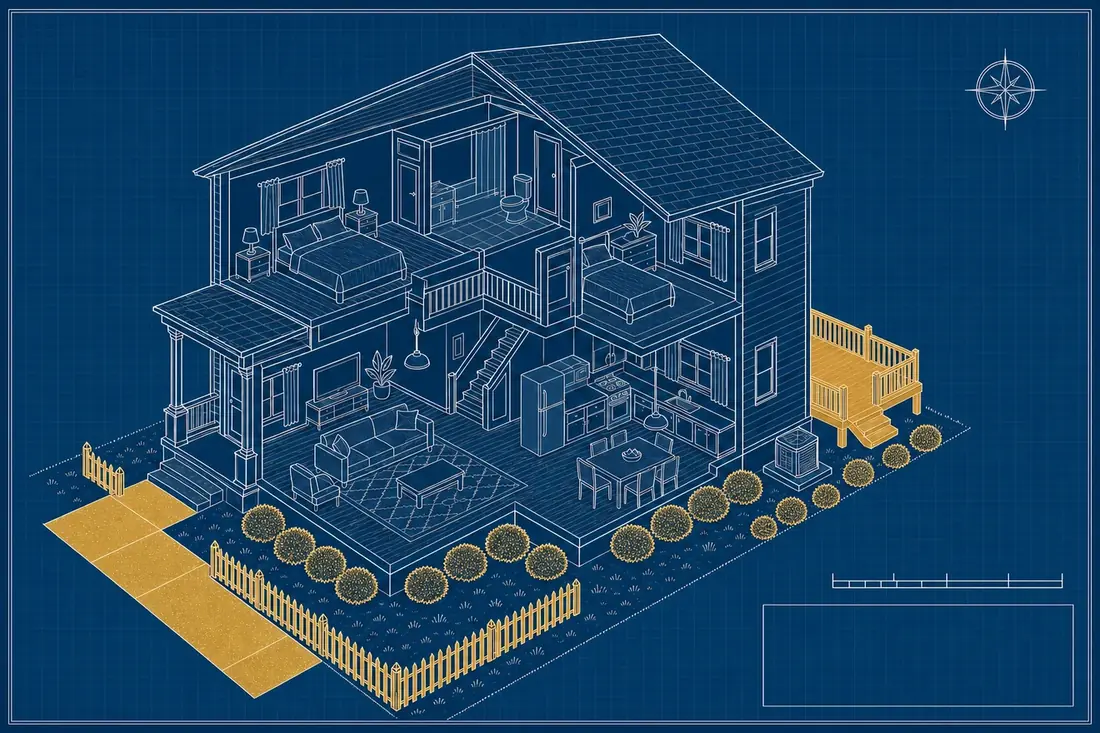
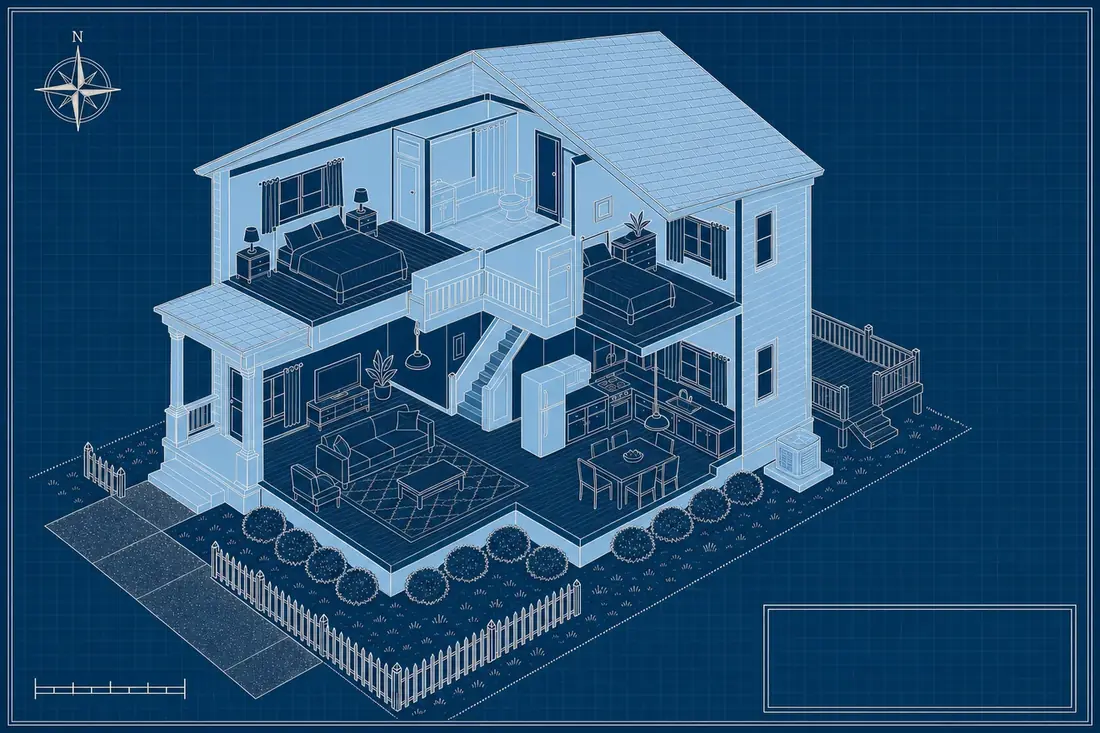
5-Year: carpet and flooring, cabinets, appliances, light fixtures, curtains 7-Year: furniture 15-Year: driveway, fencing, landscaping, deck 27.5/39-Year Shell: roof, load-bearing walls, foundation, central HVAC Get your free Preliminary Benefit Estimate Get the free estimate on the deduction itself, then confirm with your CPA whether your actual hours clear both real estate professional tests this year. Request Your Free Estimate »Material participation is a separate, additional requirementClearing both hour tests establishes real estate professional status generally, but it does not by itself make any specific rental's losses non-passive. The owner still has to materially participate in each rental activity individually (or in the aggregated activity, see below) under the same tests described in the general material participation rules. Status without participation in the specific property does not make that property's losses non-passive. This two-step structure trips up owners who assume the professional-status hours themselves count as participation in a specific rental. They can, if the hours were actually spent on that property, but hours spent on other real estate work, brokerage deals, construction projects, managing other people's properties, do not automatically transfer to a specific rental's participation test. A useful way to think about it: the 750-hour and more-than-half tests answer "is this person's job real estate," a single yes-or-no gate for the whole household. Material participation then asks, property by property, "did this person actually work on this specific building this year." Both answers have to be yes for a given rental's loss to be non-passive. A thread on BiggerPockets shows how easily this gap gets missed in practice. A recently married W-2 employee posted that his own accountant told him marrying a wife who qualifies as a real estate professional for her own rental LLC "has no benefits" on his taxes. Eight tax professionals answered, unprompted, and one accountant's reply named the exact structure this section describes: real estate professional status by itself does not automatically make rental losses deductible against a spouse's W-2 income, since the qualifying spouse also generally needs to materially participate in that specific rental, and the reply flagged that the stakes rise further once a cost segregation study is added, because a study can produce a large paper loss that only becomes usable once that second gate clears. Whether the original accountant's flat answer fit that couple's actual facts is not something the thread resolves. The useful part is the structure itself: one household-level classification, one property-level participation test, both required, neither standing in for the other. (BiggerPockets thread) Spousal hours and the aggregation electionFor a married couple filing jointly, the 750-hour and more-than-half tests are evaluated based on each spouse individually; only one spouse needs to meet both tests to establish real estate professional status for the household. Once established, however, both spouses' hours can combine toward material participation in a specific rental activity. Owners with several rental properties can make a grouping (aggregation) election under Reg. 1.469-9(g), treating all rental interests as a single activity for material participation purposes. This can make participation easier to establish across a portfolio (500 hours spread across five properties, rather than needing to separately clear a threshold on each one) but it is a formal election with its own filing requirements and consequences for later years, not a default. The consequence worth knowing before electing: once made, the aggregation election generally applies to all future years unless the owner's facts change materially enough to justify revoking it, so it is not something to toggle year to year based on whichever answer is more convenient at filing time. It is a structural decision made with a CPA looking at the whole portfolio, not a box checked on a whim, and it is worth modeling both scenarios (aggregated and not) before filing the first return that makes the election. The 60-Second Qualifier Four questions. Our engineering team's model shows the estimated first-year acceleration a study of your property would target, free, before you commit to anything. Take the Qualifier »What audit substantiation actually looks likeBoth hour tests are heavily fact-dependent, and the IRS has litigated real estate professional status often enough that documentation quality is what decides most exams. A contemporaneous log, built as the year goes rather than reconstructed afterward, covering dates, hours, and a description of the specific real property task performed, is the standard the courts and the IRS have generally expected.
Where this fits next to the short-term rental exceptionReal estate professional status is one of two main exits from the default passive treatment of rental losses; the short-term rental exception is the other, and they are independent of each other. An owner does not need real estate professional status to use short-term rental losses non-passively, and qualifying as a real estate professional does not require any property to pass the average-stay test. An owner can also fail real estate professional status and still separately qualify one specific short-term rental through the exception, since the two tests never compete against each other on the same return, they simply offer different doors into non-passive treatment, and an owner's CPA should check both before concluding either one is closed off. See how the two paths relate for an owner trying to figure out which one actually fits their situation, and how the full mechanics chain runs against W-2 income once either path is established. Frequently asked questionsCan a part-time real estate agent qualify for real estate professional status? Only if brokerage work plus any other real property trade hours exceed 750 for the year and exceed half of the agent's total working time across all jobs. A real estate agent who also works a separate full-time job in another field usually fails the more-than-half test, regardless of how many real estate hours they log. Does owning rental property count as a real property trade for the 750-hour test? Yes, rental is one of the listed real property trades or businesses under section 469(c)(7)(C), alongside development, construction, acquisition, management, and brokerage. Hours spent managing your own rentals count toward the 750-hour total, provided they are properly documented. If only one spouse qualifies as a real estate professional, does that help both spouses' returns? Yes, on a joint return, one spouse meeting the hour tests establishes real estate professional status for the household's jointly held rental activities, and both spouses' hours can then combine toward material participation in those specific rentals. What happens if I claim real estate professional status but cannot document my hours? The status can be disallowed on exam if hours are not substantiated, which converts the rental losses back to passive treatment for that year, with any resulting tax adjustment and possible penalties. This is why a contemporaneous log, not a reconstruction after the fact, is the standard worth keeping from day one. Keep readingGet your free Preliminary Benefit Estimate Send the address or the listing link. We model the number first; you decide with it in hand. Request Your Free Estimate »Educational information, not tax advice. This page describes how federal
depreciation rules and tests work in general. Whether any rule fits your facts is a determination for
you and your CPA. Our study gives your CPA the engineering and the numbers to make that call.
|