|
Cost Segregation for Commercial & Short-Term Rental Owners
|
Request a free estimate [email protected] |
Qualification
FREE Estimate Is there a first-year deduction sitting in your building? No cost, no obligation. Request Yours »Minimum ROIOur study identifies at least 20x its fee in first-year deductions on commercial property, or at least 30x on a short-term rental, or it is free. |
What Is Material Participation, and Why Does It Matter?Quick answer Material participation is the section 469 standard for whether an owner is regularly, continuously, and substantially involved in an activity. It matters for rental property because a loss can only offset other income, like wages, if the owner materially participates (or another exception applies). The IRS lists seven ways to prove it; most rental owners rely on just two or three of them, based on hours logged and documented. That is one of the tests. The check asks the rest. What you own, who runs it, average guest stay, when you bought. Four questions, 30 seconds, and you see the first-year deduction range a study would look for on your rental. No email to see the range. Run the 30-second check »Key takeaways
Why material participation exists in the tax codeSection 469 was written to stop losses from activities an owner is not really involved in from offsetting income the owner actively earns. The default assumption is that rental real estate is passive, since most owners are not there day to day the way they are at a job. Material participation is the standard an owner can meet to prove that assumption wrong for a specific activity, which then makes that activity's losses non-passive. This matters directly for a cost segregation study, since a study's main benefit, a large first-year deduction, is only immediately useful against wages or other active income if the resulting loss clears this standard, or if a separate exception like the short-term rental exception applies instead. The rule exists for a reason grounded in fairness between two very different kinds of taxpayers: someone who works 60 hours a week running an apartment complex and someone who wired money into a syndication and reads a quarterly report. Both are property owners on paper. Section 469 does not treat their losses the same way, and material participation is the test that draws that line. 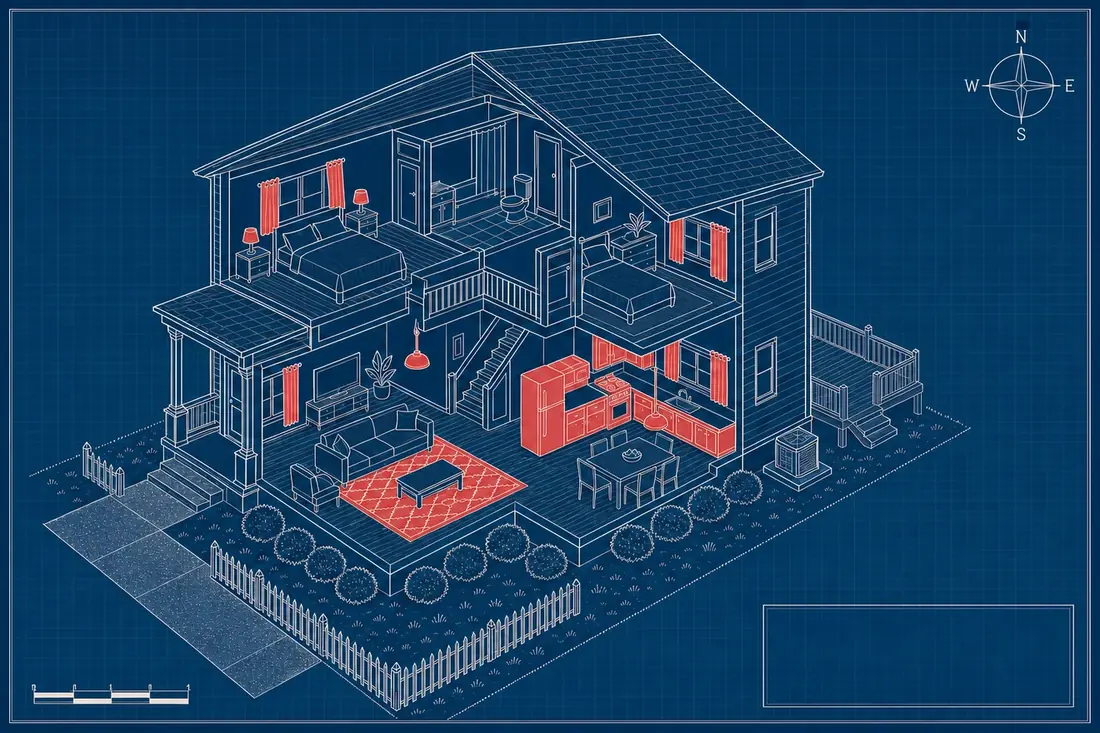
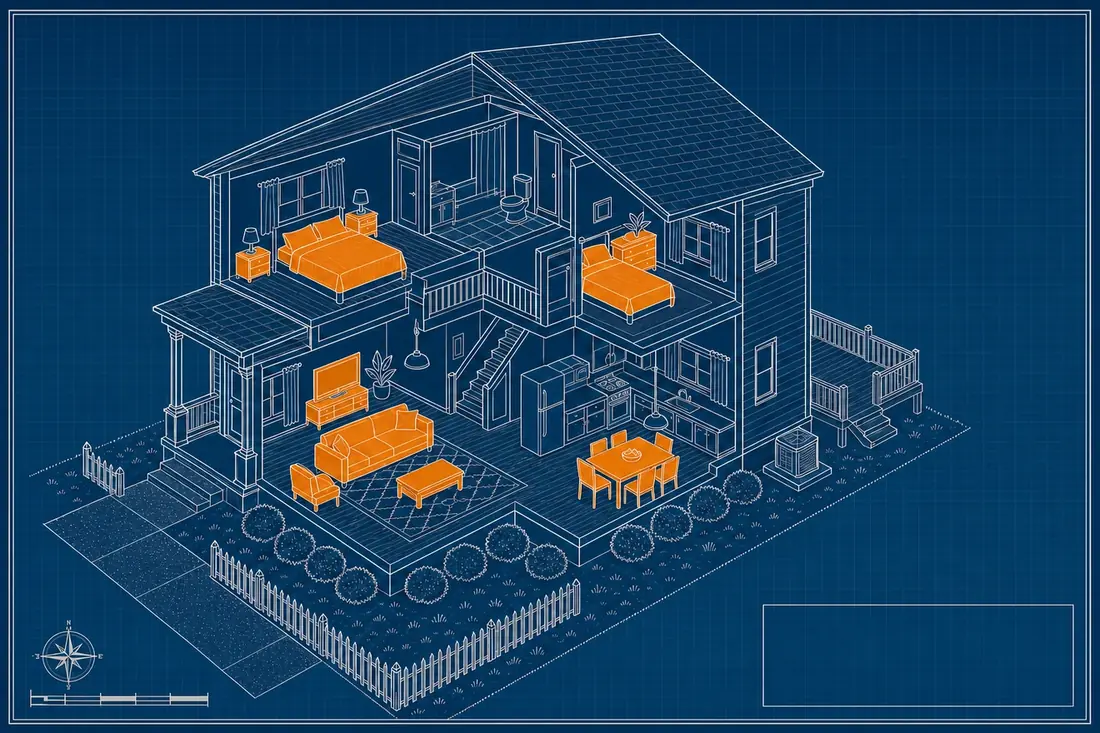
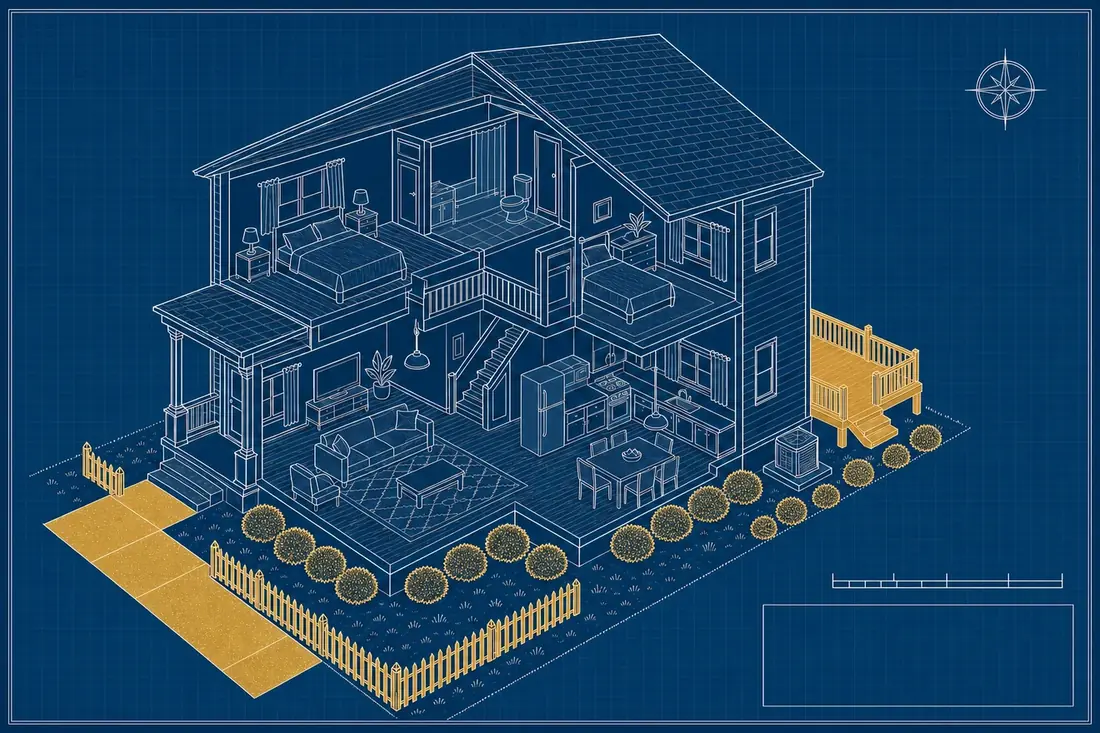
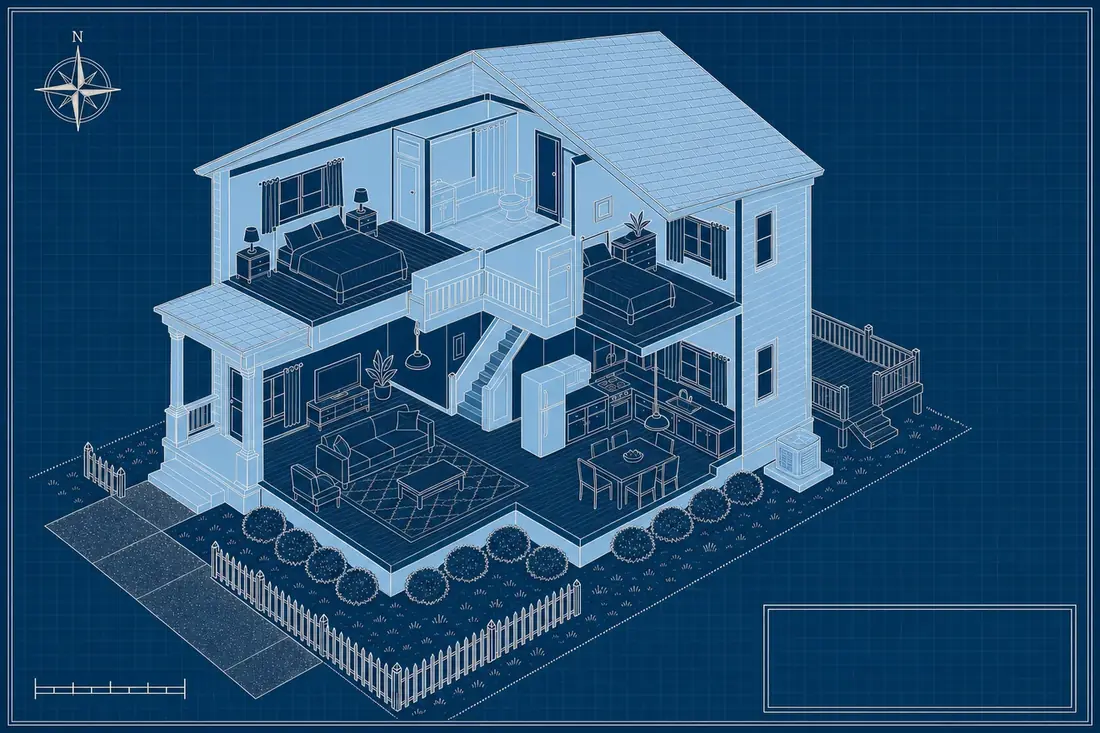
5-Year: carpet and flooring, cabinets, appliances, light fixtures, curtains 7-Year: furniture 15-Year: driveway, fencing, landscaping, deck 27.5/39-Year Shell: roof, load-bearing walls, foundation, central HVAC Get your free Preliminary Benefit Estimate Get the free estimate to see the deduction itself, then work out which of the seven tests actually fits your specific rental with your CPA. Request Your Free Estimate »The seven tests, in plain languageTemp. Reg. 1.469-5T lists seven ways an individual can be treated as materially participating in an activity for the year:
Meeting any one of the seven is enough. Most are built for businesses, farms, and professional practices with long operating histories; a single rental property usually turns on tests 1, 2, or 3. Tests 5 and 6 exist specifically for people transitioning out of an activity, someone who ran a business hands-on for years and has since scaled back, or a personal service activity like a medical or law practice. Test 4 is aimed at owners juggling several smaller activities where no single one hits 500 hours alone but the combined total does. Test 7, the facts-and-circumstances catch-all, is the least predictable to rely on and generally the last resort when none of the cleaner numeric tests apply. Which tests actually matter for rental ownersFor a standard long-term rental, material participation only matters at all if the owner is also trying to establish real estate professional status, since ordinary rental activities are passive by definition regardless of participation, unless that status or the short-term rental exception applies. See how a manager changes this calculus on a general rental. For a short-term rental whose average guest stay is 7 days or less, the property is not a "rental activity" under Reg. 1.469-1T(e)(3)(ii) in the first place, which is what makes material participation directly relevant on its own, without needing real estate professional status at all. See the three tests that matter most in that specific context (500 hours, substantially all, or 100 hours and more than anyone else) and how a full-service manager's hours can break the third test. Owners who split their portfolio between long-term and short-term rentals should keep the two categories analytically separate. A long-term rental's material participation only becomes relevant once real estate professional status is in the picture; a short-term rental's material participation is relevant on its own, immediately, the moment the average-stay test is cleared. Running both analyses through the same mental checklist is a common source of confusion. Michael Plaks, a tax accountant and enrolled agent with more than 5,500 posts on BiggerPockets, opened a widely read thread on the so-called "STR loophole" by rejecting the word itself: "the first of such myths is that it is a loophole. No, it is not. Loopholes are something UNintended. In contrast, STRs work this way intentionally, by design." The thread pulled 27 replies and 46 votes, and its real value here is not the framing point alone. Clearing the average-stay test only takes a property out of the passive rental-activity bucket; it does not, on its own, make the resulting loss usable. The owner still has to clear one of the participation tests above, most often the 500-hour test or the 100-hour-and-more test, before the loss can offset other income. Treating the average-stay exception as the finish line rather than the second of two gates is exactly how the free-money version of this story gets started. (BiggerPockets thread) The 60-Second Qualifier Four questions. Our engineering team's model shows the estimated first-year acceleration a study of your property would target, free, before you commit to anything. Take the Qualifier »What counts as an hour, across any of the testsWork an owner would reasonably perform to operate the activity counts: hands-on maintenance, tenant or guest communication, bookkeeping directly tied to the property, sourcing and coordinating vendors, and the research and decision-making involved in running it. Time spent purely as an investor, reviewing financial reports without operational involvement, generally counts far less under the regulations, and work performed in a capacity not typical of an owner (for instance, work customarily done by an owner in that trade) can be excluded entirely under the anti-abuse rules built into the regulation. A useful gut check: if the task is something a hands-off investor would never personally do, guest messaging at midnight, comparing quotes from three plumbers, restocking a linen closet, it almost certainly counts. If the task is something any passive investor does regardless of involvement, glancing at a monthly statement, it almost certainly does not. Documentation, and what happens if a test failsReg. 1.469-5T(f)(4) allows participation to be proven by "any reasonable means," which includes contemporaneous logs, calendars, and appointment books, but the regulation expects the record to exist, not be reconstructed after an exam notice arrives. A simple dated log with hours and a task description for each entry holds up far better than a single estimated total. Failing every material participation test does not eliminate a loss. It becomes a suspended passive loss, carried forward to a future year with passive income, or released in full at a taxable sale. A cost segregation study's deduction exists independent of this analysis; material participation only decides its timing, not its size. Frequently asked questionsIs material participation the same thing as being a real estate professional? No. Real estate professional status is a separate, portfolio-level classification requiring 750-plus hours and more than half of total working time in real property trades. Material participation is evaluated activity by activity and is a required additional step even for someone who already has real estate professional status. Do hours from managing my own property count toward material participation? Yes, hands-on work an owner performs to operate their own rental, guest or tenant communication, maintenance, vendor coordination, and related tasks, generally counts. Time spent purely reviewing reports as a passive investor, without operational involvement, counts for much less. Can I combine hours from two different rental properties to hit a material participation threshold? Generally no, since the tests apply activity by activity. An owner with multiple properties who wants to combine hours across them can consider a formal grouping (aggregation) election, which has its own rules and consequences and is worth discussing with a CPA before making it. What is the easiest material participation test to document? The 500-hour test is often the most straightforward to substantiate for an active owner, since it only requires total hours, with no comparison to anyone else's hours. The 100-hour-and-more test requires proving both your own hours and that nobody else logged more, which is a harder record to keep clean. Keep readingGet your free Preliminary Benefit Estimate Send the address or the listing link. We model the number first; you decide with it in hand. Request Your Free Estimate »Educational information, not tax advice. This page describes how federal
depreciation rules and tests work in general. Whether any rule fits your facts is a determination for
you and your CPA. Our study gives your CPA the engineering and the numbers to make that call.
|