|
Cost Segregation for Commercial & Short-Term Rental Owners
|
Request a free estimate [email protected] |
Qualification
FREE Estimate Is there a first-year deduction sitting in your building? No cost, no obligation. Request Yours »Minimum ROIOur study identifies at least 20x its fee in first-year deductions on commercial property, or at least 30x on a short-term rental, or it is free. |
Can You Do Cost Segregation on a Rental You Live in Part Time?Quick answer Yes, but the personal-use test comes first. Section 280A limits deductions when personal use exceeds the greater of 14 days or 10% of the days rented at fair value; cross that line and the property's tax treatment changes before depreciation even enters the picture. On a house-hack, where an owner lives in part of a building and rents the rest, only the rented portion's basis is depreciable, and a study reclassifies components within that rented share, not the owner's own living space. See this applied to your building. A few questions, 30 seconds. You see which tests matter and the first-year deduction range a study would look for. No email to see the range. Run the 30-second check »Key takeaways
Section 280A: The Gate Before DepreciationBefore any depreciation question, section 280A asks how many days the owner personally used the property versus how many days it was rented at fair value. Personal use exceeding the greater of 14 days or 10% of the days rented at fair value triggers 280A's limits, changing how the property's expenses, including depreciation, can be deducted. That threshold is a day count, not a judgment call about whether the owner's use "felt" personal. A weekend here and there for the owner adds up the same as an extended stay; the test does not distinguish by reason for the visit. Fair rental days matter too: a day rented below fair market value to a friend or relative generally does not count as a rental day, which can shrink the rental-day side of the ratio unexpectedly. Whether a specific property's day count crosses the 280A line is a facts-and-records question for a CPA, not something a general description can answer.
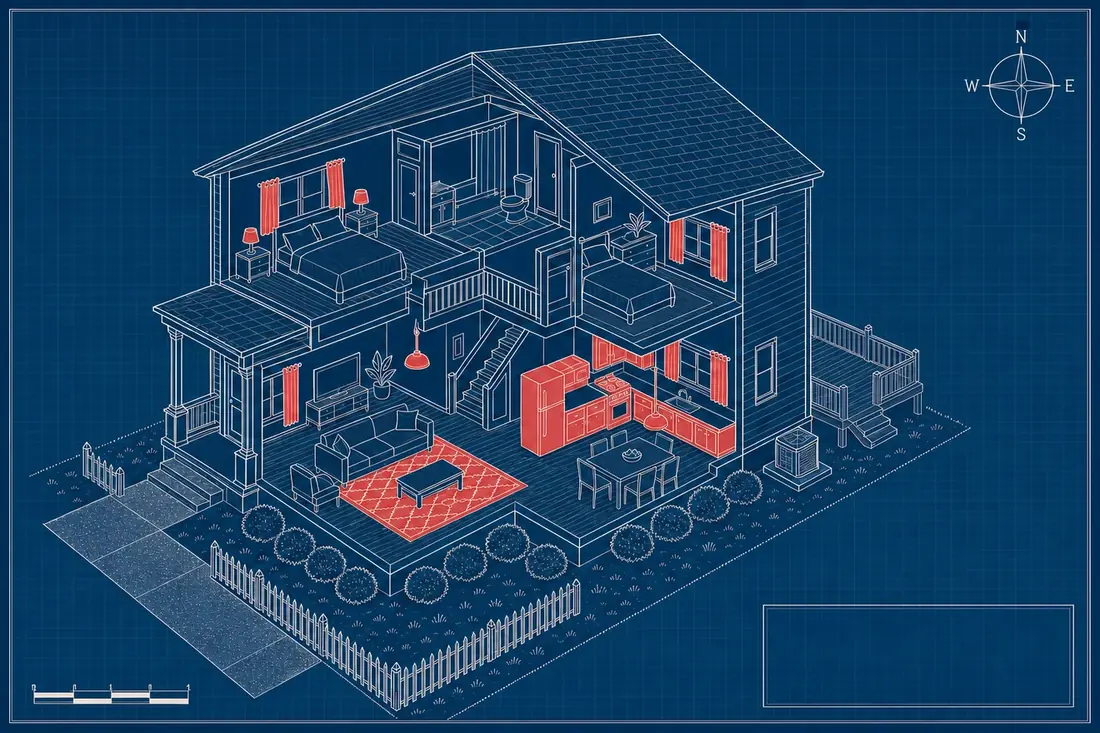
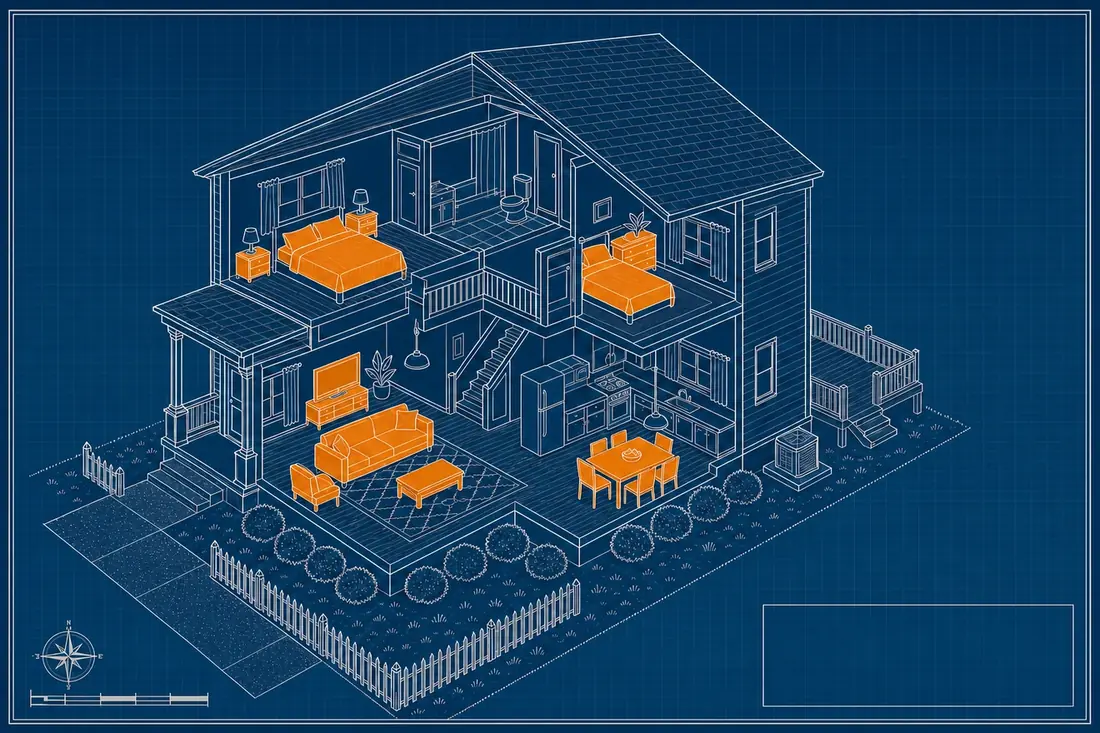
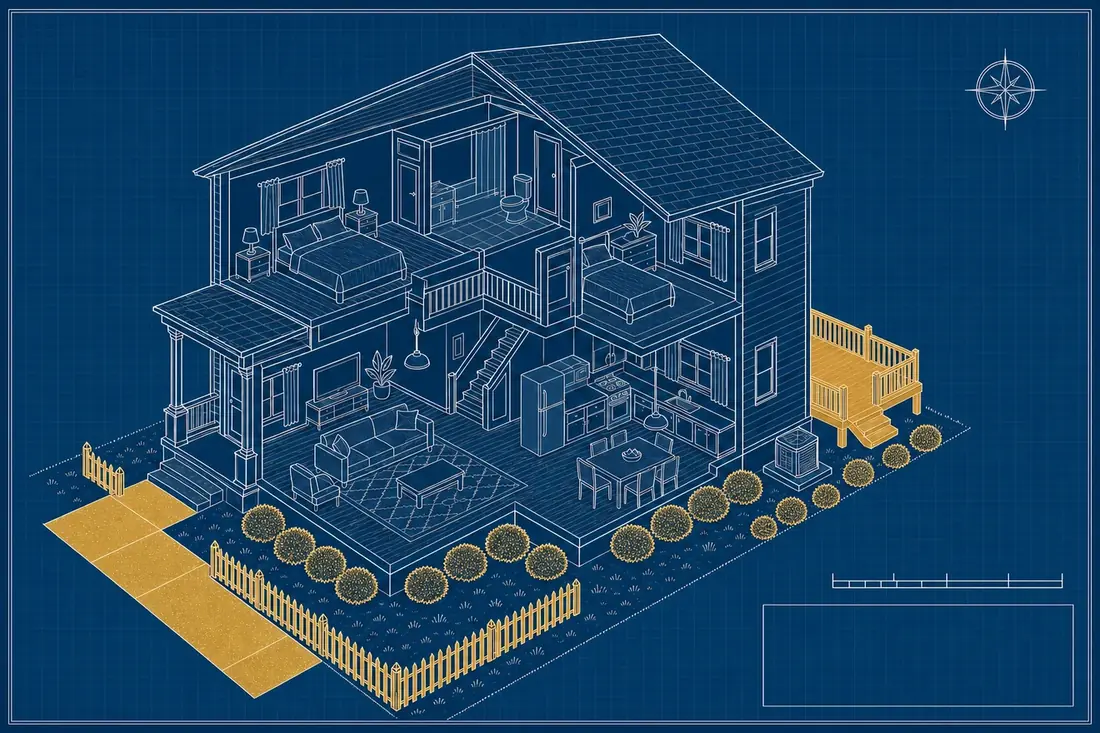
5-Year: carpet and flooring, cabinets, appliances, light fixtures, curtains 7-Year: furniture 15-Year: driveway, fencing, landscaping, deck 27.5/39-Year Shell: roof, load-bearing walls, foundation, central HVAC Get your free Preliminary Benefit Estimate Get a free Preliminary Benefit Estimate on the rented share of this property before working out the personal-use allocation with a CPA. Request Your Free Estimate »What a House-Hack Actually DepreciatesA house-hack, an owner living in part of a building while renting the rest, only depreciates the rented portion's basis. If an owner lives in one unit of a duplex and rents the other, the depreciable basis is the rented unit's share of the building, not the whole structure. The owner's own living space is not a rental asset and does not depreciate as one. Allocating basis between the owner's unit and the rented unit typically follows square footage or a comparable, defensible method, set before any cost segregation work begins. The reclassification study then works within that allocated rented share only. Shared systems complicate this further. A single HVAC unit or water heater serving both the owner's space and the rented unit typically gets allocated the same way the underlying square footage is, rather than assigned entirely to one side or the other. Which Structures Make the Allocation Easiest
The clearer the physical separation between the owner's space and the rented space, the easier the basis allocation, and the easier it is to defend a cost segregation study built on top of it. Where Cost Segregation Fits Inside That AllocationOnce the rented portion's basis is set, a study reclassifies its components the same way it would on any wholly-rented property: carpet, cabinetry, and appliances into 5-year property; certain site improvements into 15-year land improvements; the rented unit's structural shell staying on the 27.5-year residential schedule. The owner's own unit sits outside that analysis entirely. On a property with clearly separated units, a duplex, triplex, or accessory unit, that allocation is often straightforward. On a single-family home with a rented room or a rented basement inside shared living space, the allocation gets harder to defend and usually needs a CPA's judgment on method before a study is worth ordering. Common areas, a shared entryway, a shared laundry room, a shared yard, typically get split proportionally between the owner's space and the rented space rather than assigned entirely to either side, which is another reason the allocation method has to be settled before the reclassification work starts. The 60-Second Qualifier Four questions. Our engineering team's model shows the estimated first-year acceleration a study of your property would target, free, before you commit to anything. Take the Qualifier »A Worked Example, Scaled to the Rented Share$1,040,000depreciable basis, single-family rental (wholly rented) $174,905first-year depreciation 15.4%share of basis reclassified That real delivered study, a single-family rental in Montgomery County, Pennsylvania, built 2013 at 4,946 square feet, was wholly rented, with the full $1,040,000 basis eligible. A house-hack version of the same building, say half rented and half owner-occupied, would start from roughly half that depreciable basis before a study ever runs, since only the rented share is eligible in the first place. The reclassification percentage on the rented share, the 15.4% figure in the example above, would apply to that smaller number, not the whole building. Why the Personal-Use Test Matters More Here Than on a Pure RentalOn a wholly-rented property, an owner's occasional personal stay is what 280A is built to catch. On a house-hack, the owner lives there constantly, in their own unit, which is not personal use of the rented unit at all. The line that matters is whether the owner uses the rented unit itself beyond the 14-day or 10% threshold, not whether the owner lives in the building generally. Confusing "I live in the building" with "I personally used the rental unit" is the most common mistake on these properties, and it is why the day count has to track the specific unit being rented, not the property as a whole. A CPA reviewing the lease terms, the unit's actual layout, and the owner's calendar for the year is the only reliable way to settle where a specific property lands, especially on a property where the owner's own unit and the rented unit share a single entrance or a single set of utility meters. Getting a Number Before the Allocation Question Gets ComplicatedA free Preliminary Benefit Estimate can model the likely first-year acceleration once the rented share's basis is roughly known, giving an owner a number to bring into the allocation conversation with a CPA rather than working the allocation question blind. See who qualifies for a cost segregation study for the broader qualification picture, and cost segregation and passive income for how losses on the rented share get used once the study is done. Frequently asked questionsDoes renting to a family member below market rate count against the 280A test? A day rented at below fair market value generally does not count as a rental day at all under 280A; it can be treated closer to personal use instead. That shifts the ratio of personal days to rental days in a way that can push a property over the 280A threshold faster than expected. Can a single-family home with one rented bedroom qualify for a cost segregation study? It can, but the depreciable basis is limited to the rented bedroom's allocated share of the property, and shared common areas complicate that allocation. The smaller the depreciable basis, the smaller the deduction a study can identify, which is a fee-versus-benefit question worth checking before ordering. Does living in the building change how depreciation recapture works on sale? Recapture applies to the portion of the property that was actually depreciated as a rental. The owner's personal-use portion is subject to the home-sale rules instead, separate from the depreciation recapture rules covering the rented share. That split is a question for a CPA at the time of sale. How is the basis split decided between the owner's unit and the rented unit? Square footage is the most common method, comparing the rented unit's square footage to the building's total. Some properties use a different reasonable method if square footage does not reflect the units' relative value. The method should be set and documented before a cost segregation study runs on the rented share. Keep readingGet your free Preliminary Benefit Estimate Send the address or the listing link. We model the number first; you decide with it in hand. Request Your Free Estimate »Educational information, not tax advice. This page describes how federal
depreciation rules and tests work in general. Whether any rule fits your facts is a determination for
you and your CPA. Our study gives your CPA the engineering and the numbers to make that call.
|