|
Cost Segregation for Commercial & Short-Term Rental Owners
|
Request a free estimate [email protected] |
STR Guides
Free Listing SEO Audit Paste your Airbnb or VRBO listing. Get a scored audit in 90 seconds. Audit My Listing »FREE Estimate Is there a first-year deduction sitting in your building? No cost, no obligation. Request Yours »Minimum ROIOur study identifies at least 20x its fee in first-year deductions on commercial property, or at least 30x on a short-term rental, or it is free. |
How Does Cost Segregation Work on a Ski Condo?Quick answer A ski condo rented to guests can be studied like any depreciable rental. Nightly winter-season stays typically produce an average period of customer use well under 7 days for the year, clearing the short-term rental exception's first gate. The study itself works with what the owner actually owns inside the unit: furnishings, appliances, flooring, and unit-specific fixtures. Structural elements and common areas like lobbies, lifts access, and exterior walls sit with the HOA. See this applied to your building. A few questions, 30 seconds. You see which tests matter and the first-year deduction range a study would look for. No email to see the range. Run the 30-second check »Key takeaways
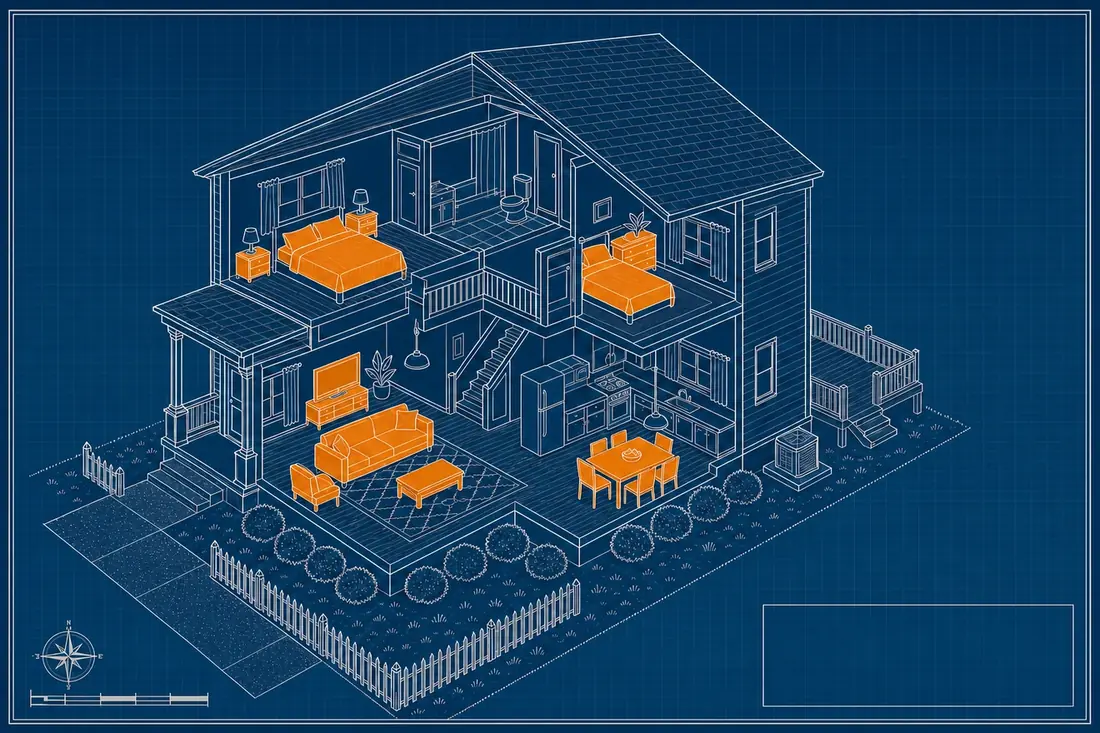
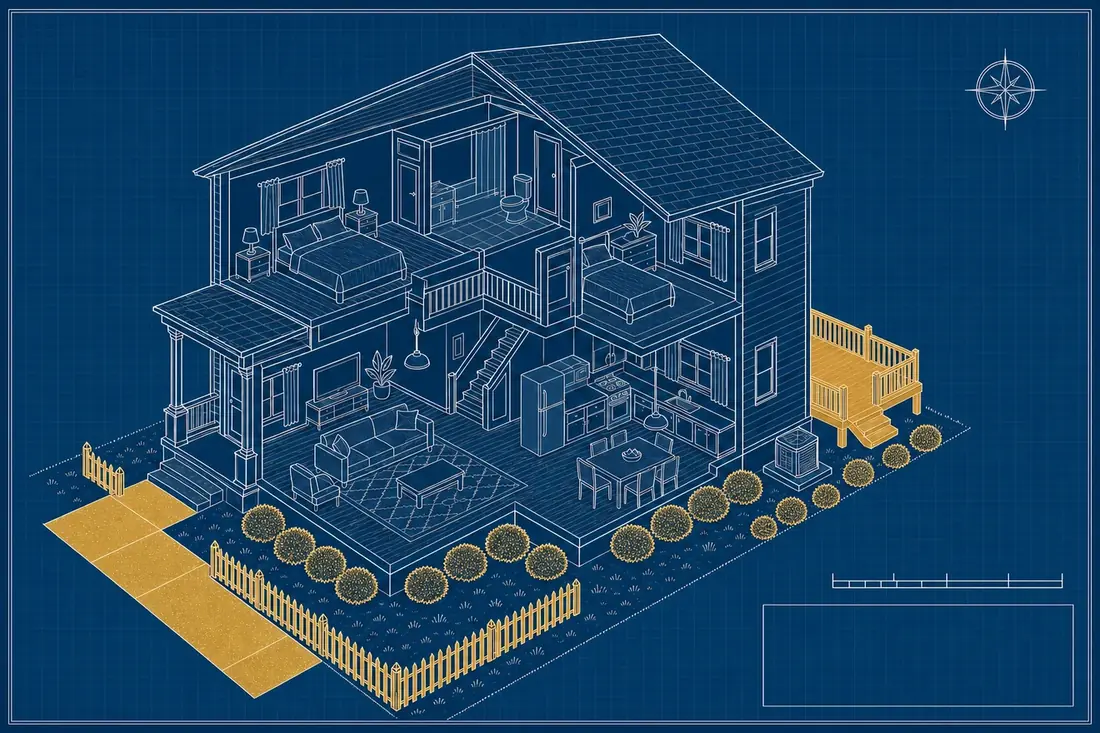
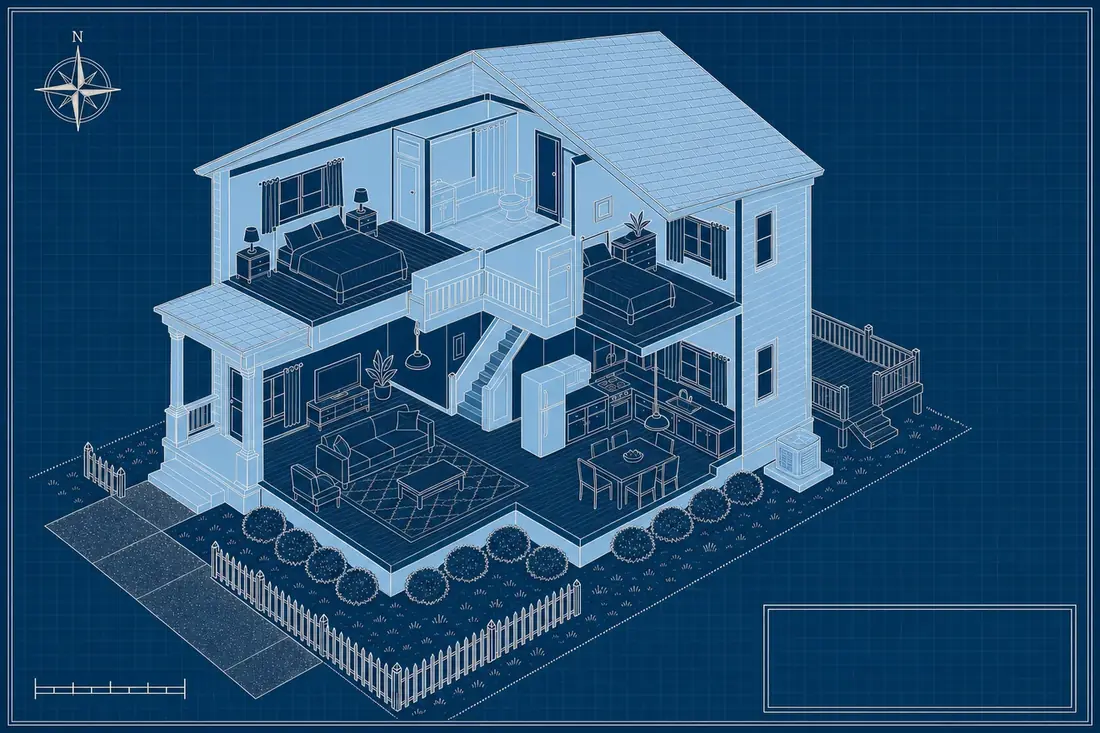
Watch a log cabin rental get built and classified A hypothetical $600,000 three-bedroom log cabin goes up floor by floor, from the gravel drive and foundation to the game loft and the hot tub on the deck. Every component lands on its depreciation schedule as it is installed, and the year-one depreciation adds up on screen. Watch the 90-second walkthrough »The winter-peak booking pattern and the average-stay testSki condos typically book in short nightly or weekend stays concentrated in the winter season, the pattern that most easily clears Reg. 1.469-1T(e)(3)(ii)'s 7-day average stay test. A condo that rents almost exclusively 2 to 5 night ski-trip stays across a winter season, even with a quieter shoulder season, usually lands with a yearly average well under 7 days. See the exact math behind the test for how the calculation runs across a full calendar year, not just the peak months. Owners should still run the actual reservation count rather than assume the season's character decides it. A condo that also takes a handful of week-long or month-long off-season bookings to fill an otherwise empty summer calendar can pull the yearly average up more than expected, especially in a lower-volume building where total reservations for the year are relatively few. Four-season mountain towns complicate this further: a property near a resort with real summer hiking or mountain-biking traffic behaves differently from one that goes largely quiet between April and November. Both patterns can clear the test; both need the actual reservation count run for the year rather than an assumption based on the region's reputation as a ski destination. Illustrative example (a math walkthrough, not an actual property): a two-bedroom ski unit booking mostly weekend ski trips across a 20-week winter might log around 45 separate reservations averaging 3 nights each, about 135 guest-nights for the season. Add 3 longer off-season stays averaging 9 nights (a summer sublet split across a few visits), and that is 27 more guest-nights over 3 more reservations. Total: 162 guest-nights across 48 reservations, for a yearly average near 3.4 days, well under the 7-day line. Shrink the winter reservation count to 15 (a smaller building, fewer but longer holiday-week stays averaging 6 nights each) while keeping the same 3 summer stays, and the math tightens considerably: 90 plus 27 is 117 guest-nights over 18 reservations, for an average closer to 6.5 days, still under 7 but with far less room to spare. The variable that moves the average is reservation volume, not the season's character, which is why running the actual count matters more than assuming a ski property automatically clears the test. 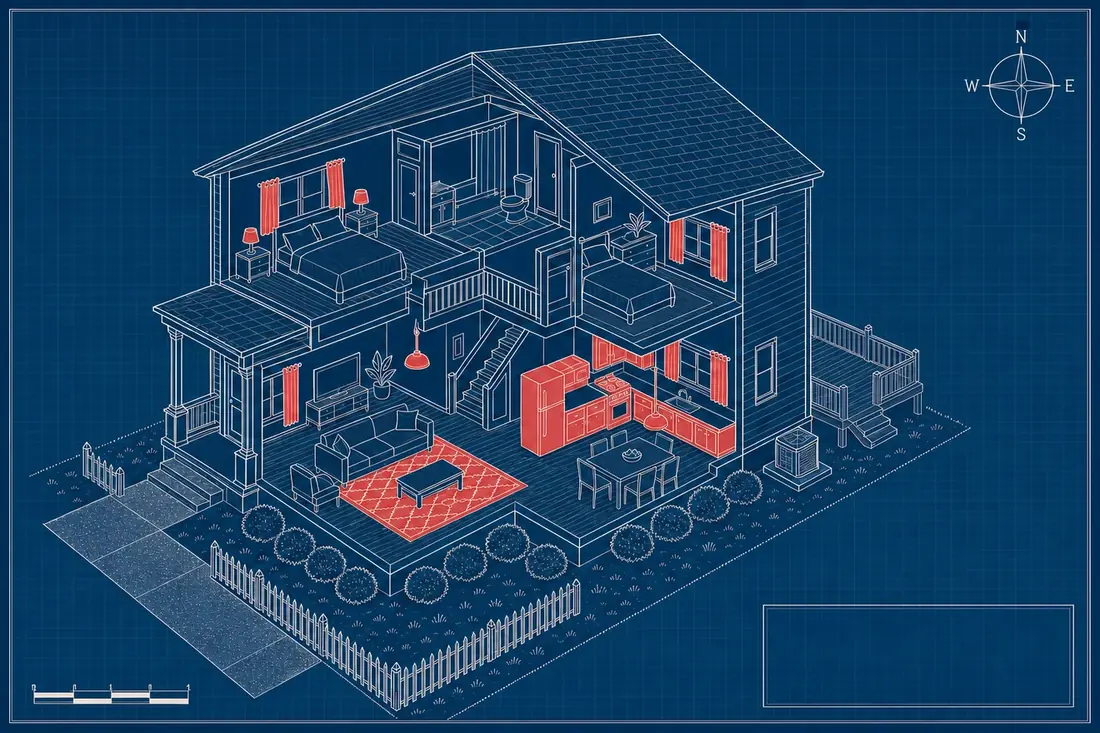
5-Year: carpet and flooring, cabinets, appliances, light fixtures, curtains 7-Year: furniture 15-Year: driveway, fencing, landscaping, deck 27.5/39-Year Shell: roof, load-bearing walls, foundation, central HVAC Get your free Preliminary Benefit Estimate Get the free estimate on your ski condo before the next tax season, and route the material participation question to your CPA based on how your unit is actually managed. Request Your Free Estimate »What a study reclassifies inside a condo unitCondo ownership generally means the interior finish and fixtures, while the building's structure, exterior walls, roof, and common areas (lobby, elevators, pool, ski storage room shared by the building) sit with the HOA. A study on a ski condo unit works with what is owned: flooring, cabinetry, bathroom fixtures, in-unit appliances, and furnishings, sorted into 5-, 7-, and 27.5-year classes the same way any residential condo would be. The interior-versus-common-area line is the same one that applies to any condo unit, ski or otherwise. If the condo declaration allocates a share of building-wide capital improvements to individual units, that allocated share can also factor into a unit's basis and, in turn, the study, though the mechanics depend on the specific declaration. This is one reason ski condos and beach condos are studied the same way structurally even though they look nothing alike on the outside: the study is always working from the unit's actual depreciable basis and its actual contents, not from the building's overall character or its price per square foot relative to other units in the complex. Ski-specific components worth namingSki condos carry a component profile shaped by their use: built-in ski and boot storage, mudroom flooring and cabinetry rated for wet gear, in-unit hot tubs or saunas where present, and furnishings selected for heavy seasonal turnover. All of these sort the same way other 5-year furnishings and fixtures do; nothing about a ski-specific fixture changes its depreciation class, only whether it exists in the unit at all. Ski condos also tend to see heavier wear on flooring, furniture, and window treatments than a comparable rental in a milder climate, given wet boots, salt and sand tracked in from parking areas, and constant guest turnover through a short winter season. That wear does not change the depreciation class, but it is part of why furnishings in these units are commonly replaced on a shorter cycle, which is also relevant to a future partial asset disposition when they are eventually swapped out.
The 60-Second Qualifier Four questions. Our engineering team's model shows the estimated first-year acceleration a study of your property would target, free, before you commit to anything. Take the Qualifier »Material participation on a self-managed vs. resort-managed unitWhether a ski condo's loss can offset other income still depends on material participation, the second gate under section 469. A self-managed unit, where the owner personally handles guest messaging, restocking, and coordinating a local cleaner, keeps the 100-hour-and-more test realistically in reach. A unit inside a full resort rental program, where front-desk and housekeeping staff run daily operations, faces the same strain described on the condotel page, since those staff hours count against the owner in the comparison. See the three material participation tests that matter most for short-term rentals for how the hours are counted and documented. Some ski towns sit in a middle ground: a smaller building with a handful of local cleaners and a part-time manager rather than a full resort staff. Whether that structure still leaves an owner with the most hours in the comparison depends entirely on how many hours those specific people actually log, which is worth tracking rather than assuming from the building's general reputation as "managed" or "self-managed." Timing a study around a ski condo purchaseA ski condo purchased mid-season and a ski condo purchased in the off-season depreciate the same way; the placed-in-service date, not the calendar season, sets when depreciation begins. An owner who already owns a ski condo purchased years ago can still capture the missed depreciation through a look-back study using Form 3115 and a section 481(a) catch-up, without amending prior returns. Bonus depreciation eligibility follows the same acquisition-date rule as any other property: qualified property (the 5-, 7-, and 15-year components a study identifies) acquired after January 19, 2025 gets 100% bonus depreciation under the current, permanently restored rate. A ski condo acquired earlier, in the 2023-through-early-2025 window, sits on the older phase-down schedule instead, which is worth confirming against the actual purchase date before assuming which rate applies, since the acquisition date, not the tax year of the study, is what sets the rate. Frequently asked questionsDoes a ski condo's summer off-season affect the 7-day average stay test? It can, depending on what fills the calendar. If the off-season sits mostly vacant, vacancy does not count toward the average either way. If the off-season brings in a handful of longer stays (a month-long summer sublet, for example), those bookings add disproportionate weight to the yearly average and should be included in the actual calculation, not assumed away. Is HOA dues-funded work on common areas part of my cost segregation study? Generally no, since common areas like the lobby, exterior, and shared amenities are owned by the HOA or building entity, not the individual unit owner. A study focuses on what the unit owner actually owns and depreciates, unless the condo declaration specifically allocates a share of building-wide capital costs to each unit's basis. Do ski condos typically reclassify more or less than a beach condo? The reclass share depends more on how the specific unit is furnished and finished than on whether it is a ski or beach property. Both are residential condos in the same 27.5-year depreciation world, and a well-furnished unit of either type typically carries a meaningful 5-year share driven by furnishings and fixtures rather than by climate or location. Can I do a cost segregation study on a ski condo I inherited? Yes. An inherited property generally receives a stepped-up basis to its fair market value at the date of death, and a study can be done on that stepped-up basis, restarting depreciation from that new number rather than the original purchase price. Keep readingGet your free Preliminary Benefit Estimate Send the address or the listing link. We model the number first; you decide with it in hand. Request Your Free Estimate »Educational information, not tax advice. This page describes how federal
depreciation rules and tests work in general. Whether any rule fits your facts is a determination for
you and your CPA. Our study gives your CPA the engineering and the numbers to make that call.
|