|
Cost Segregation for Commercial & Short-Term Rental Owners
|
Request a free estimate [email protected] |
Read nextMinimum ROIOur study identifies at least 20x its fee in first-year deductions on commercial property, or at least 30x on a short-term rental, or it is free. |
Your Airbnb Was Supposed To Be Easy Money
You ran the numbers before you bought it. Nightly rate, times occupancy, minus the mortgage. It worked on the spreadsheet. Then you actually owned it. The cleaner cancels on a Friday. Somebody leaves four stars because the wifi was slow. You are answering a message about the lockbox at eleven at night. And the money that was supposed to be sitting there at the end of the month is mostly not sitting there, because you bought a washer, and then a mattress, and then the deck needed work. It was supposed to be easy second income. It is a second job.
A client of mine bought the same problemI will call him James. He bought a cabin in the Poconos for $310,000. He is not a real estate guy. He has a regular job. He bought it because a friend of his had one and made it sound simple. A year in he was tapped out, and he knew exactly what the place needed, because he had stayed in enough of them to know. A hot tub. The basement finished. He had watched what those two things do to a nightly rate in his area. He just had nothing left to do either one with. So he waited. Told himself next season. Then we found $68,000 in the building he already owned. $310,000what he paid for it
$68,000what our study found in it
$20,000back in cash that year
+30%his nightly rate after
James's figures. Client example, individual results vary. Not tax advice. What that actually means, in plain wordsWhen you buy a rental, the government lets you deduct what the building cost you a little at a time, because buildings wear out. That deduction is called depreciation, and you are almost certainly already taking it without thinking about it. Your accountant put the whole building on one long schedule. You deduct a sliver a year, every year, for decades. One line on your return. Same number annually. Nothing to think about. Depending on how the property is classified, that long schedule is either 27.5 years or 39. Your accountant makes that call. Either way it is decades, which is the only part that matters here. That is the default. And the default quietly costs you, because a building is not one thing. Your building is not one thingWalk through it. The flooring does not last decades. Neither do the appliances, the cabinets, the light fixtures, the carpet, the window treatments, or the paving and landscaping outside. The tax code has never claimed they do. Those pieces belong on 5, 7 and 15 year schedules, and things on short schedules come off far faster.
Almost nobody splits them out, because splitting them out takes an engineer who can price building components. That is the whole idea. Somebody goes through what you actually bought, works out which parts belong on the fast schedules, and moves them. The rest stays where it was. On James's cabin, $68,000 of it belonged on the fast schedules. Same money, different decadeNothing about James's cabin changed. He did not renovate, refinance, or appeal his assessment. The only thing that changed was which schedule those pieces were sitting on. Same money. Different timing. And timing is the entire game when you are the guy who cannot afford the hot tub.
So why did my accountant never mention this?Good question to ask, and the answer is boring. It is not a knock on your accountant. It is not an accounting job. Working out what the cabinets and the flooring and the site work cost is a construction skill. Firms that do this either employ engineers or partner with one. Your accountant files the finished study on your return. They do not produce it, the same way they would not produce an appraisal of the property. It is also not new and it is not a scheme. It has been settled law since the IRS lost a case called Hospital Corporation of America in 1997, and the IRS itself publishes a guide describing how these studies are supposed to be done. It is a specialty. Specialties do not come up unless somebody raises them.
Nobody comes to your houseThis is the part that surprises people most. We never went to the Poconos. Not once.
On a house, the engineer works from your closing statement, the county's own records, your listing photographs and the floor plan. That is enough to price the components, and it is a large part of why a study on a house costs a fraction of what one on a warehouse costs. James's side of it took about ten minutes. He sent the settlement statement from his closing and a link to his Airbnb listing. That was the whole ask. What he did with itAt his 37% tax rate, $20,000 came back to him in cash the same year. He bought the hot tub. He finished the basement. 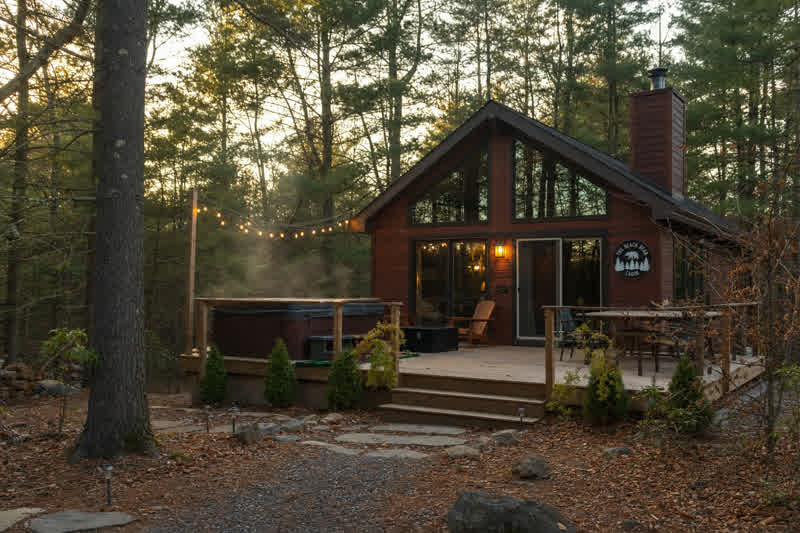
His nightly rate went up about 30%, which came to roughly $14,000 a year more on the same cabin. Read that order again, because it is the point. He did not come into money and go looking for somewhere to put it. He had a list. He had had it for a year. The money to do it was sitting inside the building the whole time he was telling himself next season. Client example. Individual results vary. Not tax advice. Now the part where I talk you out of itThis does not work for everybody, and the thing that decides it has almost nothing to do with your building. For the deduction to come off your other income, your job income included, in the same year, two things generally have to be true. Your guests have to be staying short, seven days or less on average. And you have to be the one running the place: the bookings, the pricing, the eleven at night lockbox messages, the vendors. If that sounds like your life, you are in the conversation.
If you handed the keys to a management company and you hear from the property twice a year, you usually are not. The deduction is not lost. The rules generally hold it until later, it carries forward, it comes into play when the property is sold, and the picture can change if the owner later takes over running it. Your accountant settles which side of that line you are on. I am telling you what the test is, not telling you your answer. That rules out a real share of the people reading this, and I would rather say it here than on a call. You do not have to have bought it this yearA property you put into service in an earlier year is generally handled as a catch-up rather than a first-year claim. There is a specific form for it and it does not mean amending old returns. Whether yours works that way, and what it produces, is your accountant's call once they have the study in hand. Worth knowing before you assume you missed the window. How I can give you a number before you pay me anythingEvery county publishes a split between what it calls land value and what it calls the building. Land never depreciates, not a dollar of it, so that split decides how much of what you paid is even eligible. I run that data across whole counties at a time. In the Poconos the building is usually most of the price. On the Jersey Shore it is often about half, because you are largely paying for the location. Two people can pay the same $310,000 and be sitting on very different amounts, and neither of them knows it. What it costsMost short-term rental studies land between $1,095 and $4,295. The fee scales with what you paid, because a two bedroom cabin and a twelve unit building are not the same work.
A duplex, triplex or fourplex runs $500 more than a single house at the same price. An ADU you rent on its own is priced on the ADU alone, meaning what it cost to build or convert, or its share of what you paid by square footage. Why that is a range and not a price list is worth understanding, because it works in your favour. On a short-term rental our study identifies at least 30 times its fee in first-year deductions, or it is free. That is a promise, but it is also a ceiling on what we can charge you. We cannot bill more than a thirtieth of what we expect to find. So where there is less sitting in the building, whether because land is a big share of what you paid or because the building is modest, the fee comes down or we tell you it is not worth doing. Which is why we price per property once we have looked at your county's numbers, and why nobody here can quote you off a card. What this actually isTake the terminology out and it is simple. You bought a building. Parts of it wear out fast, and the tax code has always known that. Nobody ever separated those parts out, so you have been deducting the whole thing at the pace of the slowest piece in it, and you will keep doing that for decades unless somebody looks. Not exotic, and not a scheme. A filing detail nobody raised with you, on a building you already paid for.
The only question worth your time is whether you are one of the owners who can use it now. Four questions, thirty secondsWhat the property is, who runs it, how long guests stay, and when you bought it. It tells you which of three groups you are in. The one where this makes sense now, the one where the timing is the open question, and the one where the honest answer is that this is not your property. If it makes sense, it shows you the size of the deduction a study would look for on a building at your value. No cost. Nobody calls you unless you ask them to. Step 1 of 3 What kind of property?
Who runs it day to day?
What is the average guest stay?
When did you buy it?
How many rentals do you own?
Across all of them, does your rental portfolio show taxable income overall?
Any of them likely to sell in the next few years?
Prefer to talk it through? Book straight from here. No form needed.
Would rather just send a message? Click here.Tell me what you paid and where it is I will pull your county's own land and building split and send you the size of the deduction a study would look for on your property. No cost, and nobody calls you unless you ask. Got it. I will pull the county records on your property and come back to you within one business day. Questions owners actually askFrequently asked questionsDoes somebody have to come look at my property? No. On a house the engineer works from your closing statement, your county's records, your listing photographs and the floor plan. Your side of it is usually about ten minutes of sending documents. What does it cost? Most short-term rental studies land between $1,095 and $4,295, scaling with what you paid. A million dollar property generally runs $2,495 to $2,895. We quote per property after looking at your county's numbers, and our study identifies at least 30 times its fee in first-year deductions or it is free. How long does it take? Two to three weeks from the day we have your documents. If your return is on extension there is usually room, but tell us the deadline up front and we will say honestly whether it fits. Will this get me audited? Component depreciation has been settled law since the IRS lost Hospital Corporation of America v. Commissioner in 1997, and the IRS publishes an Audit Techniques Guide describing how these studies are supposed to be done. A study also leaves you better documented than you were, because it replaces one number on a schedule with a line by line record of what that number is made of. I bought the place three years ago. Did I miss it? Not necessarily. A property put into service in an earlier year is generally handled as a catch-up rather than a first-year claim, using a specific form, and it does not mean amending old returns. Whether yours works that way is your accountant's call once they have the study. A management company runs my rental. Does this still work? It changes the timing rather than the amount. Whether the deduction can come off your other income in the same year turns on how long guests stay and how involved you are, and your accountant settles which side of that line you are on. A deduction you cannot use immediately is not lost: the rules generally hold it until later, and it comes into play when the property is sold. Do I need to change accountants? No. We produce the study and hand it to whoever prepares your return. Costing out building components is an engineering job, not an accounting one, which is the reason it rarely comes up on its own. What do you need from me to start? The settlement statement from your closing, a link to your listing, and receipts for anything substantial you spent after buying it. Landscaping, appliances and furnishings often carry more of the benefit than owners expect, so those receipts are worth digging out. Basis Property Group is a cost segregation advisory and brokerage. It is not a certified public accounting firm or a law firm, and nothing on this page constitutes tax, legal, or accounting advice. Figures shown are preliminary and illustrative. Actual results depend on an engineered study and on your individual circumstances, including Pennsylvania state tax treatment, and are determined by you and your tax advisor.
|
Copyright © 2026 Basis Property Group | Philadelphia, Pennsylvania | Studies in all 50 states
Popular guides: Airbnb & STR | Do I Qualify? | What a Study Costs | Audit Risk | When to Do It | Real Examples
About | Careers | Guides | Articles | Site Map | Privacy Policy | Terms of Service
You are visitor 0148293 | Last updated: August 2026 | Best viewed at 1024x768
Content reviewed against IRS Publication 946, Treasury Regulation §1.168, and the IRS Cost Segregation Audit Techniques Guide. For educational purposes only; this site does not constitute tax advice. Consult your CPA before filing. Not affiliated with the IRS.