|
Cost Segregation for Commercial & Short-Term Rental Owners
|
Request a free estimate [email protected] |
Guides & Tools
FREE Estimate Is there a first-year deduction sitting in your building? No cost, no obligation. Request Yours »Minimum ROIOur study identifies at least 20x its fee in first-year deductions on commercial property, or at least 30x on a short-term rental, or it is free. |
Which States Don't Conform to Federal Bonus Depreciation?Quick answer None of the nine states in Basis Property Group's footprint (PA, NJ, NY, DE, MD, NC, FL, OH, VA) fully conforms to the 100% federal bonus depreciation the 2025 OBBBA made permanent. Pennsylvania, New Jersey, New York, Maryland, and Virginia require a full state add-back. North Carolina and Ohio require a partial add-back recovered over several years. Delaware phases bonus depreciation down instead of allowing 100%, and Florida allows the deduction but spreads it back over seven years. See this applied to your building. A few questions, 30 seconds. You see which tests matter and the first-year deduction range a study would look for. No email to see the range. Run the 30-second check »Key takeaways
What "state conformity" to bonus depreciation actually meansFederal bonus depreciation, the special first-year deduction under Internal Revenue Code section 168(k), lets a business write off a large share of certain property in the year it is placed in service instead of spreading it over decades. The 2025 One Big Beautiful Bill Act (OBBBA) made 100% bonus depreciation permanent for property acquired after January 19, 2025. Each state legislature decides on its own whether to "conform" to a federal deduction like this one. A conforming state lets the federal number flow through. A state that does not conform, often called decoupling, requires an add-back to state taxable income, recovered later on a schedule the state sets. None of the nine states Basis serves, Pennsylvania, New Jersey, New York, Delaware, Maryland, North Carolina, Florida, Ohio, and Virginia, lets the full 100% federal number pass through unchanged. A cost segregation study identifies which components qualify for bonus depreciation under current federal rules. The add-back below is a separate, later step, applied to the classifications the study produced. 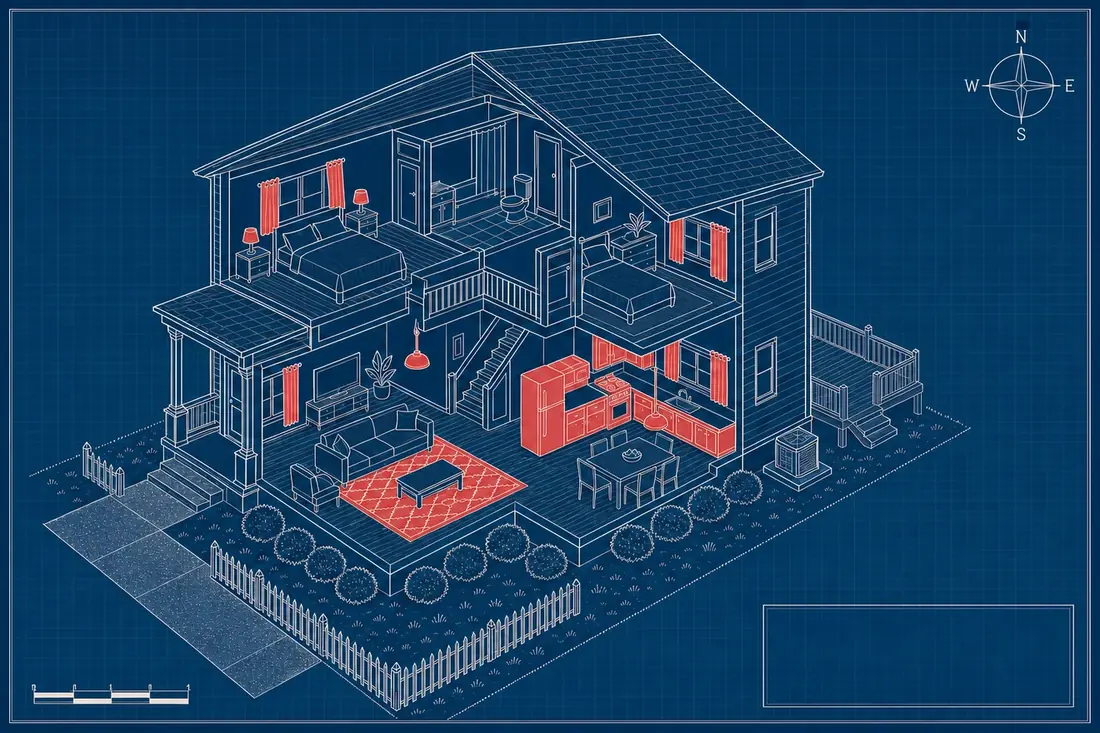
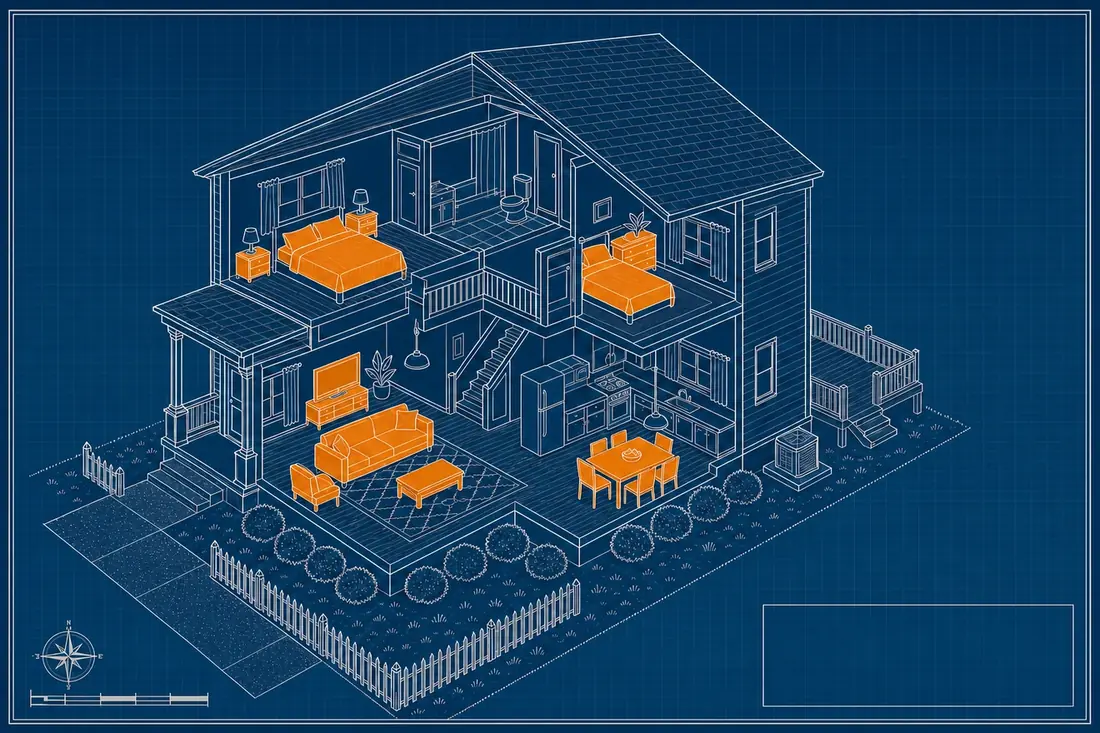
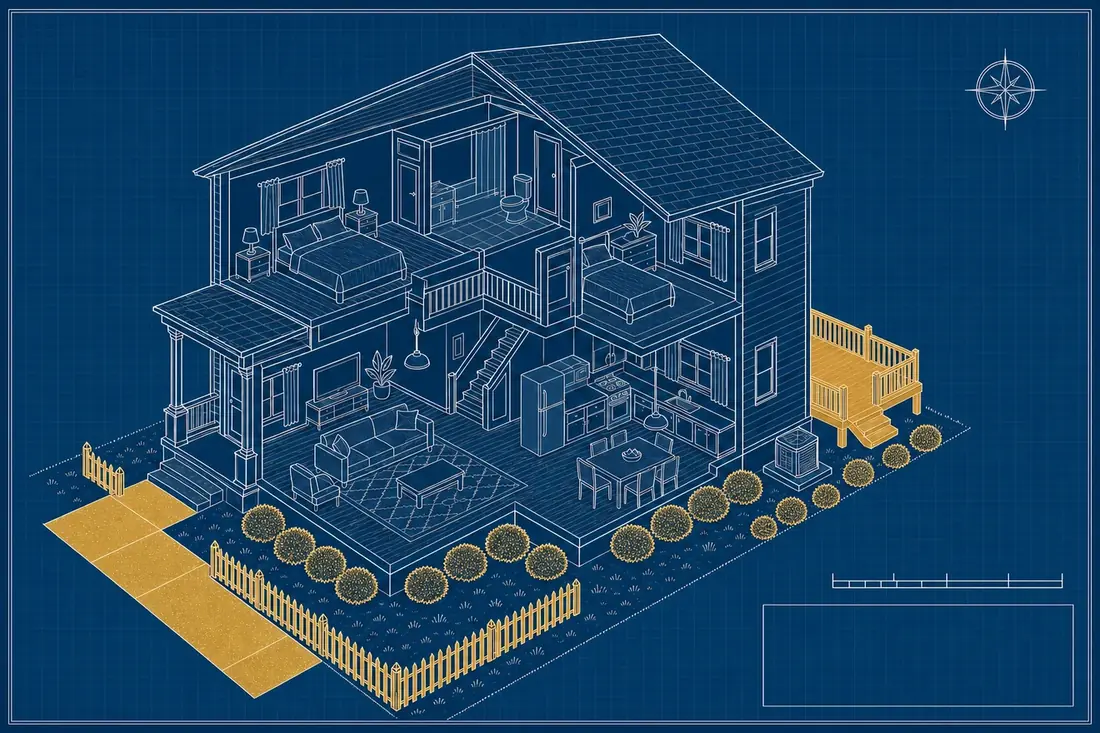
5-Year: carpet and flooring, cabinets, appliances, light fixtures, curtains 7-Year: furniture 15-Year: driveway, fencing, landscaping, deck 27.5/39-Year Shell: roof, load-bearing walls, foundation, central HVAC Get your free Preliminary Benefit Estimate Owners with property in more than one of these nine states can start with the free 60-second qualifier at /qualify and tell us which states they file in, so the estimate accounts for each state's own add-back rule. Request Your Free Estimate »The nine states at a glance5states require a full add-back 2states require a partial add-back 2states phase bonus down or spread it back
Bold names mark the two states covered in the most depth below. Pennsylvania: the state that built the modern add-back playbookPennsylvania decoupled from federal bonus depreciation for corporate taxpayers starting with the 2017 federal law that first pushed bonus to 100%. The Pennsylvania Department of Revenue's Corporate Net Income Tax Report instructions (Form RCT-101, REV-1200) require a corporate taxpayer to report the full bonus depreciation claimed under IRC section 168(k) as an addition, reversing the deduction before the state number is computed. Act 72 of 2018 set the recovery method still in use: the taxpayer adds back 100% of the federal bonus amount, then depreciates the property under ordinary IRC sections 167 and 168, without regard to section 168(k) (Schedules C-8 and C-9, REV-1834). There is no accelerated state schedule; the disallowed deduction comes back through ordinary depreciation over the asset's full recovery period, or in the year it is sold or fully depreciated. Pennsylvania does not delay the deduction on a fixed clock. It stretches it back out over the property's normal life. Act 45 of 2025 layered new decoupling on top of this rule: an add-back for the OBBBA's deduction for qualified production property under section 168(n), for research expenditures under section 174, and a lock on the business interest limitation to section 163(j) as it stood December 31, 2024. The Act 72 bonus depreciation add-back was not part of that change and continues unchanged. New Jersey: an addback that reaches both the corporate and the personal returnNew Jersey decoupled from federal bonus depreciation earlier, and more broadly, than most states in this footprint. The New Jersey Division of Taxation's published guidance, "NJ Decoupled from Federal Depreciation," states that the Corporation Business Tax (CBT) has required the add-back for privilege periods beginning on and after January 1, 2002, and the Gross Income Tax (GIT), New Jersey's personal income tax, has required it for tax years beginning on and after January 1, 2004. That second date matters for an owner holding property directly or through a pass-through entity: the GIT addback reaches an individual owner's income the same way the CBT addback reaches a corporation's return. A corporate filer computes it on Schedule S, Part II(B); an individual or pass-through filer uses the GIT depreciation worksheet. Both regimes uncouple state depreciation from the federal 168(k) figure and recompute it under pre-bonus rules. New Jersey's section 179 limits decoupled the same way, capped at the federal rules as they stood December 31, 2002. A New Jersey property run through a cost segregation study gets the same classifications as anywhere else; only the year each deduction lands changes. The 60-Second Qualifier Four questions. Our engineering team's model shows the estimated first-year acceleration a study of your property would target, free, before you commit to anything. Take the Qualifier »New York, Maryland, and Virginia: three more full add-back statesNew York does not follow federal depreciation for IRC section 168(k) property placed in service on or after June 1, 2003, with narrow exceptions for resurgence zone and Liberty Zone property. The New York State Department of Taxation and Finance requires the addback on Form IT-398, New York State Depreciation Schedule for IRC Section 168(k) Property, then allows a matching subtraction in later years. Maryland has disallowed federal bonus depreciation since 2002, when the legislature permanently decoupled from the federal law that first created it. The Comptroller of Maryland's Form 500DM has a taxpayer prepare a pro forma federal return without bonus depreciation, compare it to the return as filed, and report the difference as an addition, or later a subtraction. Virginia runs on fixed-date conformity, locking its definition of the Internal Revenue Code to a date the legislature sets (currently December 31, 2025) rather than following federal changes automatically. The Virginia Department of Taxation's bulletins are direct: Virginia continues to disallow bonus depreciation under section 168(k). A filer adds back the difference between federal depreciation with bonus and Virginia depreciation without it, then subtracts that difference in later years across the asset's life. North Carolina and Ohio: a partial add-back, recovered on a set scheduleNorth Carolina takes a different approach: an 85% add-back rather than the full amount. The North Carolina Department of Revenue's guidance on the "Adjustment for Bonus Depreciation" is specific about recovery: a taxpayer required to add back bonus depreciation may deduct 20% of that add-back in each of the first five taxable years following the addback year. The other 15% was never added back at all. Ohio's mechanism runs on sixths. Ohio's individual income tax instructions require an add-back of five-sixths of bonus depreciation claimed under IRC section 168(k), recovered in equal installments over five years. A business that raised its Ohio withholding by at least 10% adds back only two-thirds; a business with a federal net operating loss adds back the full amount over six years instead of five. Ohio suspended this add-back for tax years ending between October 3, 2023 and January 1, 2025, then restored it for 2025. Delaware and Florida: a phase-down and a fixed payback windowDelaware does not disallow bonus depreciation outright. The Delaware Division of Revenue's technical guidance on the state's OBBBA response keeps the older, pre-OBBBA phase-down alive: bonus depreciation for property a corporation places in service after January 19, 2025 (or an individual, after December 31, 2025) runs at 40% for 2025, 20% for 2026, and 0% for 2027 and after, the schedule the Tax Cuts and Jobs Act used before the OBBBA made bonus permanent at 100%. Delaware's own sunset applies the federal rules again to property placed in service after December 31, 2030. Florida requires a full 100% add-back for bonus depreciation on property placed in service before January 1, 2027, under Florida Statutes section 220.13(1)(e), then hands the deduction back on a fixed clock: one-seventh subtracted in the year of addition and each of the next six years, regardless of whether the property is later sold. Florida has no personal income tax, so this applies on the corporate return. Where this leaves a multi-state owner, and how a study handles itA cost segregation study classifies a building's components and produces a federal depreciation schedule, whether that is a look-back study filed on Form 3115 or a first-year study for a new acquisition. What each state does with that number next, a full pass-through, a full add-back, or a partial add-back spread over years, is a separate computation the client's CPA runs on the state return. Basis's engineering team hands over the classifications and the federal schedule; the state mechanics are the preparer's to apply. An owner filing in more than one of these nine states does not get one answer. Pennsylvania's recovery does not look like New Jersey's, and neither looks like North Carolina's five-year schedule or Florida's seven-year clock. Multi-state owners working with Basis can ask which states they file in and get this picture applied to their properties. Every state rule on this page is drawn from that state's own revenue department or comptroller's published guidance, current as of August 2026. Legislatures amend these rules often. This page describes each state's published test, not any reader's outcome; how these rules apply to a specific filing is a question for that owner's CPA.
Frequently asked questionsWhat does it mean when a state doesn't conform to federal bonus depreciation? It means the state legislature has not adopted the federal 100% bonus depreciation deduction under IRC section 168(k) into its own income tax code. A taxpayer computes federal taxable income with the full bonus deduction, then adds some or all of it back on the state return, recovering the difference later under whatever schedule that state's law sets. Does a state's non-conformity change which building components qualify for bonus depreciation? No. Component classification, deciding which parts of a building fall into the 5-year, 7-year, or 15-year buckets, happens under federal law and is the same regardless of state. State conformity rules only affect the timing of the deduction on the state return, not which components a cost segregation study identifies as bonus-eligible. Why did Pennsylvania decouple from federal bonus depreciation? Pennsylvania's Department of Revenue took the position, later formalized by Act 72 of 2018, that allowing the full federal bonus deduction against state corporate net income would cost the state too much near-term revenue. The add-back and ordinary-depreciation recovery mechanism has stayed in place through every federal bonus depreciation change since, including the 2025 OBBBA. Does New Jersey's bonus depreciation addback apply to individuals, or only corporations? Both. New Jersey's Corporation Business Tax has required the addback since privilege periods beginning in 2002, and the state's Gross Income Tax, its personal income tax, has required the same addback since tax years beginning in 2004. An individual owner and a corporate owner both uncouple state depreciation from the federal 168(k) figure. Which of these nine states lets 100% federal bonus depreciation pass straight through? None of them. Pennsylvania, New Jersey, New York, Maryland, and Virginia require a full state add-back. North Carolina and Ohio require a partial add-back recovered over five years. Delaware substitutes the older TCJA phase-down rate, and Florida allows the full deduction but spreads it back over seven years. Keep readingGet your free Preliminary Benefit Estimate Send the address or the listing link. We model the number first; you decide with it in hand. Request Your Free Estimate »Educational information, not tax advice. This page describes how federal
depreciation rules and tests work in general. Whether any rule fits your facts is a determination for
you and your CPA. Our study gives your CPA the engineering and the numbers to make that call.
|