|
Cost Segregation for Commercial & Short-Term Rental Owners
|
Request a free estimate [email protected] |
Vacation Markets
Free Listing SEO Audit Paste your Airbnb or VRBO listing. Get a scored audit in 90 seconds. Audit My Listing »FREE Estimate Is there a first-year deduction sitting in your building? No cost, no obligation. Request Yours »Minimum ROIOur study identifies at least 20x its fee in first-year deductions on commercial property, or at least 30x on a short-term rental, or it is free. |
Cost Segregation for a Door County Rental PropertyQuick answer Cost segregation on a Door County, Wisconsin rental applies the same engineering study used everywhere on this peninsula market between Lake Michigan and Green Bay. A summer peak followed by a fall shoulder season means the property's average guest stay has to be calculated from every booking across the year, long peak-season weeks and shorter fall stays together, rather than assumed from whichever season an owner remembers best. Own a Door County rental? See the first-year deduction range a study would look for. 30 seconds, no email to see the range. Start the check ↓Key takeaways
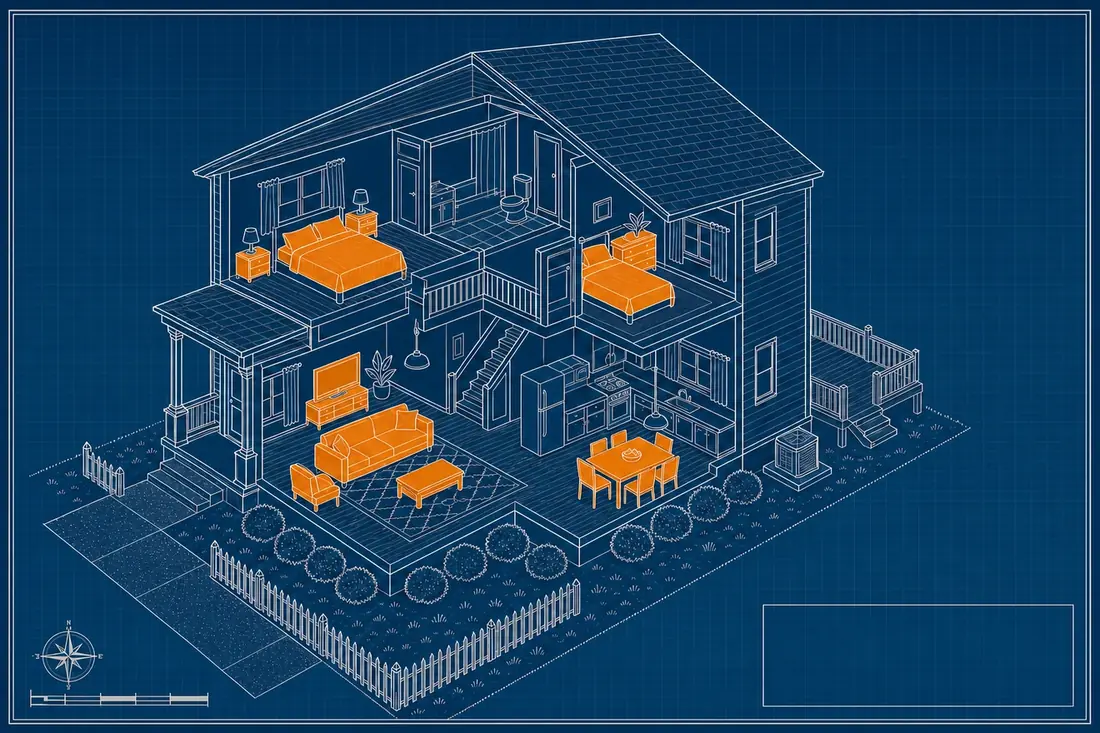
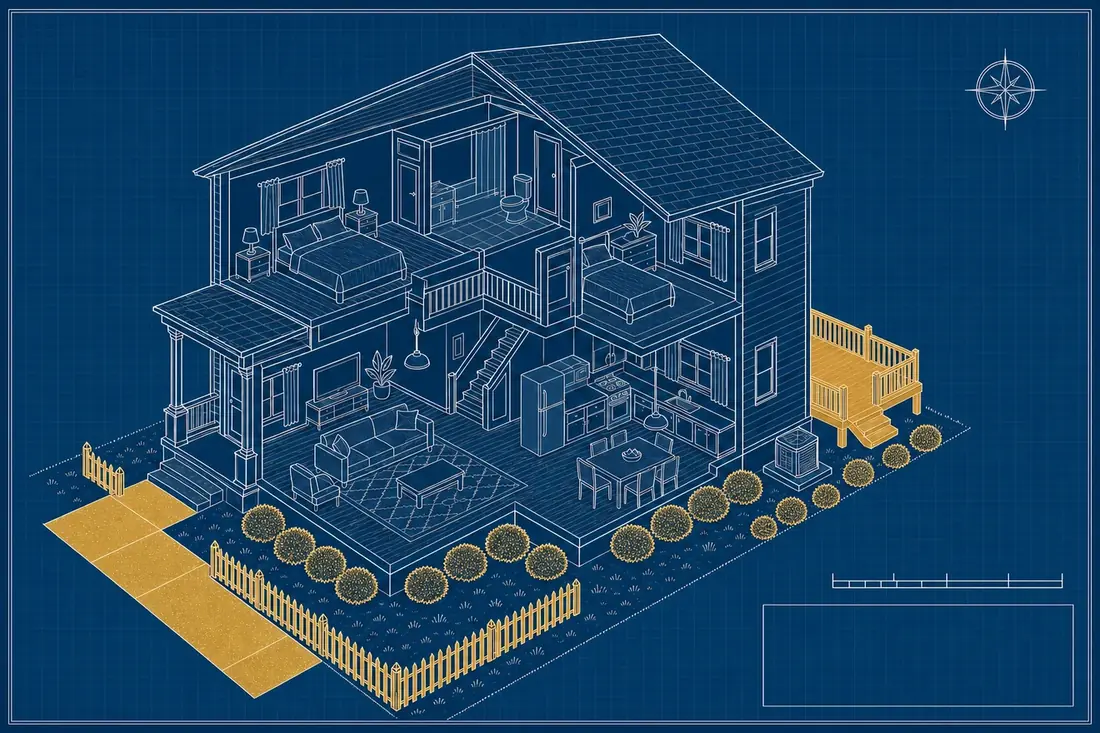
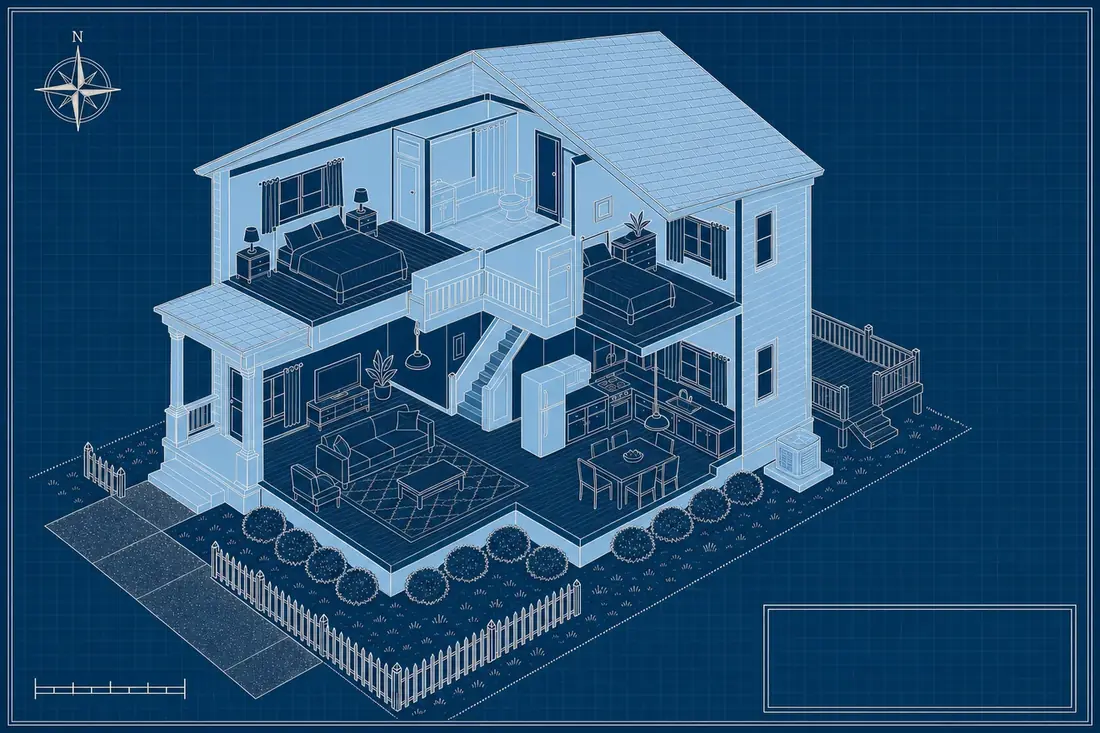
Watch a log cabin rental get built and classified A hypothetical $600,000 three-bedroom log cabin goes up floor by floor, from the gravel drive and foundation to the game loft and the hot tub on the deck. Every component lands on its depreciation schedule as it is installed, and the year-one depreciation adds up on screen. Watch the 90-second walkthrough »Cost Segregation on a Door County RentalDoor County sits on a peninsula between Lake Michigan and Green Bay, in Door County, Wisconsin, a drive-to market for Milwaukee, Chicago, and Green Bay. A cost segregation study on a Door County cabin or cottage works through the same engineering process used on any rental: components get classified into faster depreciation buckets based on what they are, not where the property sits. What makes this market worth a closer look is its calendar, a summer peak followed by a fall shoulder season, and what blending two different stay-length patterns does to the short-term rental tax test. Whether the structure itself sits on 27.5 or 39 years turns on the 80% dwelling-unit test, and a short-term rental averaging stays of 7 days or less generally lands on 39 (see the 27.5 or 39 years guide). 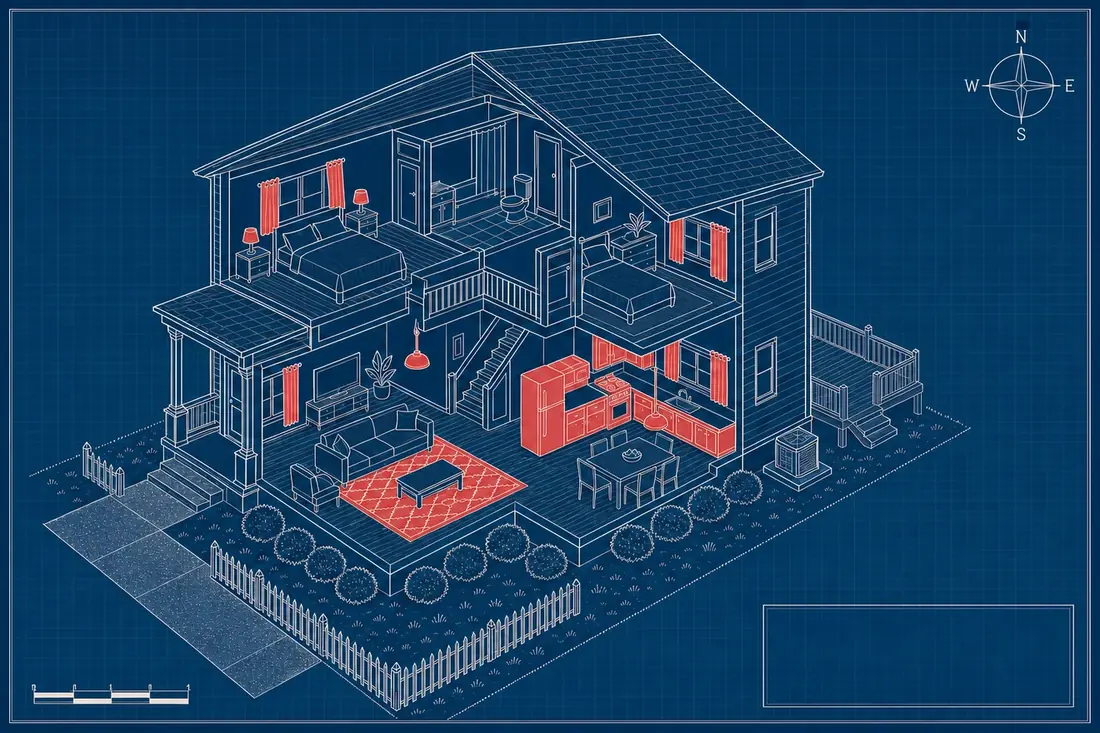
5-Year: carpet and flooring, cabinets, appliances, light fixtures, curtains 7-Year: furniture 15-Year: driveway, fencing, landscaping, deck 27.5/39-Year Shell: roof, load-bearing walls, foundation, central HVAC Get your free Preliminary Benefit Estimate See the likely first-year number for a Door County cabin or cottage with the free estimate at /qualify/. Request Your Free Estimate »How the 'Average' in the 7-Day Average Test Is Actually CalculatedThe section 469 short-term rental exception hinges on the average period of customer use across the testing period, most often the tax year, coming out to 7 days or less. That average is not a guess based on which season feels busier. It comes from every stay in the period: total guest-nights divided across the actual number of rentals. A property that books mostly by the week in peak summer and mostly by the weekend in the fall shoulder season needs both patterns counted together, not estimated from one season alone. A simple illustration shows why this matters. A property with ten peak-season bookings averaging 7 nights each and five shoulder-season bookings averaging 2 nights each is not sitting at somewhere around 7 days. It works out to roughly 5.3 nights on average, 85 total nights across 15 bookings, comfortably under the 7-day line. Flip the mix, more long summer weeks and fewer short shoulder bookings, and the same property could land on the other side of it. The only way to know is to run the actual numbers from the property's own booking history, which is exactly the kind of question worth bringing to a CPA rather than assuming. That same arithmetic applies whether the mix runs the other direction, more long peak weeks and fewer short shoulder ones, which is exactly why guessing from memory instead of counting the actual bookings is where owners get this test wrong. What a Peninsula Property's Components Typically IncludeDoor County's peninsula setting does not change the tax code, but it does shape what sits inside a typical cabin or cottage. Interior finishes, cabinetry, appliances, and window treatments are common 5-year property. Furniture and certain fixtures often land in the 7-year bucket. Outside, the driveway, fencing, landscaping, and outdoor lighting are generally 15-year land improvements. The cabin's structural shell, roof, and central HVAC stay on the 27.5/39-year schedule regardless of how close the lot sits to the water. A full walkthrough of what lands in each bucket covers examples beyond what fits here. A study typically moves 15 to 35% of a property's basis into the faster three schedules. Where a specific Door County property lands in that range depends on how much interior finish and site work it carries, not on the county it sits in. Land value itself is excluded before any of this classification starts; only the building, its interior, and its site improvements are eligible for faster depreciation, whether the property was purchased, built new, or renovated since. Material Participation When Ownership Is Shared or SeasonalA lot of peninsula vacation properties are owned and used by more than one person, whether that is a family splitting time on the property or a small group of investors. Material participation under section 469 is tested at the level of whoever is claiming the loss, using hours logged in the activity: 500 hours total, substantially all the participation in the activity, or 100 hours combined with more than any other individual, including any local cleaner or property manager. An owner sharing decision-making and hands-on work with a co-owner or a hired manager needs to know whose hours count toward which test, and that allocation question belongs with a CPA, not with the depreciation study itself. Estimate the first-year deduction on a property hereA few questions and the building value give a preliminary first-year deduction range, using the same rule as our free calculator. The breakdown can be emailed to you, or you can book a 15-minute call. Step 1 of 3 What kind of property?
Who runs it day to day?
What is the average guest stay?
When did you buy it?
How many rentals do you own?
Across all of them, does your rental portfolio show taxable income overall?
Any of them likely to sell in the next few years?
Prefer to talk it through? Book straight from here. No form needed.
Federal Bonus Depreciation and Wisconsin's Own RulesThe 5-, 7-, and 15-year property a cost segregation study identifies is federally bonus-eligible at 100% for qualified property acquired after January 19, 2025, under the 2025 tax law that restored and made that rate permanent. Federal bonus depreciation is not automatically mirrored at the state level everywhere; some states decouple from it entirely or apply their own schedule. Whether a specific state conforms to federal bonus depreciation is worth checking separately from the federal study itself, since the federal deductions a study identifies do not change based on state conformity, only how the state return treats them. Getting a Number for a Specific Cabin or CottageNone of the seasonal complexity above changes the guarantee: our study identifies at least 30 times its fee in first-year deductions on a short-term rental, or the study is free. That floor does not shrink as the property gets smaller; a modest cottage is judged against the same 30-times threshold as a larger house down the peninsula. A free Preliminary Benefit Estimate works from listing photos, no site visit and no owner homework required, which fits a market where plenty of owners live in Milwaukee, Chicago, or Green Bay rather than on the peninsula itself. See how other lake and peninsula markets compare, or start the 60-second qualifier at /qualify/. Turnaround and What the Engineering Report IncludesA residential study, cabin or cottage alike, normally takes 1 to 2 weeks, stretching to 2 to 3 weeks during tax season, and comes with same-week or one-business-day rush options for a flat upcharge when timing matters. Every study delivers a 70-page engineered report aligned with the IRS's own Audit Techniques Guide, whether it is scoped as the full engineered tier or the lighter budget tier, and it comes with full audit defense of the report itself: if an examiner has questions about the study, the engineering team that built it answers them in writing through the owner's CPA, who continues to represent the owner. Frequently asked questionsHow is the 'average stay' for the short-term rental tax test actually calculated? It's based on total guest-nights across all stays in the testing period, not a guess by season. A mix of long peak-season bookings and short shoulder-season ones gets averaged together using the property's actual booking history, not estimated from either season alone. Does a fall shoulder season count against the 7-day average test? It's factored in, not held against the property specifically. Shorter shoulder-season stays typically pull a yearly average down toward the 7-day line rather than up, but the only way to know where a specific property lands is to run the actual numbers. Can two family co-owners share a Door County cost segregation study? The study itself covers the property regardless of how many owners hold it. Material participation, which determines whether losses are non-passive, is tested against each individual's own hours, so co-owners may land on different sides of that test even on the same property. Do docks or seawalls get special depreciation treatment on a lake property? Cost segregation studies classify components using the same national buckets everywhere: 5-year, 7-year, and 15-year land improvements, alongside the 27.5/39-year structural shell. Specific waterfront features are evaluated individually by the engineering team against those categories rather than assumed in advance. Does Wisconsin follow federal bonus depreciation rules? State conformity to federal bonus depreciation varies and changes over time, so it's worth checking separately from the federal study. The federal deduction a cost segregation study identifies does not change based on state conformity; it affects only how the state return treats the same numbers. Keep readingGet your free Preliminary Benefit Estimate Send the address or the listing link. We model the number first; you decide with it in hand. Request Your Free Estimate »Educational information, not tax advice. This page describes how federal
depreciation rules and tests work in general. Whether any rule fits your facts is a determination for
you and your CPA. Our study gives your CPA the engineering and the numbers to make that call.
|