|
Cost Segregation for Commercial & Short-Term Rental Owners
|
Request a free estimate [email protected] |
Vacation Markets
Free Listing SEO Audit Paste your Airbnb or VRBO listing. Get a scored audit in 90 seconds. Audit My Listing »FREE Estimate Is there a first-year deduction sitting in your building? No cost, no obligation. Request Yours »Minimum ROIOur study identifies at least 20x its fee in first-year deductions on commercial property, or at least 30x on a short-term rental, or it is free. |
Does Cost Segregation Work on a Catskills Rental Property?Quick answer Yes. A Catskills short-term rental, whether in Greene, Ulster, Sullivan, or Delaware County, has real components to reclassify: cabinetry, flooring, a hearth surround, a deck, all candidates for 5-, 7-, or 15-year depreciation instead of the building's 27.5/39-year schedule. The region runs year-round with fall foliage and summer peaks, and its stock ranges from century-old farmhouses converted into rentals to newly built cabins, a mix that changes what a study finds without changing how the study works. Own a Catskills rental? See the first-year deduction range a study would look for. 30 seconds, no email to see the range. Start the check ↓Key takeaways
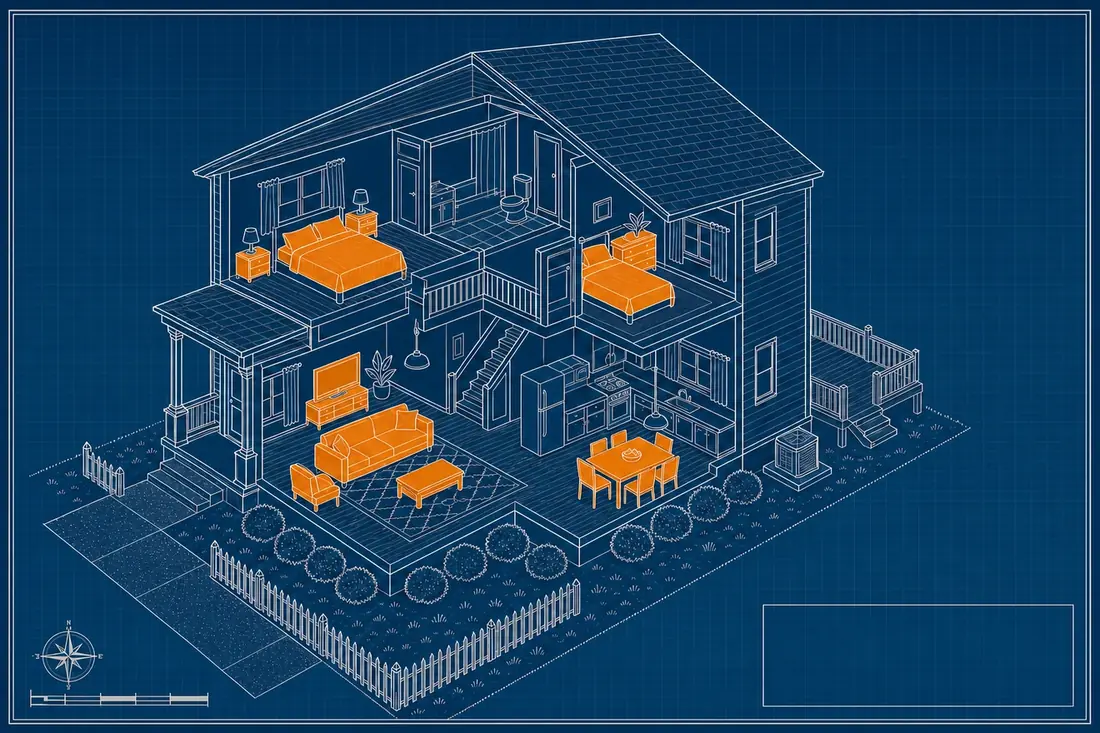
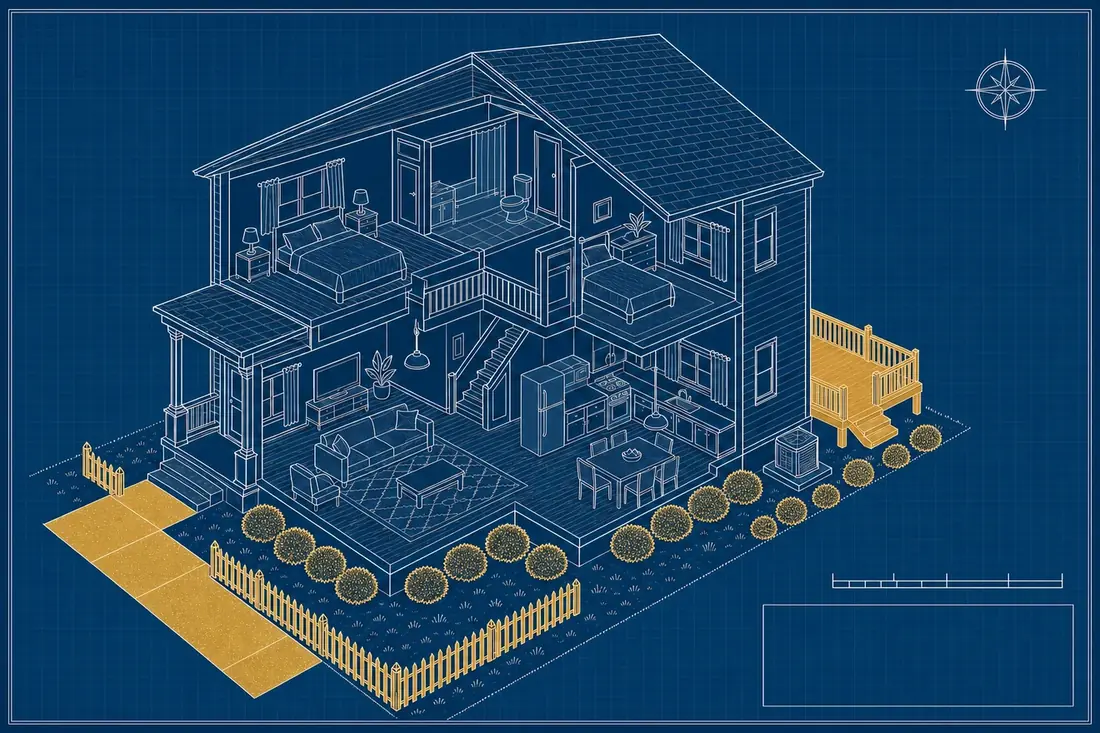
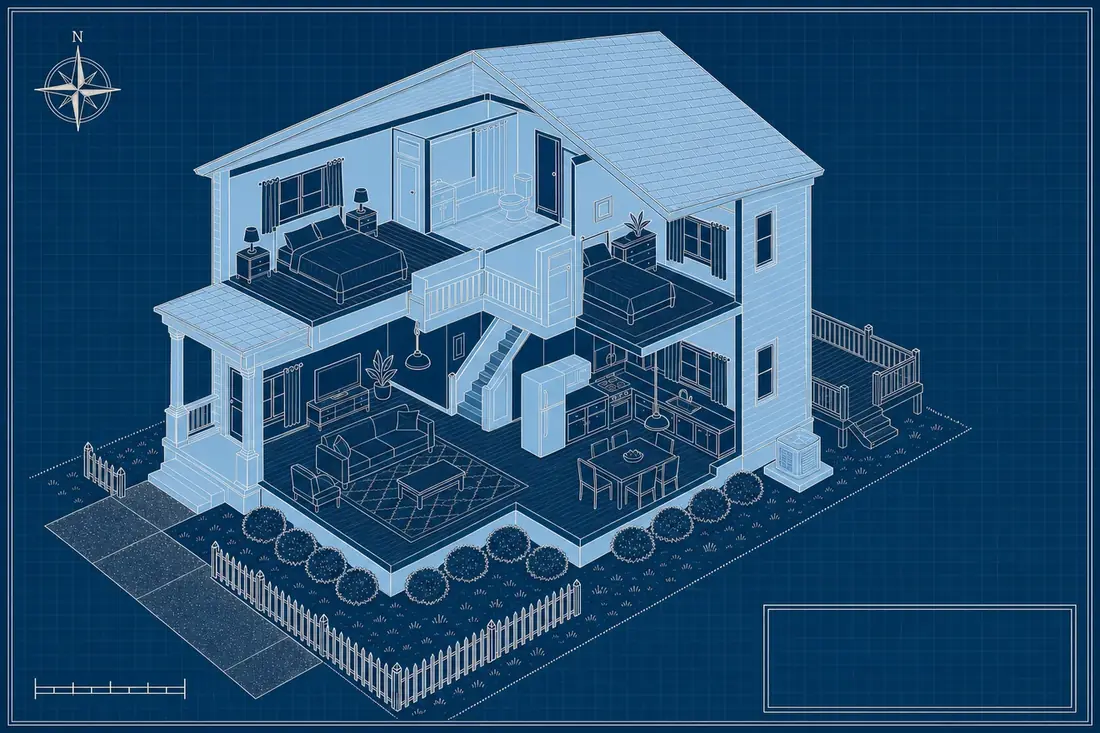
Watch a log cabin rental get built and classified A hypothetical $600,000 three-bedroom log cabin goes up floor by floor, from the gravel drive and foundation to the game loft and the hot tub on the deck. Every component lands on its depreciation schedule as it is installed, and the year-one depreciation adds up on screen. Watch the 90-second walkthrough »Four counties, one drive-to metroThe Catskills region spans Greene, Ulster, Sullivan, and Delaware counties in upstate New York, a broad area with New York City as its dominant drive-to metro, close enough for a weekend without a flight. The rental stock across those four counties varies widely: century-old farmhouses and barns converted into rentals, especially in Delaware and Sullivan counties, sit alongside newer-built cabins and A-frames closer to the more developed parts of Greene and Ulster. Demand runs close to year-round, with fall foliage and summer as the two clear peaks. A cost segregation study works the same way regardless of which county a property sits in or how old the structure is. What changes property to property is the component mix a study actually finds, and an older, renovated building often has more to find than a newer one does. Whether the structure itself sits on 27.5 or 39 years turns on the 80% dwelling-unit test, and a short-term rental averaging stays of 7 days or less generally lands on 39 (see the 27.5 or 39 years guide). 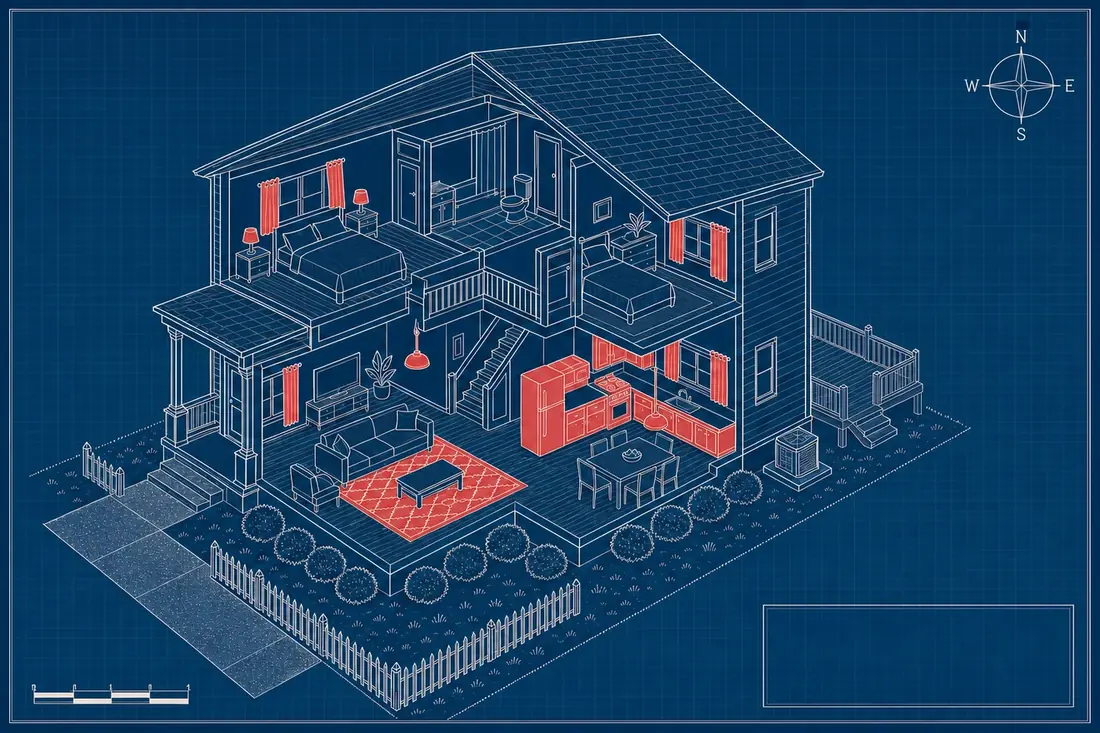
5-Year: carpet and flooring, cabinets, appliances, light fixtures, curtains 7-Year: furniture 15-Year: driveway, fencing, landscaping, deck 27.5/39-Year Shell: roof, load-bearing walls, foundation, central HVAC Get your free Preliminary Benefit Estimate See what a specific Catskills property, farmhouse or new-build, could add up to with the free estimate at /qualify. Request Your Free Estimate »Renovated farmhouses carry their own component storyA lot of Catskills rental stock started as a private farmhouse or barn and was renovated into a short-term rental, sometimes decades after it was built, sometimes recently. Cost segregation applies to renovations the same way it applies to a purchase or new construction: whatever was spent on the renovation itself, new kitchen cabinetry, new flooring, updated electrical and plumbing serving specific fixtures, a new deck, gets classified into the correct recovery period the same as if the whole building had been bought new. The original farmhouse structure, whatever is left of the framing, foundation, and roof from decades ago, generally stays on its long schedule, while the renovation dollars are what a study is built to sort into 5-, 7-, and 15-year buckets. A typical example: a stone farmhouse built in the 1850s gets bought and renovated into a rental. The original stone walls, hand-hewn framing, and roof structure stay put on the long schedule regardless of the building's age. The renovation dollars tell a different story: a new kitchen with an island and cabinetry, engineered flooring replacing worn original boards, a rebuilt hearth surround around the same old chimney opening, updated bathroom fixtures, and a new deck off the back all get classified on their own recovery periods, the same as if they were installed in any other building. The chimney's structural masonry stays on the long schedule; the surround and mantel built around it during the renovation do not. A study cannot reclassify money that was never spent. What a renovated Catskills property gets out of a study depends on what was actually replaced or added, not on the building's age alone.
What a Catskills rental typically has to reclassify
The building's foundation, load-bearing framing, and roof structure stay on the building's 27.5/39-year schedule no matter how old the structure is or how much of the interior was renovated around it. Estimate the first-year deduction on a property hereA few questions and the building value give a preliminary first-year deduction range, using the same rule as our free calculator. The breakdown can be emailed to you, or you can book a 15-minute call. Step 1 of 3 What kind of property?
Who runs it day to day?
What is the average guest stay?
When did you buy it?
How many rentals do you own?
Across all of them, does your rental portfolio show taxable income overall?
Any of them likely to sell in the next few years?
Prefer to talk it through? Book straight from here. No form needed.
Year-round demand and the 7-day averageA property whose average guest stay across the tax year is 7 days or less falls under the short-term rental exception in Reg. 1.469-1T(e)(3)(ii). A Catskills property running close to year-round demand, with fall foliage weekends and summer stays both factoring in, needs its actual average calculated from the real mix, since a heavier run of weekend foliage trips pulls the average down while a run of full summer weeks pulls it up. Where a specific property's full-year mix lands is a computation based on that property's actual booking records, not the region's general pattern. Consider an owner who blocks out two full weeks each August for extended family, then rents the rest of the year mostly as weekend trips built around fall foliage and winter getaways. Those two full weeks pull the yearly average up; a heavier run of two- and three-night weekend stays the other ten months pulls it back down. Which side of seven days the full-year average lands on depends on how those weeks actually stack up against the weekend nights, a calculation that has to run against the property's real calendar rather than an assumption drawn from the region's overall booking rhythm. Material participation is the second half of the test: 500-plus hours, substantially all the participation, or 100-plus hours and more than any other individual, cleaners and co-hosts included. A number of Catskills owners handle their own turnovers on weekend trips up from the city, directly relevant to that comparison. What a comparable residential study has looked likeA delivered study on a single-family rental in Montgomery County, Pennsylvania, 4,946 square feet with a $1,040,000 depreciable basis, identified $160,242 of accelerated basis, 15.4% of the total, and produced an estimated $174,905 in first-year depreciation, 16.8% of basis including 100% bonus depreciation, for a $1,295 fee, close to 135 to 1. That property is not a Catskills rental, but it is the same kind of property, a single-family home converted to short-term rental use, and it shows the scale a study can reach on a similarly sized building. A renovated Catskills farmhouse with a comparable basis and a real amenity list would run through the identical process. Getting a number for a Catskills propertyThe process runs on listing photos, no site visit, no owner homework list, whether the property is a converted 1800s farmhouse or a cabin built five years ago. Every study is custom-priced to the property's size, age, and component mix, with turnaround normally 1 to 2 weeks for a residential property, 2 to 3 weeks during tax season. On a short-term rental, Basis guarantees at least 30 times the fee in first-year deductions, or the study is free. Compare the four-season Pennsylvania version of this same drive-to pattern at the Poconos page, or another New York market at the Finger Lakes page. See the rest of the vacation rental market pages, or get a free Preliminary Benefit Estimate at /qualify. Frequently asked questionsDoes an old farmhouse in the Catskills qualify for cost segregation? Yes. A study applies to renovations the same way it applies to new construction or a purchase. What was actually replaced or added during a renovation, cabinetry, flooring, a deck, updated fixtures, gets classified into the correct recovery period. The original decades-old structure generally stays on its long schedule. Which counties count as the Catskills for a rental property? The region generally spans Greene, Ulster, Sullivan, and Delaware counties in upstate New York, an area positioned as a drive-to destination from New York City. Does fall foliage season change how the property is taxed? Foliage season adds booking volume in the fall, it does not change the depreciation rules. It can factor into the average-stay calculation for the short-term rental exception if it shifts the mix of longer and shorter stays across the year. Is a renovated barn treated differently from a house for cost segregation? Not fundamentally. Whatever residential structure it has become is classified the same way any residential rental is, based on what components exist and what recovery period each one falls into, regardless of what the building started out as. Do I need to be in New York for my Catskills property's study? No. The process works from listing photos rather than a site visit, so the owner's location does not affect how the study is done. How much can a renovation add to a Catskills property's depreciation basis? It depends entirely on what was spent. A study can only reclassify dollars that were actually invested in the property, whether through a purchase price or a renovation, so a larger, more thorough renovation generally gives a study more to work with than a light cosmetic update. Keep readingGet your free Preliminary Benefit Estimate Send the address or the listing link. We model the number first; you decide with it in hand. Request Your Free Estimate »Educational information, not tax advice. This page describes how federal
depreciation rules and tests work in general. Whether any rule fits your facts is a determination for
you and your CPA. Our study gives your CPA the engineering and the numbers to make that call.
|