|
Cost Segregation for Commercial & Short-Term Rental Owners
|
Request a free estimate [email protected] |
Advanced
FREE Estimate Is there a first-year deduction sitting in your building? No cost, no obligation. Request Yours »Minimum ROIOur study identifies at least 20x its fee in first-year deductions on commercial property, or at least 30x on a short-term rental, or it is free. |
How Does Financing a Cost Segregation Study Actually Work?Quick answer There is no loan product attached to a cost segregation study; "financing" here means the timing relationship between the fee, paid to commission the study, and the deduction it produces. A free Preliminary Benefit Estimate models that deduction before any fee is paid, and the guarantee, at least 20 times the fee in first-year deductions on commercial property or 30 times on a short-term rental, or the study is free, sets the floor on that relationship before an owner commits. See this applied to your building. A few questions, 30 seconds. You see which tests matter and the first-year deduction range a study would look for. No email to see the range. Run the 30-second check »Key takeaways
There Is No Loan Product Here, Just a Timing QuestionSearches for financing a cost segregation study usually assume there is a loan or payment plan attached to the fee. There is not. Every study is custom-priced to the specific property, paid to commission the engineering work, and what people actually mean by financing is a timing question: does the deduction the study produces make sense against the fee it costs, and when does each side of that equation actually land. The question tends to come from owners comparing a study to other big-ticket purchases, a roof, an HVAC system, equipment, where a lender sits between the buyer and the vendor. A cost segregation study is not that kind of purchase. It is closer to an accounting or engineering engagement, priced once, paid once, with no ongoing loan balance or interest to track afterward. That timing question has a real answer, and it starts before any commitment. A free Preliminary Benefit Estimate at /qualify models the likely first-year deduction on the specific building before a fee is ever discussed, which is the actual mechanism that answers the "does this make sense" question, not a financing product. 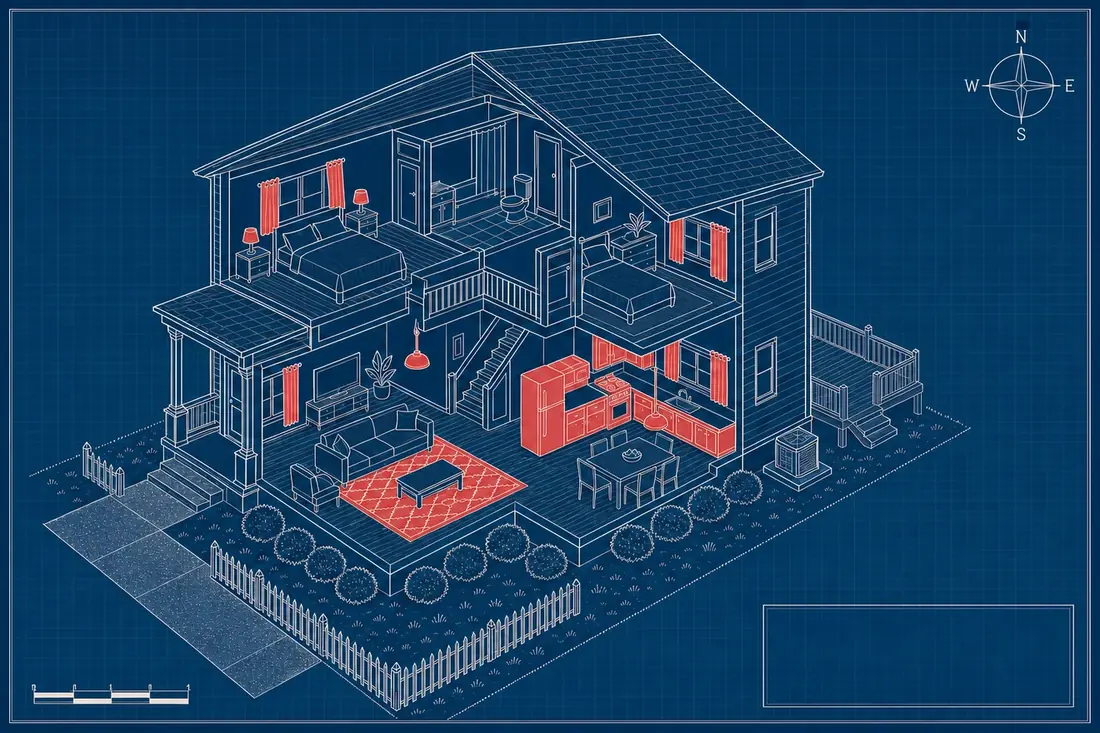
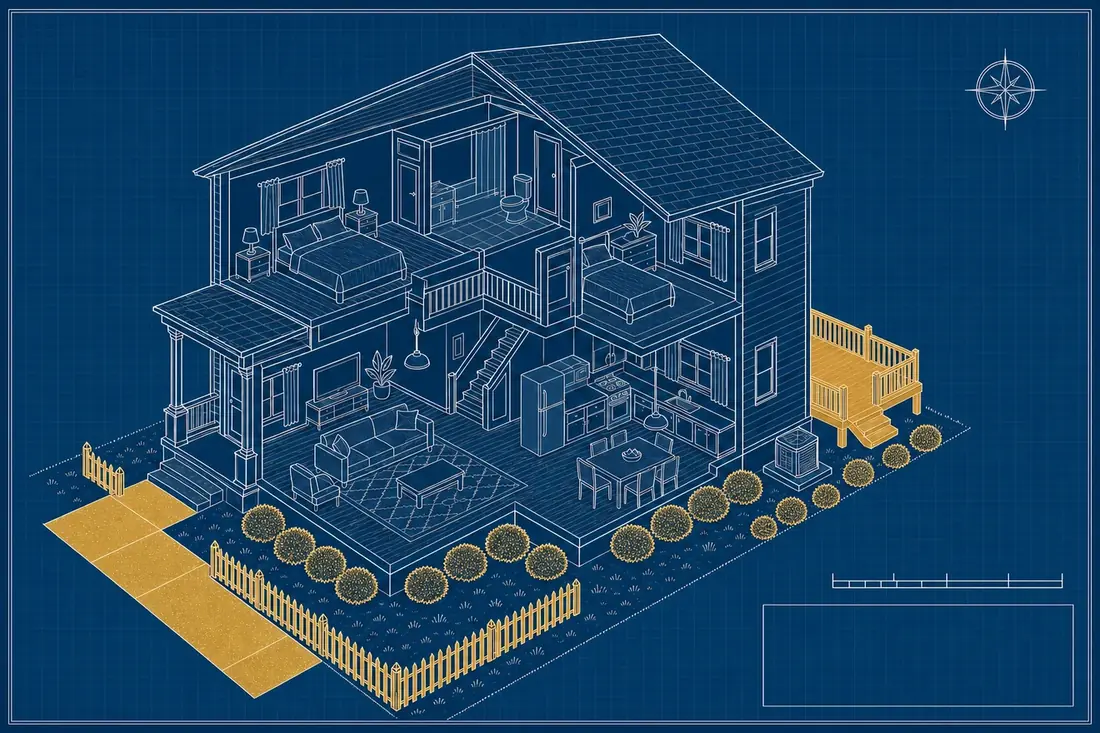
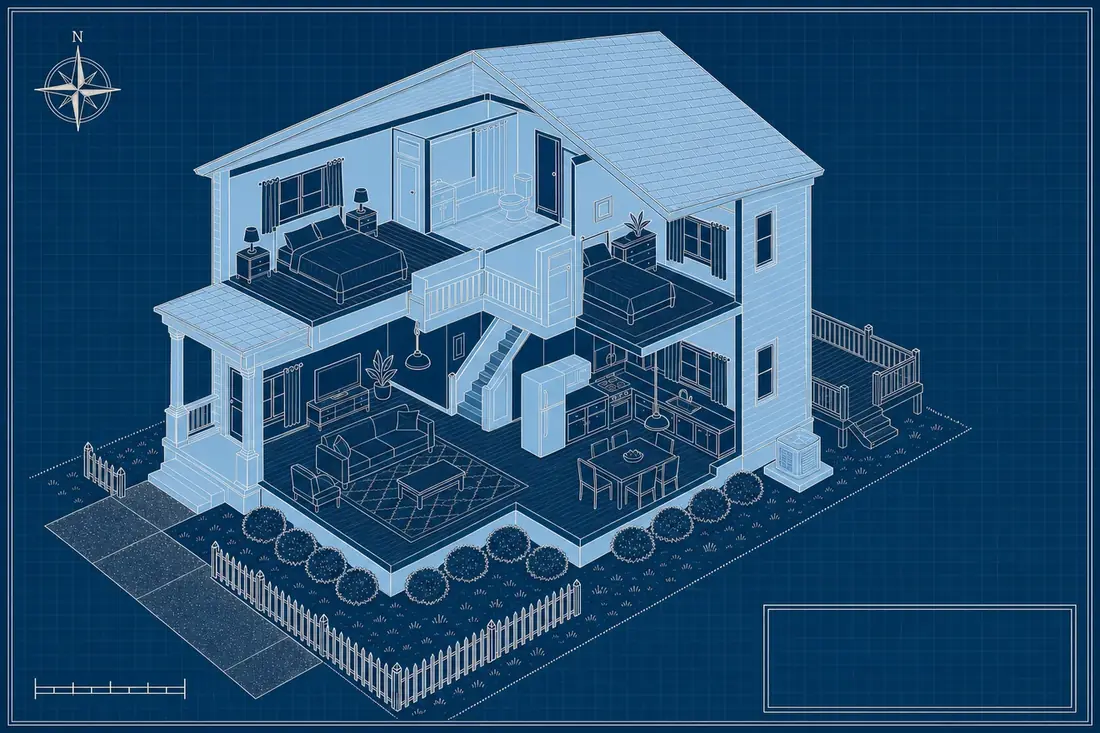
5-Year: carpet and flooring, cabinets, appliances, light fixtures, curtains 7-Year: furniture 15-Year: driveway, fencing, landscaping, deck 27.5/39-Year Shell: roof, load-bearing walls, foundation, central HVAC Get your free Preliminary Benefit Estimate See the projected deduction on your property before any fee is discussed, free, at /qualify. Request Your Free Estimate »The Guarantee Sets the Floor Before You CommitOur study identifies at least 20 times its fee in first-year deductions on commercial property, or at least 30 times on a short-term rental, or it is free. That guarantee is the floor, not a prediction; our four commercial benchmark runs all came in above the 20x commercial floor. It exists specifically to answer the fee objection directly: the downside on the ratio itself is bounded before an owner pays anything.
Our four commercial benchmark runs landed in the 24:1 to 67:1 range, a smaller multiple against a much bigger dollar figure. The one delivered residential study we publish, sitting on a far smaller fee, ran 135:1. Both describe the same relationship: the fee is a small, fixed, known number, and the deduction that follows is not. See the worked numbers on the examples page. When the Fee Is Paid, and When the Deduction LandsThe fee is paid to commission the study, which is a separate event from when the resulting deduction shows up on a return. On a new acquisition, the deduction lands on the return for the year the property is placed in service. On a property already owned for years, a look-back study claims the missed depreciation through Form 3115 with a section 481(a) catch-up deduction in the current year, described in full on the look-back study page, no amended returns required. Fees for a study on a property already in service are generally treated as a deductible business expense in the year paid, similar to accounting or tax preparation fees, rather than added to the building's basis. Whether that treatment applies exactly as described to a specific return, including timing questions around a property acquired mid-year, is a computation for your CPA working from the actual invoice and the actual placed-in-service date. Turnaround on the study itself follows the same split as the fee-versus-deduction question above. A residential study normally delivers in 1 to 2 weeks, 2 to 3 weeks during tax season, with rush options for a flat $250 same-week upcharge or a $995 upcharge for delivery within one business day of signing, payment and documents. A commercial study runs 4 to 6 weeks during tax season, typically 2 to 3 weeks in January and February. That window is the actual gap an owner is picturing when they ask about financing, not a loan term, just the time between paying the fee and holding the finished number. The 60-Second Qualifier Four questions. Our engineering team's model shows the estimated first-year acceleration a study of your property would target, free, before you commit to anything. Take the Qualifier »Why the Timing Matters for Estimated Tax PlanningAn owner who pays quarterly estimated tax sets those payments based on projected taxable income for the year. A first-year deduction the size of the benchmark examples above changes that projected income meaningfully, which is why owners often time a study to land before an estimated tax deadline rather than after one, so the number is known while the year's payments are still being calculated rather than after they are already set. None of this is a promise about a specific owner's total tax for the year; total tax depends on income, filing status, other deductions, and whether the passive activity rules or other limits apply to the specific property, described across the rest of this site. What is fixed and knowable ahead of time is the fee, the guarantee floor, and the free estimate that previews the likely deduction before any of it is committed. Sizing the Decision Before Committing the FeeThe actual decision an owner is making is not whether the fee can be financed, it is whether the projected deduction justifies the fee, and that question has a free answer before it has a paid one. The Preliminary Benefit Estimate at /qualify runs off the property's own numbers, building type, purchase price or basis, square footage, and returns a projected range before any commitment. From there, the guarantee bounds the downside, and the fee itself is the only number fixed in advance. A Worked Example of the RelationshipPicture a warehouse owner weighing a $9,900 fee against an unknown deduction. The free estimate runs first and comes back projecting a first-year number in the range of the office and warehouse benchmark run above, roughly $330,674 on a $1,911,675 building basis, a 33.4-to-1 ratio. The owner now has three fixed points before paying anything: the fee, the guaranteed floor beneath that ratio, and a specific projected range from the estimate itself. Only after seeing that range does the fee get paid, and only then does the engineering work start. The deduction itself lands on the return for the placed-in-service year, or through the current-year catch-up if the building was already owned. At no point in that sequence does an owner need a loan to bridge the gap between paying the fee and seeing the deduction, because the two events, while separated in time by the length of the engagement, both sit inside the same tax year in the overwhelming majority of cases. Frequently asked questionsDoes Basis offer a payment plan or loan to cover the study fee? No. Every study is custom-priced to the property and paid to commission the work; there is no financing product attached to the fee itself. The free Preliminary Benefit Estimate is what lets an owner see the likely deduction before deciding whether the fee makes sense for that property. Is the fee for a cost segregation study tax deductible? Fees for a study on a property already in service are generally treated as a deductible business expense in the year paid, similar to other professional fees, rather than added to basis. Whether that applies exactly to a specific return and timing is a question for your CPA. How does the 20x or 30x guarantee actually work? Our study identifies at least 20 times its fee in first-year deductions on commercial property, or at least 30 times on a short-term rental, or the study is free. It is a guaranteed floor on the ratio, not a projection of the typical result, which tends to run higher. When do I actually pay the fee relative to getting the deduction? The fee is paid to commission the study, a separate event from when the resulting deduction lands on a tax return. A new acquisition's deduction lands on the placed-in-service year's return; a look-back study on a property already owned claims the missed depreciation in the current year through Form 3115. Does a bigger fee mean a bigger deduction? Not directly. The fee reflects the complexity of engineering that specific building, while the deduction reflects the building's basis and how much of it reclassifies into faster schedules. A small residential fee can still produce a very large ratio, and a larger commercial fee can still produce a very large dollar deduction. Keep readingGet your free Preliminary Benefit Estimate Send the address or the listing link. We model the number first; you decide with it in hand. Request Your Free Estimate »Educational information, not tax advice. This page describes how federal
depreciation rules and tests work in general. Whether any rule fits your facts is a determination for
you and your CPA. Our study gives your CPA the engineering and the numbers to make that call.
|