|
Cost Segregation for Commercial & Short-Term Rental Owners
|
Request a free estimate [email protected] |
Advanced
FREE Estimate Is there a first-year deduction sitting in your building? No cost, no obligation. Request Yours »Minimum ROIOur study identifies at least 20x its fee in first-year deductions on commercial property, or at least 30x on a short-term rental, or it is free. |
Is a Cost Segregation Study a "Poor Man's 1031" Instead of a Real Exchange?Quick answer A "poor man's 1031," the phrase for using a cost segregation study's first-year deduction on a replacement property to offset the gain from a sale that was never exchanged, is not a deferral mechanism. A true 1031 exchange, a sale-and-purchase structure under section 1031, defers gain and recapture into the replacement property's basis when the like-kind and timing rules are met. The study offsets that year's taxable income only if the deduction is large enough; the exchange defers the gain regardless of deduction size. See this applied to your building. A few questions, 30 seconds. You see which tests matter and the first-year deduction range a study would look for. No email to see the range. Run the 30-second check »Key takeaways
Two Different Terms People ConfuseA 1031 exchange, named for section 1031 of the tax code, is a sale-and-purchase structure: an owner sells investment or business real property, routes the proceeds through a qualified intermediary who never lets the seller touch the cash, and buys replacement real property that meets the like-kind and timing rules, generally 45 days to identify replacement property and 180 days to close. Done correctly, the exchange defers the gain on the sale, including depreciation recapture, into the replacement property's basis. No tax is due in the sale year. A "poor man's 1031" is not a section of the tax code; it is the phrase people use for a different move entirely: sell a property without doing an exchange, pay the tax the sale produces, buy a new property with the proceeds, and commission a cost segregation study on that new property. The study's first-year deduction, if it is large enough, offsets that same year's taxable income, including some or all of the gain from the sale. Both approaches respond to the same problem, a large tax bill in a sale year, with fundamentally different mechanics. 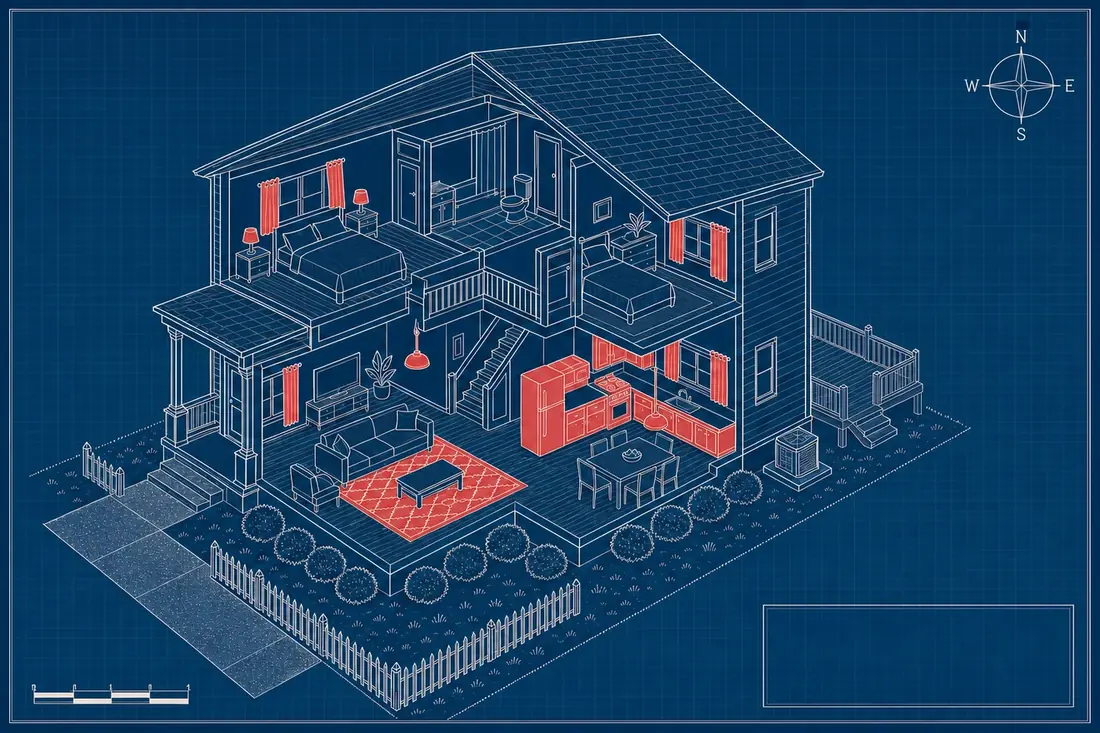
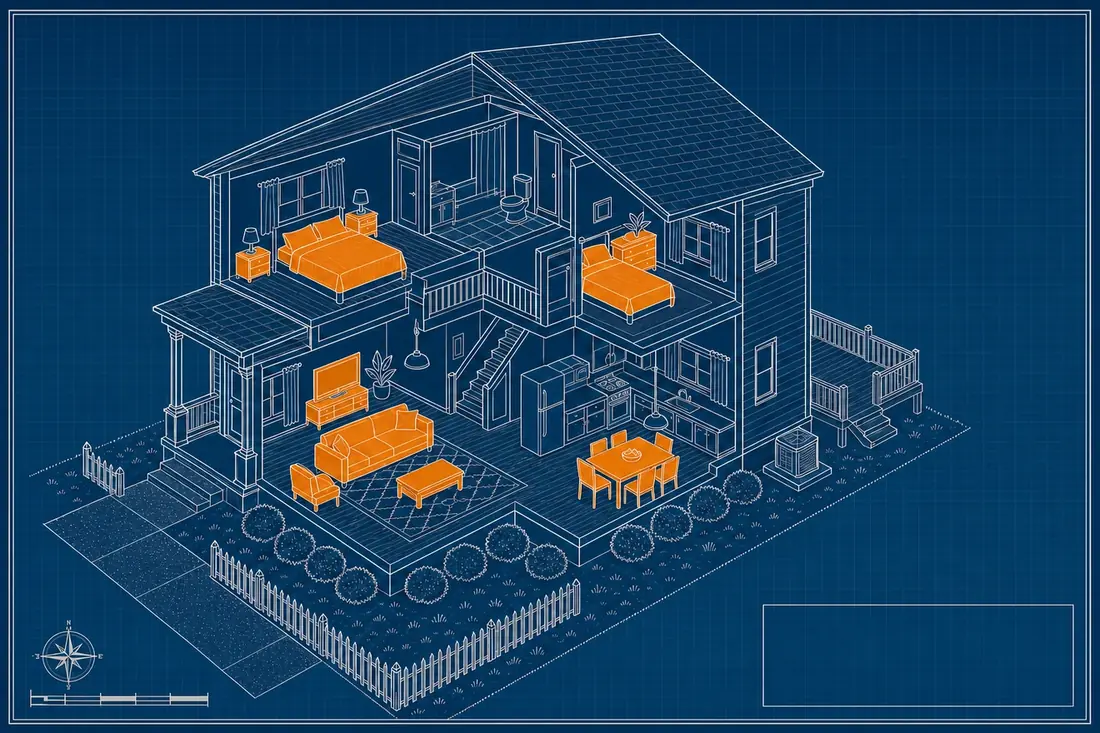
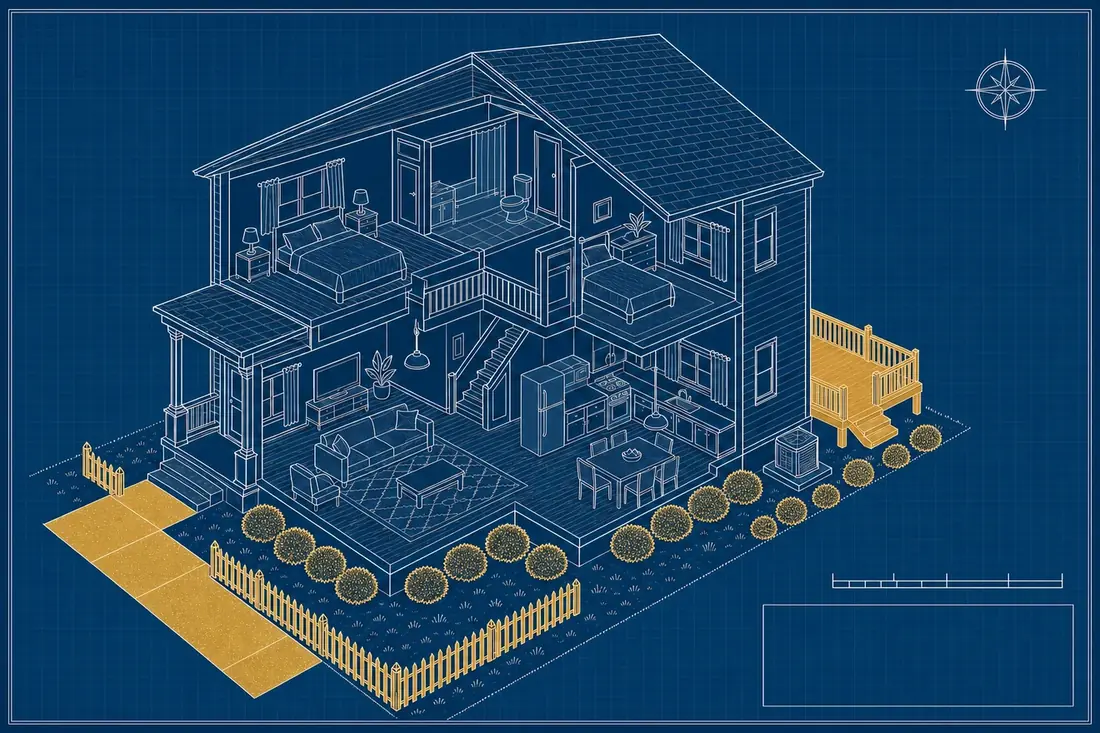
5-Year: carpet and flooring, cabinets, appliances, light fixtures, curtains 7-Year: furniture 15-Year: driveway, fencing, landscaping, deck 27.5/39-Year Shell: roof, load-bearing walls, foundation, central HVAC Get your free Preliminary Benefit Estimate See what a cost segregation study would produce on your next purchase, gain math and all, with the free 60-second estimate at /qualify. Request Your Free Estimate »What a Real 1031 Exchange Actually DefersA 1031 exchange defers the full gain on the sale, both the capital gain and depreciation recapture, the portion taxed at ordinary rates for 1245 personal property components and up to 25% as unrecaptured section 1250 gain for straight-line real property depreciation. That deferral does not depend on the size of any deduction; it is a structural feature of the exchange itself. The deferred gain carries into the replacement property's basis, and can be deferred again in a future exchange. The rules are strict. The replacement property has to be real property held for investment or business use, like-kind under current law means real property for real property, and the identification and closing deadlines do not extend for financing delays or a slow-moving deal. A qualified intermediary has to hold the proceeds throughout; an owner who takes control of the cash, even briefly, disqualifies the exchange. What a Study on the Replacement Property Actually DoesA cost segregation study on the newly purchased replacement property does not defer anything. It reclassifies parts of that new building, carpet, cabinetry, decorative lighting, and certain electrical or plumbing serving specific equipment into 5- and 7-year buckets, and site work like paving and landscaping into a 15-year bucket, out of the 39-year or 27.5-year structural schedule and into schedules eligible for 100% bonus depreciation on qualified property acquired after January 19, 2025. That produces a real, current-year deduction, sized to the new property's basis and its mix of qualifying components, not to the gain from whatever was sold. Whether that deduction offsets the gain depends entirely on the numbers landing close together. A large gain paired with a modest replacement purchase, or a replacement property with an unusually low share of reclassifiable components, a plain office shell rather than a restaurant or a short-term rental, can leave a real gap between what the sale produced and what the study offsets. A 1031 exchange does not have that problem, because it defers the gain regardless of what the replacement property contains. The 60-Second Qualifier Four questions. Our engineering team's model shows the estimated first-year acceleration a study of your property would target, free, before you commit to anything. Take the Qualifier »The Passive Activity Rules Apply Here TooA cost segregation deduction on a rental property is still a rental deduction, and section 469 still governs whether it can offset other income in the current year. An owner who does not qualify as a real estate professional, and whose new property does not clear the short-term rental exception, an average guest stay of 7 days or less, plus material participation, generally cannot use the deduction against non-passive income like wages or gain from an unrelated activity; it can suspend and carry forward instead. That risk sits on top of the size-matching problem: a large deduction that cannot currently offset the gain because of the passive activity rules solves nothing in the year it was meant to help. A 1031 exchange sidesteps this entirely, because deferral does not depend on whether a deduction can currently be used. The gain simply does not become taxable income in the first place. That structural difference is the clearest case for the real exchange over the substitute. Where the Real Exchange Wins, and Where the Substitute Has Room to MoveThe two approaches are not competitors in every situation; they solve different problems, and an owner should be honest about which problem is actually theirs. The table below lays out where each mechanism has the edge.
An owner who wants certainty around deferring the gain, and who can live with the 45- and 180-day deadlines and the like-kind property requirement, generally gets more from a real exchange. An owner who wants flexibility in property type or how sale proceeds get used, and who can accept that the deduction may not fully offset the gain, is the one actually choosing the substitute. The two are also not mutually exclusive: a property acquired through a real 1031 exchange can still get its own cost segregation study afterward, and an exchange can defer gain and recapture on a property that already went through a prior study, when the replacement property rules are met. An owner does not have to choose between accelerating depreciation and deferring gain on the same deal; sequenced correctly, both mechanisms can apply. See the broader framework on advanced cost segregation strategies for how this fits alongside entity structure and financing timing. Whether a 1031 exchange or a cost segregation study on a replacement purchase fits a specific sale is a decision for that owner's CPA or exchange intermediary, made well before closing, since the 1031 deadlines do not wait for that analysis. What this page describes is how each mechanism works, not which one fits any specific transaction.
Frequently asked questionsDoes a cost segregation study defer the gain from selling a property the way a 1031 exchange does? No. A cost segregation study on a replacement property produces a current-year deduction, not a deferral. A 1031 exchange defers gain and recapture into the replacement property's basis when the like-kind and timing rules are met; a study's deduction only offsets taxable income if it is large enough and currently usable under the passive activity rules. Can I do a 1031 exchange and still get a cost segregation study? Yes. A cost segregation study can run on a property acquired through a 1031 exchange, and the exchange still defers gain and recapture on that property, including gain carried over from the property that was exchanged, when the replacement property rules are met. Why is it called a "poor man's 1031" if it isn't a real exchange? The name describes the goal, not the mechanism. It is the phrase people use for pairing a sale, with tax paid rather than deferred, with a cost segregation study on the new purchase, aiming for the study's deduction to offset that year's tax bill the way an exchange's deferral would have, without the like-kind property rules or the 45- and 180-day deadlines. Does the deduction from a cost segregation study always offset the gain from a sale? Not automatically. The deduction is sized to the replacement property's basis and its mix of reclassifiable components, not to the gain from whatever was sold, and whether it can be used currently also depends on section 469's passive activity rules. A large gain paired with a modest deduction can leave a real gap. Is a 1031 exchange always the better option than using a cost segregation study on a new purchase? Not always. A 1031 exchange gives more certainty about deferring the gain but comes with strict deadlines, a like-kind property requirement, and a qualified intermediary. An owner who wants flexibility in property type or use of proceeds, and who can accept that the deduction may not fully offset the gain, may prefer not exchanging. Keep readingGet your free Preliminary Benefit Estimate Send the address or the listing link. We model the number first; you decide with it in hand. Request Your Free Estimate »Educational information, not tax advice. This page describes how federal
depreciation rules and tests work in general. Whether any rule fits your facts is a determination for
you and your CPA. Our study gives your CPA the engineering and the numbers to make that call.
|