|
Cost Segregation for Commercial & Short-Term Rental Owners
|
Request a free estimate [email protected] |
Vacation Markets
Free Listing SEO Audit Paste your Airbnb or VRBO listing. Get a scored audit in 90 seconds. Audit My Listing »FREE Estimate Is there a first-year deduction sitting in your building? No cost, no obligation. Request Yours »Minimum ROIOur study identifies at least 20x its fee in first-year deductions on commercial property, or at least 30x on a short-term rental, or it is free. |
Does Cost Segregation Work on an Amelia Island Rental?Quick answer An Amelia Island rental qualifies for cost segregation the same way any short-term rental does: an engineering study reclassifies furnished interiors, pool equipment, and outdoor living space onto 5-, 7-, and 15-year schedules instead of the building's 27.5/39-year one. Nassau County's year-round coastal pattern, without one season dominating the calendar, gives the yearly average-stay test a steadier signal than a market built around a single peak. Own an Amelia Island rental? See the first-year deduction range a study would look for. 30 seconds, no email to see the range. Start the check ↓Key takeaways
Watch a beach house rental get built and classified A hypothetical $1.4 million four-bedroom oceanfront house goes up on timber pilings, from the shell driveway and the parking level to the living floor, the porches and the terrace. Every component lands on its depreciation schedule as it is installed, and the year-one depreciation adds up on screen. Watch the 90-second walkthrough »Amelia Island as a rental marketAmelia Island sits in Nassau County, Florida, at the northeastern corner of the state, with Jacksonville close enough to supply a steady base of drive-to traffic. The island includes the historic town of Fernandina Beach on its northern end, alongside beachfront neighborhoods running down the rest of the island. Unlike a beach market built around one long summer season, Amelia Island runs closer to a year-round coastal pattern, without the single dominant peak a market further inland or further north tends to carry. It is also a smaller, earlier-stage rental market compared with some of Florida's bigger coastal destinations, a compact island with a compact rental stock rather than a mile after mile of high-rise condo towers. That combination, year-round demand spread across a smaller inventory, gives Amelia Island a different rhythm than a market that lives or dies on one summer surge. Whether the structure itself sits on 27.5 or 39 years turns on the 80% dwelling-unit test, and a short-term rental averaging stays of 7 days or less generally lands on 39 (see the 27.5 or 39 years guide). 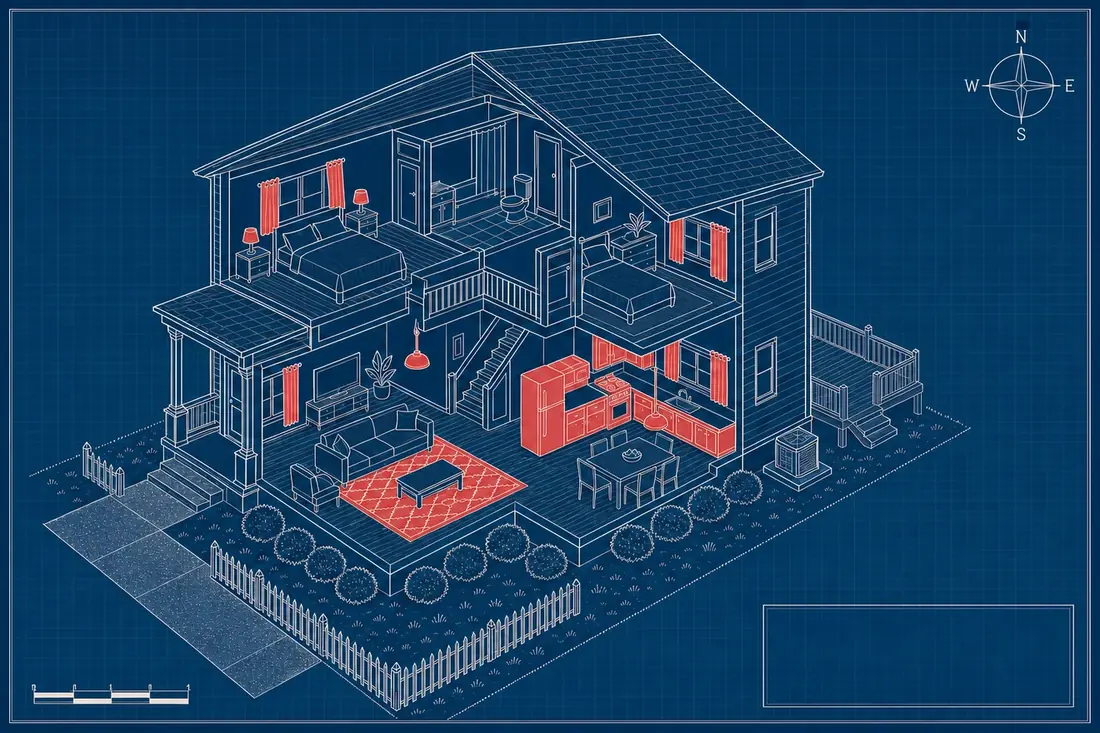
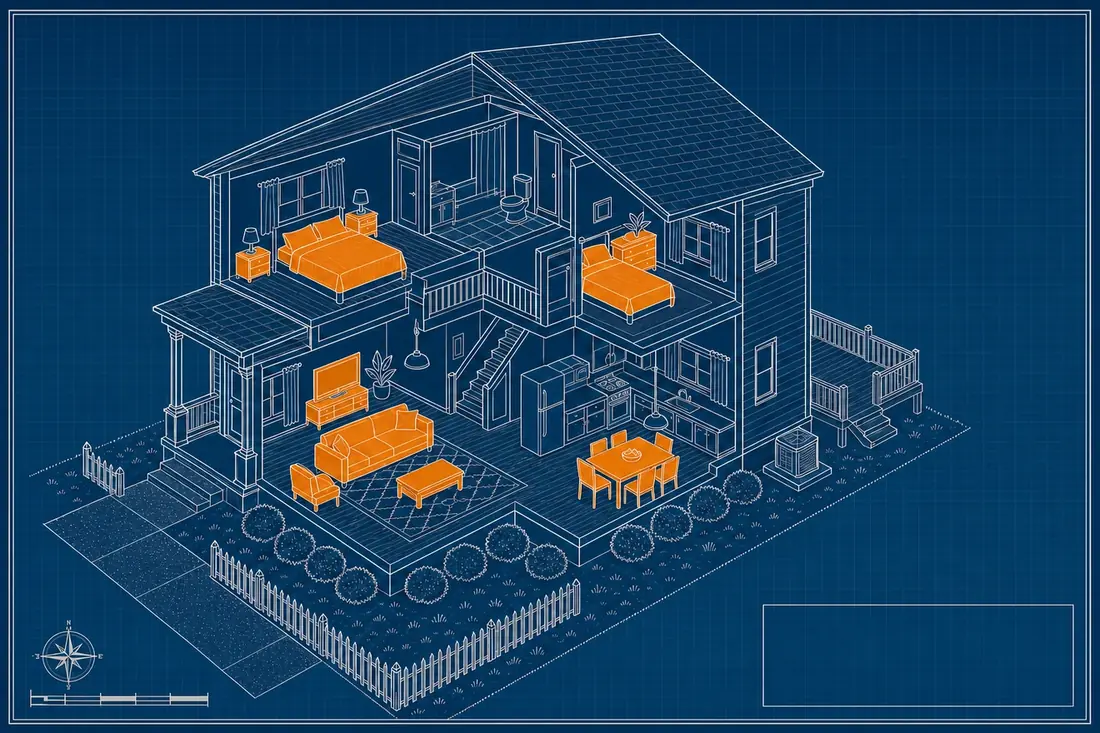
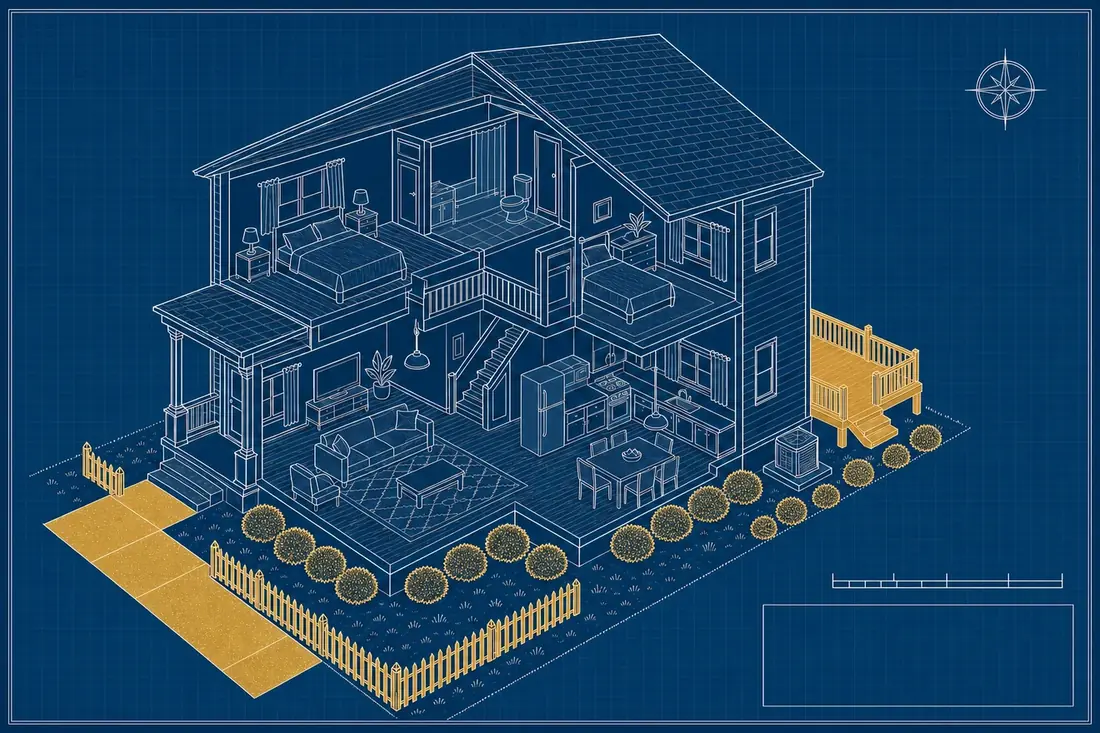
5-Year: carpet and flooring, cabinets, appliances, light fixtures, curtains 7-Year: furniture 15-Year: driveway, fencing, landscaping, deck 27.5/39-Year Shell: roof, load-bearing walls, foundation, central HVAC Get your free Preliminary Benefit Estimate See what an Amelia Island property's components and history could add up to with the free 60-second estimate at /qualify. Request Your Free Estimate »What an Amelia Island rental has to reclassifyA typical Amelia Island rental, whether a beachfront condo, a single-family home, or a historic property near downtown Fernandina Beach, carries components an engineering study can move off the building's 27.5/39-year schedule:
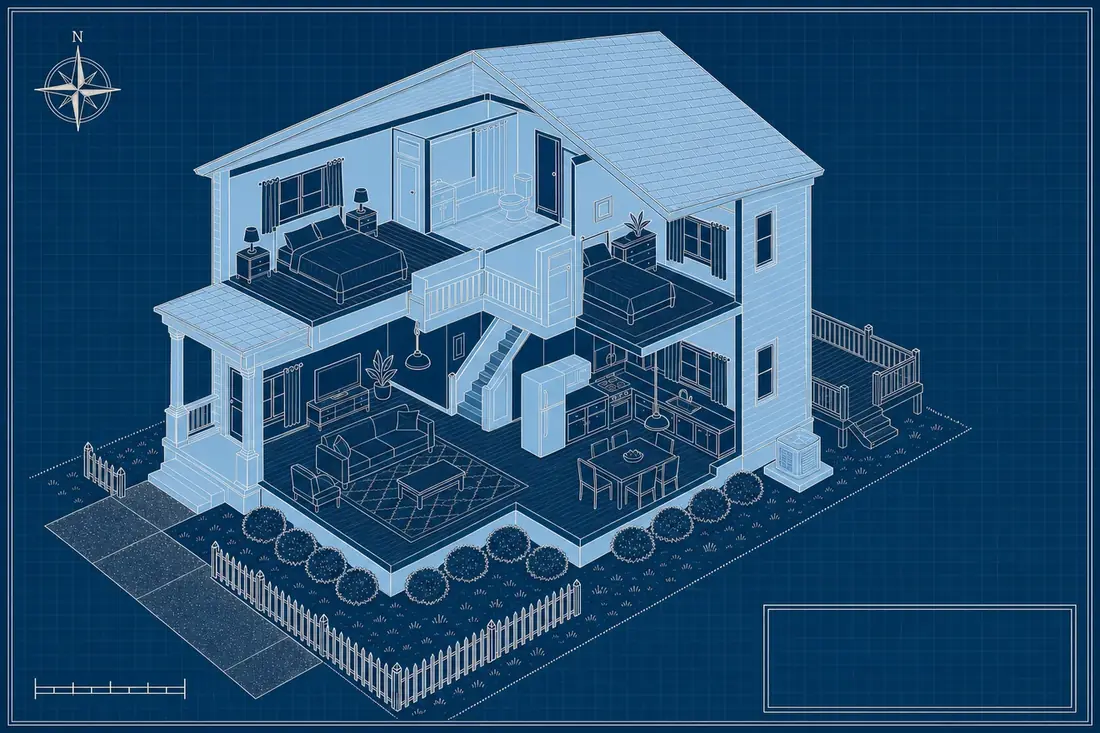
The building's foundation, framing, roof, and any central HVAC stay on the 27.5/39-year schedule regardless of age or style, whether the property is a decades-old Fernandina Beach house or new beachfront construction. Year-round demand and the 7-day averageA property whose average guest stay across the tax year runs 7 days or less falls under the short-term rental exception in Reg. 1.469-1T(e)(3)(ii), taking it out of the standard passive rental-activity framework under section 469. A market with one dominant season, a summer beach surge or a single winter ski peak, lets that one season's booking pattern carry outsized weight in the yearly average. Amelia Island's year-round pattern works differently: without one season dwarfing the rest, a property's typical booking length has more chances across the calendar to show up consistently, rather than getting pulled hard in one direction by a short, heavy peak and then sitting quiet the rest of the year. That still comes down to a specific property's actual bookings, not the market's general shape. A steadier calendar makes the yearly average a closer reflection of the property's typical guest, whatever that typical stay actually runs, compared with a market where one intense season can swing the number on its own. Estimate the first-year deduction on a property hereA few questions and the building value give a preliminary first-year deduction range, using the same rule as our free calculator. The breakdown can be emailed to you, or you can book a 15-minute call. Step 1 of 3 What kind of property?
Who runs it day to day?
What is the average guest stay?
When did you buy it?
How many rentals do you own?
Across all of them, does your rental portfolio show taxable income overall?
Any of them likely to sell in the next few years?
Prefer to talk it through? Book straight from here. No form needed.
A historic property and a look-back studyA number of Amelia Island's rentals, particularly the historic homes near downtown Fernandina Beach, have been owned for years before the owner ever considers cost segregation. That does not shut the door: a study on a property owned for years runs as a look-back study, claimed through Form 3115 with a section 481(a) catch-up deduction that recovers the missed depreciation in the current year rather than through amended returns. A newer beachfront property purchased more recently gets a study on the same basis, just without the catch-up piece, since there is less missed depreciation to recover. Either way, only the building and its improvements depreciate; land value comes out of the calculation first, whether the property in question is a century-old Fernandina Beach house or beachfront construction built last year. See how the Form 3115 look-back process works for the full mechanic. Personal use on a year-round propertyA property that rents steadily all year gives an owner more chances to mix in personal weeks than a property tied to one short peak season, since there is no single narrow window competing for the calendar. Section 280A caps deductions once an owner's personal use exceeds the greater of 14 days or 10% of the days the property is actually rented. On a year-round Amelia Island rental, that rented-day total tends to be higher across twelve months than it would be on a property that only really books during one season, which changes the math behind the threshold even though the rule itself stays the same. Whether a specific owner's personal days cross that line against their own property's actual rented nights is a question for that owner's CPA to run against the real calendar. The process for an Amelia Island propertyThe study runs on the same hands-off process regardless of whether the property is a historic downtown home or new beachfront construction: interior and listing photos, the same ones already posted to Airbnb or VRBO, feed the component classification, no site visit and no owner homework list. Every study is custom-priced to the specific property's size, age, and amenity mix, and residential turnaround normally runs 1 to 2 weeks, 2 to 3 weeks during tax season. On a short-term rental, Basis guarantees at least 30 times the fee in first-year deductions, or the study is free. A free Preliminary Benefit Estimate at /qualify models the likely number before anyone commits to anything. For a market running the opposite calendar shape, one dominant summer peak rather than a year-round pattern, see the Destin/30A page. For the full picture, see the vacation rental markets hub. Frequently asked questionsWhat county is Amelia Island in? Amelia Island sits in Nassau County, Florida, in the state's northeastern corner. Jacksonville sits close enough to supply a steady base of drive-to rental traffic, and the island includes the historic town of Fernandina Beach on its northern end. Is Amelia Island a big rental market compared to other Florida beach towns? It runs smaller and earlier-stage than some of Florida's larger coastal destinations, a compact island with a compact rental stock rather than a stretch of high-rise condo towers. The mechanics of a cost segregation study work the same regardless of market size. How does year-round demand affect the short-term rental average-stay test? Without one dominant season pulling the calendar in a single direction, a property's typical booking length has more chances to show up consistently across the year. The actual yearly average still depends on that specific property's real bookings, not the market's general shape. Can a historic Fernandina Beach home still qualify for cost segregation? Yes. A property owned for years runs as a look-back study, claimed through Form 3115 with a section 481(a) catch-up deduction that recovers missed depreciation in the current year rather than through amended returns. Age and history don't disqualify a property from the process. Do porches and pools on an Amelia Island rental qualify for faster depreciation? Generally yes. Pool and spa equipment typically falls into 5-year property, and a porch or deck built on grade generally falls into 15-year land improvements. The building's structural shell, foundation, framing, and roof, stays on the building's 27.5/39-year schedule. Keep readingGet your free Preliminary Benefit Estimate Send the address or the listing link. We model the number first; you decide with it in hand. Request Your Free Estimate »Educational information, not tax advice. This page describes how federal
depreciation rules and tests work in general. Whether any rule fits your facts is a determination for
you and your CPA. Our study gives your CPA the engineering and the numbers to make that call.
Related guides: How Does Cost Segregation Work in Vacation... · Does Cost Segregation Work on a Poconos... · Cost Segregation for a Jersey Shore Rental... · Cost Segregation for a Pigeon Forge Cabin... · Cost Segregation for a Gatlinburg Rental...
More Florida markets: Cost Segregation for a Pensacola Beach or... · Cost Segregation for a Cape San Blas or... · Cost Segregation for a Sanibel or Captiva... · Cost Segregation for a St. George Island... · Cost Segregation for a Destin or 30A... · Cost Segregation for a Panama City Beach... · All vacation markets
|