|
Cost Segregation for Commercial & Short-Term Rental Owners
|
Request a free estimate [email protected] |
Vacation Markets
Free Listing SEO Audit Paste your Airbnb or VRBO listing. Get a scored audit in 90 seconds. Audit My Listing »FREE Estimate Is there a first-year deduction sitting in your building? No cost, no obligation. Request Yours »Minimum ROIOur study identifies at least 20x its fee in first-year deductions on commercial property, or at least 30x on a short-term rental, or it is free. |
Does Cost Segregation Work on a Florida Keys Rental?Quick answer Yes. A Florida Keys rental in Monroe County has the same real components any waterfront vacation property does: a dock, a screened pool enclosure, an outdoor kitchen, a furnished interior, candidates for 5- or 7-year depreciation instead of the building's 27.5/39-year schedule. The market's two-speed calendar, a winter snowbird high season plus year-round tourist traffic, puts real weight on the average-stay math behind the short-term rental exception, since long winter stays and short tourist trips land very differently on that yearly average. Own a Florida Keys rental? See the first-year deduction range a study would look for. 30 seconds, no email to see the range. Start the check ↓Key takeaways
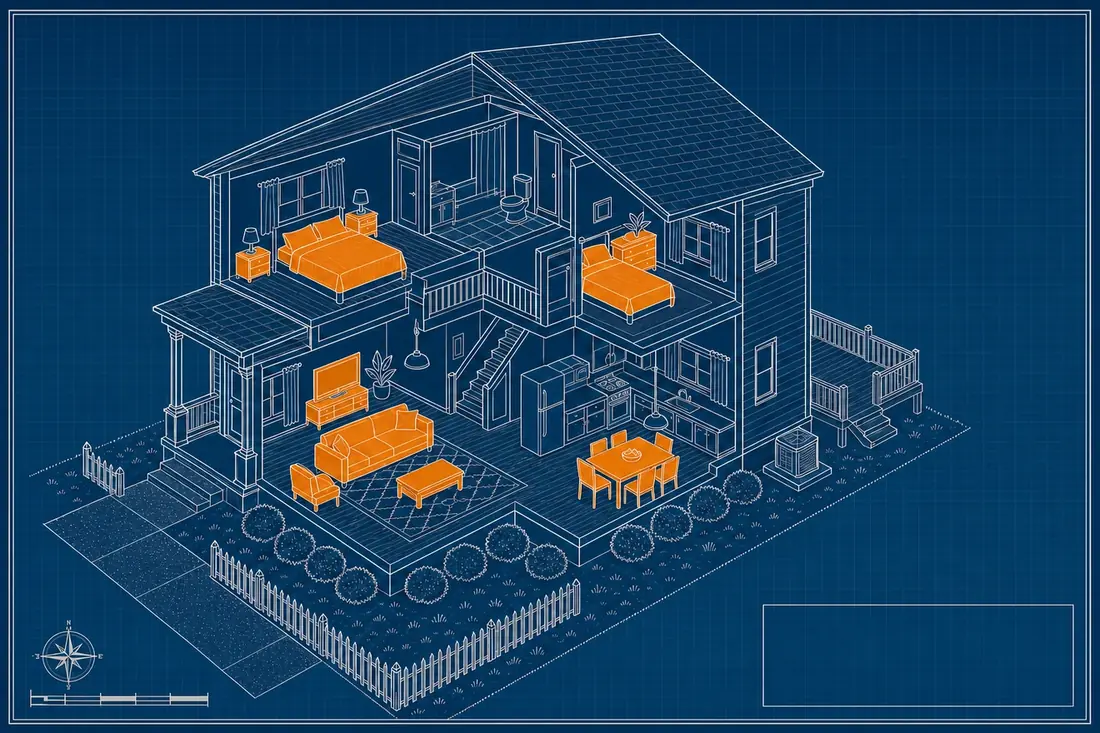
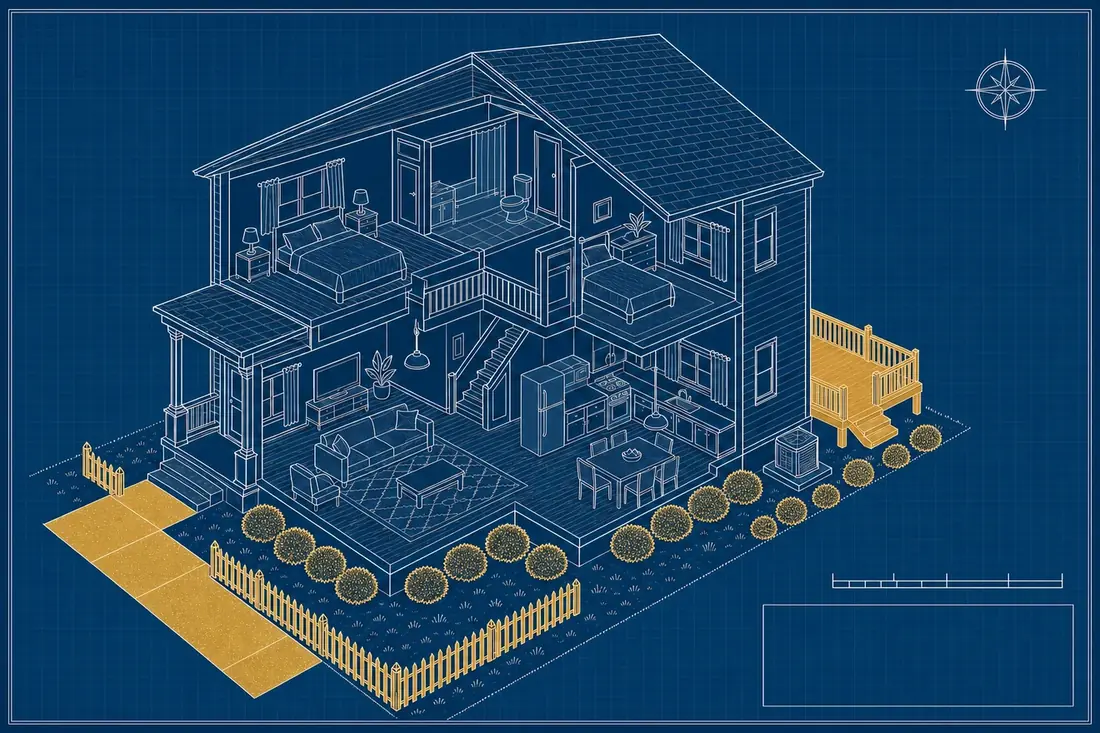
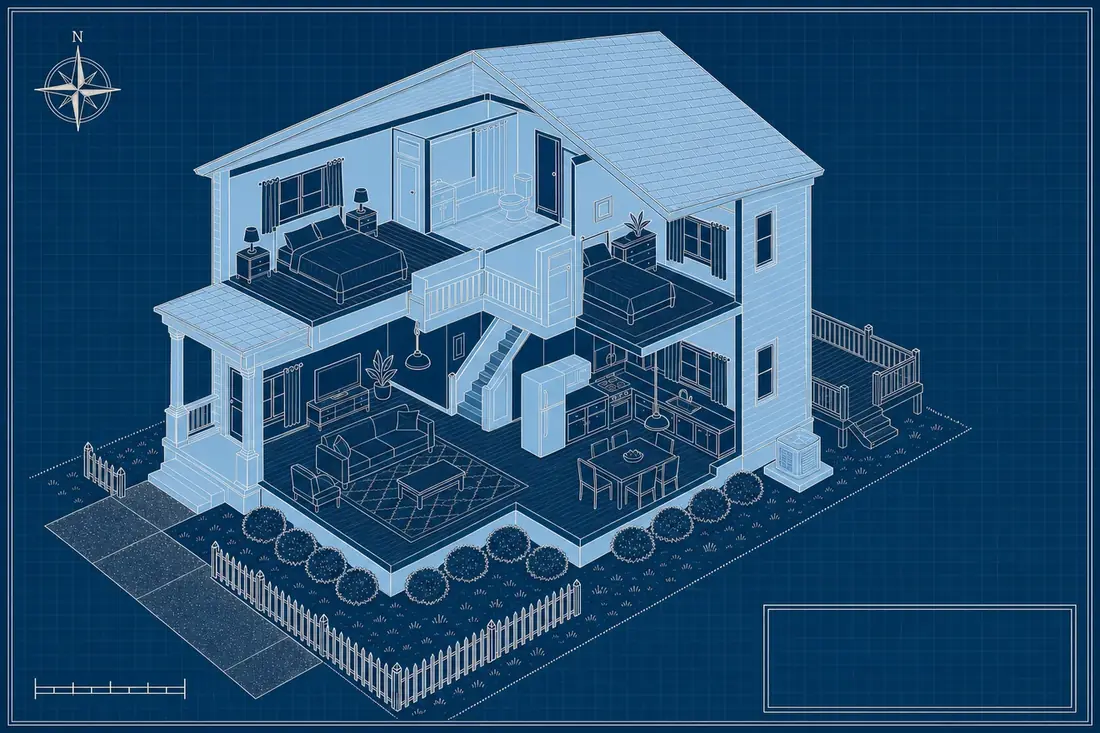
Watch a beach house rental get built and classified A hypothetical $1.4 million four-bedroom oceanfront house goes up on timber pilings, from the shell driveway and the parking level to the living floor, the porches and the terrace. Every component lands on its depreciation schedule as it is installed, and the year-one depreciation adds up on screen. Watch the 90-second walkthrough »A winter-snowbird market with year-round tourist trafficThe Florida Keys rental market runs through Monroe County, a string of islands from Key Largo down to Key West, with Miami as the main drive-to metro feeding visitors and owners heading down US-1. The market carries two distinct kinds of demand in the same calendar year: a winter high season built around snowbird traffic, owners and long-stay guests escaping colder climates roughly November through April, and a year-round base of shorter tourist trips, diving, fishing, and island-hopping visits that keep the islands busy outside the winter peak. That two-speed pattern is what makes a Keys property a genuinely different cost segregation case than a single-season beach town, the same underlying mechanics covered generally on the vacation rental markets hub. A market that only fills up in one season has a single booking rhythm to analyze. A Keys property can carry a long winter stay pattern and a short year-round tourist pattern inside the same tax year, and both feed into the same test described below. Whether the structure itself sits on 27.5 or 39 years turns on the 80% dwelling-unit test, and a short-term rental averaging stays of 7 days or less generally lands on 39 (see the 27.5 or 39 years guide). 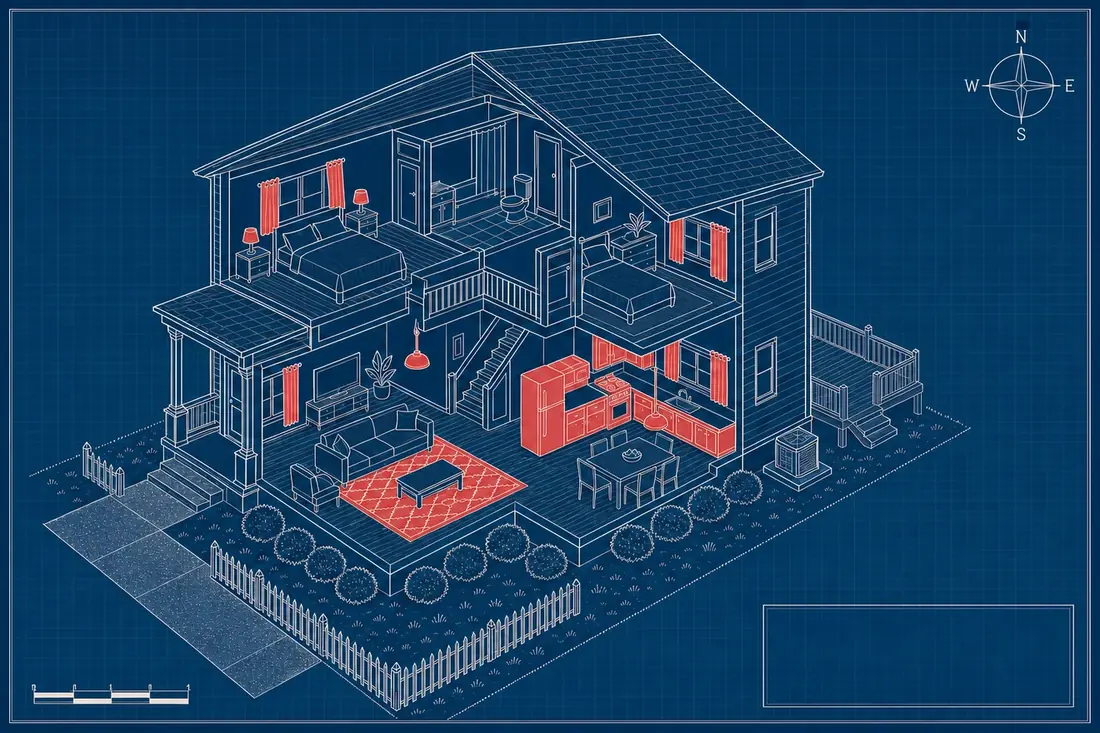
5-Year: carpet and flooring, cabinets, appliances, light fixtures, curtains 7-Year: furniture 15-Year: driveway, fencing, landscaping, deck 27.5/39-Year Shell: roof, load-bearing walls, foundation, central HVAC Get your free Preliminary Benefit Estimate See what your Keys property's amenities and rental mix could add up to with the free 60-second estimate at /qualify. Request Your Free Estimate »What a Keys property actually has to reclassifyA typical Keys rental, whether a canal-front house in Marathon or a Key West cottage a few blocks off Duval Street, tends to carry a specific amenity list shaped by the islands themselves:
The elevated foundation itself, the pilings and structural framing that flood-elevation requirements call for across most of the Keys, stays on the 27.5/39-year schedule, the same as any other structural component. A roof or central air conditioning system is structural too, not fast-depreciating equipment, a common misconception worth correcting on an island chain where air conditioning runs nearly year-round. Snowbird months, tourist weeks, and the 7-day averageA property whose average guest stay across the year is 7 days or less falls under the short-term rental exception in Reg. 1.469-1T(e)(3)(ii), pulling it out of the standard passive rental-activity framework under section 469. A Keys property's two-speed calendar puts real weight on both sides of that average: a winter stretch of longer, sometimes month-long snowbird stays pulls the yearly average up, while a spring, summer, and fall calendar of shorter diving, fishing, and island-hopping trips pulls it back down. Where a specific property's full-year average actually lands depends on how much of its calendar each pattern fills, not on the regional description alone. A property booked mostly to short tourist trips with a few winter long-stay guests mixed in sits differently than one that leans hard into month-long winter rentals and books lightly the rest of the year. From there, the owner still needs material participation, commonly 500-plus hours, substantially all the participation, or 100-plus hours and more than any other individual, including a cleaner or property manager, for the resulting losses to be non-passive. A month-long winter stay and a three-night tourist trip both count toward the same yearly average; the mix is what decides where that average lands.
Estimate the first-year deduction on a property hereA few questions and the building value give a preliminary first-year deduction range, using the same rule as our free calculator. The breakdown can be emailed to you, or you can book a 15-minute call. Step 1 of 3 What kind of property?
Who runs it day to day?
What is the average guest stay?
When did you buy it?
How many rentals do you own?
Across all of them, does your rental portfolio show taxable income overall?
Any of them likely to sell in the next few years?
Prefer to talk it through? Book straight from here. No form needed.
An owner who winters in their own rentalPlenty of Keys owners split the calendar themselves, renting the property most of the year and spending part of the winter season in it personally. Section 280A caps deductions once an owner's personal use exceeds the greater of 14 days or 10% of the days the property is actually rented. Whether a specific owner's personal weeks cross that line is a question for that owner's CPA, who can run the actual day count against the property's real rental calendar for the year. That same owner, if handling turnover and guest coordination personally between winter visits, is also building toward the material participation hours the short-term rental exception requires on top of the average-stay test. The two questions, average stay and material participation, are separate tests, and a Keys owner who splits time on the property is often working both at once without realizing it. Storm damage and partial asset dispositionIsland property takes storm damage, and a roof, dock, pool enclosure, or seawall replaced after a storm is not just a repair bill, it is also a tax event. Under Treas. Reg. 1.168(i)-8, when a component is replaced, the remaining basis of the old component can be written off, but only in the tax year of the replacement. Miss that year and the old roof's or dock's remaining basis stays buried in the building's depreciation schedule for decades, while the new one starts depreciating on top of it. See how partial asset disposition works for the full mechanic. Getting a number for a Keys propertyThe study runs on the same hands-off process used across any residential or short-term rental: interior and listing photos, the same photos already posted to Airbnb or VRBO, feed the component classification directly, no site visit, no owner homework list. Every study is custom-priced against the specific property's size, age, and amenity mix, and turnaround for a residential study normally runs 1 to 2 weeks, 2 to 3 weeks during tax season. On a short-term rental, Basis guarantees at least 30 times the fee in first-year deductions, or the study is free. Both a full engineered study and a budget engineered study deliver the same 70-page report aligned to the IRS's own Audit Techniques Guide; which tier fits depends on the property's size and complexity. For a market running on a similar year-round tourist rhythm further up the Gulf, see the South Padre Island page. A free Preliminary Benefit Estimate at /qualify models the likely number for a specific property's amenity mix before anyone commits to a fee. Frequently asked questionsWhat counties do the Florida Keys cover for a rental property? The Keys run through Monroe County, Florida, a chain of islands from Key Largo down to Key West, with Miami serving as the main drive-to metro feeding the market. Does a boat dock or lift qualify for faster depreciation? Generally yes. A dock, boat lift, or davit typically sits in the land improvement bucket, separate from the structure itself, alongside items like fencing and outdoor lighting. My Keys rental books long winter stays and short trips the rest of the year. Does that matter? Yes. Both patterns feed into the same yearly average-stay figure used for the short-term rental exception. A long winter stay and a short tourist trip both count toward that average; the mix across the year is what determines where it lands. Does an elevated, flood-zone foundation change how a study treats the building? No. The pilings and structural framing required by flood-elevation rules stay on the building's 27.5/39-year schedule, the same as a conventional foundation. The amenities built on top of that foundation are what a study reclassifies. What happens if I replace a roof or dock after storm damage? Replacing a component after storm damage can open a partial asset disposition election, letting the remaining basis of the old component be written off in that tax year. The election is only available in the year the old component is actually removed. Keep readingGet your free Preliminary Benefit Estimate Send the address or the listing link. We model the number first; you decide with it in hand. Request Your Free Estimate »Educational information, not tax advice. This page describes how federal
depreciation rules and tests work in general. Whether any rule fits your facts is a determination for
you and your CPA. Our study gives your CPA the engineering and the numbers to make that call.
Related guides: How Does Cost Segregation Work in Vacation... · Does Cost Segregation Work on a Poconos... · Cost Segregation for a Jersey Shore Rental... · Cost Segregation for a Pigeon Forge Cabin... · Cost Segregation for a Gatlinburg Rental...
More Florida markets: Does Cost Segregation Work on an Amelia... · Cost Segregation for a Pensacola Beach or... · Cost Segregation for a Cape San Blas or... · Cost Segregation for a Sanibel or Captiva... · Cost Segregation for a St. George Island... · Cost Segregation for a Destin or 30A... · All vacation markets
|