|
Cost Segregation for Commercial & Short-Term Rental Owners
|
Request a free estimate [email protected] |
Vacation Markets
Free Listing SEO Audit Paste your Airbnb or VRBO listing. Get a scored audit in 90 seconds. Audit My Listing »FREE Estimate Is there a first-year deduction sitting in your building? No cost, no obligation. Request Yours »Minimum ROIOur study identifies at least 20x its fee in first-year deductions on commercial property, or at least 30x on a short-term rental, or it is free. |
Does Cost Segregation Work for a Lake Tahoe Rental?Quick answer Cost segregation works for a Lake Tahoe rental on either side of the state line. A Lake Tahoe short-term rental, whether in El Dorado or Placer County on the California side or Douglas County on the Nevada side, has the same components any rental does: cabinetry, flooring, a dock or boathouse, ski storage built into a mudroom, all candidates for 5-, 7-, or 15-year depreciation instead of the building's 27.5/39-year schedule. The federal depreciation rules do not change at the state line; what changes across the basin is the mix of ski-season and lake-season components a given property carries. Own a Lake Tahoe rental? See the first-year deduction range a study would look for. 30 seconds, no email to see the range. Start the check ↓Key takeaways
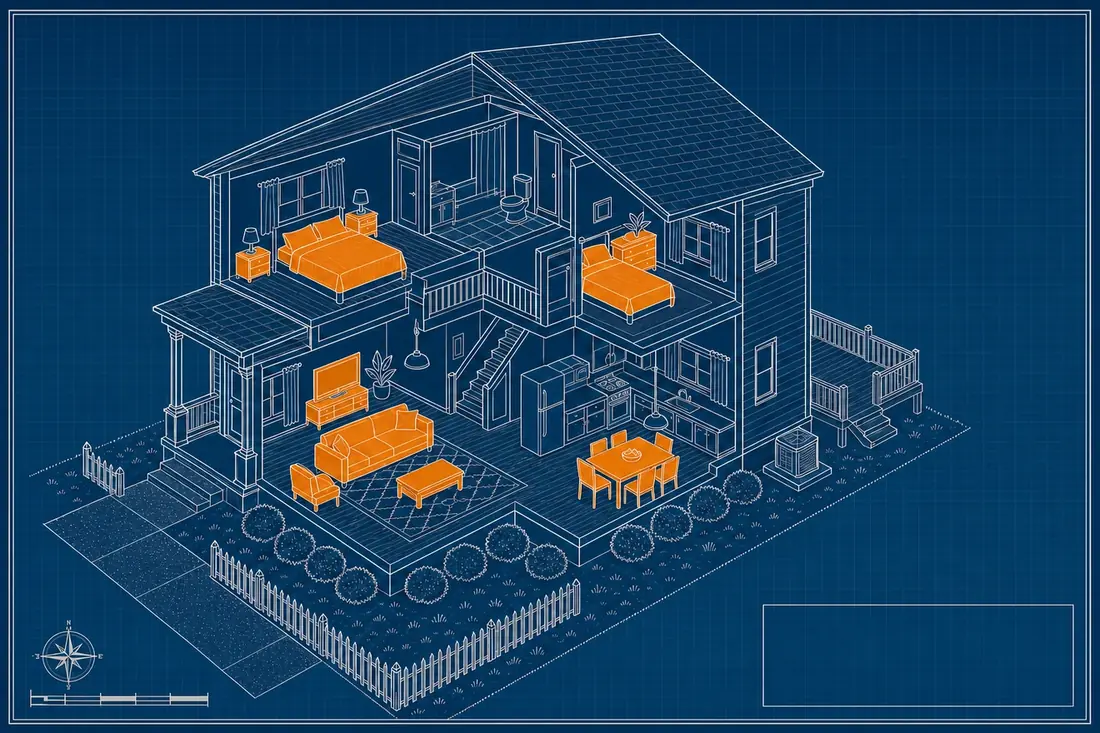
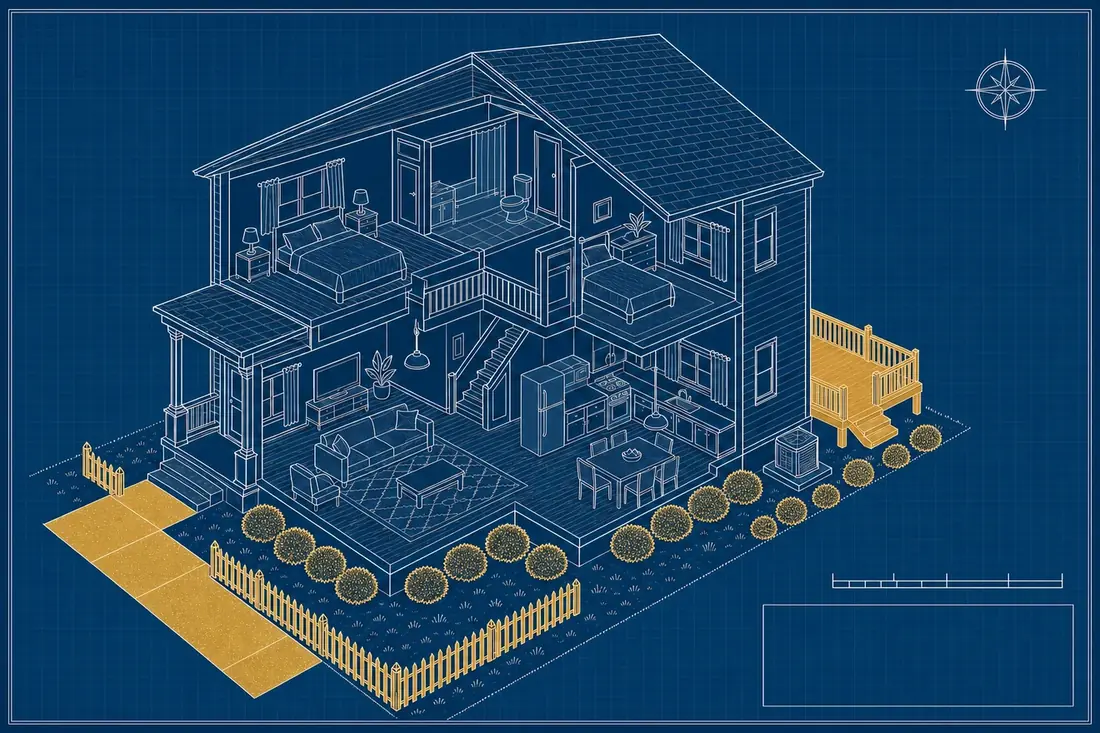
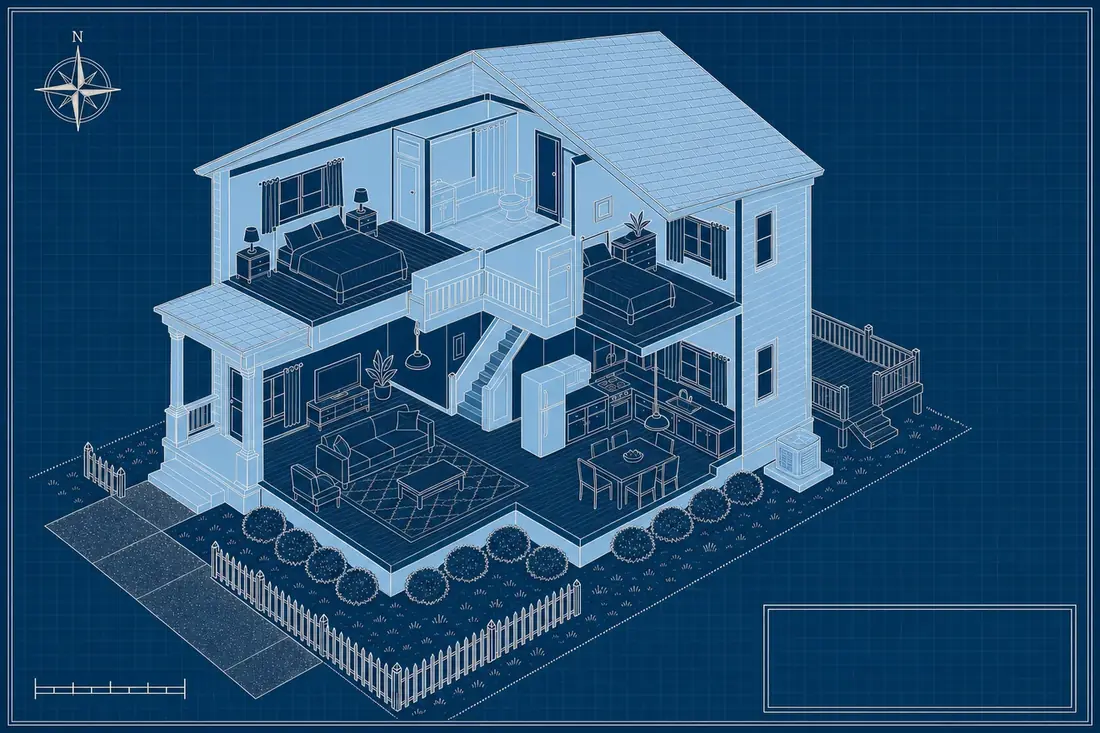
Watch a log cabin rental get built and classified A hypothetical $600,000 three-bedroom log cabin goes up floor by floor, from the gravel drive and foundation to the game loft and the hot tub on the deck. Every component lands on its depreciation schedule as it is installed, and the year-one depreciation adds up on screen. Watch the 90-second walkthrough »One lake, two states, one set of federal rulesLake Tahoe sits on the California-Nevada border, with El Dorado and Placer counties covering the California side and Douglas County covering the Nevada side. The basin draws rental traffic from Sacramento and the San Francisco Bay Area to the west and Reno to the east, close enough for both a weekend trip and a full week. It runs a genuine dual season: winter ski traffic feeding the resorts on both shores, summer lake traffic feeding swimming, boating, and hiking once the snow clears. Cost segregation is a federal depreciation mechanic under the tax code, not a state program, so a property's side of the state line has no bearing on which components qualify or how they are classified. A ski chalet in Placer County and a lakefront house in Douglas County run through the identical engineering process. What differs between them is the mix of components each season's use pattern actually built into the property. Whether the structure itself sits on 27.5 or 39 years turns on the 80% dwelling-unit test, and a short-term rental averaging stays of 7 days or less generally lands on 39 (see the 27.5 or 39 years guide). 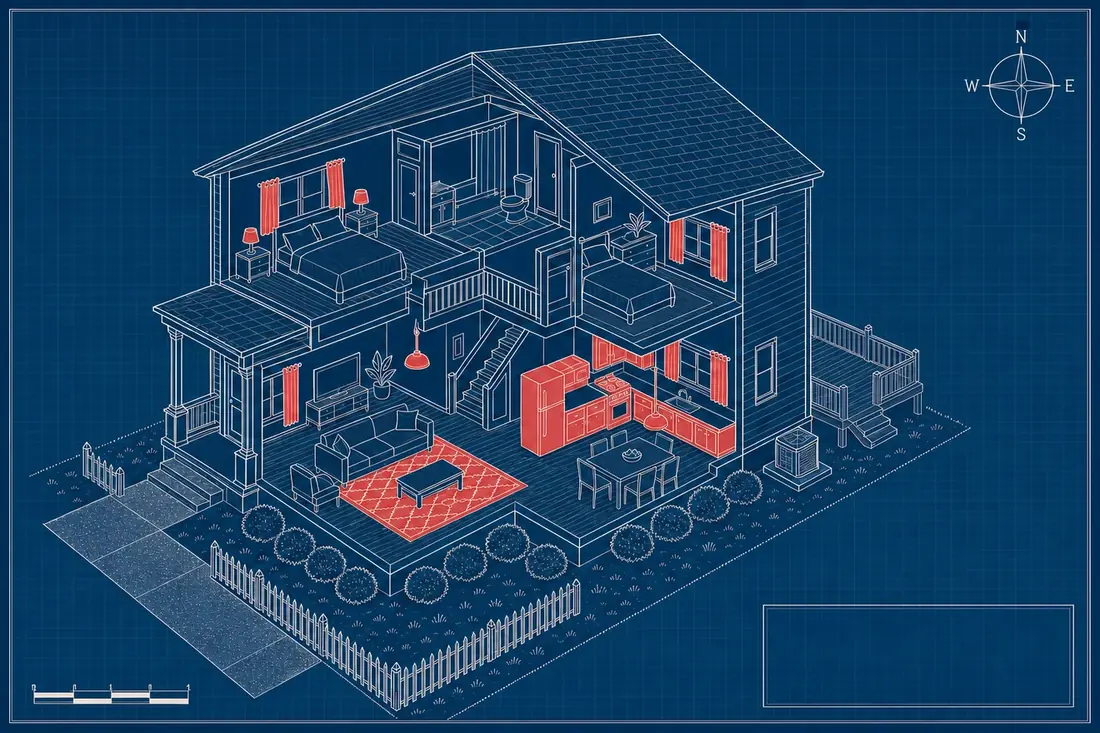
5-Year: carpet and flooring, cabinets, appliances, light fixtures, curtains 7-Year: furniture 15-Year: driveway, fencing, landscaping, deck 27.5/39-Year Shell: roof, load-bearing walls, foundation, central HVAC Get your free Preliminary Benefit Estimate See what a specific Tahoe property's ski and lake components could add up to with the free estimate at /qualify. Request Your Free Estimate »What a ski-season property carriesA Tahoe property built around winter traffic tends to carry a specific component list beyond the standard cabinetry and flooring:
The roof structure and the central heating system serving the rest of the house stay on the building's 27.5/39-year schedule. A steep-pitched roof built for snow load is still a structural component, not fast-depreciating equipment, the same as any other roof. What a lake-season property carriesA property built around the summer lake season carries a different set of extras:
Window treatments in lake-facing rooms, and the electrical or plumbing runs feeding a dock light, an outdoor kitchen, or a hot tub rather than the house's core systems, generally sit in the same 5-year bucket as the mudroom racks and watercraft storage above; a study separates that dedicated equipment from the wiring and piping serving the building as a whole, which stays on the standard schedule. A property built for both seasons, common around the lake, carries some combination of both lists, part of why a Tahoe study tends to run larger in scope than a single-season rental of comparable size. Estimate the first-year deduction on a property hereA few questions and the building value give a preliminary first-year deduction range, using the same rule as our free calculator. The breakdown can be emailed to you, or you can book a 15-minute call. Step 1 of 3 What kind of property?
Who runs it day to day?
What is the average guest stay?
When did you buy it?
How many rentals do you own?
Across all of them, does your rental portfolio show taxable income overall?
Any of them likely to sell in the next few years?
Prefer to talk it through? Book straight from here. No form needed.
The 7-day average across two very different seasonsA property whose average guest stay across the tax year is 7 days or less falls under the short-term rental exception in Reg. 1.469-1T(e)(3)(ii), taking it out of the standard passive rental-activity framework under section 469. Tahoe's dual season puts real weight on both sides of that average: a full week booked at Christmas or over a ski week runs long, while a series of weekend ski trips or short summer lake stays runs short. A property leaning toward week-long ski rentals sits differently on the yearly average than one running mostly weekend and long-weekend bookings across both seasons. Where a specific Tahoe property's full-year average actually lands depends on that property's real booking mix, not the basin's pattern as a whole; that is a computation for the owner and their CPA using the year's actual guest-night records. Material participation is the second test: 500-plus hours, substantially all the participation, or 100-plus hours and more than any other individual, cleaners and co-hosts included. An owner using a full-service property manager on a property they rarely visit personally is comparing their own hours against that manager's under the 100-hour test. Scale: a basin that runs bigger than mostOn a benchmark run for an office and warehouse property, a $1,911,675 building basis produced $330,674 in first-year deductions for a $9,900 fee, a 33.4-to-1 ratio. That is a commercial example, offered as a scale reference rather than a claim about a Tahoe residential property. Tahoe's lakefront and ski-adjacent homes tend to carry a larger basis than a typical inland rental simply because the properties themselves run bigger and the land improvements, docks, snow-melt systems, larger decking, add real dollars beyond the standard finish list. A bigger basis does not change the ratio math on the guarantee; it changes how many real dollars that ratio produces. First-year deductions on a well-scoped study typically run 16 to 21% of building basis under current bonus rules, and a study typically shifts 15 to 35% of basis into faster schedules, with land-improvement-heavy properties, a dock-and-boathouse lakefront home among them, tending toward the higher end. Getting a number for a Tahoe propertyThe process is the same hands-off one used for any short-term rental: listing photos, the same ones already on Airbnb or VRBO, feed the component classification, no site visit required on either side of the state line. Every study is custom-priced to the property's size, age, and component mix, with turnaround normally running 1 to 2 weeks for a residential property, 2 to 3 weeks during tax season. On a short-term rental, Basis guarantees at least 30 times the fee in first-year deductions, or the study is free. Compare a smaller-scale, single-county version of the same dual-season pattern at the Big Bear Lake page, or see the full mechanic at what a study typically costs. See the rest of the vacation rental market pages, or start with a free Preliminary Benefit Estimate at /qualify. Frequently asked questionsDoes it matter whether a Lake Tahoe rental sits in California or Nevada? Not for the depreciation mechanics. Cost segregation runs under federal tax law, so a property in El Dorado or Placer County, California, and one in Douglas County, Nevada, follow the identical engineering process and the same recovery periods. What differs is state-level tax treatment elsewhere in the return, a separate question from the federal study itself. Are docks and boathouses really depreciated faster than the house? Generally yes. A dock, boat slip, or boathouse structure typically falls into the 15-year land improvement category, separate from the 27.5/39-year structure, though the exact classification depends on how the structure is built and attached. How does a dual ski-and-lake season affect the short-term rental tax test? The short-term rental exception looks at the average guest stay across the full year, not one season alone. A property mixing full-week ski or lake bookings with shorter weekend stays in the other season needs its actual full-year average calculated from real booking records, not assumed from the basin's general pattern. Does a bigger Tahoe property mean a bigger depreciation number? Generally yes, in dollar terms. A larger basis and more land improvements, docks, snow-melt systems, larger decking, typically means more total dollars move into faster schedules, even though the underlying percentage ranges and guarantee ratio stay the same as on any other property. Do I need to visit the property for the study? No. The process works from listing photos already used for the Airbnb or VRBO listing, so no site visit or owner homework list is required on either side of the lake. How long does a Lake Tahoe cost segregation study take? For a residential short-term rental, normally 1 to 2 weeks, extending to 2 to 3 weeks during the busiest part of tax season. Rush options are available for a flat upcharge given the photos-only process. Keep readingGet your free Preliminary Benefit Estimate Send the address or the listing link. We model the number first; you decide with it in hand. Request Your Free Estimate »Educational information, not tax advice. This page describes how federal
depreciation rules and tests work in general. Whether any rule fits your facts is a determination for
you and your CPA. Our study gives your CPA the engineering and the numbers to make that call.
Related guides: How Does Cost Segregation Work in Vacation... · Does Cost Segregation Work on a Poconos... · Cost Segregation for a Jersey Shore Rental... · Cost Segregation for a Pigeon Forge Cabin... · Cost Segregation for a Gatlinburg Rental...
More Mountain West markets: Cost Segregation for a Big Bear Lake Rental... · Does Cost Segregation Work on a Park City... · Cost Segregation for a Breckenridge Rental... · Cost Segregation for a Steamboat Springs... · Does Cost Segregation Work on a Jackson... · Does Cost Segregation Work on a Whitefish... · All vacation markets
|