|
Cost Segregation for Commercial & Short-Term Rental Owners
|
Request a free estimate [email protected] |
Vacation Markets
Free Listing SEO Audit Paste your Airbnb or VRBO listing. Get a scored audit in 90 seconds. Audit My Listing »FREE Estimate Is there a first-year deduction sitting in your building? No cost, no obligation. Request Yours »Minimum ROIOur study identifies at least 20x its fee in first-year deductions on commercial property, or at least 30x on a short-term rental, or it is free. |
Cost Segregation for a Deep Creek Lake Rental PropertyQuick answer Cost segregation for a Deep Creek Lake rental works the same as it does for any short-term rental property. A Deep Creek Lake short-term rental in Garrett County, Maryland, qualifies for a cost segregation study the same as any rental, with a dock, hot tub, and furnished interior as common candidates for 5-, 7-, or 15-year depreciation instead of the building's 27.5/39-year schedule. What makes Deep Creek distinct is a true four-season calendar, summer lake traffic, fall foliage, and winter skiing at Wisp, three separate booking rhythms feeding one property's yearly average-stay calculation. Own a Deep Creek Lake rental? See the first-year deduction range a study would look for. 30 seconds, no email to see the range. Start the check ↓Key takeaways
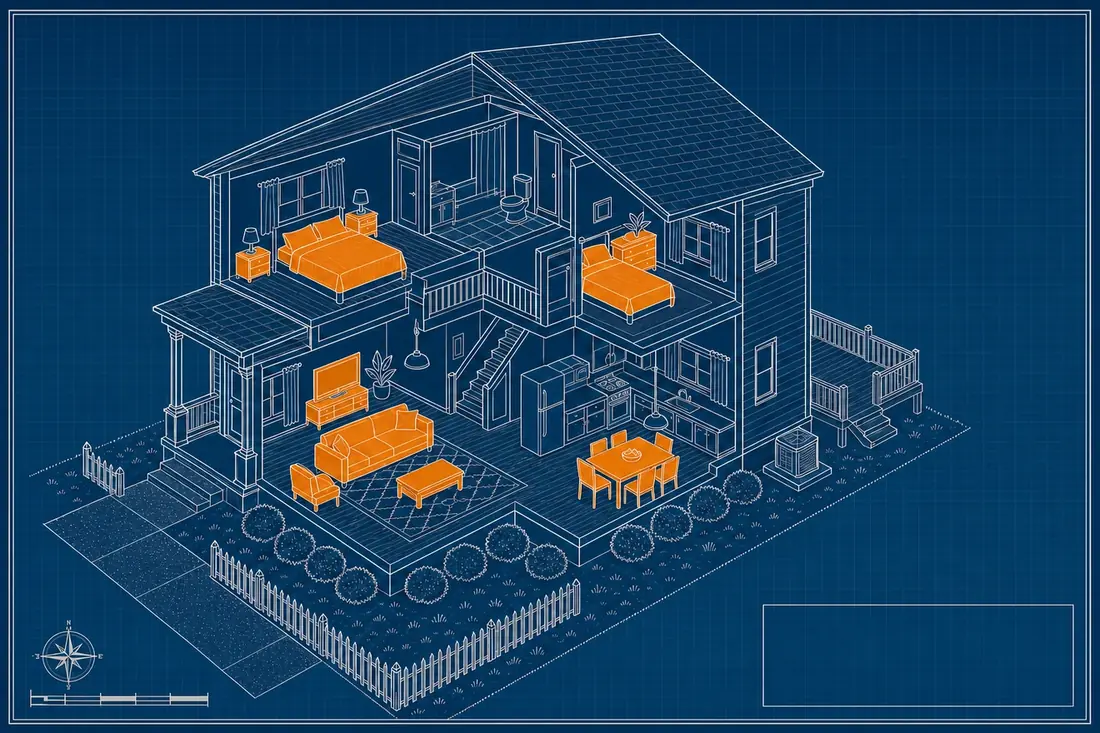
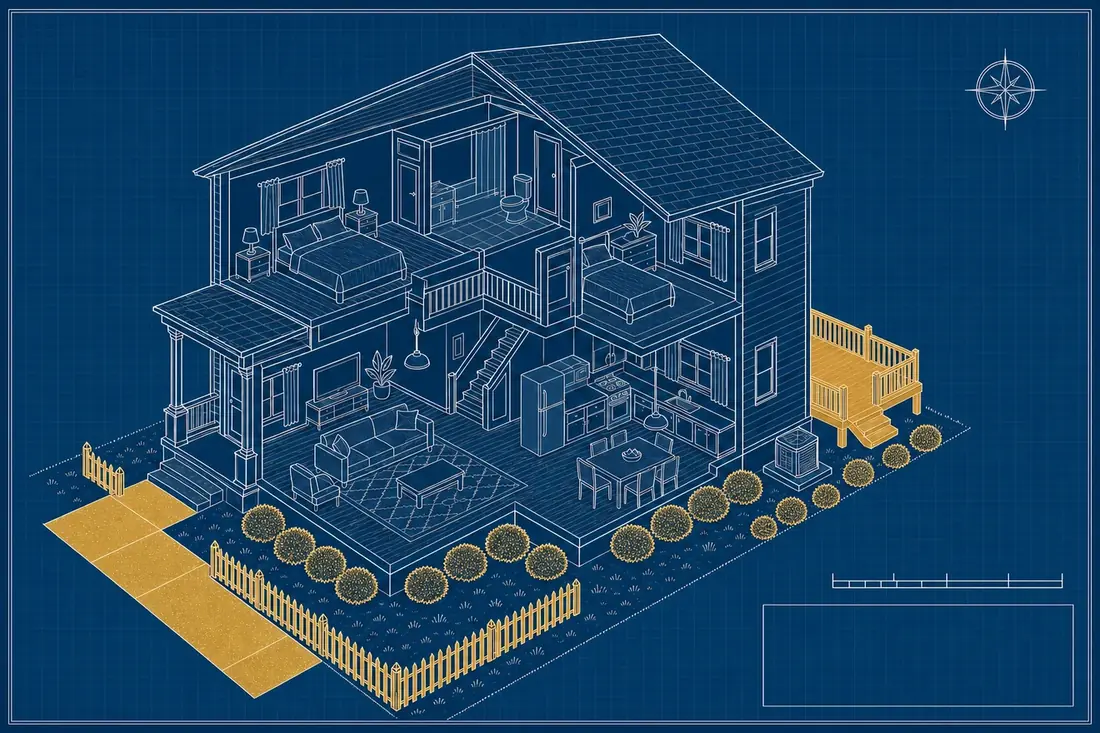
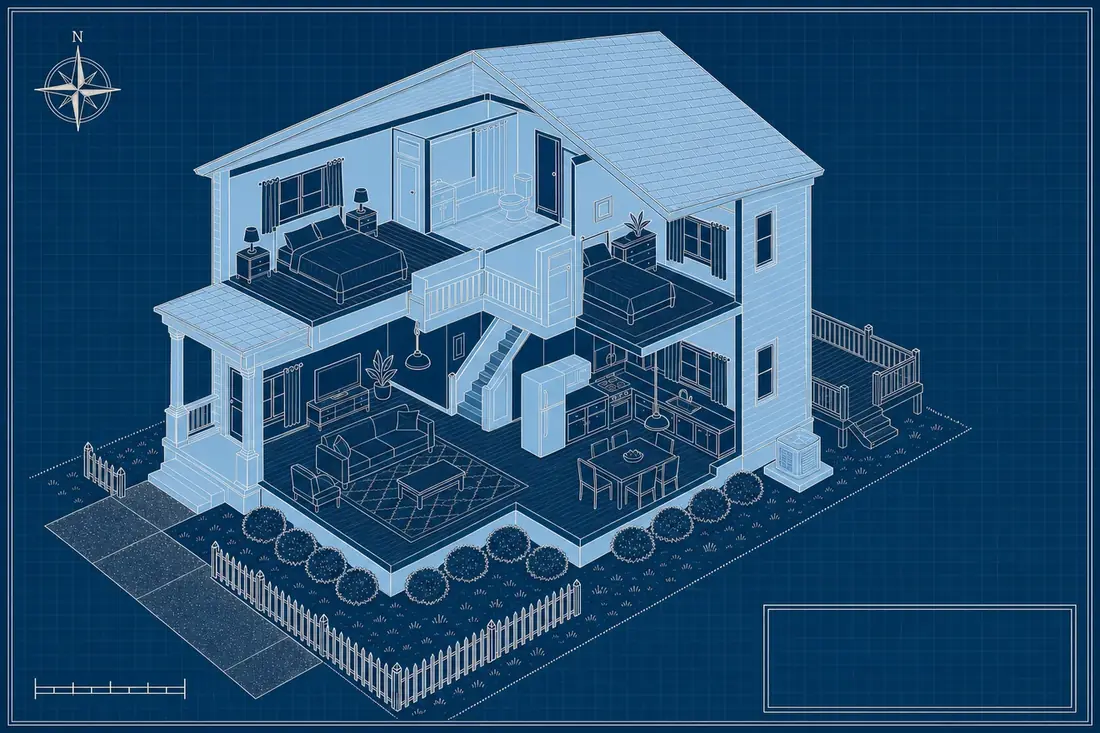
Watch a lake house rental get built and classified A hypothetical $900,000 four-bedroom lake house goes up on a sloping lot, from the driveway and the walkout level to the great room, the screened porch and the covered dock. Every component lands on its depreciation schedule as it is installed, and the year-one depreciation adds up on screen. Watch the 90-second walkthrough »A true four-season lake marketDeep Creek Lake sits in Garrett County, Maryland, within drive-to range of Washington DC, Baltimore, and Pittsburgh. Unlike a lake market that runs on a single summer season or a simple two-season split, Deep Creek carries three distinct demand periods across the year: summer lake traffic, swimming, boating, and the lake itself; fall foliage traffic through the surrounding mountains; and winter ski traffic feeding Wisp, the resort on the lake's western shore. All three seasons rent through the same property, which makes Deep Creek one of the more layered markets in terms of how its calendar actually works. Whether the structure itself sits on 27.5 or 39 years turns on the 80% dwelling-unit test, and a short-term rental averaging stays of 7 days or less generally lands on 39 (see the 27.5 or 39 years guide). 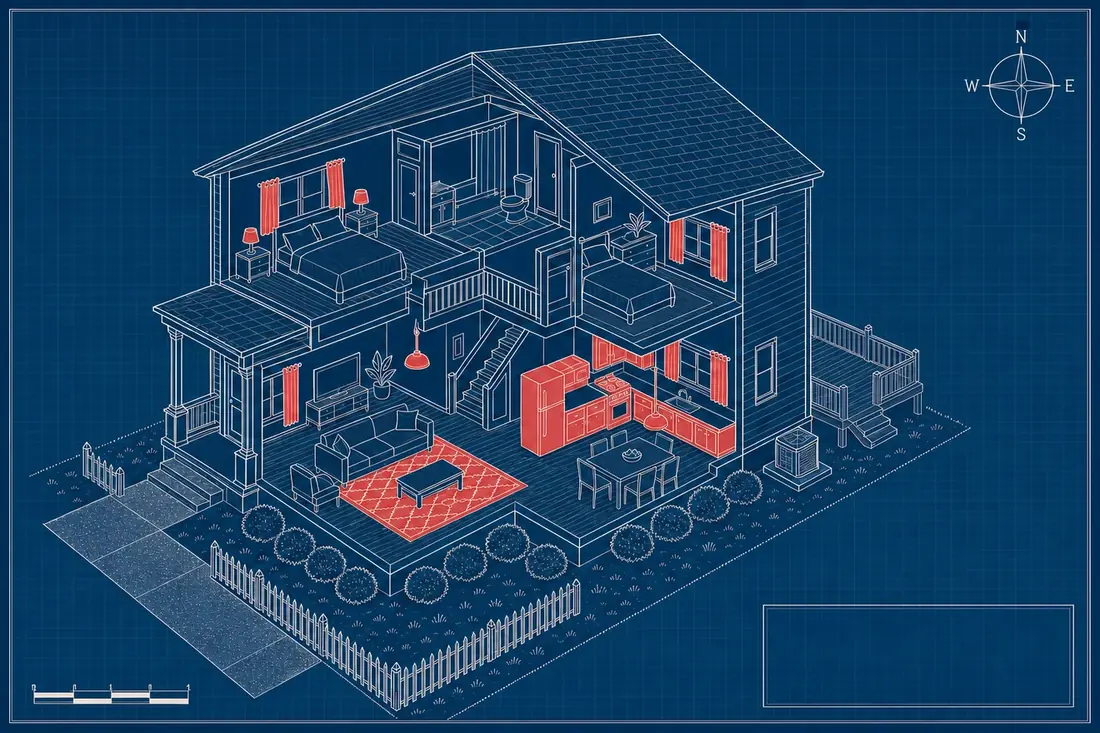
5-Year: carpet and flooring, cabinets, appliances, light fixtures, curtains 7-Year: furniture 15-Year: driveway, fencing, landscaping, deck 27.5/39-Year Shell: roof, load-bearing walls, foundation, central HVAC Get your free Preliminary Benefit Estimate See what a specific Deep Creek property's three-season component list could add up to at /qualify. Request Your Free Estimate »What each season adds to the component list
A Deep Creek property built to serve all three seasons tends to carry more of this list at once than a single-season lake or ski property does elsewhere, part of why a study here often finds a broader mix of 5-, 7-, and 15-year components than a simpler market produces. Site utilities and site work across three seasonsGarrett County is rural enough that most Deep Creek properties run on a septic system and, in many cases, a private well rather than municipal water and sewer. That site-utility infrastructure, the septic tank and drain field, the well and its pump and pressure equipment, the site work connecting them to the house, generally falls into the 15-year land improvement bucket, the same category a paved driveway, a retaining wall, or a dock sits in. That is separate from the plumbing fixtures inside the house itself. A property built or renovated with winter access in mind sometimes adds site work aimed specifically at the ski season: a heated driveway apron or walkway to manage snow and ice near an entrance, extra exterior lighting for early winter darkness, a mudroom addition to handle wet ski gear before it reaches the interior. That kind of winter-specific site work also generally falls under land improvements or the standard 5-year interior categories depending on what it actually is, not the 27.5/39-year structural shell. None of this infrastructure is unique to Deep Creek, every rural property carries some version of it. What differs here is that a property actually used across three seasons tends to have more of this site work doing real work across the year than a property that only opens for one, part of why a fully seasonal Deep Creek property often carries a broader mix of land-improvement and interior components than a single-season lake house of similar size. Three booking rhythms, one yearly averageA property whose average guest stay across the tax year is 7 days or less falls under the short-term rental exception in Reg. 1.469-1T(e)(3)(ii). Deep Creek's three seasons do not necessarily book the same way: a full week over the summer runs long, a weekend foliage trip runs short, and a ski weekend runs short as well. With three separate rhythms feeding one calculation, the yearly average depends heavily on how much of the total year's rental nights come from the long summer weeks versus the two shorter shoulder and winter seasons. This is a genuinely more layered calculation than a simple two-season market runs, and it depends entirely on that specific property's actual booking records for the year, not the region's general shape.
Estimate the first-year deduction on a property hereA few questions and the building value give a preliminary first-year deduction range, using the same rule as our free calculator. The breakdown can be emailed to you, or you can book a 15-minute call. Step 1 of 3 What kind of property?
Who runs it day to day?
What is the average guest stay?
When did you buy it?
How many rentals do you own?
Across all of them, does your rental portfolio show taxable income overall?
Any of them likely to sell in the next few years?
Prefer to talk it through? Book straight from here. No form needed.
Material participation across three seasonsClearing the average-stay test only gets to the second half of the exception: material participation, generally 500-plus hours, substantially all the participation, or 100-plus hours and more than any other individual, cleaners and co-hosts included. A property that turns over across three separate seasons, rather than one long summer season, can mean more turnover events spread across the year, directly relevant to an owner tracking their own hours against a property manager's or cleaning crew's. What the numbers look like on a property this layeredOn a benchmark run for a medical clinic, a $1,404,500 building basis produced $241,839 in first-year deductions for a $10,000 fee, a 24.2-to-1 ratio. That is a commercial example, offered as a scale reference rather than a claim about a Deep Creek residential property. A lake house serving three seasons at once, with dock, hot tub, and multiple outdoor living areas all present on one property, tends to carry more reclassifiable basis than a simpler single-season rental of the same size, since a study typically shifts 15 to 35% of a building's basis into faster schedules, with land-improvement-heavy, amenity-heavy properties running toward the higher end. Getting a study built for a three-season propertyThe process is the same regardless of how many seasons a Garrett County property actually serves: listing photos, no site visit, no owner homework list. Every study is custom-priced to the property's size, age, and full component mix, and turnaround normally runs 1 to 2 weeks for a residential property, 2 to 3 weeks during tax season. On a short-term rental, Basis guarantees at least 30 times the fee in first-year deductions, or the study is free. Many Deep Creek properties are older chalets or lake houses bought years before they were renovated into full four-season rentals, a hot tub added for winter, a mudroom rebuilt, ski storage carved out of a garage bay. Cost segregation is not limited to a fresh purchase. A study on a property already owned for years is claimed through Form 3115, an automatic consent form, with the missed depreciation from those prior years caught up in one section 481(a) deduction in the current tax year rather than through amended returns filed for each year individually. For a property renovated in stages as its season count grew, that catch-up can capture components the owner never separated out when they were originally built. Comparing Deep Creek to a simpler seasonal lakeA property running three seasons is not automatically worth more than one running a single clean season; it depends on the specific components each property actually has. See a summer-dominant lake market at the Smith Mountain Lake page, or a ski-plus-foliage market further north at the Vermont ski house page, for two different seasonal shapes. See the rest of the vacation rental market pages, or start with a free Preliminary Benefit Estimate at /qualify to see the likely number for a specific property. Frequently asked questionsDoes Deep Creek Lake really have three separate rental seasons? Yes, structurally. Summer brings lake traffic, fall brings foliage traffic, and winter brings ski traffic to Wisp on the lake's western shore. A single property can rent through all three, different from a market that runs on one dominant season. How does a three-season calendar affect the 7-day rental test? It makes the calculation more layered, not different in kind. The short-term rental exception still looks at the average guest stay across the full year; a property mixing long summer weeks with shorter fall and winter stays needs that average calculated from its actual full-year booking records. Is Wisp ski resort part of what a study looks at? Not directly. A study looks at the property's own components, hot tubs, ski storage, decking, not the resort itself. Proximity to Wisp is relevant to the property's rental pattern, not to what gets classified in the study. Do docks and hot tubs both qualify on the same Deep Creek property? Yes. A property can carry a dock as a 15-year land improvement and a hot tub as 5-year property at the same time; a study identifies every qualifying component regardless of how many different categories they fall into. How long does a Deep Creek Lake study take? For a residential short-term rental, normally 1 to 2 weeks, extending to 2 to 3 weeks during the busiest part of tax season, using listing photos rather than a scheduled site visit. Does a septic system or private well affect how a Deep Creek property is depreciated? It generally adds land-improvement basis rather than changing the outcome. Septic and well infrastructure typically fall into the 15-year land improvement category alongside a driveway or retaining wall, separate from the plumbing fixtures inside the house, common on a rural Garrett County property regardless of how many seasons it rents. Keep readingGet your free Preliminary Benefit Estimate Send the address or the listing link. We model the number first; you decide with it in hand. Request Your Free Estimate »Educational information, not tax advice. This page describes how federal
depreciation rules and tests work in general. Whether any rule fits your facts is a determination for
you and your CPA. Our study gives your CPA the engineering and the numbers to make that call.
Related guides: How Does Cost Segregation Work in Vacation... · Does Cost Segregation Work on a Poconos... · Cost Segregation for a Jersey Shore Rental... · Cost Segregation for a Pigeon Forge Cabin... · Cost Segregation for a Gatlinburg Rental...
More Mid-Atlantic Shore markets: Cost Segregation for a Long Beach Island... · Cost Segregation for an Ocean City, New... · Cost Segregation for an Ocean City... · Cost Segregation Services in Delaware... · Cost Segregation for Wildwood, North... · Cost Segregation for Avalon and Stone... · All vacation markets
|