|
Cost Segregation for Commercial & Short-Term Rental Owners
|
Request a free estimate [email protected] |
Vacation Markets
Free Listing SEO Audit Paste your Airbnb or VRBO listing. Get a scored audit in 90 seconds. Audit My Listing »FREE Estimate Is there a first-year deduction sitting in your building? No cost, no obligation. Request Yours »Minimum ROIOur study identifies at least 20x its fee in first-year deductions on commercial property, or at least 30x on a short-term rental, or it is free. |
Cost Segregation for a Smith Mountain Lake Rental PropertyQuick answer Yes, a Smith Mountain Lake short-term rental in Bedford, Franklin, or Pittsylvania County qualifies for cost segregation the same way any rental does. A lake house here typically carries a dock, boat slip, or retaining wall along the shoreline, plus the standard cabinetry, flooring, and furnishings, all candidates for 5-, 7-, or 15-year depreciation instead of the building's 27.5/39-year schedule. The lake's summer peak plus its year-round appeal to weekend visitors both factor into the average-stay math the short-term rental tax exception runs on. Own a Smith Mountain Lake rental? See the first-year deduction range a study would look for. 30 seconds, no email to see the range. Start the check ↓Key takeaways
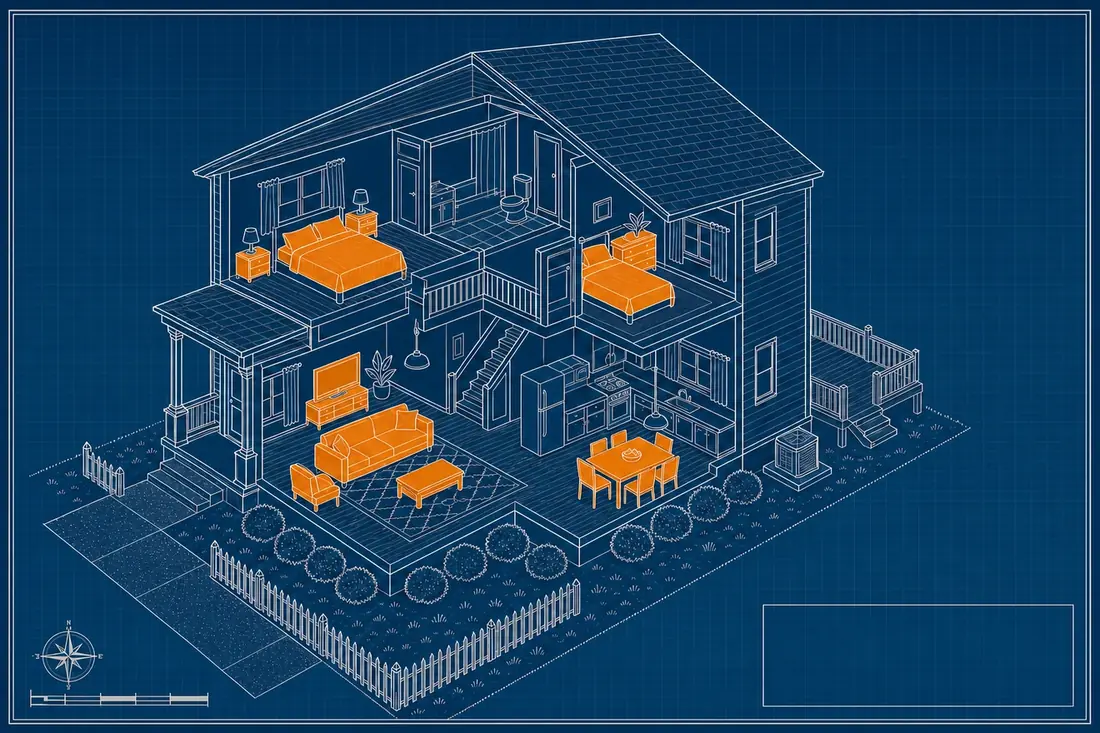
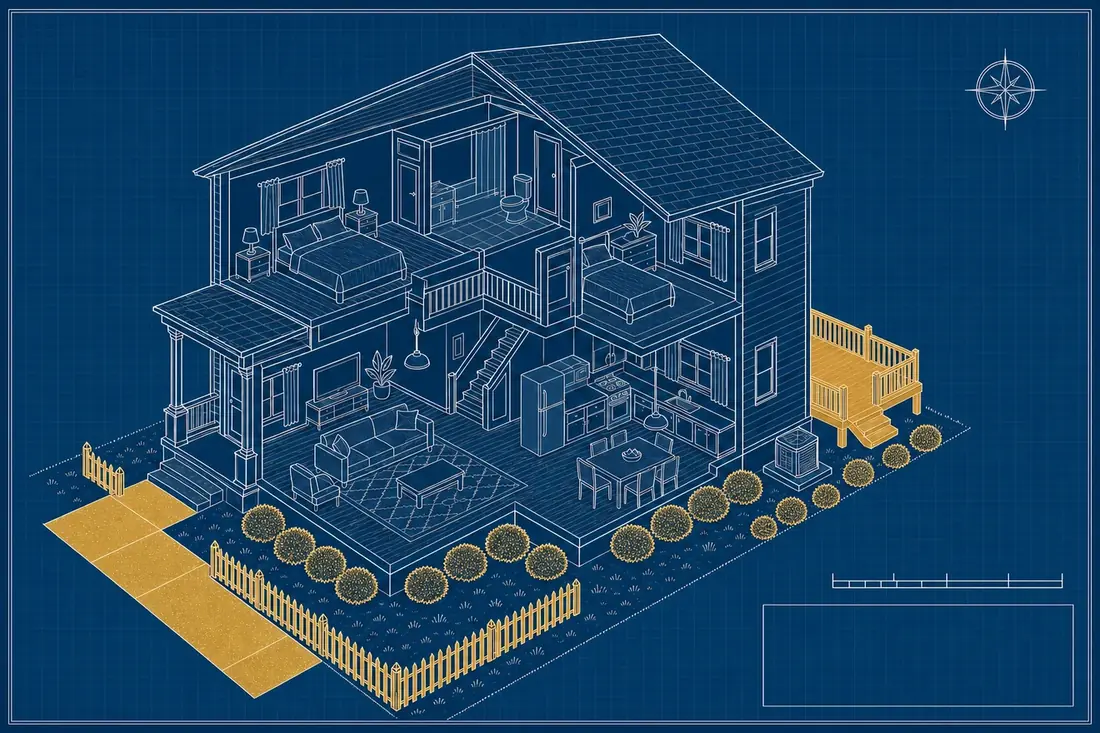
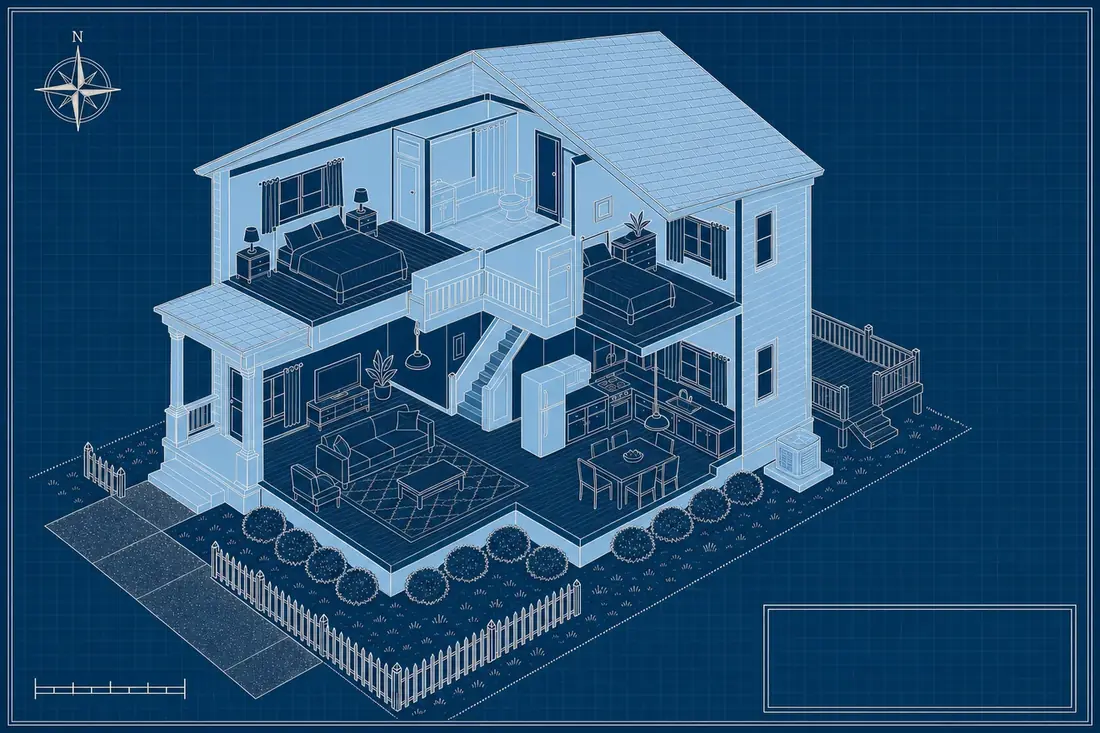
Watch a lake house rental get built and classified A hypothetical $900,000 four-bedroom lake house goes up on a sloping lot, from the driveway and the walkout level to the great room, the screened porch and the covered dock. Every component lands on its depreciation schedule as it is installed, and the year-one depreciation adds up on screen. Watch the 90-second walkthrough »A Virginia lake with three counties and a long seasonSmith Mountain Lake sits across Bedford, Franklin, and Pittsylvania counties in Virginia, close enough to Roanoke for a short drive and within range of Richmond and, at the far end, the DC area for a longer weekend trip. Summer carries the clear peak season, boating, swimming, and lake traffic through the warm months, but the lake draws visitors year-round rather than shutting down once summer ends, which sets it apart from a market that runs on one season alone. Whether the structure itself sits on 27.5 or 39 years turns on the 80% dwelling-unit test, and a short-term rental averaging stays of 7 days or less generally lands on 39 (see the 27.5 or 39 years guide). 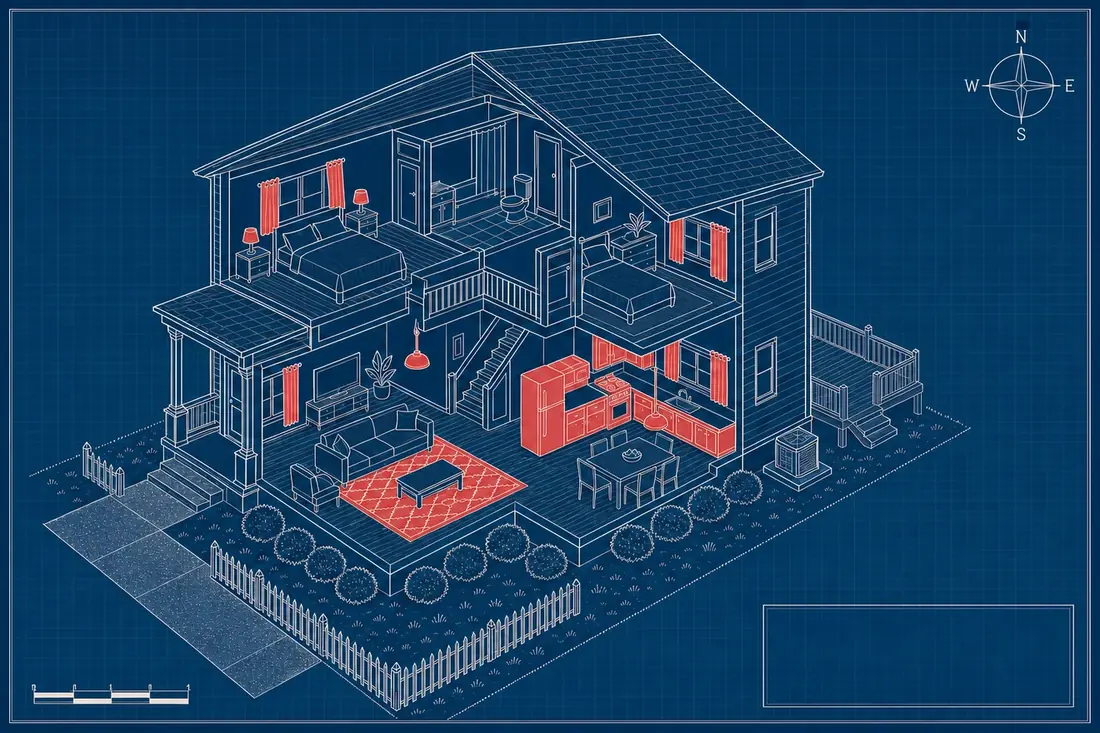
5-Year: carpet and flooring, cabinets, appliances, light fixtures, curtains 7-Year: furniture 15-Year: driveway, fencing, landscaping, deck 27.5/39-Year Shell: roof, load-bearing walls, foundation, central HVAC Get your free Preliminary Benefit Estimate See what a specific Smith Mountain Lake property's dock and shoreline work could add up to at /qualify. Request Your Free Estimate »What a Smith Mountain Lake house has to reclassify
The house's foundation, framing, roof, and central HVAC stay on the building's 27.5/39-year schedule, the same as any other residential rental, regardless of how much shoreline work surrounds the structure. Septic systems and site utilities away from municipal sewerMost Smith Mountain Lake properties run on a septic system rather than municipal sewer, since the lake sits across three rural-to-suburban counties rather than inside a single sewered municipality. A septic system, the drain field, the tank, and the site work connecting it to the house, generally falls into the 15-year land improvement bucket alongside paving and other site utilities, the same category a dock or a paved driveway sits in. That is separate from the plumbing fixtures inside the house itself, sinks, tubs, and water lines serving the structure, which fall into their own category. A well, where a property draws its own water instead of a public system, follows the same site-utility logic. None of this changes whether a property qualifies, every rental has some mix of structure and site work, but a lake property running its own septic and well infrastructure carries more site-utility basis outside the 27.5/39-year structural shell than a property tied into municipal service already has. The boat lift's motor versus the lift itselfA boat lift raises and lowers a boat out of the water between uses, common on Smith Mountain Lake given the water-level changes a reservoir lake can see. The lift's physical structure, the pilings, frame, and platform, generally sits in the same 15-year land improvement category as the dock it is attached to. The motor, cables, and electrical control box that actually raise and lower the lift are a different piece of equipment, mechanical and electrical gear serving the property, which can fall into the faster 5-year bucket separate from the structure it operates. A study looks at both pieces on their own terms rather than treating the whole lift as one line item, the same way it separates a dock's decking from the pilings holding it up. Estimate the first-year deduction on a property hereA few questions and the building value give a preliminary first-year deduction range, using the same rule as our free calculator. The breakdown can be emailed to you, or you can book a 15-minute call. Step 1 of 3 What kind of property?
Who runs it day to day?
What is the average guest stay?
When did you buy it?
How many rentals do you own?
Across all of them, does your rental portfolio show taxable income overall?
Any of them likely to sell in the next few years?
Prefer to talk it through? Book straight from here. No form needed.
Summer weeks, off-season weekends, and the 7-day averageA property whose average guest stay across the tax year is 7 days or less falls under the short-term rental exception in Reg. 1.469-1T(e)(3)(ii). A Smith Mountain Lake property that books full summer weeks and also draws weekend traffic the rest of the year is mixing two different stay lengths into one yearly average, and which one carries more weight depends on the actual split between them for that specific property and year. A property leaning harder into weekend traffic outside the summer season sits differently on that average than one that mostly sits empty until Memorial Day. Material participation is the second test: 500-plus hours, substantially all the participation, or 100-plus hours and more than any other individual, cleaners and co-hosts included. Where a specific property's full-year average and participation hours land is a computation for the owner and their CPA using the actual records, not an assumption from the lake's general pattern. The commercial-to-residential ratio rangeOur four commercial benchmark runs came in at 24 to 1 up to 67 to 1 in deductions to fee, depending heavily on property type. The one delivered short-term rental study we publish, priced at a much smaller residential fee, ran 135 to 1, a smaller total dollar figure than a large commercial building produces but a bigger multiple relative to what the study itself cost. A lake house carrying real dock, retaining wall, and land-improvement work tends to sit toward the higher end of what a residential study can identify as a share of its basis, typically 15 to 35%. A look-back study on an established Smith Mountain Lake propertyCost segregation applies to a property just purchased and to one an owner has held for years, not only to new construction. A Smith Mountain Lake house bought a decade ago and never studied is a common case: the owner has been depreciating the whole structure on the building's 27.5/39-year schedule the entire time, docks, decks, and interior finishes included, when a real share of that basis could have moved to a 5-, 7-, or 15-year schedule from the start. A study on an already-owned property is claimed through Form 3115, an automatic consent form, with the missed depreciation caught up in a single section 481(a) deduction in the current tax year rather than through amended returns for every prior year. The catch-up arrives all at once, in the year the study is filed, not spread across the years that were missed. Getting a number for a Smith Mountain Lake propertyThe process runs on listing photos, no site visit, no owner homework list. Every study is custom-priced to the property's size, age, and shoreline work, with turnaround normally 1 to 2 weeks for a residential property, 2 to 3 weeks during tax season. On a short-term rental, Basis guarantees at least 30 times the fee in first-year deductions, or the study is free. If a dock or retaining wall gets rebuilt rather than repaired, partial asset disposition can write off what is left of the old one, but only in the year of the replacement. Compare another inland lake market at the Lake of the Ozarks page, or see the rest of the vacation rental market pages. A free Preliminary Benefit Estimate at /qualify models the likely number before any commitment. Frequently asked questionsIs a boat dock at Smith Mountain Lake really faster depreciation? Generally yes. A dock, boat slip, or lift fixed to the shoreline typically falls into the 15-year land improvement category, separate from the 27.5/39-year structure, the same treatment a fixed dock gets on any lake property. What happens if I rebuild a retaining wall instead of repairing it? Rebuilding a retaining wall can trigger a partial asset disposition, writing off the remaining basis of the old wall in the year it comes out, but only in that tax year. Miss the year and the old wall's basis stays on the depreciation schedule for decades while the new one depreciates on top of it. Does year-round demand help or hurt the 7-day rental test? It depends on the actual mix of stay lengths. Year-round weekend traffic outside the summer peak tends to pull the yearly average toward shorter stays, while a heavy run of full summer weeks pulls it the other way. The real answer comes from that property's actual booking records. Which counties surround Smith Mountain Lake? The lake spans Bedford, Franklin, and Pittsylvania counties in Virginia, within drive-to range of Roanoke, Richmond, and, for a longer trip, the DC area. How long does a Smith Mountain Lake study take? For a residential short-term rental, normally 1 to 2 weeks, extending to 2 to 3 weeks during the busiest part of tax season, since the process works from listing photos rather than a scheduled site visit. Does a septic system or private well change how a Smith Mountain Lake property depreciates? Generally it means more site-utility basis outside the 27.5/39-year structure, not a different result. Septic and well infrastructure typically fall into the 15-year land improvement category alongside paving and other site work, the same category a dock or driveway sits in, separate from the plumbing fixtures inside the house. Keep readingGet your free Preliminary Benefit Estimate Send the address or the listing link. We model the number first; you decide with it in hand. Request Your Free Estimate »Educational information, not tax advice. This page describes how federal
depreciation rules and tests work in general. Whether any rule fits your facts is a determination for
you and your CPA. Our study gives your CPA the engineering and the numbers to make that call.
Related guides: How Does Cost Segregation Work in Vacation... · Does Cost Segregation Work on a Poconos... · Cost Segregation for a Jersey Shore Rental... · Cost Segregation for a Pigeon Forge Cabin... · Cost Segregation for a Gatlinburg Rental...
More Southern Appalachians markets: Cost Segregation for a New River Gorge... · Cost Segregation for a Sevierville or Wears... · Cost Segregation for Ellijay, Georgia Cabin... · Cost Segregation for Helen, Georgia Cabins... · Cost Segregation for Hiawassee, Georgia and... · Cost Segregation for Dahlonega, Georgia... · All vacation markets
|