|
Cost Segregation for Commercial & Short-Term Rental Owners
|
Request a free estimate [email protected] |
Vacation Markets
Free Listing SEO Audit Paste your Airbnb or VRBO listing. Get a scored audit in 90 seconds. Audit My Listing »FREE Estimate Is there a first-year deduction sitting in your building? No cost, no obligation. Request Yours »Minimum ROIOur study identifies at least 20x its fee in first-year deductions on commercial property, or at least 30x on a short-term rental, or it is free. |
Does Cost Segregation Work on a Moab Rental Property?Quick answer Yes. A Moab rental in Grand County, Utah, whether a desert home, casita, or guest house near Arches and Canyonlands, has furnishings, a hot tub, and outdoor living space that can move to 5-, 7-, and 15-year schedules instead of the building's 27.5/39-year one. Moab's shoulder-season pattern, spring and fall peaks with a heat-driven summer dip, and its role as a national-park stopover also shape how a property's average guest stay lines up against the short-term rental test. Own a Moab rental? See the first-year deduction range a study would look for. 30 seconds, no email to see the range. Start the check ↓Key takeaways
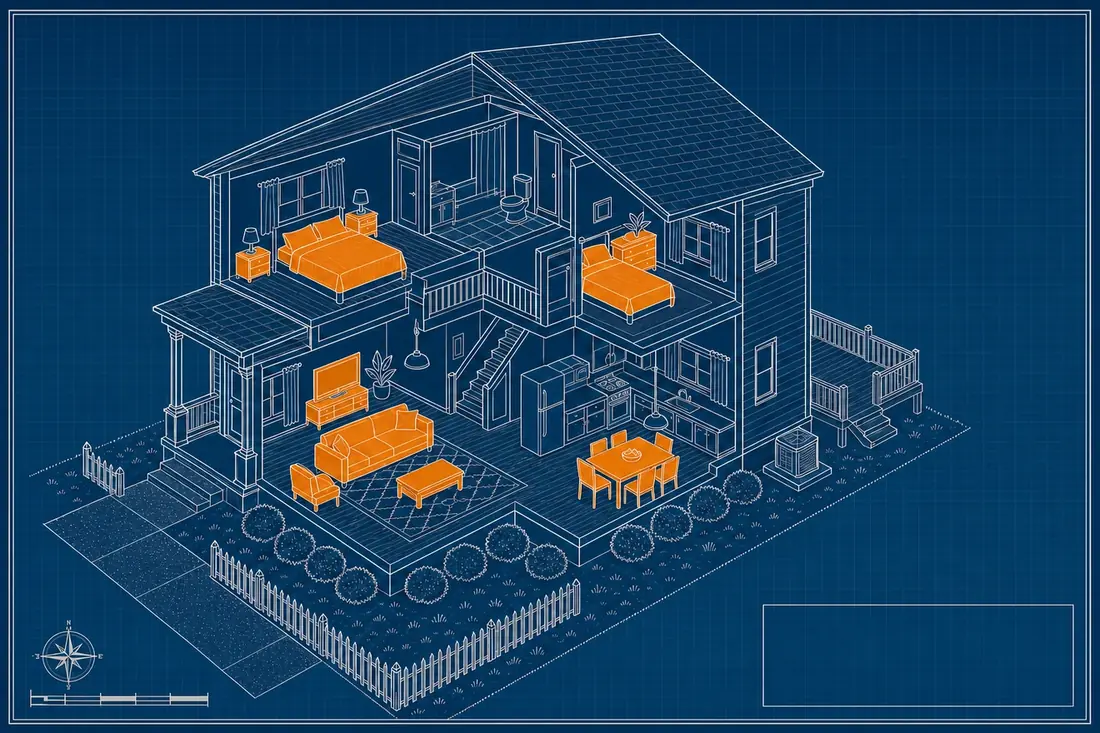
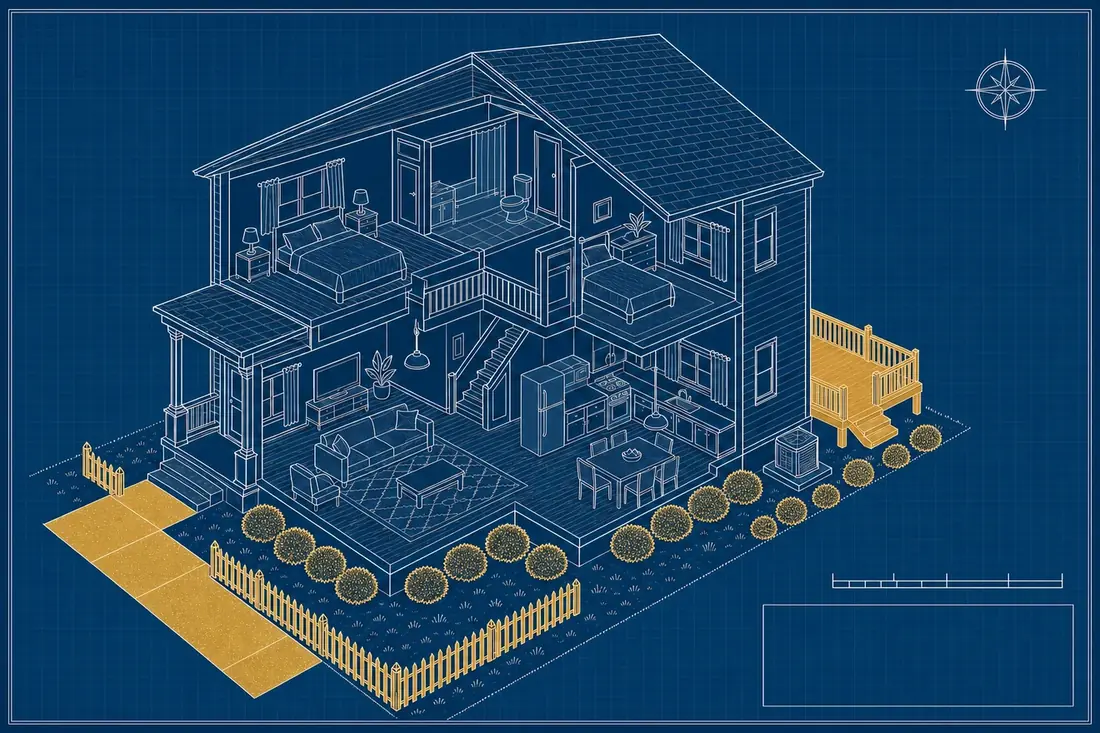
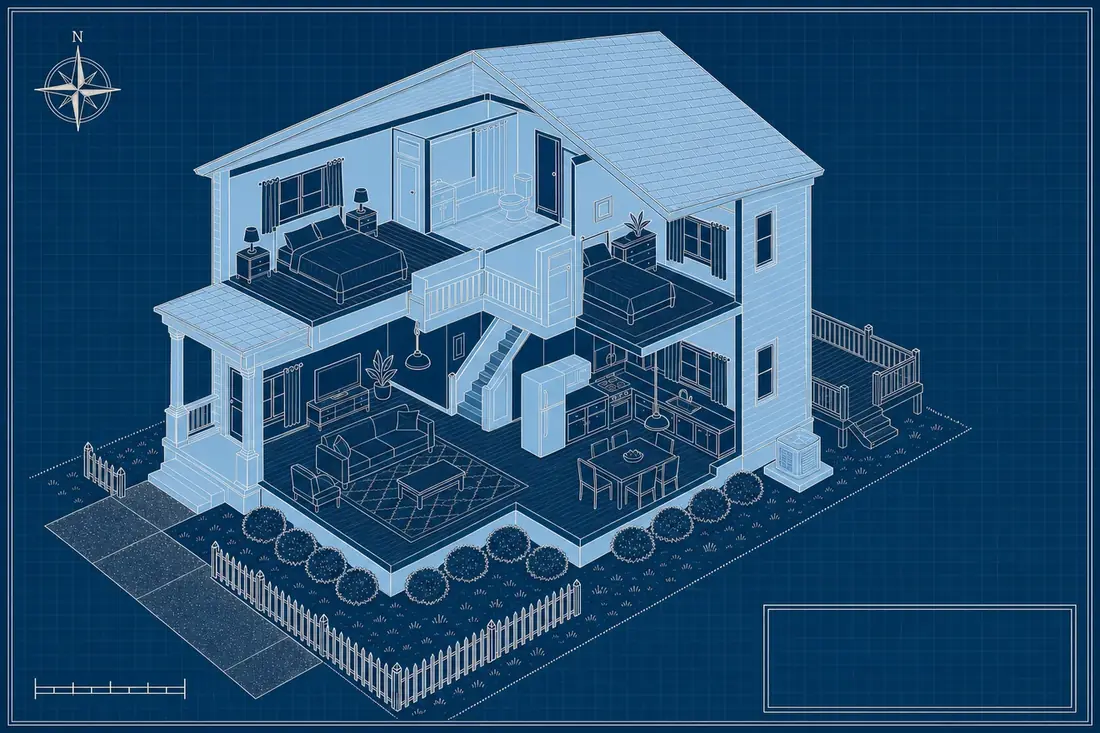
Watch a log cabin rental get built and classified A hypothetical $600,000 three-bedroom log cabin goes up floor by floor, from the gravel drive and foundation to the game loft and the hot tub on the deck. Every component lands on its depreciation schedule as it is installed, and the year-one depreciation adds up on screen. Watch the 90-second walkthrough »Moab as a rental marketMoab sits in Grand County, Utah, in the high desert of the Colorado Plateau, wedged between Arches National Park and Canyonlands National Park. The town's rental stock exists almost entirely because of that geography: travelers come through Moab to see the parks, and a desert home, casita, or guest house near town captures that traffic the way a beach house captures coastline traffic anywhere else. Drive-to visitors come mainly from Salt Lake City, with Denver pulling in guests willing to make the longer drive from Colorado's Front Range. Moab runs a different seasonal shape than most vacation markets. Spring and fall carry the heaviest traffic, when daytime desert heat sits in a comfortable range for hiking and touring the parks. Midsummer brings a real dip: temperatures that regularly clear 100 degrees push a share of park traffic toward early morning and evening hours, or toward other destinations entirely, softening what would otherwise be a peak season anywhere with a normal summer climate. That shoulder-peaked pattern, rather than a single summer high season, is the shape a Moab owner actually works with, and it matters for more than marketing: it shapes how the property's yearly booking calendar lines up against the short-term rental tests below. Whether the structure itself sits on 27.5 or 39 years turns on the 80% dwelling-unit test, and a short-term rental averaging stays of 7 days or less generally lands on 39 (see the 27.5 or 39 years guide). 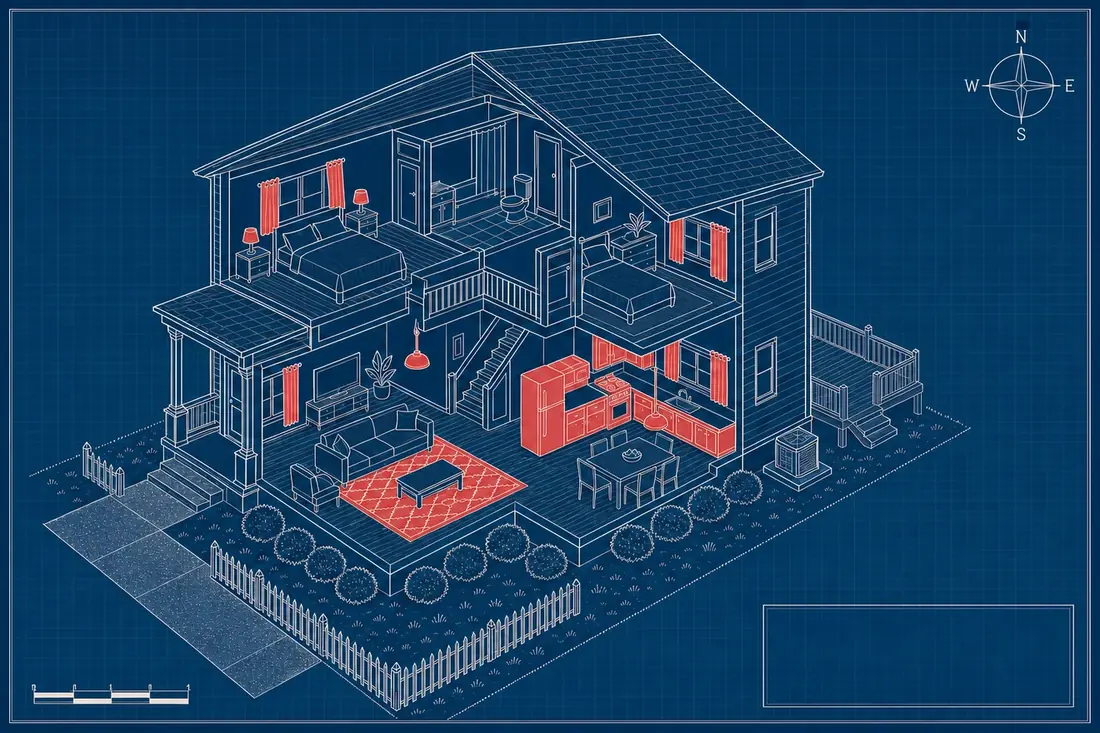
5-Year: carpet and flooring, cabinets, appliances, light fixtures, curtains 7-Year: furniture 15-Year: driveway, fencing, landscaping, deck 27.5/39-Year Shell: roof, load-bearing walls, foundation, central HVAC Get your free Preliminary Benefit Estimate See what a Grand County rental's amenities and site work could add up to with the free 60-second estimate at /qualify. Request Your Free Estimate »What a Moab rental has to reclassifyA typical Moab rental, desert home, casita, or guest house, carries a real amenity list an engineering study can reclassify off the building's 27.5/39-year schedule:
The home's foundation, framing, roof structure, and any central HVAC stay on the 27.5/39-year schedule no matter how the amenity list around them looks. A roof or a central air system is structural property, not fast-depreciating equipment, a distinction worth stating plainly since it is a common misconception. Short touring stays and the 7-day average testA property whose average guest stay across the tax year runs 7 days or less falls under the short-term rental exception in Reg. 1.469-1T(e)(3)(ii), which takes it out of the standard passive rental-activity framework under section 469. A Moab rental sits in an unusual position on that test because of what actually brings guests to Grand County: most visitors are touring Arches, Canyonlands, and the surrounding red-rock country as one stop on a longer trip, not settling in for a week in one place. A booking calendar built around that kind of traffic tends to run toward shorter, multi-night stays rather than full-week blocks, a different shape than a beach market where families book a single week and stay put. That is a structural tendency, not a guarantee for any specific property; a property's actual average stay is a computation run against its own year of bookings, not an assumption drawn from the regional pattern. A market like the Outer Banks, where the classic pattern is a full Saturday-to-Saturday week, runs the opposite calculation entirely, worth comparing to see how differently the same test can land depending on what a market's guests are actually doing. Estimate the first-year deduction on a property hereA few questions and the building value give a preliminary first-year deduction range, using the same rule as our free calculator. The breakdown can be emailed to you, or you can book a 15-minute call. Step 1 of 3 What kind of property?
Who runs it day to day?
What is the average guest stay?
When did you buy it?
How many rentals do you own?
Across all of them, does your rental portfolio show taxable income overall?
Any of them likely to sell in the next few years?
Prefer to talk it through? Book straight from here. No form needed.
The shoulder-season workload and material participationOnce a property clears the average-stay test, the losses still need material participation to be non-passive: the owner needs 500 or more hours in the activity for the year, or to provide substantially all the participation, or to clear 100 hours and more than any other individual, including a cleaner, co-host, or property manager. Moab's shoulder-peaked calendar changes how that hour count tends to distribute across the year compared with a market that runs one long, even summer season. A self-managed owner handling turnovers, guest messages, and maintenance is likely doing most of that work in the spring and fall crunch, with a genuinely quieter stretch through the hottest weeks of summer. Whether a specific owner's hours clear whichever test applies is a question of that owner's actual time log for the year, not something to infer from the seasonal shape of the market. What the shoulder-season pattern does establish is that a Moab owner's participation hours are unlikely to spread evenly across twelve months the way they might in a market with one long, steady peak. Replacing exterior components: the partial asset disposition angleDesert exterior work wears differently than a green-climate market's does. Sun exposure and heat cycling age decking, shade structures, and exterior lighting faster than they might in a milder climate, which means these components get replaced on a real timeline rather than a hypothetical one. Under Treas. Reg. 1.168(i)-8, when a component like a deck or a shade structure is torn out and rebuilt, the remaining basis of the old component can be written off, but only in the tax year of the replacement. Miss that year and the old component's remaining basis stays on the books for the rest of its recovery period while the new one starts depreciating separately on top of it. See how partial asset disposition works for the full mechanic, including how it interacts with a property that already has a cost segregation study in place. The process for a Moab propertyThe study runs on the same hands-off process used for any short-term rental: interior and listing photos, the same ones already posted to Airbnb or VRBO, feed the component classification, no site visit required and no owner homework list to work through. Every study is custom-priced against the specific property's size, age, and amenity mix, and residential turnaround normally runs 1 to 2 weeks, 2 to 3 weeks during tax season. On a short-term rental, Basis guarantees at least 30 times the fee in first-year deductions, or the study is free. A free Preliminary Benefit Estimate at /qualify models the likely number for a specific property before anyone commits to a fee. For how this fits into the broader vacation-rental picture, see the vacation rental markets overview. Frequently asked questionsWhat county is Moab, Utah in for a rental property? Moab sits in Grand County, Utah, on the Colorado Plateau between Arches National Park and Canyonlands National Park. Drive-to traffic comes mainly from Salt Lake City, with Denver serving as an extended draw for guests willing to make the longer trip from Colorado. Do desert landscaping and patios qualify for faster depreciation on a Moab rental? Generally yes. Xeriscaping, rock beds, drip irrigation, patios, and shade structures typically fall into the 15-year land improvement bucket rather than the 27.5/39-year schedule the structure itself uses. An engineering study inventories these components individually rather than treating the exterior as one lump. How does Moab's summer heat dip affect a short-term rental's tax picture? It does not change the underlying rules, but it does change how an owner's participation hours tend to distribute across the year. A shoulder-peaked calendar, busy in spring and fall with a quieter midsummer stretch, concentrates turnover and guest-coordination work differently than a market with one long, even season. My guests usually stay a few nights while touring the parks. Does that help the short-term rental test? A booking pattern built around shorter, multi-night touring stays tends to run toward the 7-day-or-less average the short-term rental exception in Reg. 1.469-1T(e)(3)(ii) requires. Whether a specific property's actual yearly average clears that line is a computation based on that property's real bookings, not an assumption. Is a Moab cost segregation study different from a mountain cabin study? The engineering mechanics are identical everywhere. What differs is the component mix, desert landscaping and shade structures instead of a cabin's hot tub and game room, and a shoulder-season booking pattern instead of a four-season one, both of which the study accounts for directly. Keep readingGet your free Preliminary Benefit Estimate Send the address or the listing link. We model the number first; you decide with it in hand. Request Your Free Estimate »Educational information, not tax advice. This page describes how federal
depreciation rules and tests work in general. Whether any rule fits your facts is a determination for
you and your CPA. Our study gives your CPA the engineering and the numbers to make that call.
Related guides: How Does Cost Segregation Work in Vacation... · Does Cost Segregation Work on a Poconos... · Cost Segregation for a Jersey Shore Rental... · Cost Segregation for a Pigeon Forge Cabin... · Cost Segregation for a Gatlinburg Rental...
More Mountain West markets: Does Cost Segregation Work on a Coeur... · Does Cost Segregation Work for a Lake Tahoe... · Cost Segregation for a Big Bear Lake Rental... · Does Cost Segregation Work on a Park City... · Cost Segregation for a Breckenridge Rental... · Cost Segregation for a Steamboat Springs... · All vacation markets
|