|
Cost Segregation for Commercial & Short-Term Rental Owners
|
Request a free estimate [email protected] |
Vacation Markets
Free Listing SEO Audit Paste your Airbnb or VRBO listing. Get a scored audit in 90 seconds. Audit My Listing »FREE Estimate Is there a first-year deduction sitting in your building? No cost, no obligation. Request Yours »Minimum ROIOur study identifies at least 20x its fee in first-year deductions on commercial property, or at least 30x on a short-term rental, or it is free. |
Cost Segregation for a Traverse City Vacation RentalQuick answer Cost segregation on a Traverse City area short-term rental, spanning Grand Traverse and Leelanau counties, Michigan, reclassifies the building's components into 5-, 7-, and 15-year buckets separate from the 27.5/39-year structural shell. The market's sharp summer peak and pronounced off-season do not change the mechanics: depreciation runs from when the property is placed in service and held out for rental, not from how many nights it is actually booked. Own a Traverse City rental? See the first-year deduction range a study would look for. 30 seconds, no email to see the range. Start the check ↓Key takeaways
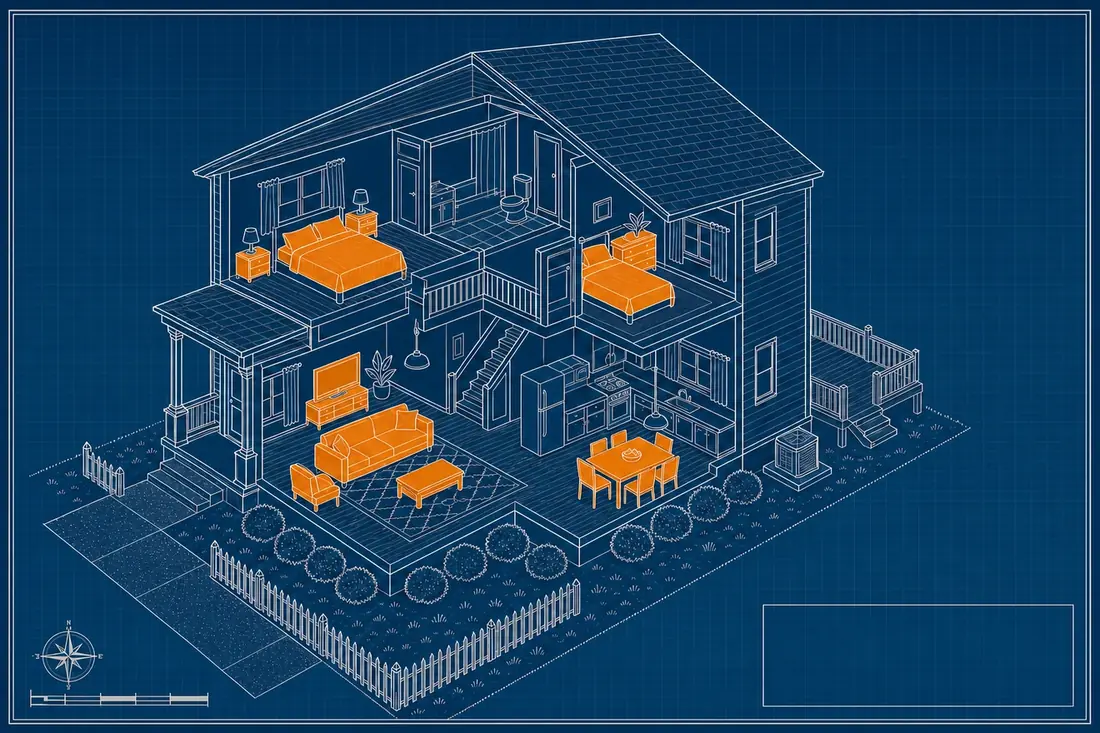
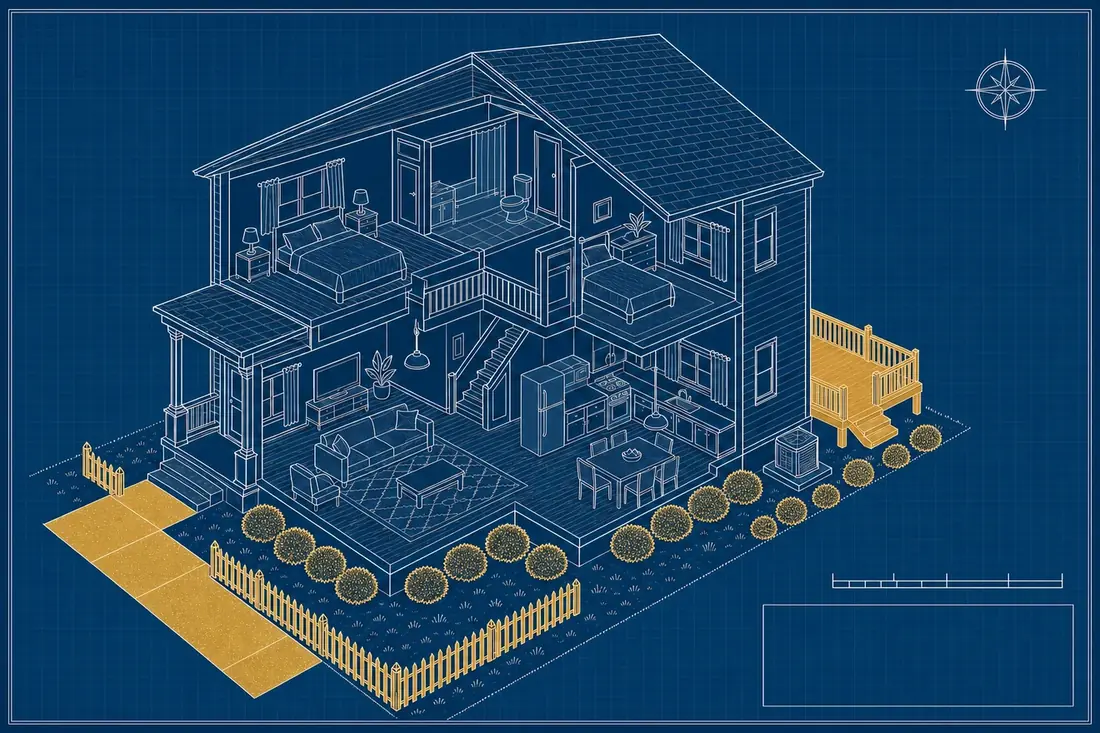
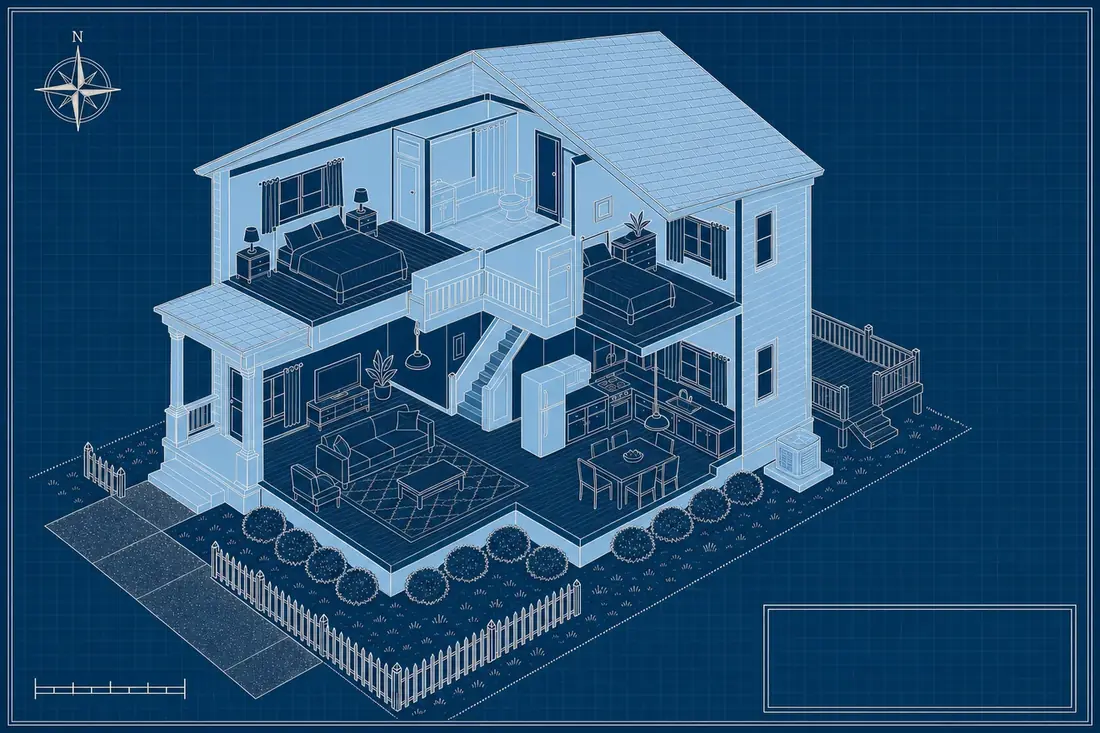
Watch a log cabin rental get built and classified A hypothetical $600,000 three-bedroom log cabin goes up floor by floor, from the gravel drive and foundation to the game loft and the hot tub on the deck. Every component lands on its depreciation schedule as it is installed, and the year-one depreciation adds up on screen. Watch the 90-second walkthrough »Cost Segregation on a Traverse City Vacation RentalA cost segregation study reclassifies a building's cost, minus the land underneath it, into IRS categories that depreciate faster than the standard schedule. On a short-term rental around Traverse City, spanning Grand Traverse and Leelanau counties in Michigan, that means separating interior finishes, furniture, and site work from the structural shell, which stays on the 27.5/39-year schedule no matter how the property is used. This market's calendar runs a sharp summer peak, concentrated around July, followed by a pronounced off-season, and that shape raises a specific question worth answering directly: does a quiet winter change what a property can deduct? Cost segregation applies the same way whether the cottage was purchased as-is, built new, or renovated since, and land value is always excluded first, so only the building and its improvements are ever on the table. Whether the structure itself sits on 27.5 or 39 years turns on the 80% dwelling-unit test, and a short-term rental averaging stays of 7 days or less generally lands on 39 (see the 27.5 or 39 years guide). 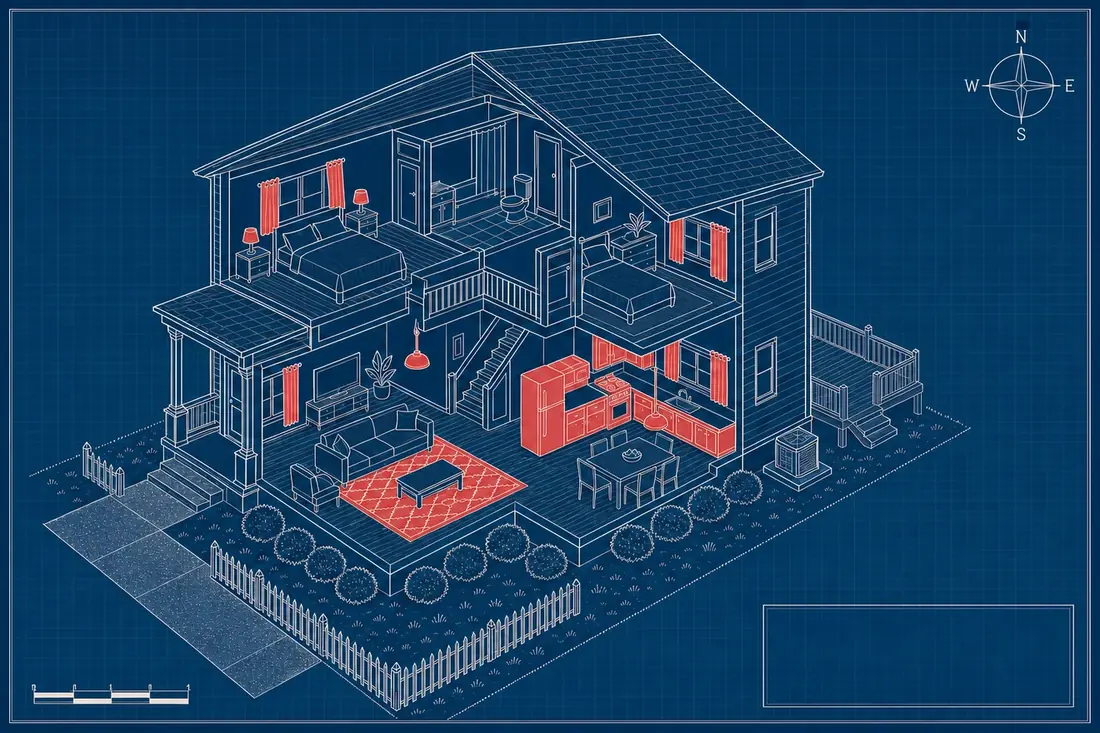
5-Year: carpet and flooring, cabinets, appliances, light fixtures, curtains 7-Year: furniture 15-Year: driveway, fencing, landscaping, deck 27.5/39-Year Shell: roof, load-bearing walls, foundation, central HVAC Get your free Preliminary Benefit Estimate See the likely first-year number for a Grand Traverse or Leelanau County rental with the free estimate at /qualify/. Request Your Free Estimate »A Sharp Summer Peak Does Not Change the Depreciation ClockDepreciation, including the accelerated depreciation a cost segregation study identifies, runs from when a property is placed in service, meaning available and ready for rental use, not from how many nights it is actually booked. A Traverse City cottage that rents hard through July and August and sits mostly empty from November through March still depreciates on the same schedule through its quiet months as it does during peak season. The building does not need to be occupied every night for its components to keep depreciating; it needs to be held out for rental use. That distinction matters for an owner weighing when to run a study. Waiting for a fuller rental history before ordering a study does not change what the engineering classification finds inside the property. It only delays when the accelerated deductions start counting. What a Study Finds Inside a Grand Traverse or Leelanau PropertyThe component split on a lake cottage or vacation house follows the same national buckets used everywhere:
A study typically shifts 15 to 35% of a property's basis into the faster three buckets, varying by how much interior finish and site work the specific property carries. What a Comparable Single-Family Rental Study Actually Found
Those numbers come from a delivered study on a single-family rental in Montgomery County, Pennsylvania, built in 2013 at 4,946 square feet, cited here as a benchmark of what a residential rental study can find, not a promise about any specific Traverse City property. Every study is priced and scoped to the individual building; a smaller or larger cottage will land on different numbers. The guarantee underneath all of them is the same: at least 30 times the fee in first-year deductions on a short-term rental, or the study is free. Every engineered study, whether scoped as a full study or the lighter budget tier, delivers a 70-page report aligned with the IRS's own Audit Techniques Guide, the same audit-ready documentation regardless of which tier fits a specific property. Estimate the first-year deduction on a property hereA few questions and the building value give a preliminary first-year deduction range, using the same rule as our free calculator. The breakdown can be emailed to you, or you can book a 15-minute call. Step 1 of 3 What kind of property?
Who runs it day to day?
What is the average guest stay?
When did you buy it?
How many rentals do you own?
Across all of them, does your rental portfolio show taxable income overall?
Any of them likely to sell in the next few years?
Prefer to talk it through? Book straight from here. No form needed.
Material Participation Across Three Drive-To MetrosTraverse City pulls from a wider radius than a lot of single-metro vacation markets: Grand Rapids sits close enough for regular visits, Detroit is a longer haul, and Chicago functions as an extended drive-to market rather than a weekend one. That spread matters for material participation, the second half of the section 469 short-term rental exception, once an owner's average stay clears the 7-day line. The common tests are 500 hours of participation, substantially all the participation in the activity, or 100 hours combined with more than anyone else, including a property manager. An owner making the Grand Rapids drive most weekends is in a very different position than one calling in from Chicago a few times a season, and that gap is exactly what a CPA weighs when deciding which test actually fits. How the average-stay test itself gets calculated is worth reading before assuming which prong applies. Older Cottages and the Look-Back OptionNot every Traverse City rental is a recent purchase. An owner who has held a cottage for years without ever running a cost segregation study has not lost the opportunity: a look-back study claims the missed accelerated depreciation through Form 3115, an automatic consent procedure, with a section 481(a) catch-up deduction taken in the current year. There is no need to amend prior returns. The missed depreciation from every earlier year arrives at once, in the year the look-back study is filed. A cottage that has also been renovated since purchase adds partial asset disposition to the picture, since a replaced roof, deck, or kitchen can have its old remaining basis written off, but only in the tax year the old component came out. See other lake and vacation markets or start at /qualify/ for a free estimate on a specific property. Audit Defense and How the Study Works With a CPAEvery Basis study comes with full audit defense of the report itself: if an examiner questions the study, the engineering team that built it answers the technical questions, not the property owner alone. That is defense of the report, not representation of the taxpayer; the owner's own CPA still represents them in front of the IRS. On a look-back study specifically, the section 481(a) computation is built into the study itself, and the engineering team takes technical questions directly from the owner's CPA on methodology and classifications. The CPA still prepares and files the return, including Form 3115; Basis never files a return on an owner's behalf. Frequently asked questionsDoes an off-season with few bookings hurt a Traverse City rental's depreciation? No. Depreciation runs from when a property is placed in service and held out for rental, not from how many nights it's actually booked. A cottage that sits quiet from November through March still depreciates through those months the same as it does in July. What's a realistic accelerated depreciation number for a Michigan lake cottage? It depends entirely on the property, but a delivered single-family rental study elsewhere identified $160,242 in accelerated basis on a $1,040,000 property, about 15.4%, with $174,905 in estimated first-year depreciation. A free estimate models the number for a specific cottage before any commitment. Can a cottage I've owned for ten years still get a cost segregation study? Yes. A look-back study claims the missed acceleration through Form 3115 with a section 481(a) catch-up in the current year, no amended returns required. How long the property has been held does not block the study. Does it matter which drive-to metro a Traverse City owner lives in? It can matter for material participation, since an owner who visits often from nearby Grand Rapids is positioned differently than one managing remotely from Chicago. It does not affect the depreciation study itself or the size of the deduction a study identifies. Is Leelanau County treated differently from Grand Traverse County for tax purposes? No. Both sit in Michigan and follow the same federal depreciation rules. County lines affect local zoning and property tax, not how cost segregation or bonus depreciation work on a rental building. Keep readingGet your free Preliminary Benefit Estimate Send the address or the listing link. We model the number first; you decide with it in hand. Request Your Free Estimate »Educational information, not tax advice. This page describes how federal
depreciation rules and tests work in general. Whether any rule fits your facts is a determination for
you and your CPA. Our study gives your CPA the engineering and the numbers to make that call.
|