|
Cost Segregation for Commercial & Short-Term Rental Owners
|
Request a free estimate [email protected] |
STR Guides
Free Listing SEO Audit Paste your Airbnb or VRBO listing. Get a scored audit in 90 seconds. Audit My Listing »FREE Estimate Is there a first-year deduction sitting in your building? No cost, no obligation. Request Yours »Minimum ROIOur study identifies at least 20x its fee in first-year deductions on commercial property, or at least 30x on a short-term rental, or it is free. |
Is Short-Term Rental Depreciation 27.5 or 39 Years?Quick answer Short-term rental depreciation runs 27.5 years when 80% or more of the building's gross rental income comes from dwelling units, or 39 years when it does not. A short-term rental with an average guest stay of 7 days or less reads as transient, hotel-like use, and that generally moves the building to the 39-year nonresidential schedule instead. Either way, the 5-, 7-, and 15-year components a cost segregation study identifies keep their own recovery periods and their own bonus depreciation eligibility. That is one of the tests. The check asks the rest. What you own, who runs it, average guest stay, when you bought. Four questions, 30 seconds, and you see the first-year deduction range a study would look for on your rental. No email to see the range. Run the 30-second check »Key takeaways
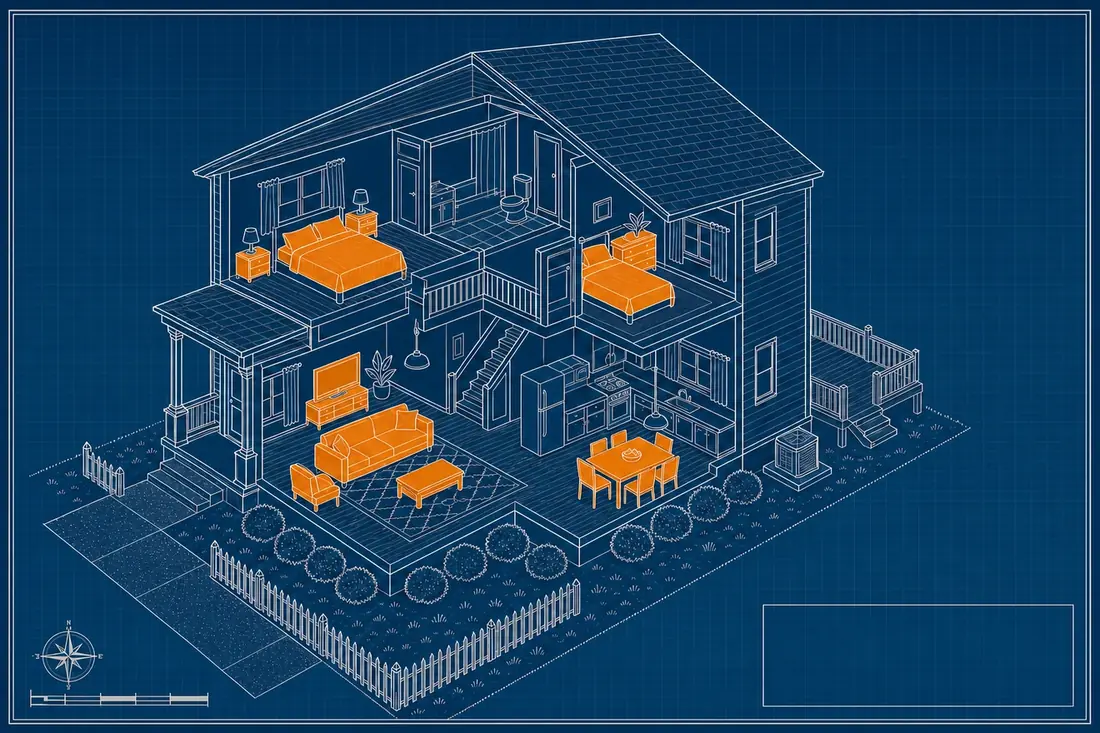
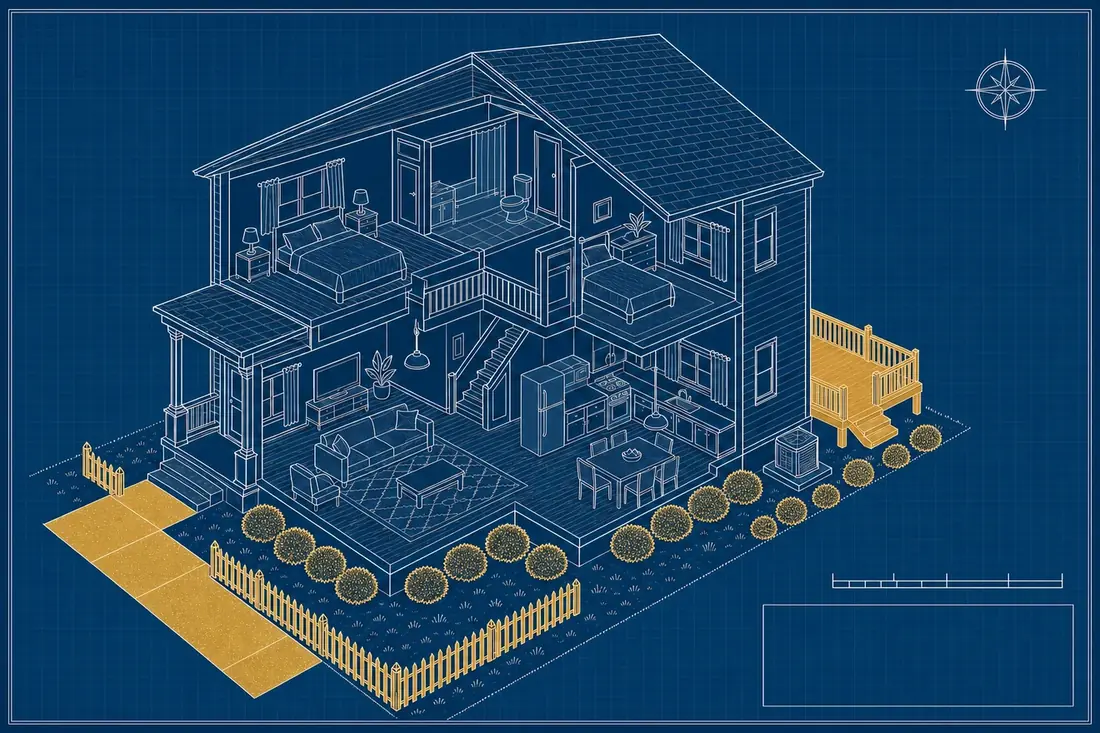
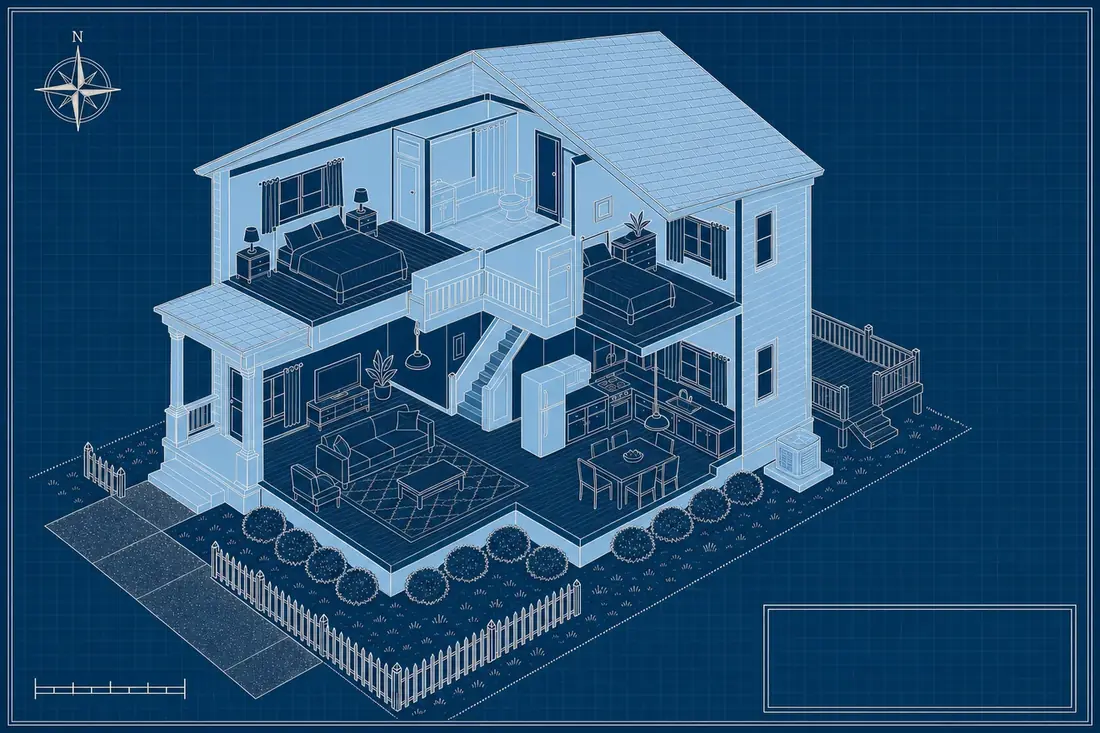
Watch a log cabin rental get built and classified A hypothetical $600,000 three-bedroom log cabin goes up floor by floor, from the gravel drive and foundation to the game loft and the hot tub on the deck. Every component lands on its depreciation schedule as it is installed, and the year-one depreciation adds up on screen. Watch the 90-second walkthrough »The Two Depreciation Schedules, DefinedEvery rental building lands on one of two default recovery periods before a cost segregation study ever touches it. Residential rental property depreciates over 27.5 years on the straight-line method; the tax code defines it under section 168(e)(2) as a building where 80% or more of the gross rental income for the year comes from dwelling units, ordinary homes people live in. Nonresidential real property, the 39-year schedule, catches everything else: office buildings, retail, warehouses, and, the part owners miss, any building where more than half the units are used on a transient basis. That last phrase is the whole ballgame for a short-term rental. The tax code carves hotels, motels, and transient lodging out of the residential definition on purpose. A house rented to the same family for a year looks nothing like a house rented to nine different guests for four nights each, even if it is the same four walls. 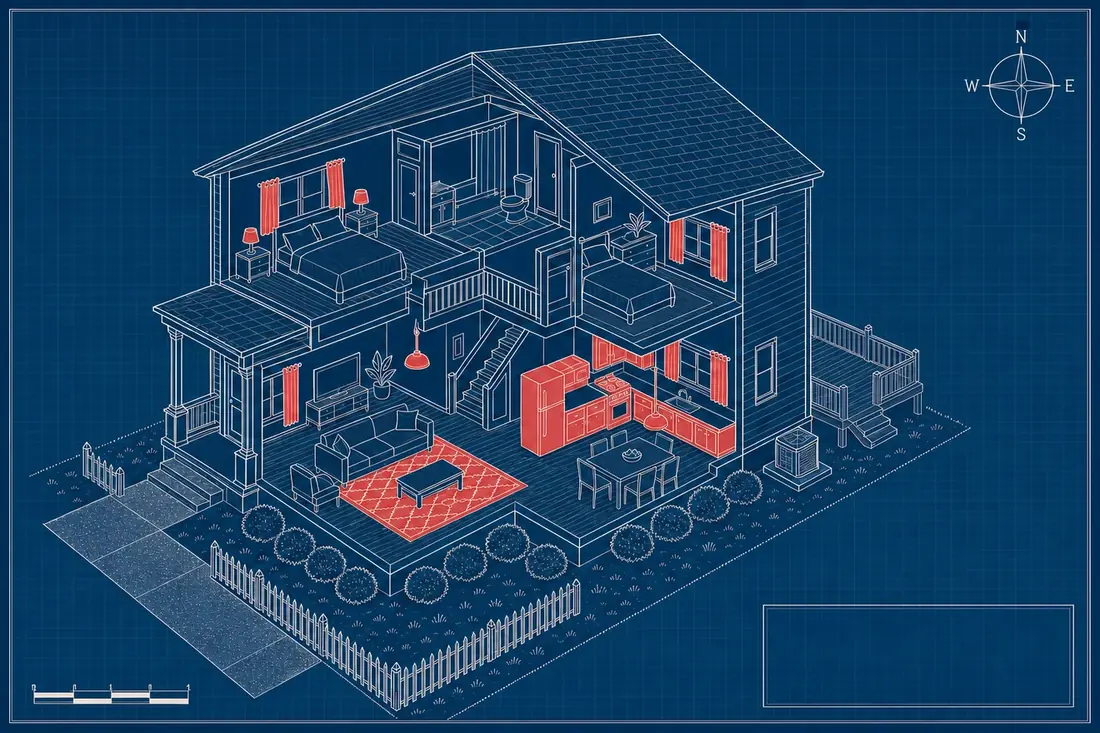
5-Year: carpet and flooring, cabinets, appliances, light fixtures, curtains 7-Year: furniture 15-Year: driveway, fencing, landscaping, deck 27.5/39-Year Shell: roof, load-bearing walls, foundation, central HVAC Get your free Preliminary Benefit Estimate Run the free estimate on the components while your CPA checks which schedule this year's booking mix actually lands the building on. Request Your Free Estimate »Why the 7-Day Average Decides ItThe line between residential and transient use comes down to how long guests actually stay, averaged across the year. A property where the average stay runs 7 days or less reads as hotel-like use, the same transient-use concept behind the test that separates a short-term rental from an ordinary long-term rental for passive-loss purposes (see the average-stay rule for how that number also governs the section 469 material participation question). Applied to depreciation, a stay pattern in that range generally supports treating the building as nonresidential, 39-year, rather than 27.5-year residential. The word Airbnb is not a depreciation category. The booking pattern is. The math practitioners use is simple: total nights rented during the year, divided by the number of separate reservations. A cabin booked 150 nights across 30 reservations averages 5 nights a stay, solidly transient. The same cabin booked by three long-term tenants for 50 nights each averages far longer, and the residential test comes back into play. The pattern gets measured, not assumed from the word "Airbnb" on the listing. What Stays the Same Either WayThe building's shell, whichever schedule it lands on, is only part of the basis. A cost segregation study identifies the carpet, cabinetry, decorative lighting, and certain electrical and plumbing that serve specific equipment as 5-year property; certain furniture and fixtures as 7-year; and paving, fencing, landscaping, and site utilities as 15-year land improvements. None of that reclassification depends on whether the shell is 27.5 or 39 years. Bonus depreciation on rental property reaches those same 5-, 7-, and 15-year buckets regardless of the building's own schedule. 15-35%of building basis typically shifts to faster schedules 135:1deductions to fee on the one delivered STR study The 39-year shell moves slower than a 27.5-year shell would, a real difference, a smaller annual write-off on the structure itself. But the structure was never where most of the acceleration lived. The buckets a study pulls out are the same buckets either way. How Owners and CPAs Actually Track the TestThe average-stay calculation is not a one-time label. It runs on the property's actual bookings for the tax year in question, which means a property that ran heavy short-term traffic one year and shifted toward mid-term, 30-day-plus rentals the next can land on a different schedule in a different year. Owners who mix strategies, three months of nightly bookings, nine months of a single corporate tenant, need their CPA reviewing the actual rental log each year rather than relying on how the property was classified last time. Documentation matters here for the same reason it matters on the passive-loss side of short-term rentals: a reservation calendar, a log of nights booked, and the count of distinct rental agreements are what a CPA actually reviews, not the property's nickname or its listing category. The 60-Second Qualifier Four questions. Our engineering team's model shows the estimated first-year acceleration a study of your property would target, free, before you commit to anything. Take the Qualifier »Where the 7-Day Test Shows Up AgainThe same average-stay-of-7-days concept that can push a building to the 39-year schedule is also the doorway to the short-term rental exception under section 469, the rule that lets a qualifying owner treat losses as non-passive with material participation. That is a different question with a different payoff, running in the opposite direction from the depreciation-schedule question this page answers. What changes and what doesn't when an Airbnb lands on the 39-year schedule walks through both sides of that trade-off. Whichever way the classification lands, the number that actually matters on an owner's return is what a cost segregation study finds inside the building, not the label on the shell. The shell schedule is one input among several. A Hypothetical Side-by-SidePicture two 3-bedroom cabins in the same mountain town, identical basis, identical everything except bookings. Cabin A runs 48 reservations in a year averaging 4 nights each, 192 nights total, a clear transient pattern that generally supports 39-year treatment. Cabin B runs 12 reservations averaging 25 nights each, corporate relocations and extended-stay guests, 300 nights total, a pattern that looks far more like an ordinary long-term rental and can support the 27.5-year residential schedule instead. Both cabins hold the same carpet, the same cabinetry, the same driveway and landscaping. A cost segregation study finds the identical categories of components in both. The only thing separating Cabin A from Cabin B is the shape of the booking calendar, which is exactly why the calculation has to run on the property's actual numbers rather than on what kind of cabin it "is." A property that only operates seasonally, a ski cabin closed each summer, still runs the same test on whatever months it's rented; a shorter operating season with the same booking pattern doesn't change the average-stay math, only the total reservation count feeding it. A Cost Segregation Study Doesn't Wait for the Classification QuestionAn engineered cost segregation study documents a building's components independent of the 27.5-versus-39-year question. The classification only determines the recovery period for the remaining structural shell, the walls, the roof deck, the foundation, after that study has already pulled out everything that qualifies for 5-, 7-, or 15-year treatment. Owners sometimes wait for a CPA to settle the classification question before commissioning a study; the two questions don't actually block each other. For a short-term rental, our engineering team works from the listing photos, the same photos on the Airbnb or VRBO listing, with no site visit and no owner homework. The average-stay history is a separate question for the owner's CPA to track; it does not change how our team identifies and classifies the components inside the building. Frequently asked questionsDoes every Airbnb automatically get 39-year depreciation? No. The 39-year schedule follows from the average-stay test, not from the word Airbnb. A property with longer average stays that still earns 80% or more of its gross rental income from dwelling units can meet the residential rental property definition and depreciate over 27.5 years. The actual booking pattern for the tax year controls, not the platform or the marketing. What is the dollar difference between 27.5-year and 39-year depreciation? The gap shows up only in the structural shell's annual straight-line rate; a 39-year schedule spreads the same basis over more years, so each year's structural deduction is smaller than under 27.5 years. It has no effect on the 5-, 7-, and 15-year components a cost segregation study identifies, which depreciate on their own schedules regardless of the shell's classification. Does land depreciate differently under either schedule? No. Land is never depreciated under either schedule; a cost segregation study and the underlying tax rules always exclude land value first and depreciate only the building and its improvements. That step happens before the 27.5-versus-39-year question is even relevant. Can a property's schedule change from one tax year to the next? It can, in theory, if the actual rental pattern changes enough to pass or fail the transient-use test differently. A property that shifts from heavy nightly bookings to long-term tenants, or the reverse, needs its CPA to review the current year's bookings rather than assume last year's classification still applies. Does a mid-term rental with stays of a month or more face the same question? It faces the same test with a different likely answer. Longer average stays make it easier to clear 80% of gross rental income from dwelling units without tripping the transient-use exclusion, though the result still depends on the specific mix of bookings in the property's own rental log for the year. Keep readingGet your free Preliminary Benefit Estimate Send the address or the listing link. We model the number first; you decide with it in hand. Request Your Free Estimate »Educational information, not tax advice. This page describes how federal
depreciation rules and tests work in general. Whether any rule fits your facts is a determination for
you and your CPA. Our study gives your CPA the engineering and the numbers to make that call.
|