|
Cost Segregation for Commercial & Short-Term Rental Owners
|
Request a free estimate [email protected] |
How It Works
FREE Estimate Is there a first-year deduction sitting in your building? No cost, no obligation. Request Yours »Minimum ROIOur study identifies at least 20x its fee in first-year deductions on commercial property, or at least 30x on a short-term rental, or it is free. |
How Does the 27.5-Year Depreciation Schedule Work?Quick answer A residential rental property, a single-family home, duplex, condo, or small apartment building, depreciates its structural shell on a 27.5-year straight-line schedule under MACRS. That works out to roughly 3.636% of depreciable basis per full year, adjusted in the first and final years by the mid-month convention, which prorates the deduction based on the month the property was placed in service. A cost segregation study can move 15 to 35% of that basis onto faster 5, 7, or 15-year schedules instead, leaving a smaller balance behind on the 27.5-year clock. See this applied to your building. A few questions, 30 seconds. You see which tests matter and the first-year deduction range a study would look for. No email to see the range. Run the 30-second check »Key takeaways
What the 27.5-Year Schedule Actually CoversA rental property with dwelling units, a single-family home, a duplex, a condo, or a small apartment building, depreciates its structural shell, the walls, the roof structure, and the building's central systems, over 27.5 years under MACRS. That is the residential rental class life. It is different from the 39-year schedule that applies to office, retail, industrial, and other nonresidential commercial property. Land is excluded first in both cases; only the building and its improvements ever depreciate at all. The method itself is straight-line, meaning the same dollar amount comes off the depreciable basis every full year, no acceleration built in. Compare that to a straight-line schedule applied to the whole building versus one where a study has already pulled components out onto faster classes. The 27.5-year number is not arbitrary; it is the class life Congress set for residential rental real property, and every rental building that has not had a cost segregation study sits entirely on this one schedule by default. The class life is about how the property is used, not what it costs. A 500,000 dollar duplex and a 5,000,000 dollar apartment building both start on the identical 27.5-year clock. Cost segregation applies the same way regardless of how the property was acquired, purchase, new construction, or a renovation, since the schedule tracks the building's class, not the transaction that created its basis. 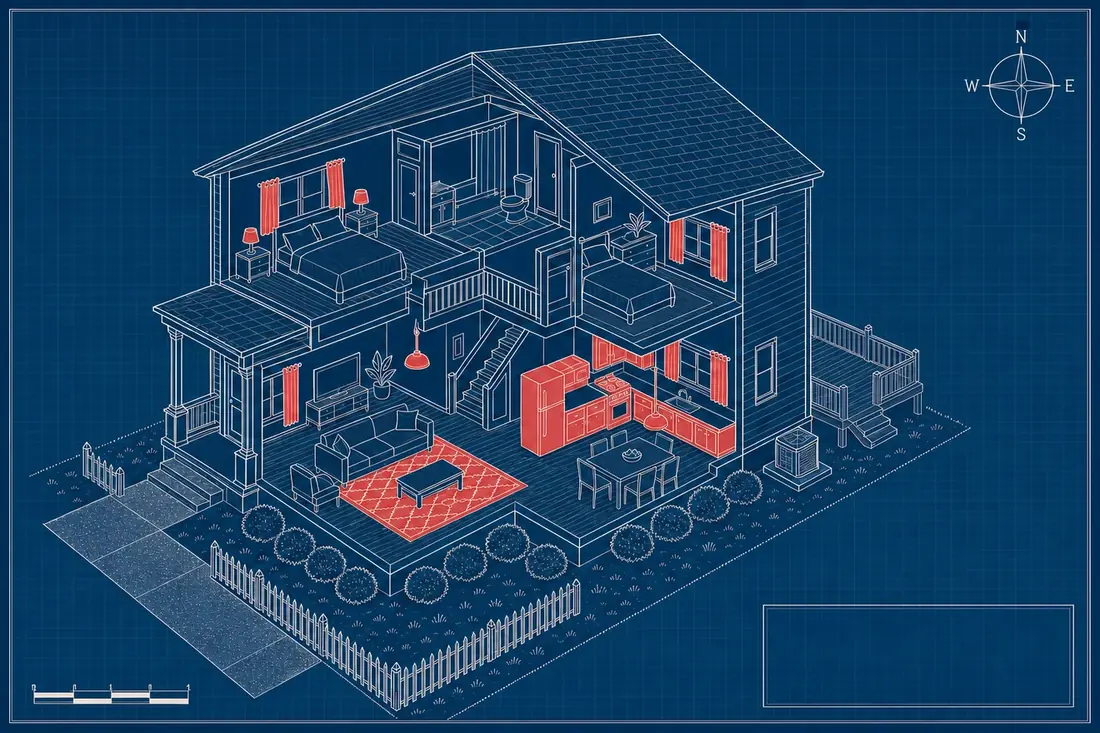
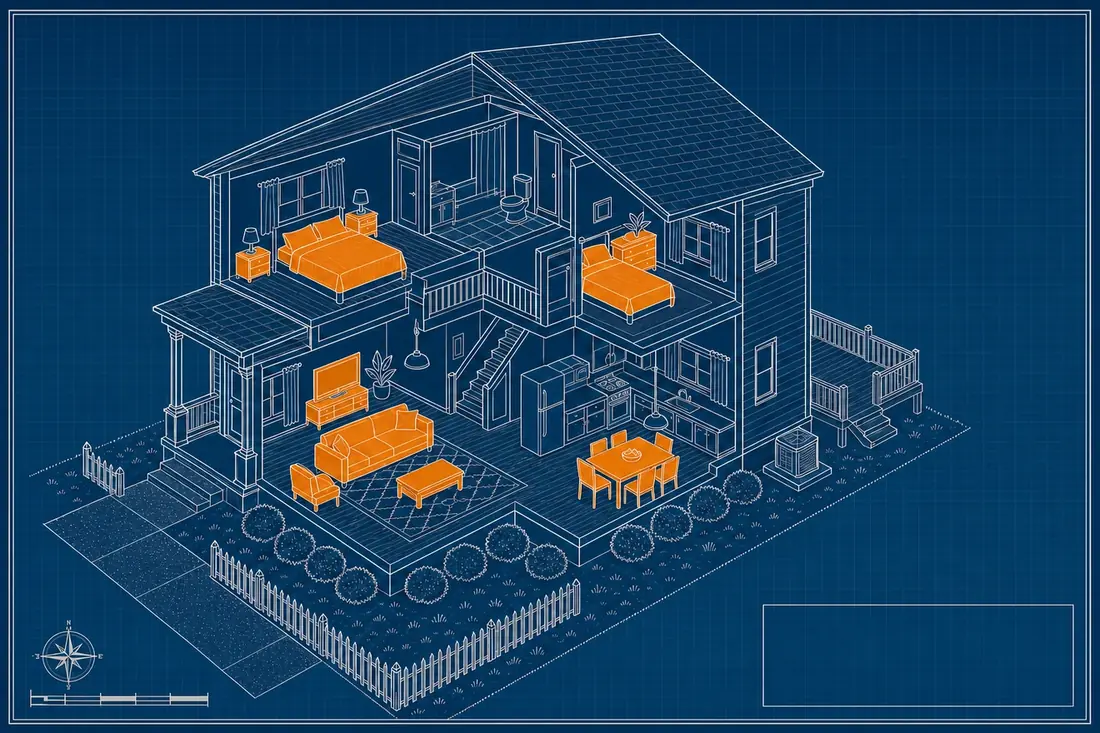
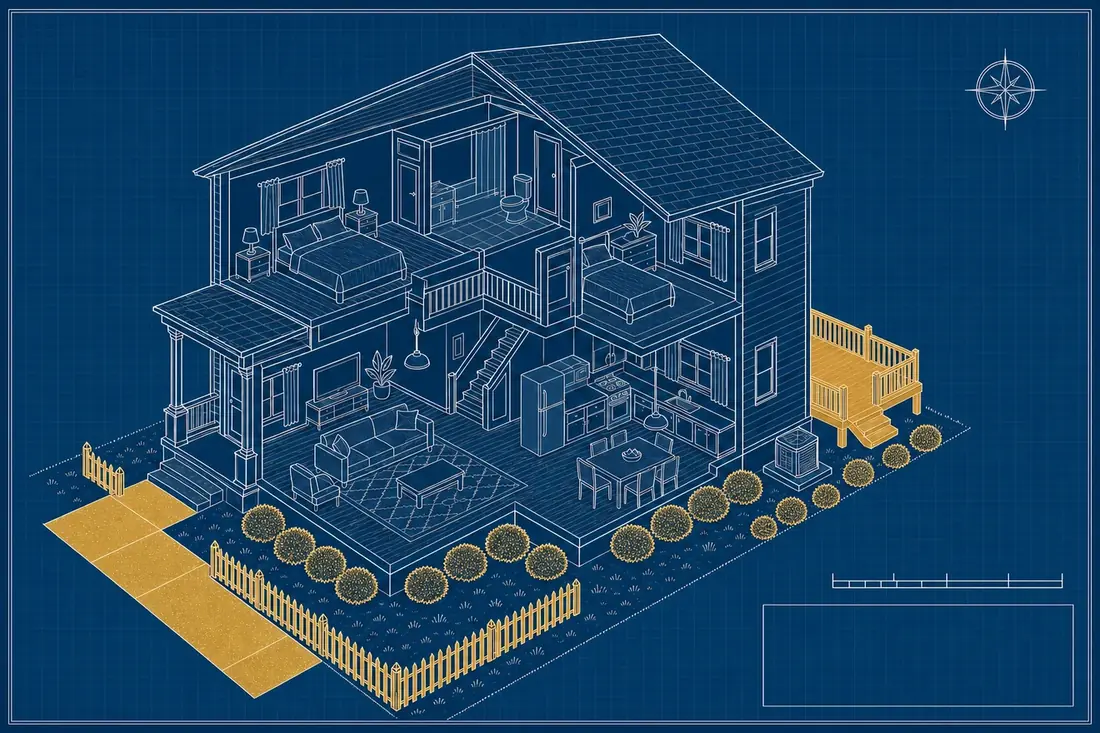
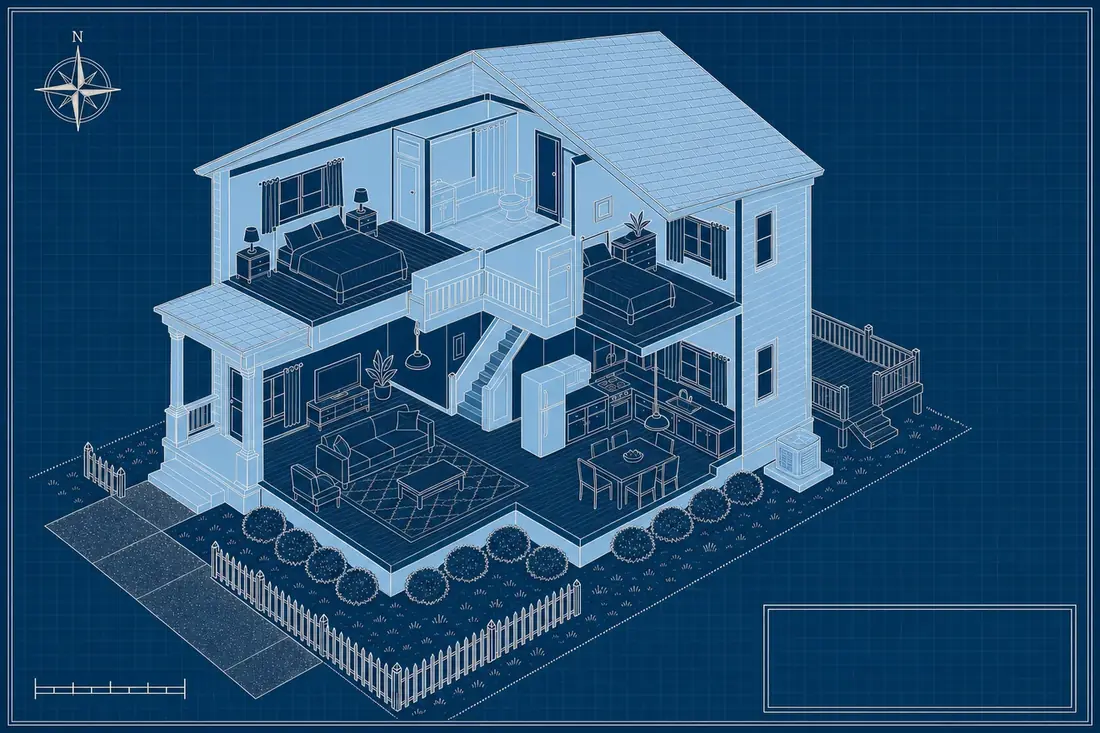
5-Year: carpet and flooring, cabinets, appliances, light fixtures, curtains 7-Year: furniture 15-Year: driveway, fencing, landscaping, deck 27.5/39-Year Shell: roof, load-bearing walls, foundation, central HVAC Get your free Preliminary Benefit Estimate See how much of your rental's basis could move off the 27.5-year clock with a free Preliminary Benefit Estimate. Request Your Free Estimate »The Mid-Month Convention, In Plain TermsMACRS applies a mid-month convention to real property, both the 27.5-year residential class and the 39-year commercial class. Under that convention, a property is treated as placed in service, or disposed of, exactly in the middle of whatever month the event actually happened in. A building placed in service on March 3 and one placed in service on March 28 both get treated as placed in service on March 15 for depreciation purposes. That half-month rule means the first year of ownership almost never gets a full year of depreciation. A property placed in service in March gets roughly 9.5 months of depreciation in year one, not 12. The same proration applies in reverse in the year a property is sold or disposed of. Because of that convention, a structural shell that depreciates in full over 27.5 years typically spans parts of 28 different tax years, not a clean 27 or 28. The same mid-month rule governs the year a property sells or otherwise leaves service, so the final partial-year deduction also depends on the month of the sale, not the calendar year alone. Two owners who each hold a rental for exactly 27.5 years can still end up claiming depreciation across a different number of actual tax-filing years, purely because they placed the property in service in different months. The Buckets on a Cost-Segregated PropertyThe classes a cost segregation study works with are the same four buckets that show up on any property type; what changes on a residential rental is which shell they sit against.
See a fuller breakdown of what typically lands in each class on 5, 7, and 15-year property examples. Every one of these components starts out, by default, buried inside the 27.5-year figure. A study is the process that pulls them back out. The 60-Second Qualifier Four questions. Our engineering team's model shows the estimated first-year acceleration a study of your property would target, free, before you commit to anything. Take the Qualifier »Where Cost Segregation Changes the 27.5-Year MathA delivered example shows what this looks like on a real property. A single-family rental in Montgomery County, Pennsylvania, built in 2013 at 4,946 square feet, carried a depreciable basis of $1,040,000. Left untouched, all of that basis sits on the 27.5-year schedule, straight-line, at roughly $37,818 a year in a full year.
15.4%of basis moved off the 27.5-year schedule $174,905estimated first-year depreciation, including bonus $1,295fee on this delivered study The $160,242 that moved did not disappear. It went onto 5, 7, and 15-year schedules instead, where current bonus depreciation rules can take it in year one rather than spreading it across decades. Combined with that reclassification, the property's estimated first-year depreciation came to $174,905, 16.8% of basis, against a $1,295 fee. A Common Mix-Up: Roof and HVACA structural roof and a residential building's central HVAC system are part of the 27.5-year shell, not 5-year property, a misconception that comes up constantly. A new roof does not become fast-depreciating property just because it was recently installed; it is still structural, still on the slow schedule. What can change is that the OLD roof's remaining basis, whatever had not yet been depreciated, can potentially be written off through partial asset disposition in the year the old roof comes out, a separate mechanic from cost segregation itself. Why the Slow Schedule Is the DefaultNothing about the 27.5-year schedule is a penalty or a mistake. It is simply what applies automatically, on every dollar of a rental building's basis, unless a study identifies which parts of that basis actually belong somewhere faster. The IRS lost the argument that a building is one undifferentiated asset in Hospital Corporation of America v. Commissioner (109 T.C. 21, 1997), and its own Cost Segregation Audit Techniques Guide (Publication 5653) describes exactly how a proper study separates a building's components. A study can be done in the year of purchase or, through a look-back, on a property owned for years, since the classification question, what belongs on which schedule, does not depend on when the building was bought. For what happens once the structural shell finishes its full run on this schedule, see what happens after 27.5 years of depreciation. Frequently asked questionsWhy is residential rental property depreciated over 27.5 years instead of 39? MACRS sets separate class lives for residential rental real property, homes, duplexes, condos, and small apartment buildings, at 27.5 years, and for nonresidential commercial buildings at 39 years. The distinction is based on how the property is used, not its size or cost. Does the 27.5-year schedule apply to land? No. Land value is always excluded first, before any depreciation calculation begins. Only the building itself and its improvements, the parts that actually wear out over time, ever sit on a depreciation schedule. What is the mid-month convention? It is the MACRS rule that treats real property as placed in service, or disposed of, exactly in the middle of the month the event occurred in. That prorates the first and final years of depreciation based on which month the property entered or left service, rather than giving a full year's deduction in a partial year. Is 5-year property depreciated with the same convention as the 27.5-year shell? No. Personal property in the 5, 7, and 15-year classes generally uses a half-year or mid-quarter convention rather than the mid-month convention, and runs on a much shorter schedule. That is one reason a cost segregation study changes the timing picture so much, not just the classification. What happens once the 27.5 years are up? Depreciation on the structural shell simply stops once its basis reaches zero. What that means for a sale, for recapture, and for a renovation added along the way is a separate question, covered in what happens after 27.5 years of depreciation. Keep readingGet your free Preliminary Benefit Estimate Send the address or the listing link. We model the number first; you decide with it in hand. Request Your Free Estimate »Educational information, not tax advice. This page describes how federal
depreciation rules and tests work in general. Whether any rule fits your facts is a determination for
you and your CPA. Our study gives your CPA the engineering and the numbers to make that call.
|