|
Cost Segregation for Commercial & Short-Term Rental Owners
|
Request a free estimate [email protected] |
Vacation Markets
Free Listing SEO Audit Paste your Airbnb or VRBO listing. Get a scored audit in 90 seconds. Audit My Listing »Minimum ROIOur study identifies at least 20x its fee in first-year deductions on commercial property, or at least 30x on a short-term rental, or it is free. |
Cost Segregation for a Sanibel or Captiva Island RentalYes. A short-term rental on Sanibel or Captiva Island, both in Lee County, Florida, qualifies for a cost segregation study the same as any rental property. Sanibel is its own incorporated city with its own permitting department; Captiva is unincorporated and governed at the county level. Both islands run elevated, piling-supported construction, and both include a mix of long-held homes and properties rebuilt or renovated after storm damage, which is exactly the situation a look-back study is built for. Key takeaways
Steven's Take Sanibel and Captiva have more rebuilt and renovated properties than most of the markets on this site, and that is not incidental. A home rebuilt after storm damage is often exactly the property a look-back study is built for: new construction dates, new components, a section 481(a) catch-up sitting unclaimed because nobody ran the numbers when the rebuild finished. The estimate works the same way whether a property has been owned for one year or fifteen, because the components do not know which. The real difference is which mechanism, current-year or look-back, gets used to claim them. Steven Ellis, Founder Watch a log cabin rental get built and classified A hypothetical $600,000 three-bedroom log cabin goes up floor by floor, from the gravel drive and foundation to the game loft and the hot tub on the deck. Every component lands on its depreciation schedule as it is installed, and the year-one depreciation adds up on screen. Watch the 90-second walkthrough »Two islands, two forms of local governmentSanibel and Captiva sit off the coast of Fort Myers in Lee County, Florida, a barrier-island market distinct from the mainland Fort Myers and Cape Coral page, which covers canal-front and suburban rental stock rather than island beach property. Sanibel is an incorporated city with its own government and its own permitting department, confirmed on the city's official site (mysanibel.com). Captiva, connected to Sanibel by a short causeway, is unincorporated and falls under Lee County's rules directly rather than a town of its own. That governance split matters for local requirements, permits, business tax receipts, and any rental registration a specific property needs, but it has no bearing on the federal depreciation rules a cost segregation study applies. Those rules are identical on both sides of the causeway. 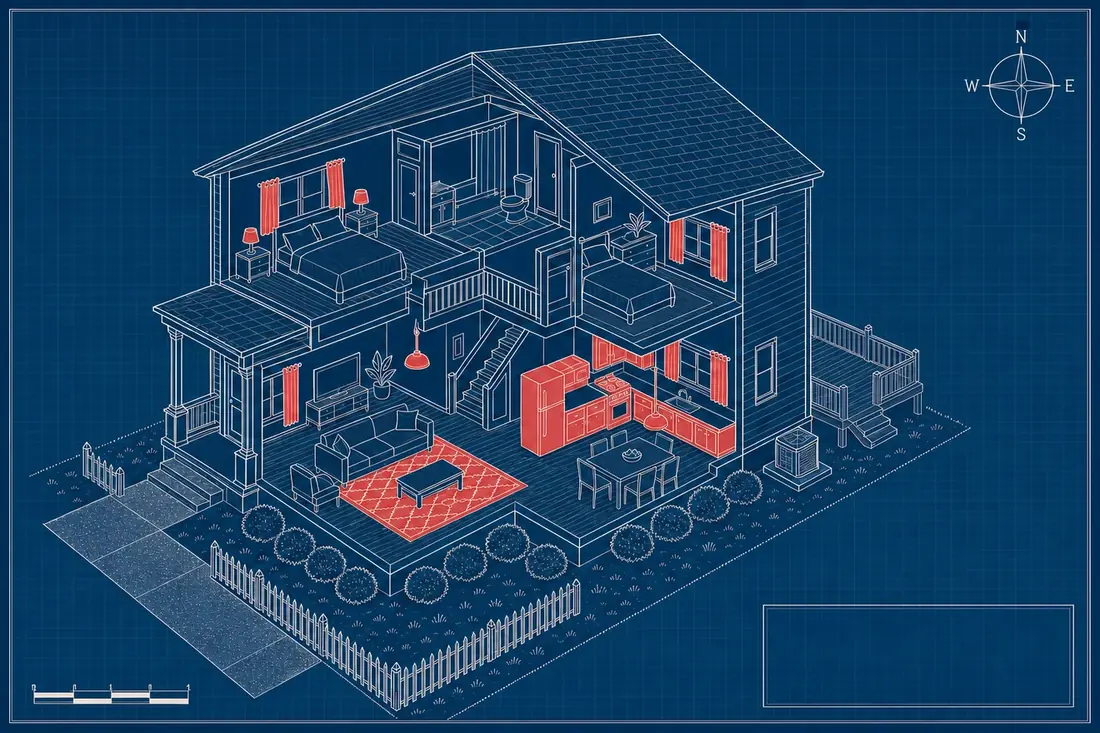
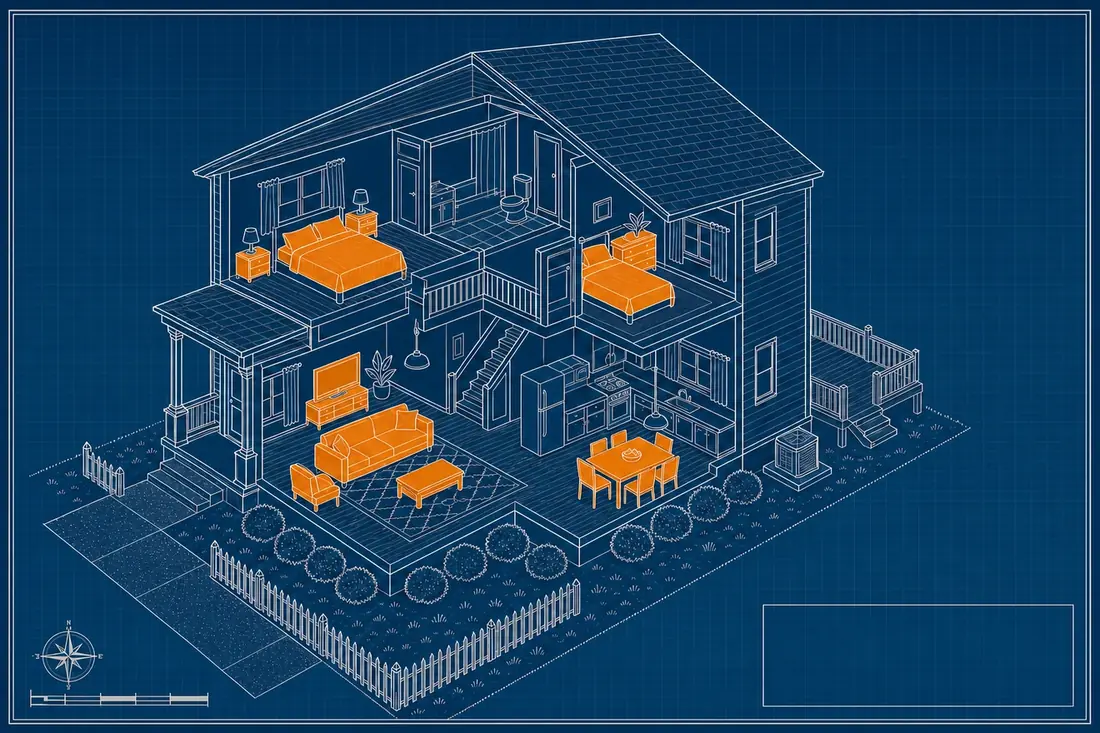
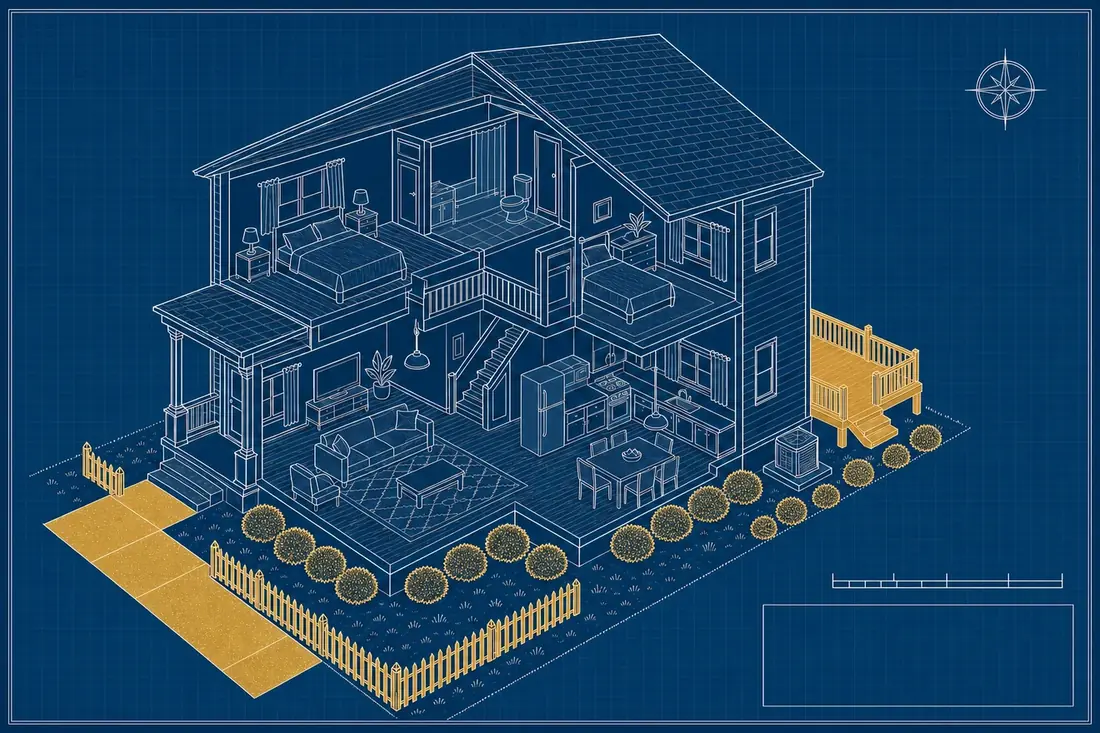
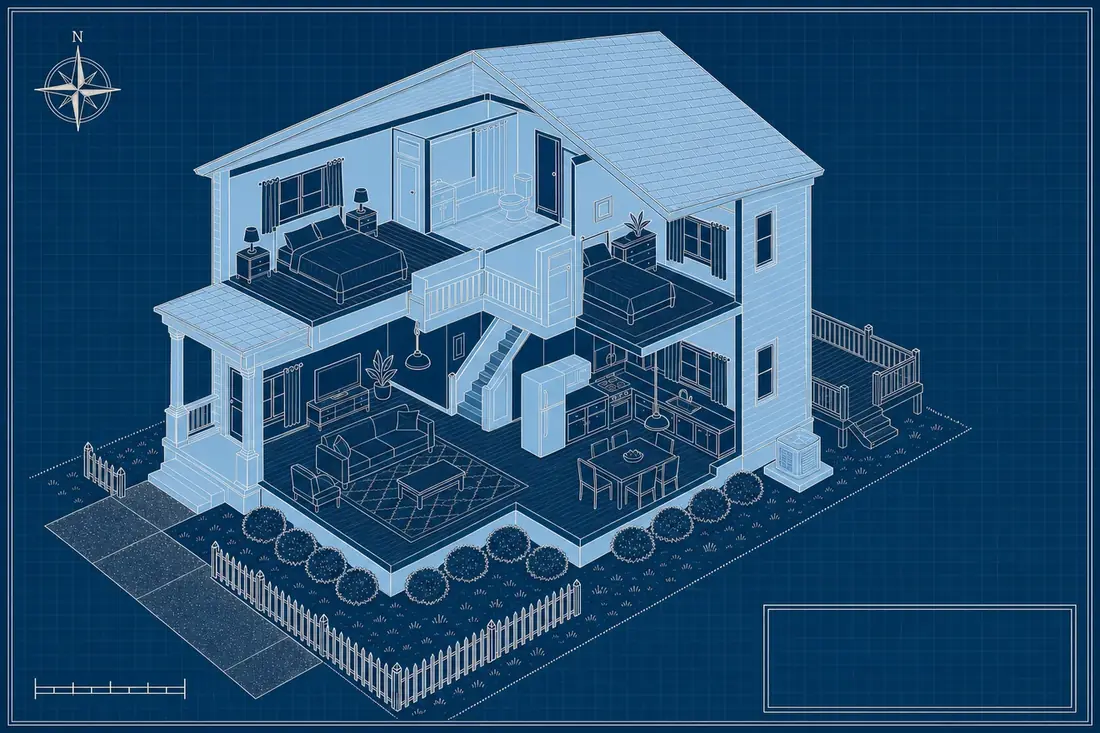
5-Year: carpet and flooring, cabinets, appliances, light fixtures, curtains 7-Year: furniture 15-Year: driveway, fencing, landscaping, deck 27.5/39-Year Shell: roof, load-bearing walls, foundation, central HVAC Get your free Preliminary Benefit Estimate See what a specific Sanibel or Captiva property could accelerate with the free estimate at /qualify. Request Your Free Estimate »What an elevated island home carriesBoth islands run construction elevated on pilings above flood elevation, the standard build pattern for barrier-island property across Florida's Gulf coast. A Sanibel or Captiva single-family home typically carries a full interior finish package above the elevated main level, an outdoor shower, and elevated decking, with the ground level underneath used for parking and storage rather than finished living space.
A condo unit on either island scopes narrower, generally reaching only what the individual owner owns, interior finishes and unit-specific systems, since the building shell and any shared amenities usually belong to the condo association rather than the unit owner. Rebuilt and renovated propertiesBoth islands include a meaningful number of properties rebuilt or renovated after storm damage in recent years, a widely known feature of this stretch of Florida's Gulf coast. A rebuilt or substantially renovated property is not a special case for cost segregation; it is a new set of components placed in service, classified the same way any renovation is. See the after-renovation page for how a renovation's own component list gets studied, separate from the original structure's basis. A property an owner has held since well before any renovation, sometimes for decades, is also a candidate for a look-back study on the original components that were never separated out. That study runs through Form 3115, an automatic consent form, with the missed depreciation caught up in one section 481(a) deduction in the current tax year rather than through amended returns filed one by one. The 7-day test on a weekly island marketSanibel and Captiva run a weekly rental pattern through the high season, with Saturday check-ins and check-outs common across island rental stock. A summer built on full-week bookings pushes a property's average period of customer use, the test set out in Reg. 1.469-1T(e)(3)(ii), close to the 7-day line the short-term rental exception uses, while shorter shoulder-season stays tend to pull the yearly average back down. A high share of both islands' owners live off-island, often out of state, and rely on a local rental agency for bookings and turnovers. That agency's hours count against the owner in the 100-hour material participation test, one of the tests that decides whether a rental's losses can offset other income. The 60-Second Qualifier Four questions. Our engineering team's model shows the estimated first-year acceleration a study of your property would target, free, before you commit to anything. Take the Qualifier »Renovation, personal use, and eventual saleA property renovated after storm damage or simply updated over time, new cabinetry, new flooring, a refreshed primary suite, generates its own component list separate from the original structure's basis. When an older component gets replaced rather than just refreshed, an owner has the option under the partial asset disposition rule (Treas. Reg. 1.168(i)-8) to write off the remaining basis of the component that was removed, the old cabinetry or the old flooring, but only in the tax year of the replacement. Miss that year and the election is gone; the old component's remaining basis stays buried in the building, depreciating for decades alongside whatever replaced it. A number of Sanibel and Captiva owners split the property's use between personal weeks and rental income, particularly on Captiva, where many homes have been in the same family for generations. Section 280A limits deductions once personal use exceeds the greater of 14 days or 10% of the days the property is actually rented. And when a long-held island property is eventually sold, gain attributable to the depreciation already claimed on the 5- and 7-year components is recaptured at ordinary rates on sale, while the straight-line depreciation on the structure itself is taxed as unrecaptured section 1250 gain, up to 25%. A 1031 exchange can defer both, including on a property that already had a cost segregation study, when the replacement property rules are met. What the numbers look like at commercial scaleA recent engineered study on an office and warehouse property produced $330,674 in first-year deductions on a $1,911,675 building basis for a $9,900 fee, a 33.4-to-1 ratio, a commercial example offered as a scale reference rather than a claim about a residential island property. A single-family Sanibel or Captiva home with a full interior package, elevated decking, and site work above the norm for a mainland property tends to carry a meaningful share of reclassifiable basis, since a study typically shifts 15 to 35% of a building's basis into faster schedules. Running a study on either islandA short-term rental study works from listing photos, whether the property is a Sanibel single-family home, a Captiva condo unit, or a recently rebuilt house on either island. No site visit, no owner homework list. Every study is custom-priced, with turnaround normally running 1 to 2 weeks for a residential property, 2 to 3 weeks during tax season, and Basis guarantees at least 30 times the fee in first-year deductions on a short-term rental, or the study is free. See the full Airbnb and short-term rental overview for the mechanics behind every market Basis studies, or start the 60-second qualifier at /qualify to see the likely number for a specific property. Frequently asked questionsIs Sanibel governed differently than Captiva? Yes. Sanibel is an incorporated city with its own government and permitting department. Captiva, just across a short causeway, is unincorporated and falls under Lee County's rules directly. Federal depreciation rules apply identically to both. Does a rebuilt or renovated Sanibel property qualify for cost segregation? Yes. A rebuilt or renovated property is studied the same way any new construction or renovation is, based on the components actually placed in service. Storm-related rebuilds are not a special or excluded case. Can a Sanibel or Captiva property owned for many years still get a study? Yes, through a look-back study. Missed depreciation on components that were never separated out is claimed through Form 3115 with a section 481(a) catch-up deduction in the current tax year, with no amended returns required. Does a condo unit on Sanibel get a full-lot study like a single-family house does? No. A condo unit's study generally reaches the interior the owner individually owns. A single-family house's study reaches the whole lot, since that owner holds the structure, the land, and every improvement on it. How long does a study take for a Sanibel or Captiva property? Normally 1 to 2 weeks for a residential short-term rental, extending to 2 to 3 weeks during the busiest part of tax season. The study works from listing photos, so it does not depend on a scheduled visit to the island. Keep readingGet your free Preliminary Benefit Estimate Send the address or the listing link. We model the number first; you decide with it in hand. Request Your Free Estimate »Educational information, not tax advice. This page describes how federal
depreciation rules and tests work in general. Whether any rule fits your facts is a determination for
you and your CPA. Our study gives your CPA the engineering and the numbers to make that call.
Related guides: How Does Cost Segregation Work in Vacation... · Does Cost Segregation Work on a Poconos... · Cost Segregation for a Jersey Shore Rental... · Cost Segregation for a Pigeon Forge Cabin... · Cost Segregation for a Gatlinburg Rental...
More Florida markets: Cost Segregation for a Destin or 30A... · Cost Segregation for a Panama City Beach... · How Does Cost Segregation Work for Florida... · How Does Cost Segregation Work on the... · How Does Cost Segregation Work in Fort... · Does Cost Segregation Work on a Florida... · All vacation markets
|
Copyright © 2026 Basis Property Group | Philadelphia, Pennsylvania | Studies in all 50 states
Popular guides: Airbnb & STR | Do I Qualify? | What a Study Costs | Audit Risk | When to Do It | Real Examples
About | Careers | Guides | Articles | Site Map | Privacy Policy | Terms of Service
You are visitor 0148293 | Last updated: August 2026 | Best viewed at 1024x768
Content reviewed against IRS Publication 946, Treasury Regulation §1.168, and the IRS Cost Segregation Audit Techniques Guide. For educational purposes only; this site does not constitute tax advice. Consult your CPA before filing. Not affiliated with the IRS.