|
Cost Segregation for Commercial & Short-Term Rental Owners
|
Request a free estimate [email protected] |
Vacation Markets
Free Listing SEO Audit Paste your Airbnb or VRBO listing. Get a scored audit in 90 seconds. Audit My Listing »Minimum ROIOur study identifies at least 20x its fee in first-year deductions on commercial property, or at least 30x on a short-term rental, or it is free. |
Cost Segregation for Blowing Rock, North CarolinaBlowing Rock sits on the Blue Ridge Parkway across the Watauga and Caldwell county line, a historic summer resort village founded in 1889, distinct from Boone's college-town rhythm just up the road. Its rental stock leans toward historic cottages and larger estate-style homes in and around the village rather than ski condos or cabins. Both property types qualify for a cost segregation study, reclassifying interior finishes and site improvements into 5-, 7-, and 15-year schedules instead of the standard 27.5-year residential shell. Key takeaways
Steven's Take Blowing Rock is not Boone with a different exit sign, and lumping every North Carolina mountain town into one page is the mistake I see most in this market. An 1889 resort village of historic cottages and larger estate homes carries a different mix of finishes than a ski condo an hour up the road: more built-in millwork, more landscaped site work, less shared-amenity square footage. The address does not change the mechanics. What changes is what the engineering team actually finds once it looks at the real components, which is why the estimate comes before any commitment, not after. An owner who assumes otherwise is guessing at their own number. Steven Ellis, Founder Watch a log cabin rental get built and classified A hypothetical $600,000 three-bedroom log cabin goes up floor by floor, from the gravel drive and foundation to the game loft and the hot tub on the deck. Every component lands on its depreciation schedule as it is installed, and the year-one depreciation adds up on screen. Watch the 90-second walkthrough »A Parkway village, not a ski townBlowing Rock straddles the line between Watauga and Caldwell counties, North Carolina, right along the Blue Ridge Parkway. The town was founded in 1889 as a summer resort, built for lowland families escaping the heat before air conditioning made that trip unnecessary, and the village still carries that identity: a walkable downtown of shops and art galleries, the Blowing Rock Art and History Museum, and Moses H. Cone Memorial Park just outside town with its manor house and carriage trails. Boone sits a few minutes north in Watauga County and runs on an Appalachian State football and ski-traffic calendar. Blowing Rock runs on a different one entirely, closer to a historic mountain resort town than a college town or a ski destination. That distinction matters for how a property here gets used and rented, even though the Boone and Blowing Rock corridor often gets talked about as one market. The mechanics of a cost segregation study do not change between the two, but the property style and the calendar behind it do. 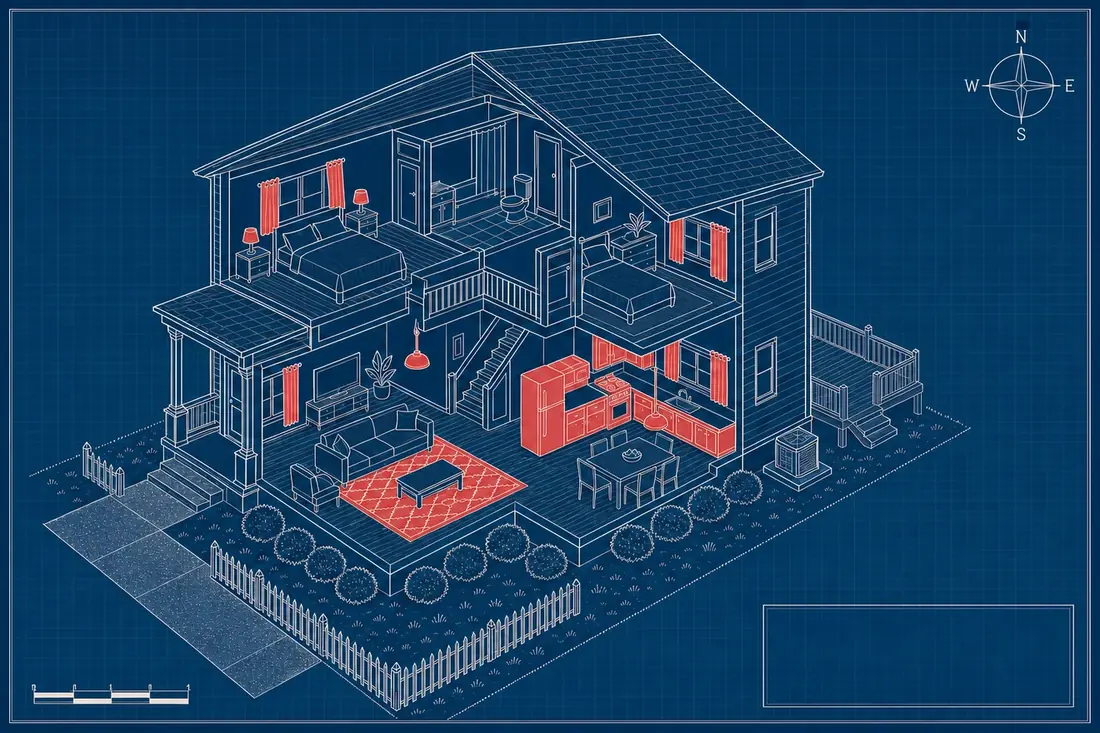
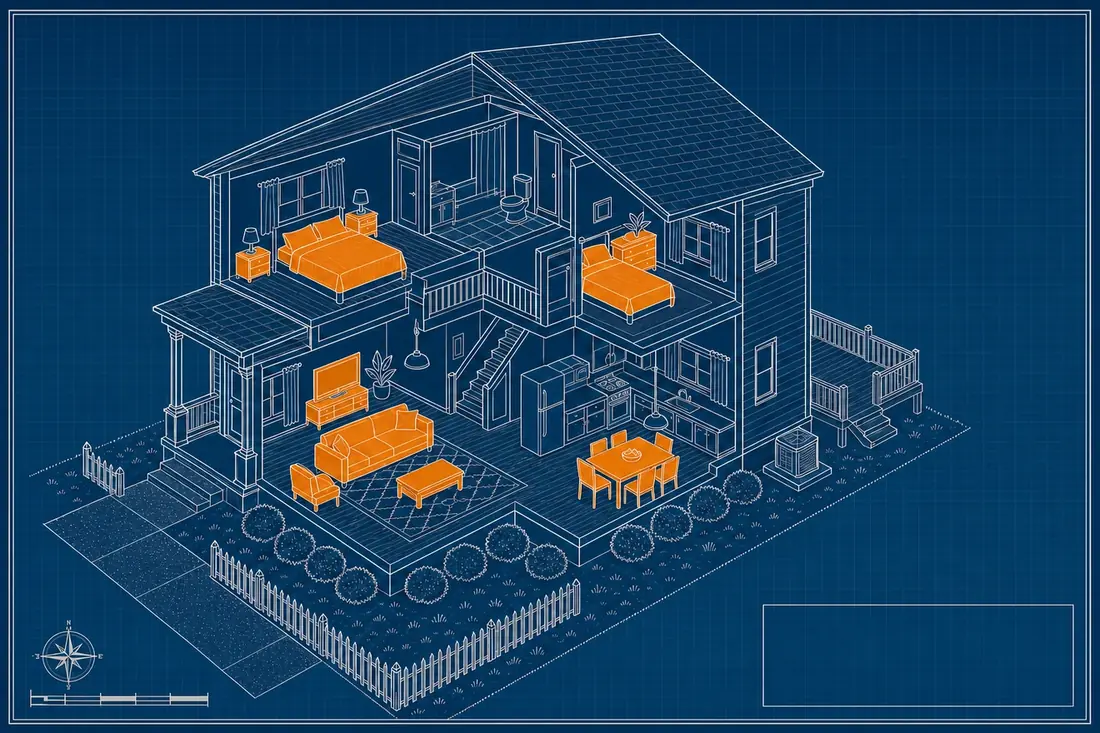
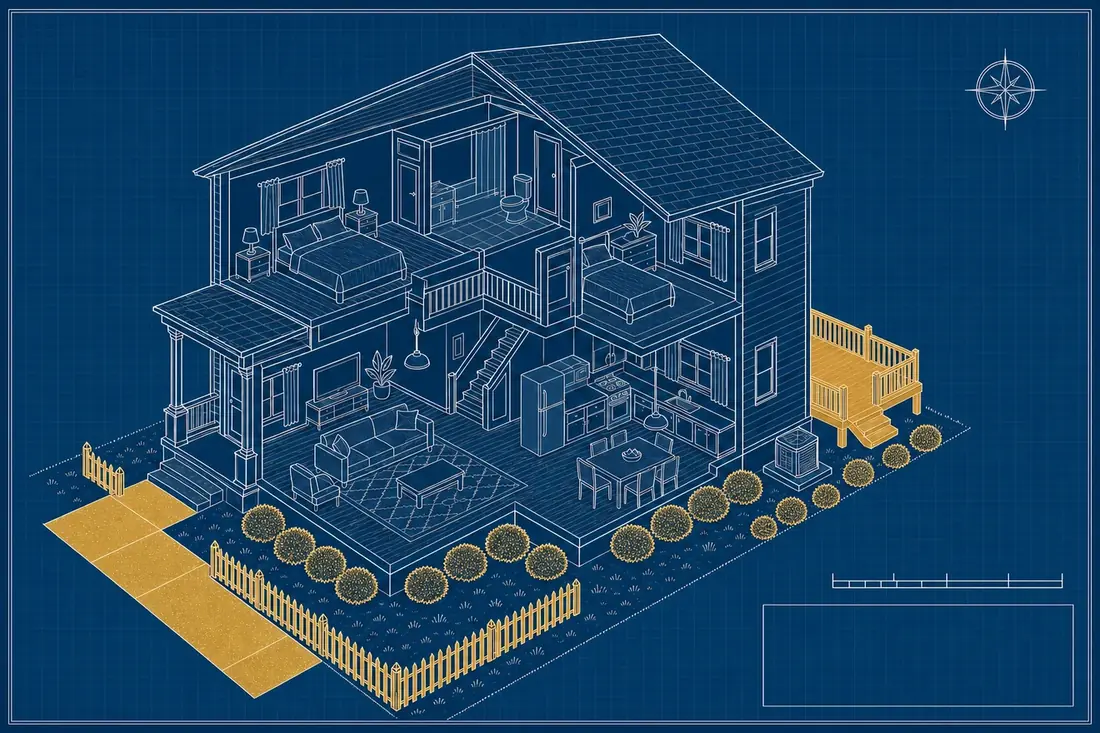
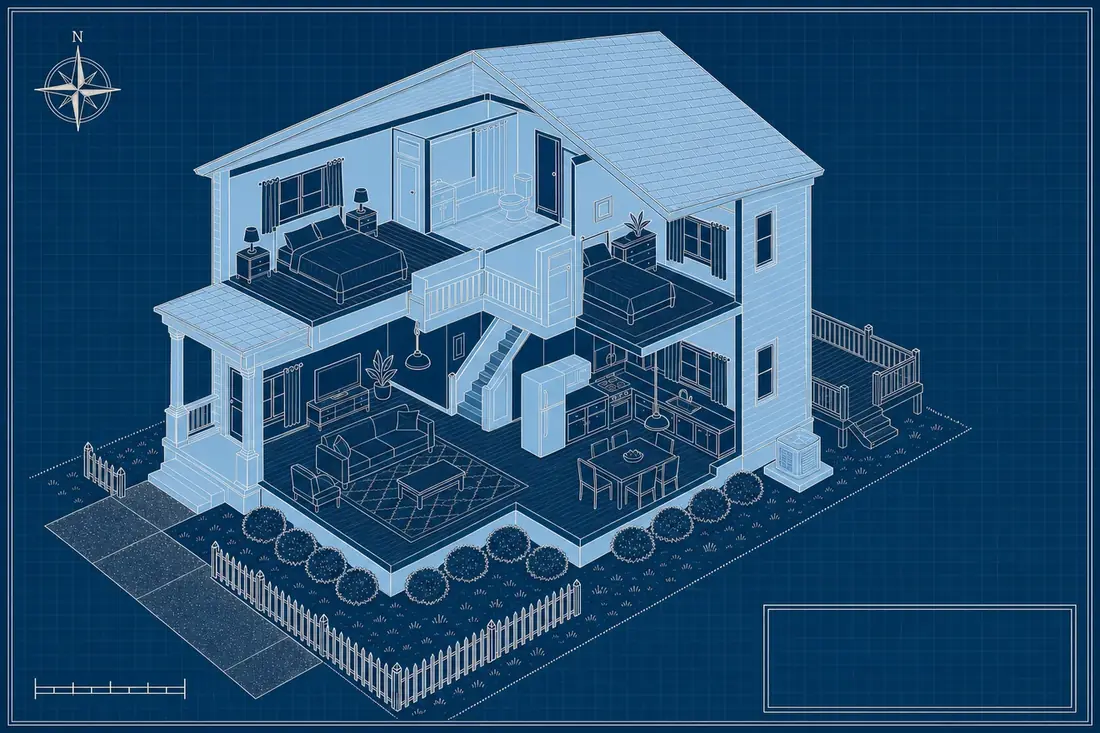
5-Year: carpet and flooring, cabinets, appliances, light fixtures, curtains 7-Year: furniture 15-Year: driveway, fencing, landscaping, deck 27.5/39-Year Shell: roof, load-bearing walls, foundation, central HVAC Get your free Preliminary Benefit Estimate See what a Blowing Rock cottage or summer estate could accelerate with the free estimate at /qualify. Request Your Free Estimate »Historic cottages and larger summer estatesMuch of Blowing Rock's rental stock traces back to the resort era: original cottages built in the late 1800s and early 1900s, since renovated and updated, sitting on smaller in-village lots close to downtown. Outside the village core, larger estate-style homes on wooded acreage make up the other half of the market, closer in scale to a custom mountain home than a historic cottage. Both qualify for a study the same way. An older cottage's age does not change the classification rules; a kitchen remodel, a replaced roof, or an addition built in the last decade generates its own component classifications regardless of when the original structure went up. A larger newer estate simply has more square footage and more finish work to classify at once.
Stone walls and porches on a village lotBlowing Rock's building style leans on stone, native rock retaining walls and foundations that fit the Parkway aesthetic, and deep wraparound porches common on both the historic cottages and the newer estate homes. Stone retaining walls holding a sloped village lot, a paved driveway fit to a smaller in-town parcel, and the site work behind a porch addition generally fall into the 15-year land improvement bucket. On the larger properties outside the village, that list grows to include more elaborate landscaping and, on lots without town water and sewer access, a private well and septic system, infrastructure that generally falls into the same land improvement category rather than changing the outcome. The 60-Second Qualifier Four questions. Our engineering team's model shows the estimated first-year acceleration a study of your property would target, free, before you commit to anything. Take the Qualifier »One long season and the 7-day testWhere Banner Elk and Beech Mountain run a genuine two-season ski-and-summer calendar, and Boone layers football, leaf, ski, and summer traffic on top of each other, Blowing Rock leans toward one longer stretch: summer through fall leaf season along the Parkway, without a resort driving a separate winter peak inside town limits. That single dominant season does not automatically produce a longer or shorter average stay than a multi-season market. It depends on the specific property's actual booking pattern for the year, whether it fills mostly with full-week summer stays or shorter weekend Parkway trips. The average-stay calculation under Reg. 1.469-1T(e)(3)(ii) always runs on that property's own full-year records, not on the market's general seasonal shape. Personal use is worth watching in this market specifically. A number of Blowing Rock's historic cottages have stayed in the same family for generations, and an owner who uses the property personally for part of the season runs into section 280A's personal-use threshold, the greater of 14 days or 10% of rental days, on top of the rental-activity test. Weekend art fairs and week-long summer stays, both in one calendarBlowing Rock's visitor calendar mixes two different rhythms inside the same long season. Art fairs, antique shows, and the long-running Blowing Rock Charity Horse Show draw weekend crowds into the village on a fairly predictable schedule through the summer and into fall. Underneath that, longer week-long stays fill the calendar from families using a cottage or estate home as a base for the wider High Country, day trips to the Parkway, Grandfather Mountain, and Tweetsie Railroad included. A property positioned right in the walkable village core tends to see more of the shorter weekend-event traffic; a larger home on acreage outside town tends to see more of the week-long bookings. That mix is exactly what feeds into the average-stay calculation discussed above. Two properties a mile apart, one downtown and one on a wooded lot, can land on genuinely different averages depending on which crowd each one actually attracts, which is why the number has to come from each property's own records rather than an assumption about the village as a whole. Getting a number for a Blowing Rock propertyEvery study, cottage or estate home, is custom-priced to the specific property. A recent delivered study on a single-family rental, 4,946 square feet with a $1,040,000 basis, produced an estimated $174,905 in first-year depreciation for a $1,295 fee, close to 135 to 1, a residential benchmark closer in scale to a Blowing Rock cottage than a large commercial building. A free Preliminary Benefit Estimate at /qualify models the likely number for a specific property before any commitment, and short-term rental studies work from listing photos, no site visit required. For a cottage owned for years already, the study runs through Form 3115 with a section 481(a) catch-up, covered in the look-back guide. See the full short-term rental overview for how the average-stay and material-participation tests work together, or the rest of the state's mountain and coastal markets on the North Carolina hub. Frequently asked questionsIs Blowing Rock the same rental market as Boone? They sit minutes apart and share a county line, but the markets run differently. Boone follows an Appalachian State and ski-traffic calendar, while Blowing Rock's identity comes from its 1889 founding as a summer resort village, with a rental stock weighted toward historic cottages and larger estate homes. Does an older historic cottage qualify for cost segregation the same as a new home? Yes. The age of the original structure does not change the classification rules. Interior finishes, appliances, and any additions or renovations still get classified into 5-, 7-, and 15-year categories the same way, regardless of when the cottage was originally built. Does a Blowing Rock property need a site visit for the study? No, short-term rental studies use listing photos to classify components, so there is no scheduled visit or owner homework required, whether the property is a historic in-village cottage or a larger estate home outside town. How does a single long summer season affect the 7-day rental test? It does not change the test itself. The average guest stay is still calculated across the full year from the property's actual booking records, whether the calendar is dominated by one long season or split across several shorter ones. Are Blowing Rock's short-term rental rules the same as the rest of Watauga County? Town and county rental registration and occupancy-tax rules can differ and can change. Check the current rules directly with the Town of Blowing Rock or the relevant county before listing a property here. Keep readingGet your free Preliminary Benefit Estimate Send the address or the listing link. We model the number first; you decide with it in hand. Request Your Free Estimate »Educational information, not tax advice. This page describes how federal
depreciation rules and tests work in general. Whether any rule fits your facts is a determination for
you and your CPA. Our study gives your CPA the engineering and the numbers to make that call.
Related guides: How Does Cost Segregation Work in Vacation... · Does Cost Segregation Work on a Poconos... · Cost Segregation for a Jersey Shore Rental... · Cost Segregation for a Pigeon Forge Cabin... · Cost Segregation for a Gatlinburg Rental...
More North Carolina markets: Cost Segregation for Ashe County, North... · Cost Segregation for Highlands, North Carolina · Cost Segregation for Bryson City and... · Cost Segregation for Lake Lure and Chimney... · Cost Segregation for Emerald Isle and the... · Cost Segregation for Ocean Isle and Sunset... · All vacation markets
|
Copyright © 2026 Basis Property Group | Philadelphia, Pennsylvania | Studies in all 50 states
Popular guides: Airbnb & STR | Do I Qualify? | What a Study Costs | Audit Risk | When to Do It | Real Examples
About | Careers | Guides | Articles | Site Map | Privacy Policy | Terms of Service
You are visitor 0148293 | Last updated: August 2026 | Best viewed at 1024x768
Content reviewed against IRS Publication 946, Treasury Regulation §1.168, and the IRS Cost Segregation Audit Techniques Guide. For educational purposes only; this site does not constitute tax advice. Consult your CPA before filing. Not affiliated with the IRS.