|
Cost Segregation for Commercial & Short-Term Rental Owners
|
Request a free estimate [email protected] |
Vacation Markets
Free Listing SEO Audit Paste your Airbnb or VRBO listing. Get a scored audit in 90 seconds. Audit My Listing »Minimum ROIOur study identifies at least 20x its fee in first-year deductions on commercial property, or at least 30x on a short-term rental, or it is free. |
Cost Segregation for Emerald Isle and the Crystal Coast, NCEmerald Isle sits at the western end of Bogue Banks in Carteret County, North Carolina, anchoring the Crystal Coast, the state's central shoreline and a quieter, more residential beach market than the northern Outer Banks. Homes here are typically elevated on pilings under North Carolina's coastal building code, with dune walkovers protecting the beach access most properties share. A cost segregation study reclassifies interior finishes, walkovers, decking, and other site improvements into 5-, 7-, and 15-year schedules instead of the standard 27.5-year residential shell. Key takeaways
Steven's Take Emerald Isle owners are not fighting the same marketing every Outer Banks page runs, and a quieter, more residential barrier island deserves its own answer instead of a generic coastal template. Pilings, dune walkovers, elevated decking, these are real components a coastal building code puts on nearly every home here, and a study has to classify them the same way it classifies interior finishes. The process still runs on listing photos with no site visit required, because an owner managing a rental on Bogue Banks from somewhere else should not need to fly in for an engineer's clipboard. A quieter island still has a full components list, it just gets fewer headlines. Steven Ellis, Founder Watch a log cabin rental get built and classified A hypothetical $600,000 three-bedroom log cabin goes up floor by floor, from the gravel drive and foundation to the game loft and the hot tub on the deck. Every component lands on its depreciation schedule as it is installed, and the year-one depreciation adds up on screen. Watch the 90-second walkthrough »A different stretch of coast than the Outer BanksEmerald Isle sits at the western end of Bogue Banks, a 21-mile barrier island in Carteret County, North Carolina, alongside the neighboring towns of Atlantic Beach, Pine Knoll Shores, and Indian Beach. Together they anchor the Crystal Coast, an 85-mile stretch of the state's central shoreline. That is a separate market from the Outer Banks further north in Dare County, both geographically and in character. Emerald Isle carries a more residential feel than a commercial beach strip, wide public beaches and a year-round community alongside the seasonal rental stock. 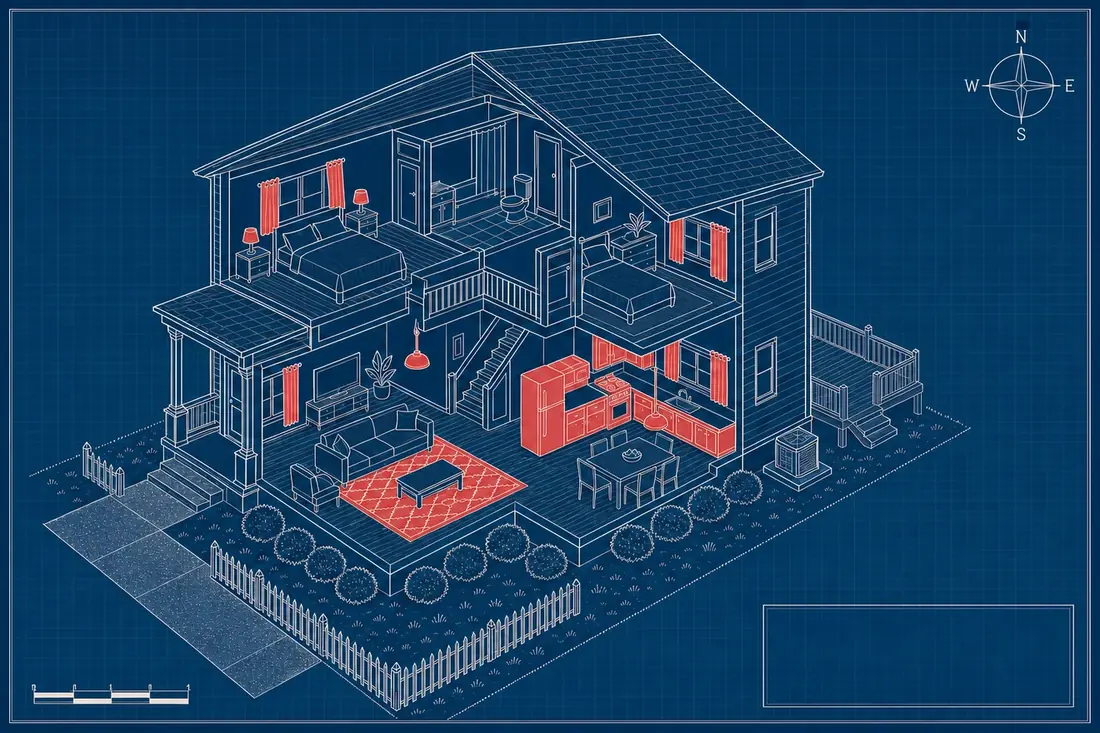
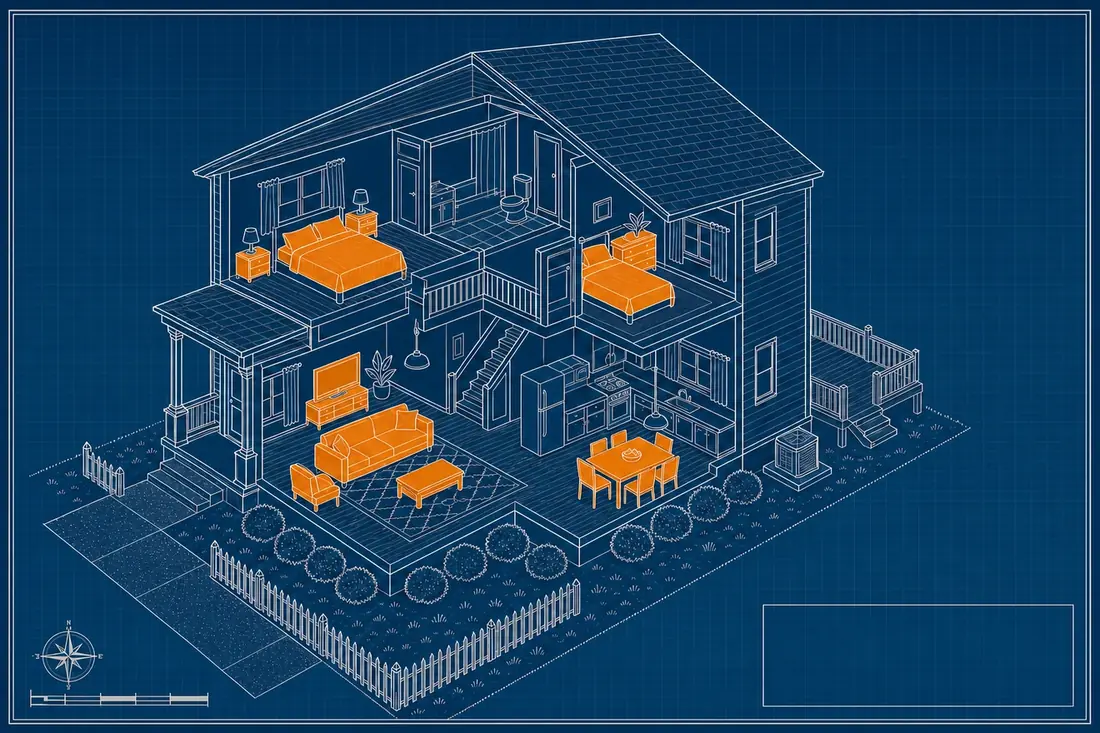
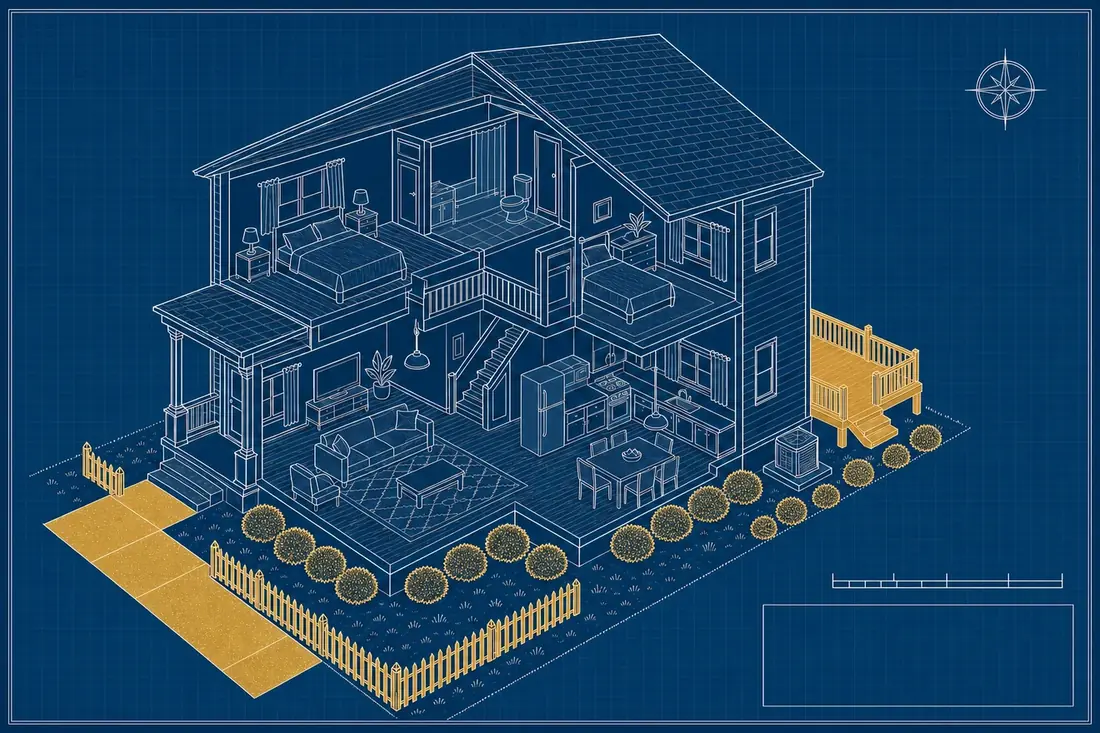
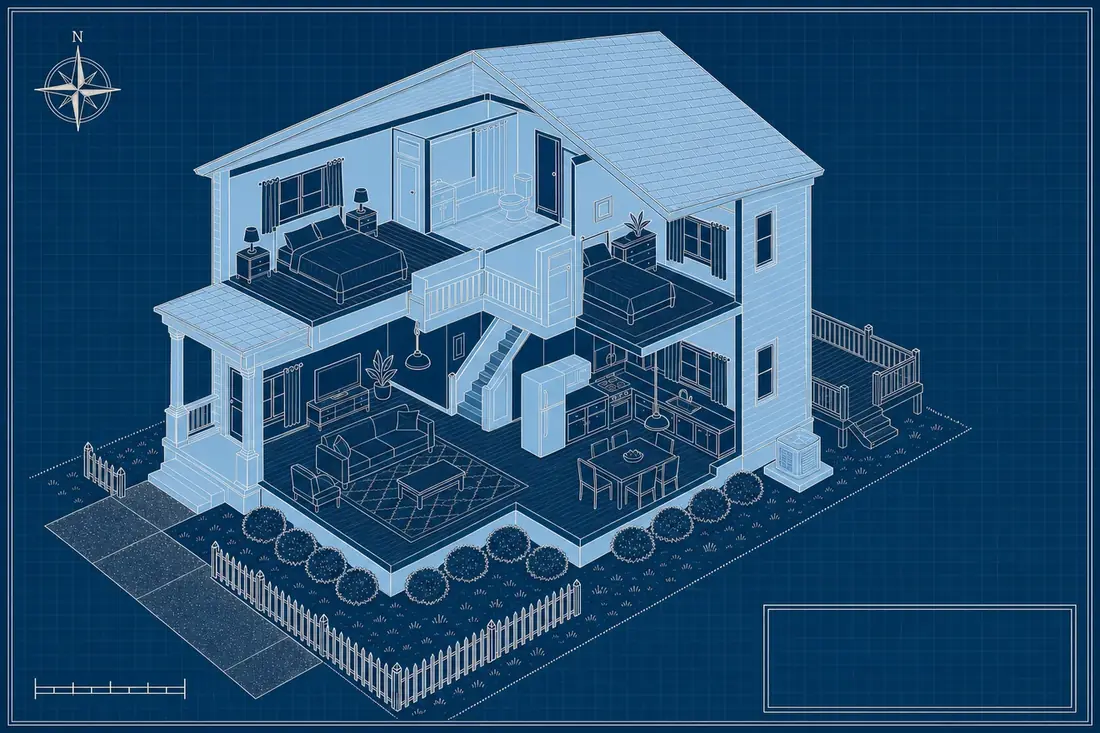
5-Year: carpet and flooring, cabinets, appliances, light fixtures, curtains 7-Year: furniture 15-Year: driveway, fencing, landscaping, deck 27.5/39-Year Shell: roof, load-bearing walls, foundation, central HVAC Get your free Preliminary Benefit Estimate See what an Emerald Isle or Crystal Coast beach house could accelerate with the free estimate at /qualify. Request Your Free Estimate »Elevated construction and what a study coversNorth Carolina's coastal building code puts many Crystal Coast homes up on pilings or an elevated foundation to clear flood elevation requirements, and that construction style shapes what a study finds. The living space above still carries the standard categories, cabinetry, flooring, and appliances as 5-year property, certain furniture as 7-year property. The ground level underneath an elevated home, often finished as parking or storage space behind breakaway walls designed to give way in a storm surge, carries its own components as well, any built-in storage, lighting, or mechanical equipment installed there.
Dune walkovers and beach-access featuresMany Crystal Coast towns require a dune walkover, an elevated wooden path over the protected dune line, to reach the beach without disturbing the dune vegetation that holds the shoreline in place. A walkover is a distinct, separately identifiable structure from the house itself, and it generally depreciates as a 15-year land improvement rather than folding into the residential shell. The same category picks up an outdoor shower, exterior lighting for a late beach walk back, and any decking connecting the house to the walkover, features that show up on a large share of the rental stock along this stretch of coast. The space under an elevated homeThe enclosed area beneath a piling-built home is not incidental. Many owners finish it for parking, beach-gear storage, or an outdoor entertaining space, and the components installed there, cabinetry, lighting, any built-in storage, get classified the same way equivalent components inside the main living space would. That enclosure sits apart from the elevated structural shell above it, which is the load-bearing part of the home the building code is actually protecting. A study looks at both levels of a piling-built house, not just the living space most guests see in listing photos. Outdoor living space tends to concentrate at ground level on an elevated coastal home rather than upstairs. An outdoor shower rinsing off sand before anyone climbs the stairs, a covered area for beach gear and bicycles, and the walkway connecting the driveway to the stairs up all sit in that same ground-level zone, and all generally fall into the same 15-year land improvement or component categories as the features one level up. The 60-Second Qualifier Four questions. Our engineering team's model shows the estimated first-year acceleration a study of your property would target, free, before you commit to anything. Take the Qualifier »A summer week and the 7-day testThe Crystal Coast's rental pattern leans heavily on full-week summer stays, the classic family beach vacation booked well in advance for a Saturday-to-Saturday turnover. That pattern puts real pressure on the short-term rental exception's average-stay test under Reg. 1.469-1T(e)(3)(ii), since a calendar filled mostly with 7-day stays sits right at the line the test draws, rather than comfortably under it the way a market full of 2- and 3-night stays would. A property mixing some shorter off-season weekend stays in with the summer weeks needs its actual full-year average calculated from real booking records to see where it lands. A calendar dominated by exactly 7-day stays needs particular care in that calculation, run against the specific property's own records for the year.
A residential island, not a commercial stripEmerald Isle incorporated in 1957 and has grown steadily since, but the town has kept a residential character that sets it apart from a denser, more commercial beach strip. Wide public beach access, a mix of long-standing single-family rental cottages and newer construction, and a genuine year-round population alongside the seasonal rental stock all point the same direction: a family beach market built for repeat visitors rather than a high-turnover tourist corridor. The North Carolina Aquarium at Pine Knoll Shores, a short drive east along Bogue Banks, adds a family-oriented draw that fits the same pattern, day-trip and half-day activity rather than a boardwalk or amusement-pier scene. That residential character shows up in the rental stock itself. A larger share of Crystal Coast properties are standalone single-family homes passed between generations or held by long-time owners than the high-rise condo towers common in bigger beach markets, which means a study here more often deals with an entire structure's components, land improvements included, rather than an interior-only condo scope. A handful of condo and townhome developments do sit along Bogue Banks as well, and those follow the same interior-versus-shared-structure scoping question any association-governed building raises, the unit owner's title generally covering the interior finishes rather than the building envelope or the grounds. Getting a number for a Crystal Coast propertyEvery study is custom-priced to the specific home, elevated or not, and a free Preliminary Benefit Estimate at /qualify models the likely first-year number before any commitment. On a recent engineered study, a $2,971,345 mid-rise office building basis produced $479,220 in first-year deductions for a $12,000 fee, a 39.9-to-1 ratio, a commercial example shown for scale rather than a claim about a residential beach house. Short-term rental studies work from listing photos, no site visit required, elevated pilings and all. For a property owned for years already, the study runs through Form 3115 with a section 481(a) catch-up, covered in the look-back guide. See the full short-term rental overview for how the average-stay and material-participation tests work together, or the state's other coastal and mountain markets on the North Carolina hub. Frequently asked questionsIs Emerald Isle part of the Outer Banks? No. Emerald Isle sits on Bogue Banks in Carteret County, part of the Crystal Coast in central North Carolina, geographically and administratively separate from the Outer Banks further north in Dare County. Do dune walkovers and elevated pilings qualify for a cost segregation study? A dune walkover generally qualifies as a 15-year land improvement, a distinct structure from the house. The elevated pilings themselves are part of the structural shell and stay on the standard 27.5-year residential schedule, the same as a foundation would on a slab-built home. What about the storage space under an elevated beach house? Components installed in that ground-level enclosure, lighting, built-in storage, any finish work, get classified the same way equivalent components in the main living space would. The enclosure itself sits apart from the elevated structural shell above it. Does a week-long summer rental pattern affect the 7-day test? It can. A calendar filled mostly with 7-day stays sits close to the line the short-term rental exception draws, so the actual full-year average, calculated from real booking records rather than assumed from the typical weekly pattern, matters more here than in a market with shorter average stays. What are the current short-term rental rules on the Crystal Coast? Registration and occupancy-tax rules can differ by town within Carteret County and can change over time. Check the current rules directly with Emerald Isle or the relevant municipality before listing a property. Keep readingGet your free Preliminary Benefit Estimate Send the address or the listing link. We model the number first; you decide with it in hand. Request Your Free Estimate »Educational information, not tax advice. This page describes how federal
depreciation rules and tests work in general. Whether any rule fits your facts is a determination for
you and your CPA. Our study gives your CPA the engineering and the numbers to make that call.
Related guides: How Does Cost Segregation Work in Vacation... · Does Cost Segregation Work on a Poconos... · Cost Segregation for a Jersey Shore Rental... · Cost Segregation for a Pigeon Forge Cabin... · Cost Segregation for a Gatlinburg Rental...
More North Carolina markets: Cost Segregation for Ocean Isle and Sunset... · Cost Segregation for an Outer Banks Rental... · Cost Segregation in North Carolina · Cost Segregation for Boone and Blowing... · Cost Segregation for Cashiers, Highlands... · Does Cost Segregation Work on an Asheville... · All vacation markets
|
Copyright © 2026 Basis Property Group | Philadelphia, Pennsylvania | Studies in all 50 states
Popular guides: Airbnb & STR | Do I Qualify? | What a Study Costs | Audit Risk | When to Do It | Real Examples
About | Careers | Guides | Articles | Site Map | Privacy Policy | Terms of Service
You are visitor 0148293 | Last updated: August 2026 | Best viewed at 1024x768
Content reviewed against IRS Publication 946, Treasury Regulation §1.168, and the IRS Cost Segregation Audit Techniques Guide. For educational purposes only; this site does not constitute tax advice. Consult your CPA before filing. Not affiliated with the IRS.