|
Cost Segregation for Commercial & Short-Term Rental Owners
|
Request a free estimate [email protected] |
Vacation Markets
Free Listing SEO Audit Paste your Airbnb or VRBO listing. Get a scored audit in 90 seconds. Audit My Listing »FREE Estimate Is there a first-year deduction sitting in your building? No cost, no obligation. Request Yours »Minimum ROIOur study identifies at least 20x its fee in first-year deductions on commercial property, or at least 30x on a short-term rental, or it is free. |
Cost Segregation for Maggie Valley Cabins in Haywood County, North CarolinaQuick answer Maggie Valley is a Smokies gateway town in Haywood County, North Carolina, and a cabin there is studied like any other residential rental: an engineering study moves interior finishes, long decks and site work onto 5-, 7- and 15-year schedules instead of leaving them on the building's own 27.5- or 39-year schedule. The public record adds two local facts. Haywood County's tourism authority describes a 4% occupancy tax on paid overnight stays, and the county's own parcel file shows roughly 80% of assessed value in buildings and 20% in land for parcels with Maggie Valley addresses. Own a Maggie Valley rental? See the first-year deduction range a study would look for. 30 seconds, no email to see the range. Start the check ↓Key takeaways
Watch a log cabin rental get built and classified A hypothetical $600,000 three-bedroom log cabin goes up floor by floor, from the gravel drive and foundation to the game loft and the hot tub on the deck. Every component lands on its depreciation schedule as it is installed, and the year-one depreciation adds up on screen. Watch the 90-second walkthrough »A valley with a ski area, an elk herd and a festival groundMaggie Valley is a small town in Haywood County, on the Great Smoky Mountains side of western North Carolina. Cataloochee Ski Area draws winter traffic. Elk in Cataloochee Valley, inside Great Smoky Mountains National Park, draw visitors in the fall, and leaf season runs along the Blue Ridge Parkway nearby. The town also runs festivals on its festival grounds, and its own calendar lists a bluegrass festival and an arts and crafts festival in October 2026. Asheville is the closest city, and Atlanta and Charlotte are the long-haul drive markets. The rental stock is mostly cabins and mountain homes on steep lots, with long decks facing the ridges. That mix gives the calendar several different shapes in one year, ski weekends in winter, longer stays in summer and short leaf-season trips in the fall, which matters for the 7-day test later on this page. 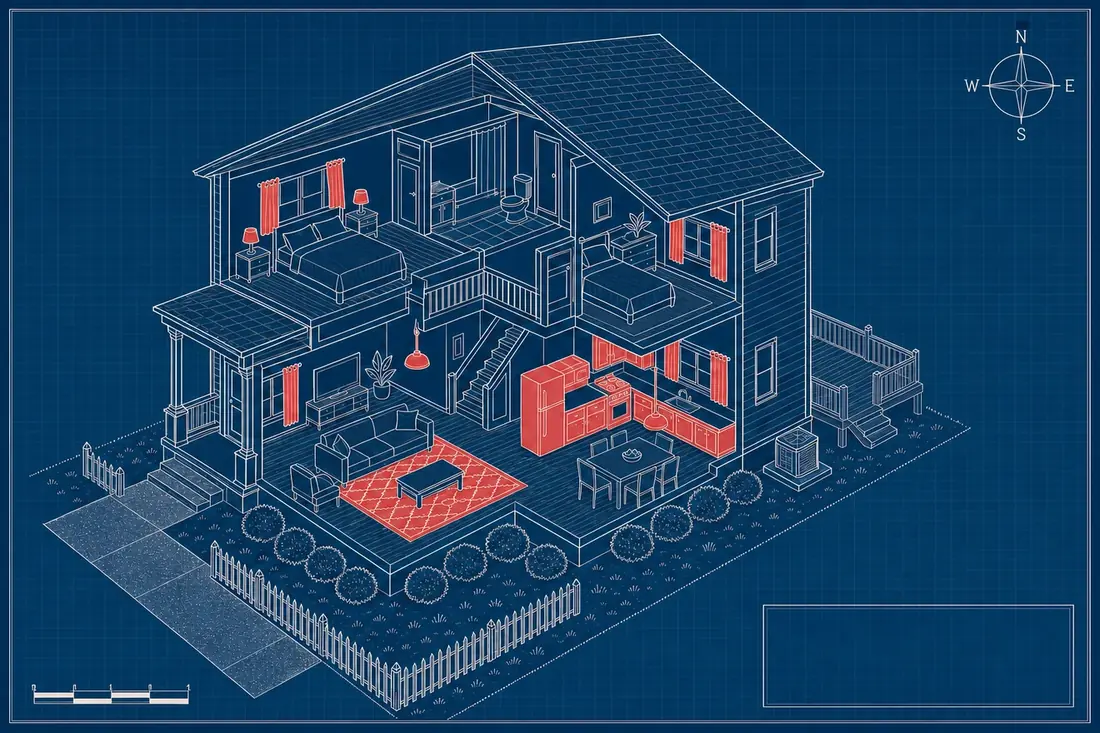
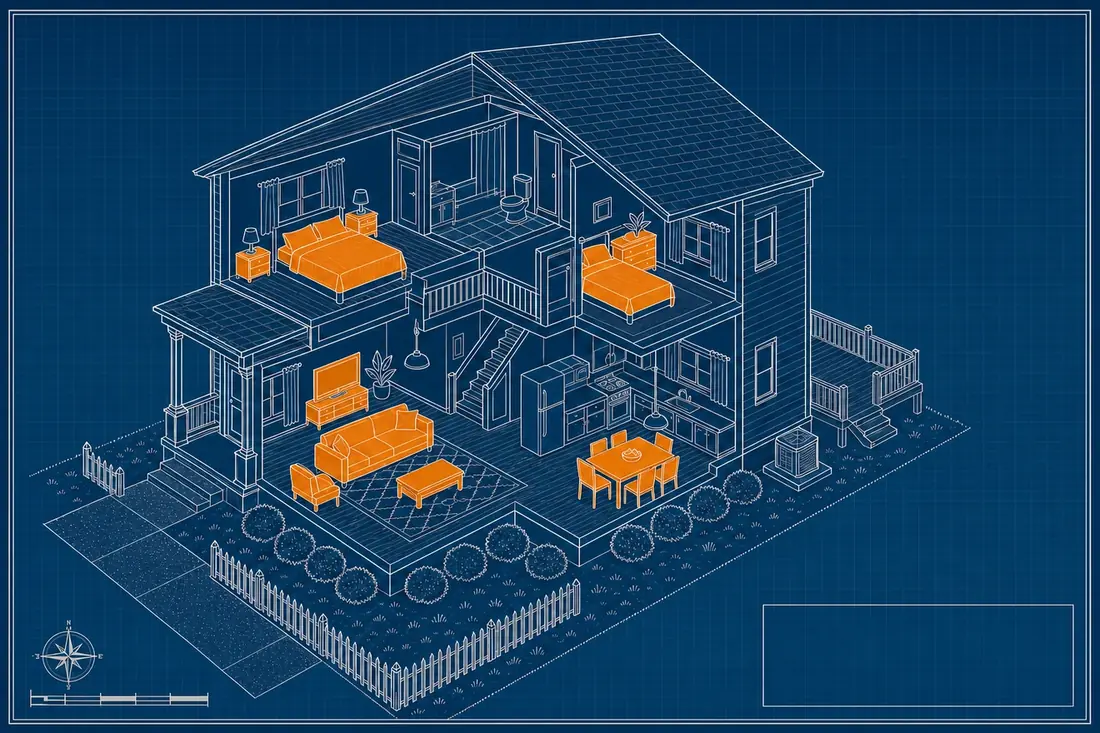
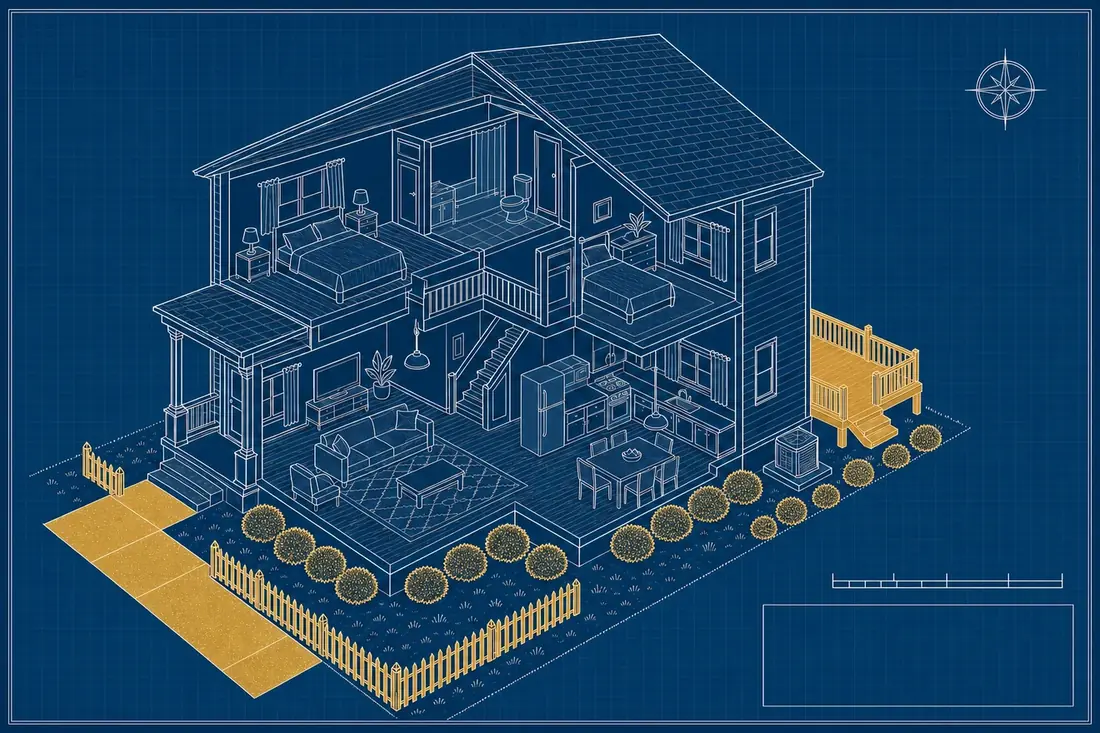
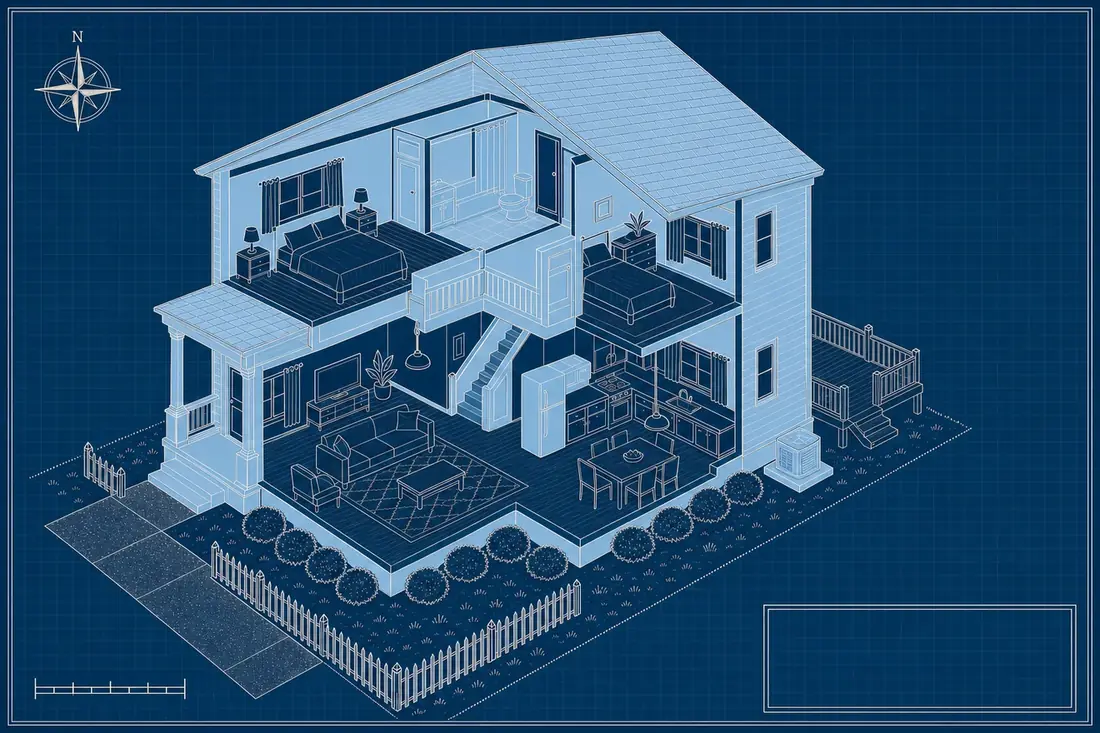
5-Year: carpet and flooring, cabinets, appliances, light fixtures, curtains 7-Year: furniture 15-Year: driveway, fencing, landscaping, deck 27.5/39-Year Shell: roof, load-bearing walls, foundation, central HVAC Get your free Preliminary Benefit Estimate See what a Maggie Valley cabin could accelerate with the free estimate at /qualify. Request Your Free Estimate »What Haywood County publishes about occupancy taxNorth Carolina counties levy room occupancy taxes under local acts, and Haywood County's is administered through its Tourism Development Authority. The authority's occupancy tax page describes a 4% tax collected on paid overnight stays countywide, including short-term rentals such as Airbnb or VRBO listings, and the tax is applied in addition to state and local sales taxes. The county's own Occupancy Tax page says that anyone renting out a home or vacation property for less than 90 days is required to collect it. Its FAQ says rental properties register with the county Finance Office and the authority, then file a monthly remittance form and pay by the 20th. Maggie Valley is one of the incorporated towns inside that county. These are operating rules, not depreciation rules, but they are part of the public record a Haywood rental runs on. What the assessor's file shows: land versus buildingNorth Carolina law, G.S. 105-317, tells appraisers to value land on its own factors, such as location, zoning and soil, and to value a building on its own, such as type of construction, age and replacement cost. So a county parcel record carries a land value and a building value as separate lines. Haywood County publishes those lines in an open parcel layer on its mapping server. On October 17, 2026 we pulled every parcel in that layer with a Maggie Valley, NC situs address, kept the 3,746 with both a land value and a building value above zero, and added them up. Land came to about $210 million and buildings to about $849 million, so buildings were about 80% of combined value and land about 20%. The median parcel was 83% building, and the middle half of parcels fell between 77% and 87%. A situs address is a postal address, so this includes homes outside the town limits. Two cautions. The values come from the county's last revaluation, which its Real Property page dates to 2021, and the county announced that its next one, delayed two years after Hurricane Helene, takes effect January 1, 2027. And the assessor's split is a reference point, not the allocation a purchase uses. A view lot with a modest cabin runs well above 20% land, and a larger cabin on a plain lot runs below it. Land is never depreciable, which is why the land line matters. The land value guide covers how the allocation gets set. Estimate the first-year deduction on a property hereA few questions and the building value give a preliminary first-year deduction range, using the same rule as our free calculator. The breakdown can be emailed to you, or you can book a 15-minute call. Step 1 of 3 What kind of property?
Who runs it day to day?
What is the average guest stay?
When did you buy it?
How many rentals do you own?
Across all of them, does your rental portfolio show taxable income overall?
Any of them likely to sell in the next few years?
Prefer to talk it through? Book straight from here. No form needed.
Steep lots, long decks and what goes in a cabin studyOn a steep Maggie Valley lot, the site work is a large part of the build. Long decks, a driveway cut into the slope, retaining walls, stone steps and exterior lighting are site items, separate from the structure, and they generally sort into the 15-year land improvement bucket. A stone fireplace's decorative facing is often 5-year property, separate from the chimney and firebox behind it. Inside, cabinetry, appliances, carpet and most flooring, and decorative lighting generally move to 5-year property. The log or timber shell, the roof structure and the central HVAC generally stay on the building's own schedule, 27.5 years or 39, and a short-term rental averaging stays of 7 days or less generally lands on 39 (see the 27.5 or 39 years guide). A study typically shifts 15 to 35% of a cabin's basis into the faster schedules. The cabin page and the site improvements page go through the components one at a time. Storm repairs are their own question. Whether replacing a damaged deck or roof is a repair or an improvement depends on the facts, and the after-renovation page explains how that line gets drawn. Ski weekends, leaf season and the 7-day testThe short-term rental exception under Reg. 1.469-1T(e)(3)(ii) turns on whether the average guest stay across the full year is 7 days or less. Ski weekends and leaf-season trips tend to run a few nights. Summer stays run longer. A property with that mix often blends to an average near the line, and the answer depends on the year's actual booking records. The average-stay guide shows the calculation. Material participation is the separate question. An owner who lives in Charlotte and uses a local manager faces a different count of hours than an owner who drives up to turn the cabin personally, since the manager's hours count in the comparison. The property manager page covers that. Which test a specific owner clears is a question for that owner's CPA, and it does not change what a depreciation study finds in the cabin. Hypothetical math, then a real estimateFor scale, take a hypothetical cabin with a building value of $400,000, land excluded. Our free estimate's rule for a short-term rental is 16% to 26% of building value, which gives $64,000 to $104,000 of estimated first-year deductions. The range assumes 100% bonus depreciation, which applies to property acquired after January 19, 2025. It is a deduction, not a cash figure, and an engineered study sets the real number. A free Preliminary Benefit Estimate at /qualify runs that rule on a specific cabin, and short-term rental studies work from listing photos with no site visit. For neighboring markets, see Asheville, the Smoky Mountains and Bryson City and Nantahala, or the full picture on the North Carolina hub. Frequently asked questionsWhat is the occupancy tax rate in Haywood County, NC? Haywood County's Tourism Development Authority describes a 4% occupancy tax on paid overnight stays countywide. The county's page says rentals of less than 90 days are subject to collection, with registration through the Finance Office and the authority. Is land or building a bigger share of value around Maggie Valley? On the county's parcel file, parcels with Maggie Valley addresses carry about 80% of combined assessed value in buildings and 20% in land, with the median parcel at 83% building. Individual lots vary, and the assessor's split is a reference point, not a purchase allocation. When does Haywood County's next reappraisal take effect? January 1, 2027. The county postponed it two years after Hurricane Helene, and its current values come from the 2021 revaluation. Does a steep Maggie Valley lot change a cost segregation study? It changes what is on the component list. Decks, retaining walls, driveways and steps are site work, generally on the 15-year schedule, and they are a larger share of a cabin on a slope. Do ski and leaf-season stays count toward the 7-day average? Every stay in the year counts. The test looks at the average across the full year, so short winter and fall trips and longer summer stays blend into one number. Get your free Preliminary Benefit Estimate Send the address or the listing link. We model the number first; you decide with it in hand. Request Your Free Estimate »Educational information, not tax advice. This page describes how federal
depreciation rules and tests work in general. Whether any rule fits your facts is a determination for
you and your CPA. Our study gives your CPA the engineering and the numbers to make that call.
Related guides: How Does Cost Segregation Work in Vacation... · Does Cost Segregation Work on a Poconos... · Cost Segregation for a Jersey Shore Rental... · Cost Segregation for a Pigeon Forge Cabin... · Cost Segregation for a Gatlinburg Rental...
More North Carolina markets: Cost Segregation for Brevard and... · Cost Segregation for Murphy and Cherokee... · Cost Segregation for an Outer Banks Rental... · Cost Segregation in North Carolina · Cost Segregation for Boone and Blowing... · Cost Segregation for Cashiers, Highlands... · All vacation markets
|