|
Cost Segregation for Commercial & Short-Term Rental Owners
|
Request a free estimate [email protected] |
Vacation Markets
Free Listing SEO Audit Paste your Airbnb or VRBO listing. Get a scored audit in 90 seconds. Audit My Listing »Minimum ROIOur study identifies at least 20x its fee in first-year deductions on commercial property, or at least 30x on a short-term rental, or it is free. |
Cost Segregation for Bryson City and Nantahala Gorge RentalsBryson City, the seat of Swain County, North Carolina, and the Nantahala Gorge a few miles west sit at the southern edge of Great Smoky Mountains National Park, a whitewater and river-recreation market distinct from Asheville or Tennessee's larger Smokies cabin developments. Cabins here cluster along the Tuckasegee and Nantahala rivers near the park boundary. A cost segregation study applies the same mechanics here as anywhere: reclassifying interior finishes and river-adjacent site work into 5-, 7-, and 15-year schedules instead of the standard 27.5-year residential shell. Key takeaways
Steven's Take Owners call me about a river cabin expecting the conversation to start with square footage, and it should start with water access instead. Docks, decking, retaining walls holding a lot against a riverbank, that is real basis a generic 27.5-year schedule buries right alongside the drywall. The process runs off listing photos precisely because a Bryson City owner is usually managing a rental two or three states from where they actually live, not standing on the property waiting for an engineer to show up. The estimate shows that owner what their specific components are worth before they spend anything finding out. Square footage is the wrong first question on a property like this. Steven Ellis, Founder Watch a log cabin rental get built and classified A hypothetical $600,000 three-bedroom log cabin goes up floor by floor, from the gravel drive and foundation to the game loft and the hot tub on the deck. Every component lands on its depreciation schedule as it is installed, and the year-one depreciation adds up on screen. Watch the 90-second walkthrough »A river-and-park market, not a resort townBryson City is the county seat of Swain County, North Carolina, sitting at the southern edge of Great Smoky Mountains National Park along the Tuckasegee River. The Nantahala Gorge, roughly 12 miles west, carries the Nantahala River through a whitewater run that draws rafting and kayaking traffic for much of the year, and the Great Smoky Mountains Railroad runs excursion trains out of town through the gorge and along the river. Fontana Lake sits nearby as well, adding another layer to the area's outdoor draw. None of that looks like Asheville's rental market an hour east, built on breweries, restaurants, and an arts scene inside a growing city. It also looks different from the denser cabin subdivisions on the Tennessee side of the park, covered on the Smoky Mountains cabins page. Bryson City and the Nantahala Gorge run smaller, more rural, and built specifically around the river and the park boundary. 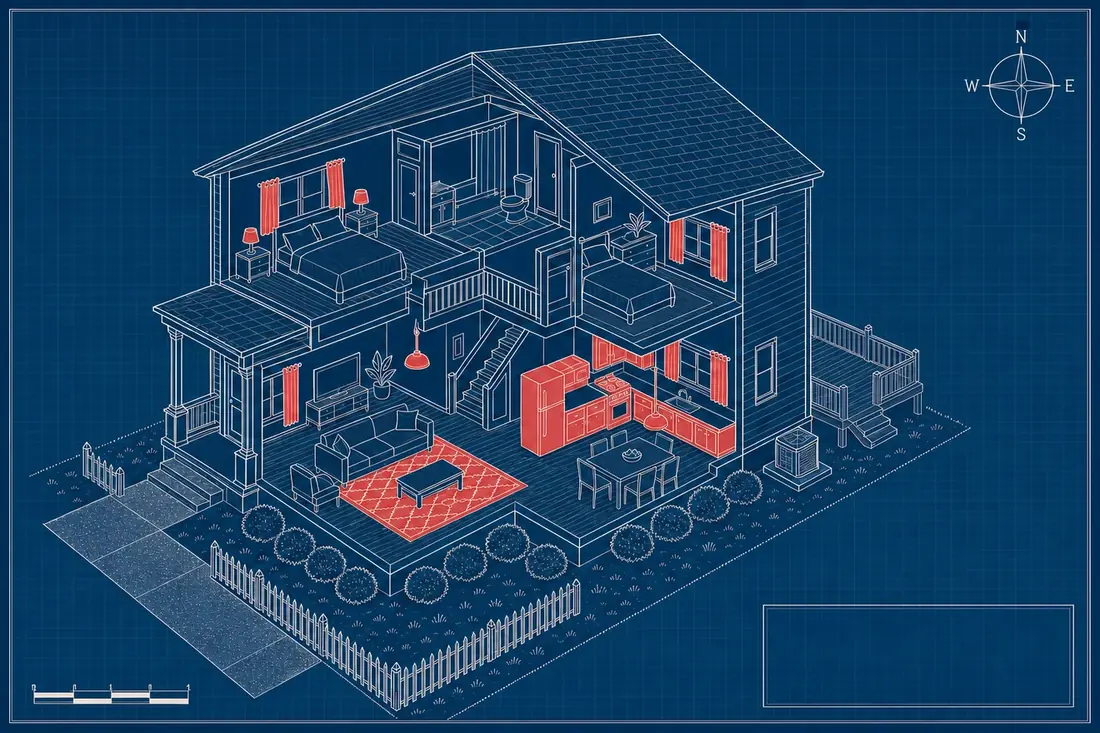
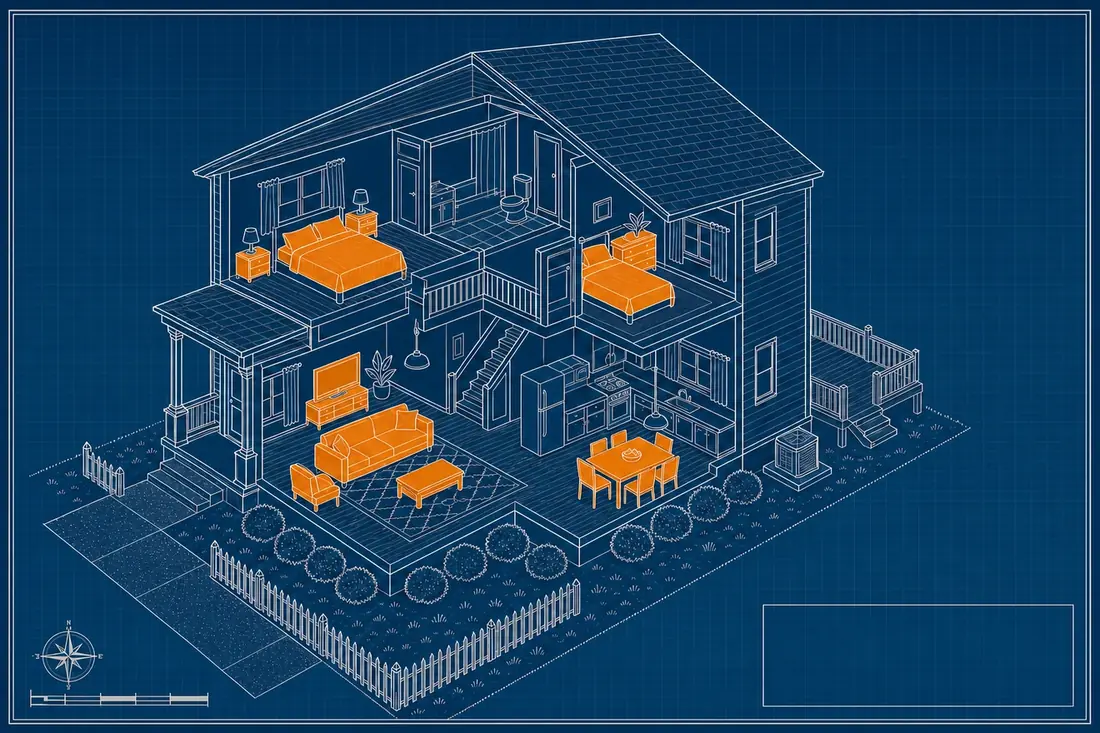
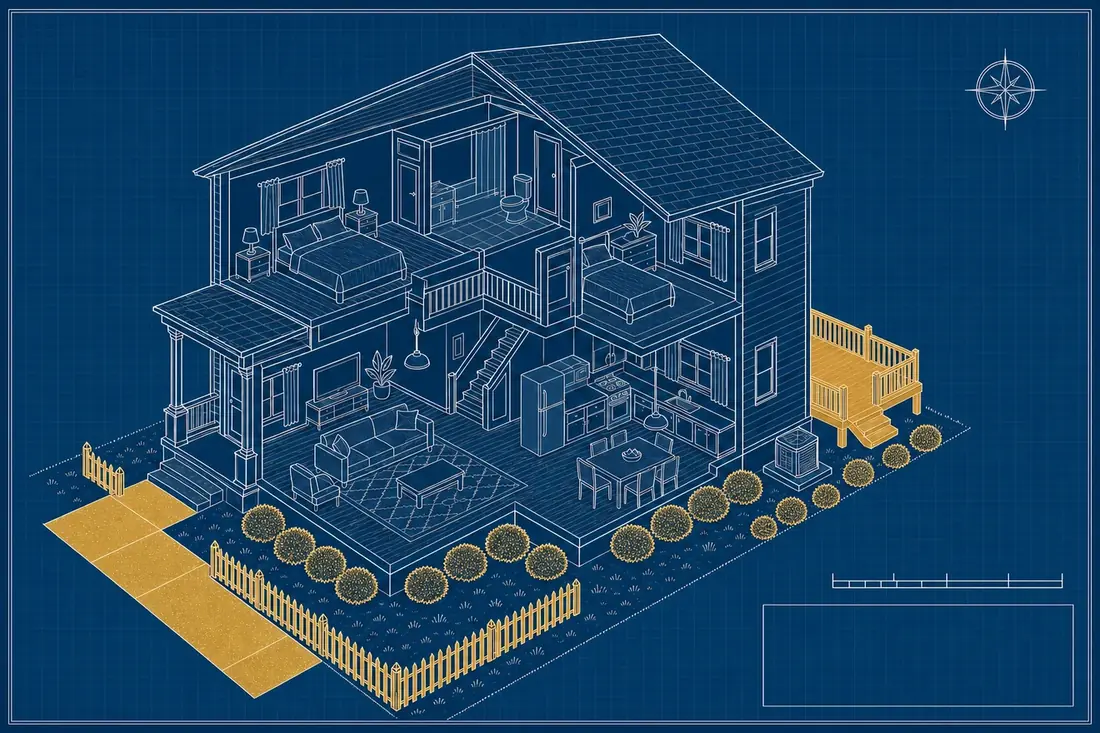
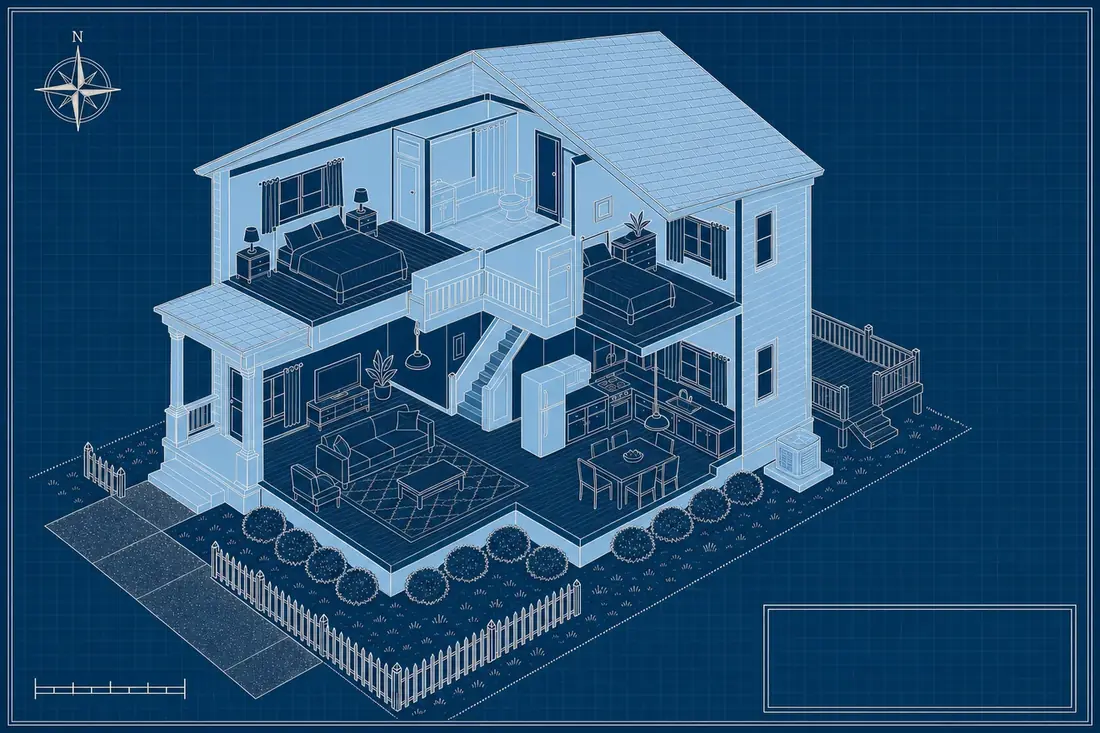
5-Year: carpet and flooring, cabinets, appliances, light fixtures, curtains 7-Year: furniture 15-Year: driveway, fencing, landscaping, deck 27.5/39-Year Shell: roof, load-bearing walls, foundation, central HVAC Get your free Preliminary Benefit Estimate See what a Bryson City or Nantahala Gorge rental could accelerate with the free estimate at /qualify. Request Your Free Estimate »Riverside cabins: what a study coversA cabin along the Tuckasegee or near the Nantahala Gorge gets classified the same way any short-term rental does, just with a component list shaped by river access. Cabinetry, flooring, and appliances fall into 5-year property. Certain furniture and freestanding fixtures fall into 7-year property. Riverside decking, a dock or a put-in point for kayaks and rafts, a gravel driveway cut into a wooded lot, a fire pit, and exterior lighting for a dark, tree-covered property generally fall into the 15-year land improvement bucket.
National forest and park-adjacent landSwain County is rural enough that municipal water and sewer service stops at Bryson City's town limits. Most riverside cabins and forest-bordering properties run on a private well and septic system, infrastructure that generally falls into the same 15-year land improvement category as the driveway or the deck, separate from the plumbing fixtures inside the house. Properties that border national forest or park land sometimes carry additional site work as well, a longer access road, retaining walls where the lot meets steeper terrain, none of which changes the underlying classification rules, only how much a study finds. The 60-Second Qualifier Four questions. Our engineering team's model shows the estimated first-year acceleration a study of your property would target, free, before you commit to anything. Take the Qualifier »A rafting season and the 7-day testThe Nantahala Gorge's rafting season runs from roughly spring through fall, tied to water releases and weather, and drives a strong pattern of weekend and short trips built around a day or two on the river. The off-season brings a quieter, more variable pattern, hikers using the park's Deep Creek entrance near Bryson City, leaf-season visitors, and longer stays from guests less focused on a single rafting trip. A property's average guest stay across the full tax year, the number that decides whether it falls under the short-term rental exception in Reg. 1.469-1T(e)(3)(ii), depends on how those two patterns actually mix across a given year. That average is calculated from the specific property's own full-year booking records, not from the area's general seasonal pattern. Material participation runs on the standard hour tests, 500-plus hours, substantially all the participation, or 100-plus hours and more than any other individual, cleaners and co-hosts included. A rafting-season property with heavy weekend turnover can mean more turnover events spread across a shorter window than a property that rents more evenly across the year. Deep Creek, waterfalls, and a second visitor typeThe rafting crowd heading to the Nantahala Gorge is only part of what fills a Bryson City rental calendar. The park's Deep Creek entrance sits right at the edge of town, drawing hikers to a cluster of waterfalls, Juney Whank Falls, Indian Creek Falls, and Toms Branch Falls, reachable on loop trails short enough for a half-day visit. That draws a different guest than a multi-day rafting trip, someone stopping for a night or two on a broader Smokies itinerary rather than someone booking specifically around a Nantahala Gorge outfitter's schedule. Fontana Lake, a reservoir on the Little Tennessee River bordering the park's southern edge, adds a third pattern again, boating and fishing traffic that behaves more like a lake market than a whitewater one. A single cabin can pick up all three visitor types across a season without changing anything about the property itself. What that means for a study is straightforward: the component list, decking, a dock if the property sits on Fontana Lake, riverside access if it sits on the Tuckasegee, gets built from what the specific property actually has, not from an assumption about which of the three draws brought the guest. The Great Smoky Mountains Railroad's excursion trains add a fourth, smaller strand to the mix, weekend and holiday-season riders who base themselves in Bryson City for a day trip rather than an outdoor-recreation stay. None of these patterns changes the underlying 5-, 7-, and 15-year classification rules. They change how a specific property's average stay and booking pattern actually look when it comes time to run the numbers. Getting a number for a Bryson City or Nantahala propertyEvery study, riverside cabin or forest-bordering property, is custom-priced to the specific building. On a recent engineered study, a $1,404,500 medical clinic basis produced $241,839 in first-year deductions for a $10,000 fee, a 24.2-to-1 ratio, a commercial example offered for scale rather than a claim about a residential cabin. A free Preliminary Benefit Estimate at /qualify models the likely number for a specific property before any commitment, and short-term rental studies work from listing photos, no site visit required. For a cabin owned for years already, the study runs through Form 3115 with a section 481(a) catch-up, covered in the look-back guide. See the full short-term rental overview for how the average-stay and material-participation tests work together, or the rest of the state's mountain and coastal markets on the North Carolina hub. Frequently asked questionsIs Bryson City part of the Asheville rental market? No. Bryson City and the Nantahala Gorge sit about an hour west of Asheville and run a different market entirely, built around whitewater rafting, river access, and proximity to Great Smoky Mountains National Park rather than an urban restaurant and arts scene. How is this different from the Smoky Mountains cabins page? That page covers the larger, denser cabin developments on the Tennessee side of the Smokies near Pigeon Forge and Gatlinburg. Bryson City and Nantahala sit on the North Carolina side, in Swain County, with a smaller-scale, more rural cabin market built around the river and the park's southern boundary. Do riverside docks and decking count toward the study? Yes. A dock, a kayak put-in point, or riverside decking generally falls into the 15-year land improvement category, the same bucket a driveway or a fire pit sits in, alongside the standard 5- and 7-year interior components. Does the Nantahala Gorge rafting season affect the 7-day rental test? It can, if the property books mostly short rafting-trip stays in season and different, sometimes longer, stays in the off-season. The test always runs on that specific property's actual full-year booking records, not on the area's general rafting calendar. What are the current short-term rental rules in Swain County? Registration and occupancy-tax rules can vary by town and county and can change over time. Check the current rules directly with Swain County or Bryson City before listing a property near the gorge or the park. Keep readingGet your free Preliminary Benefit Estimate Send the address or the listing link. We model the number first; you decide with it in hand. Request Your Free Estimate »Educational information, not tax advice. This page describes how federal
depreciation rules and tests work in general. Whether any rule fits your facts is a determination for
you and your CPA. Our study gives your CPA the engineering and the numbers to make that call.
Related guides: How Does Cost Segregation Work in Vacation... · Does Cost Segregation Work on a Poconos... · Cost Segregation for a Jersey Shore Rental... · Cost Segregation for a Pigeon Forge Cabin... · Cost Segregation for a Gatlinburg Rental...
More North Carolina markets: Cost Segregation for Lake Lure and Chimney... · Cost Segregation for Emerald Isle and the... · Cost Segregation for Ocean Isle and Sunset... · Cost Segregation for an Outer Banks Rental... · Cost Segregation in North Carolina · Cost Segregation for Boone and Blowing... · All vacation markets
|
Copyright © 2026 Basis Property Group | Philadelphia, Pennsylvania | Studies in all 50 states
Popular guides: Airbnb & STR | Do I Qualify? | What a Study Costs | Audit Risk | When to Do It | Real Examples
About | Careers | Guides | Articles | Site Map | Privacy Policy | Terms of Service
You are visitor 0148293 | Last updated: August 2026 | Best viewed at 1024x768
Content reviewed against IRS Publication 946, Treasury Regulation §1.168, and the IRS Cost Segregation Audit Techniques Guide. For educational purposes only; this site does not constitute tax advice. Consult your CPA before filing. Not affiliated with the IRS.