|
Cost Segregation for Commercial & Short-Term Rental Owners
|
Request a free estimate [email protected] |
Vacation Markets
Free Listing SEO Audit Paste your Airbnb or VRBO listing. Get a scored audit in 90 seconds. Audit My Listing »Minimum ROIOur study identifies at least 20x its fee in first-year deductions on commercial property, or at least 30x on a short-term rental, or it is free. |
Cost Segregation for an Ocean City, Maryland Rental PropertyYes. A short-term rental in Ocean City, Maryland, in Worcester County, qualifies for a cost segregation study the same as any rental property, and it is a different town in a different state from Ocean City, New Jersey. The market splits along the inlet: high-rise and mid-rise condo towers dominate north of it, while older single-family homes and duplexes make up the downtown section south of it. A study's scope depends heavily on which side of that line a property sits. Key takeaways
Steven's Take Ocean City, Maryland splits cleanly at the inlet, condo towers on one side, older single-family homes and duplexes on the other, and that line matters more than the town's name does. A condo study generally reaches the unit interior; a house study reaches the whole lot, site work included. This page runs separate from Ocean City, New Jersey for the obvious reason, and separate in its own right because an owner north of the inlet and an owner south of it are not buying the same kind of study even though they mail their taxes to the same town. The inlet decides more about a study's scope than the shared name does. Steven Ellis, Founder Watch a short-term rental get built and classified A hypothetical $3.25 million Sedona vacation rental goes up piece by piece, from the four suites to the pool, hot tub and pickleball court. Every component lands on its depreciation schedule as it is installed, and the year-one depreciation adds up on screen. Watch the 90-second walkthrough »Not the New Jersey oneOcean City, Maryland sits in Worcester County, on Maryland's short stretch of Atlantic coastline, and shares its name with, but not its state or county with, Ocean City, New Jersey further up the coast. Maryland's Ocean City is the state's only true oceanfront resort town, and it draws heavily from Washington DC, Baltimore, and Philadelphia, similar drive-to range to Deep Creek Lake on the opposite side of the state, though the two markets could not look more different, one an oceanfront resort town, the other a four-season mountain lake. It is common enough for an owner to hold property in both corners of Maryland, a pattern worth noting rather than a statistic. 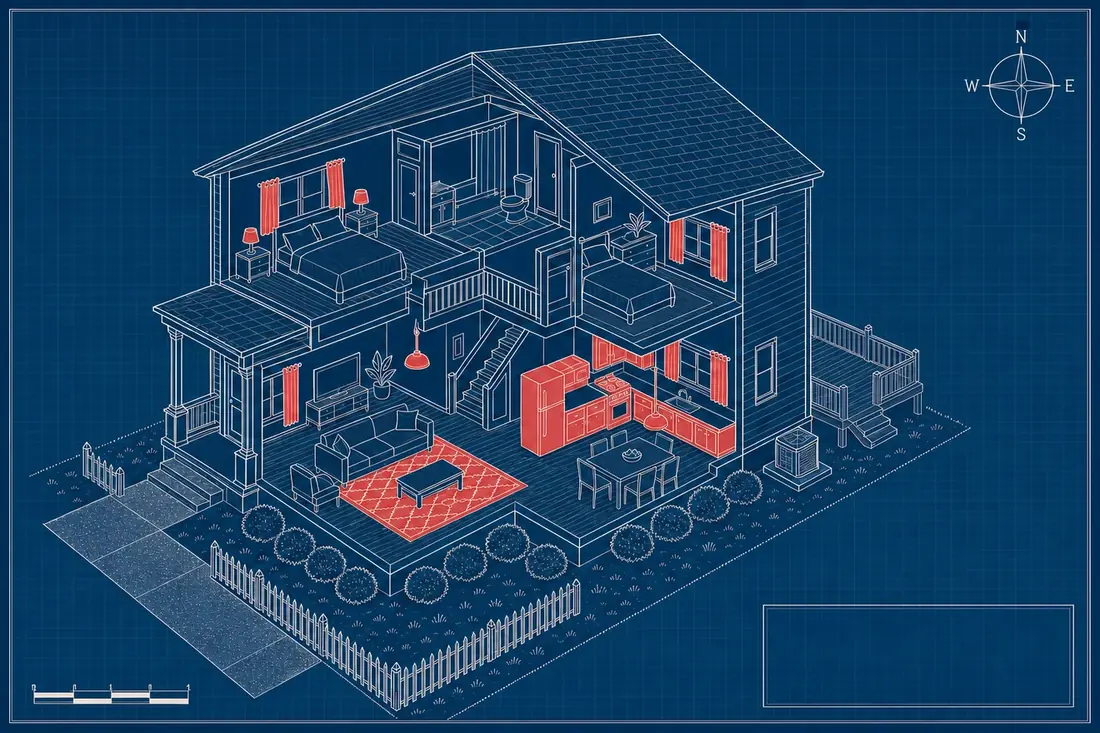
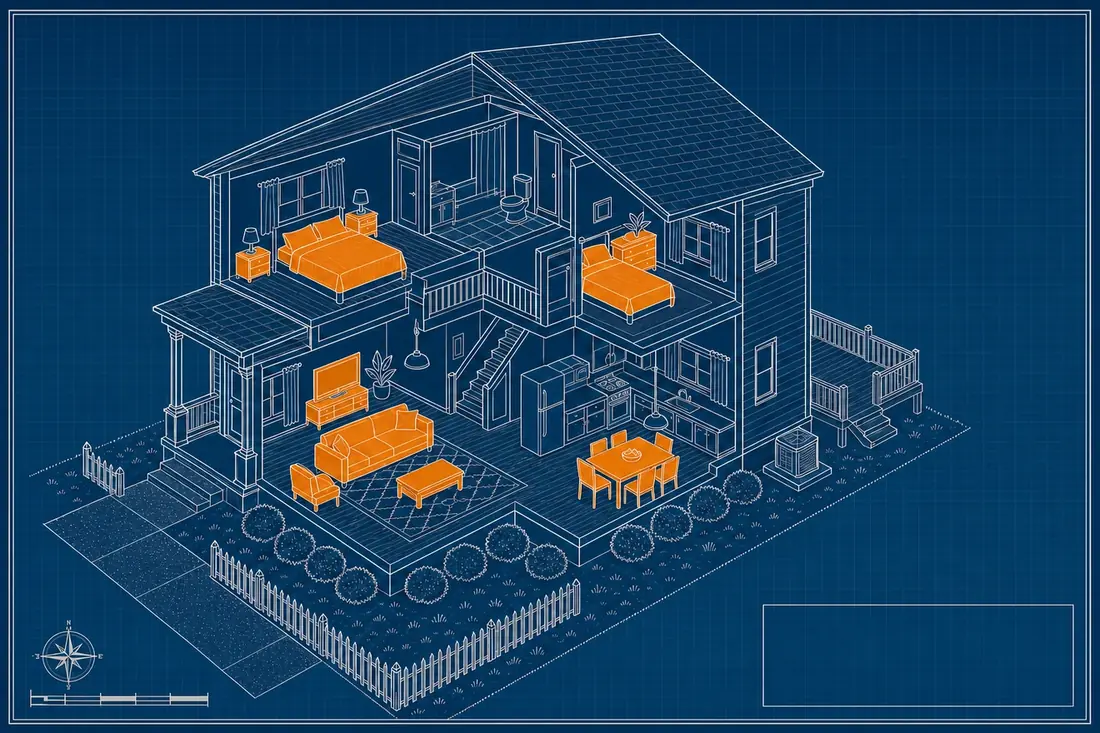
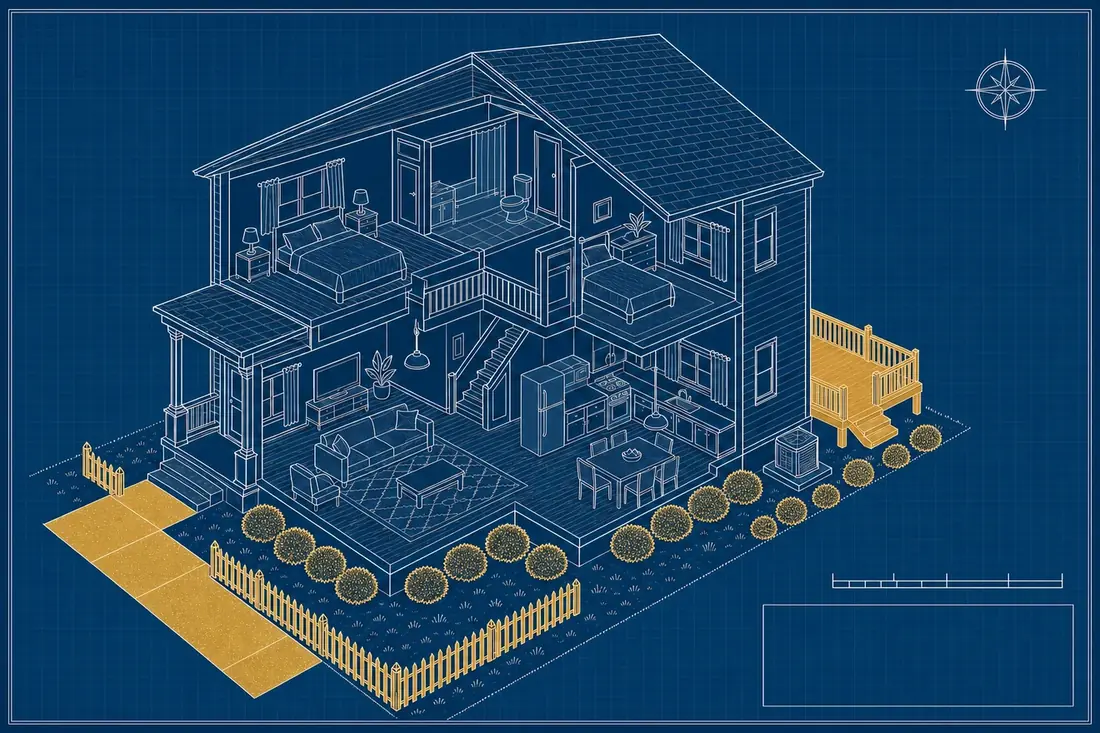
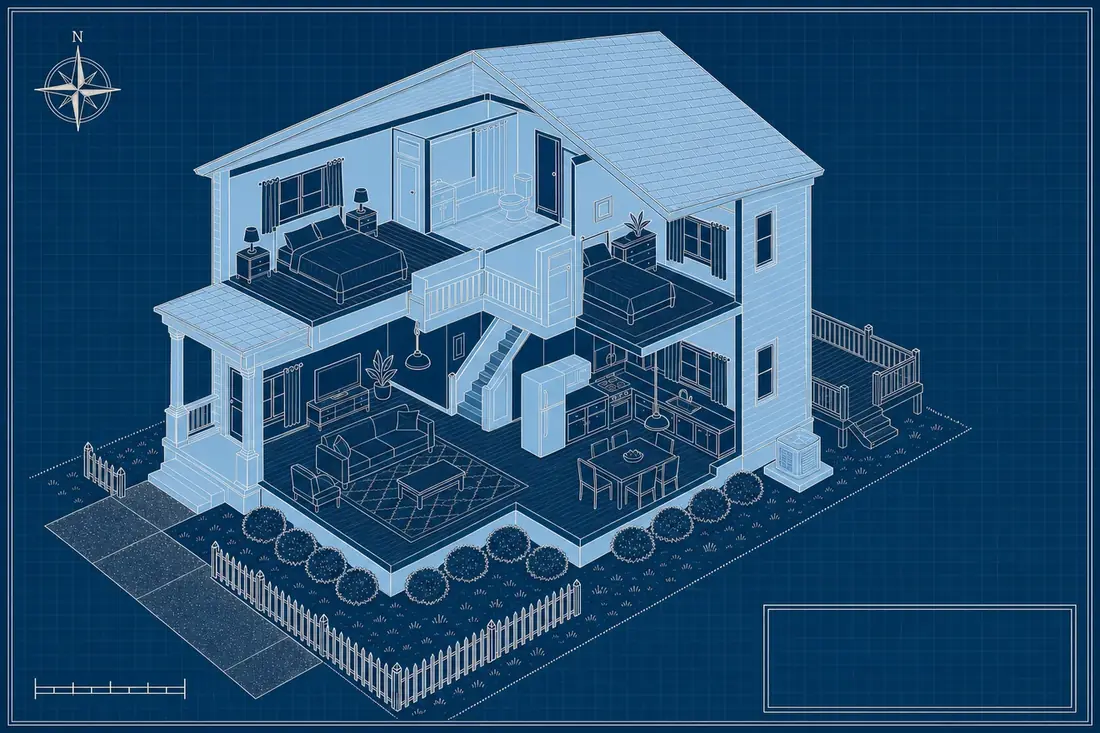
5-Year: carpet and flooring, cabinets, appliances, light fixtures, curtains 7-Year: furniture 15-Year: driveway, fencing, landscaping, deck 27.5/39-Year Shell: roof, load-bearing walls, foundation, central HVAC Get your free Preliminary Benefit Estimate See what a north-end condo or a downtown house could accelerate with the free estimate at /qualify. Request Your Free Estimate »North of the inlet and south of it are different marketsOcean City's rental stock splits sharply along the inlet at the town's southern end. North of the inlet, the skyline runs to high-rise and mid-rise condo towers, stacked units with shared building systems, elevators, and amenities. South of the inlet, in the older downtown section near the boardwalk, the stock runs to single-family homes and duplexes on individually owned lots, closer in character to a traditional shore town. That split changes what a study reaches. A condo unit in a north-end tower generally scopes to the interior the owner individually owns, since the building shell, elevators, and any shared pool or amenity deck belong to the condo association. A downtown single-family house or duplex scopes to the whole lot the owner holds: the structure, the site work, and everything on it. What reclassifies on either side of the inlet
A downtown house near Assateague Island's northern approach, just south of town, sometimes carries dune-adjacent site work, boardwalk-style decking or a walkover, similar to what shows up on the Long Beach Island page further up the coast, though Assateague itself is a National Seashore, not part of any rental property's own basis. The weekly summer market and the 7-day testOcean City runs the standard mid-Atlantic weekly summer rental calendar, Saturday-to-Saturday bookings through peak season, whether the property is a north-end condo or a downtown house. A full season of 7-night stays averages to a 7-day stay, right at the threshold Reg. 1.469-1T(e)(3)(ii) sets for the short-term rental exception, while shorter shoulder-season bookings in spring and fall tend to pull the yearly average down. A north-end condo tower is more likely to run through a large-scale, on-site rental management operation than a downtown single-family house, where an owner is more likely to self-manage or use a smaller local agency. That distinction is relevant to material participation, since the hours a management company logs count against the owner under the 100-hour test, one of several tests used to determine whether rental losses can offset other income. The 60-Second Qualifier Four questions. Our engineering team's model shows the estimated first-year acceleration a study of your property would target, free, before you commit to anything. Take the Qualifier »Renovated condo towers and older downtown housesMany of the north-end condo towers went up decades ago and have since gone through unit-level renovations, a new kitchen, new flooring, updated bathrooms, sometimes more than once. When an owner replaces a component that was already on the books, the old cabinetry or the old kitchen fixtures torn out to make way for the renovation, the remaining basis of that old component can generally be written off under the partial asset disposition rule (Treas. Reg. 1.168(i)-8), but only in the tax year the replacement happens. Miss that year and the election disappears; the old component's basis stays buried in the building for the rest of its depreciation schedule, stacked underneath whatever replaced it. South of the inlet, a downtown house or duplex bought years ago and never studied is a candidate for a look-back study instead, claimed through Form 3115 with a section 481(a) catch-up deduction in the current tax year rather than through amended returns filed one by one. And an owner who reserves a personal week or two on top of renting the property out should keep Section 280A in mind, which limits deductions once personal use exceeds the greater of 14 days or 10% of the days the property is actually rented. What the numbers look like at commercial scaleA recent engineered study on a mid-rise office building produced $479,220 in first-year deductions on a $2,971,345 building basis for a $12,000 fee, a 39.9-to-1 ratio, offered here as a scale reference given how much of Ocean City's own rental stock is mid-rise or high-rise construction, though a residential condo unit and a mid-rise office run at very different scales. A study typically shifts 15 to 35% of a building's basis into faster schedules regardless of scale, with fully finished, amenity-heavy units on either side of the inlet tending toward the higher end. Getting a study started on either side of the inletA short-term rental study works from listing photos, whether the property is a north-end condo tower unit or a downtown house near the boardwalk. No site visit, no owner homework list. Every study is custom-priced to the property's actual scope, with turnaround normally running 1 to 2 weeks for a residential rental, 2 to 3 weeks during tax season, and Basis guarantees at least 30 times the fee in first-year deductions on a short-term rental, or the study is free. See the Jersey Shore's version of this same market on the Ocean City, NJ page, a very different Maryland market on the Deep Creek Lake page, or the full Airbnb and short-term rental overview for the mechanics behind every market Basis studies. Start the 60-second qualifier at /qualify to see the number for a specific property. Frequently asked questionsIs Ocean City, Maryland the same as Ocean City, New Jersey? No. They are two different towns in two different states and counties, Worcester County, Maryland and Cape May County, New Jersey. The federal depreciation rules a cost segregation study applies are identical in both. Does a condo tower unit north of the inlet get studied differently than a downtown house? Yes, in scope. A condo unit's study generally reaches the interior the owner individually owns, since the building shell and shared amenities belong to the association. A house's study reaches the full lot and structure. Is Assateague Island part of an Ocean City rental property's basis? No. Assateague Island is a National Seashore just south of town, separate from any individual rental property. A property near that end of town may carry its own dune-adjacent site work, which is what a study actually classifies. How does the weekly summer season affect the passive-loss rules here? A full season of 7-night stays averages to a 7-day stay, meeting the threshold for the short-term rental exception under section 469. A separate material participation test still needs to be cleared for losses to be non-passive. Do owners who have a Deep Creek Lake property also often own in Ocean City, MD? It is a pattern some Maryland owners follow, a mountain property and a beach property on opposite sides of the state, though it is not a statistic and does not change how either property's depreciation is studied. Keep readingGet your free Preliminary Benefit Estimate Send the address or the listing link. We model the number first; you decide with it in hand. Request Your Free Estimate »Educational information, not tax advice. This page describes how federal
depreciation rules and tests work in general. Whether any rule fits your facts is a determination for
you and your CPA. Our study gives your CPA the engineering and the numbers to make that call.
Related guides: How Does Cost Segregation Work in Vacation... · Does Cost Segregation Work on a Poconos... · Cost Segregation for a Jersey Shore Rental... · Cost Segregation for a Pigeon Forge Cabin... · Cost Segregation for a Gatlinburg Rental...
More Mid-Atlantic Shore markets: Cost Segregation Services in Delaware... · Cost Segregation for a Jersey Shore Rental... · Cost Segregation for Cape May County Shore... · Cost Segregation for a Deep Creek Lake... · Cost Segregation for a Long Beach Island... · Cost Segregation for an Ocean City, New... · All vacation markets
|
Copyright © 2026 Basis Property Group | Philadelphia, Pennsylvania | Studies in all 50 states
Popular guides: Airbnb & STR | Do I Qualify? | What a Study Costs | Audit Risk | When to Do It | Real Examples
About | Careers | Guides | Articles | Site Map | Privacy Policy | Terms of Service
You are visitor 0148293 | Last updated: August 2026 | Best viewed at 1024x768
Content reviewed against IRS Publication 946, Treasury Regulation §1.168, and the IRS Cost Segregation Audit Techniques Guide. For educational purposes only; this site does not constitute tax advice. Consult your CPA before filing. Not affiliated with the IRS.