|
Cost Segregation for Commercial & Short-Term Rental Owners
|
Request a free estimate [email protected] |
Vacation Markets
Free Listing SEO Audit Paste your Airbnb or VRBO listing. Get a scored audit in 90 seconds. Audit My Listing »Minimum ROIOur study identifies at least 20x its fee in first-year deductions on commercial property, or at least 30x on a short-term rental, or it is free. |
Cost Segregation for a Sevierville or Wears Valley CabinYes. A short-term rental cabin in Sevierville or Wears Valley, both in Sevier County, Tennessee, qualifies for a cost segregation study the same as any rental. Sevierville's newer cabin subdivisions often share a pool or clubhouse with other units, which changes what a study can reach on that specific property. Wears Valley's steeper, more secluded lots tend to carry more site work: retaining walls, longer driveways, drainage. Both run the same nightly-booking pattern as the rest of Sevier County. Key takeaways
Steven's Take A Sevierville cabin in a planned development and a Wears Valley cabin on a steep, wooded lot get scoped differently even though they sit fifteen minutes apart, and that is the distinction a generic Smokies page glosses over every time. Shared pools and clubhouses do not belong to one owner's basis; retaining walls and long gravel driveways on a secluded lot do. Our engineering team works from the actual property record, not the cabin-market reputation, because Sevier County runs thousands of these units and no two owners end up classifying the same components even when the nightly rate looks identical. Two cabins fifteen minutes apart can carry two completely different numbers. Steven Ellis, Founder Watch a log cabin rental get built and classified A hypothetical $600,000 three-bedroom log cabin goes up floor by floor, from the gravel drive and foundation to the game loft and the hot tub on the deck. Every component lands on its depreciation schedule as it is installed, and the year-one depreciation adds up on screen. Watch the 90-second walkthrough »Two gateway towns, two different building patternsSevierville and Wears Valley sit on opposite sides of the same Sevier County, Tennessee gateway into the Great Smoky Mountains, a few miles from Pigeon Forge and Gatlinburg and covered at the range level on the Smoky Mountains cabins page. Sevierville itself is the flatter, more commercial of the two, closer to the Sevierville Parkway corridor and to the outlet and entertainment strip that spills over from Pigeon Forge. A lot of its short-term rental stock is newer construction, built inside planned cabin developments with a shared amenity center rather than standing alone on its own lot. Wears Valley sits in the narrow valley between Pigeon Forge and Townsend, quieter and more rural, with individual cabins spread across steep, wooded parcels rather than clustered subdivisions. County government treats both the same way: Sevier County runs its own short-term rental unit permit program, a fact confirmed on the county's own site (seviercountytn.org), separate from the federal depreciation rules described below. 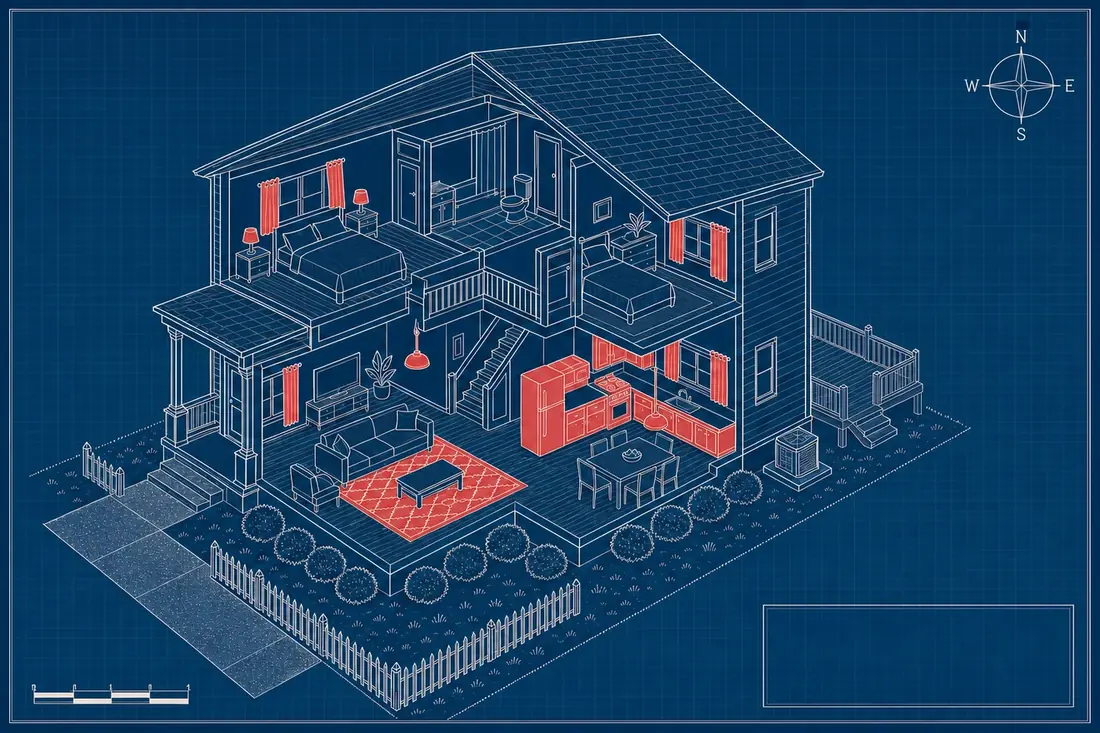
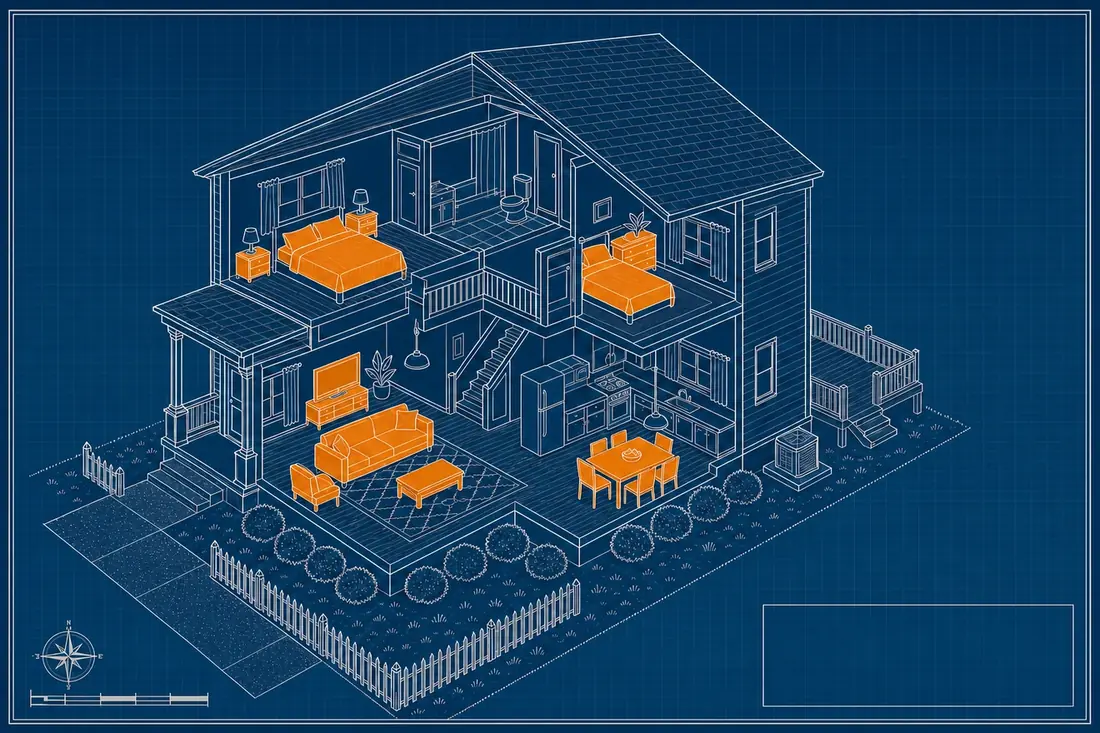
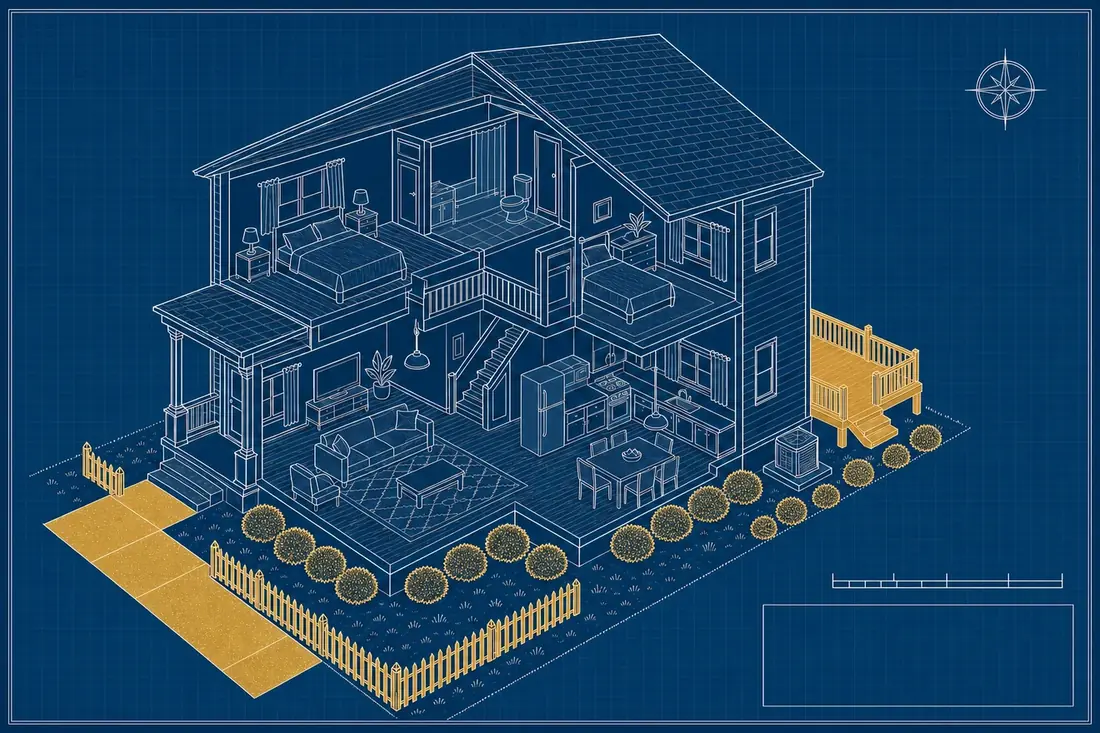
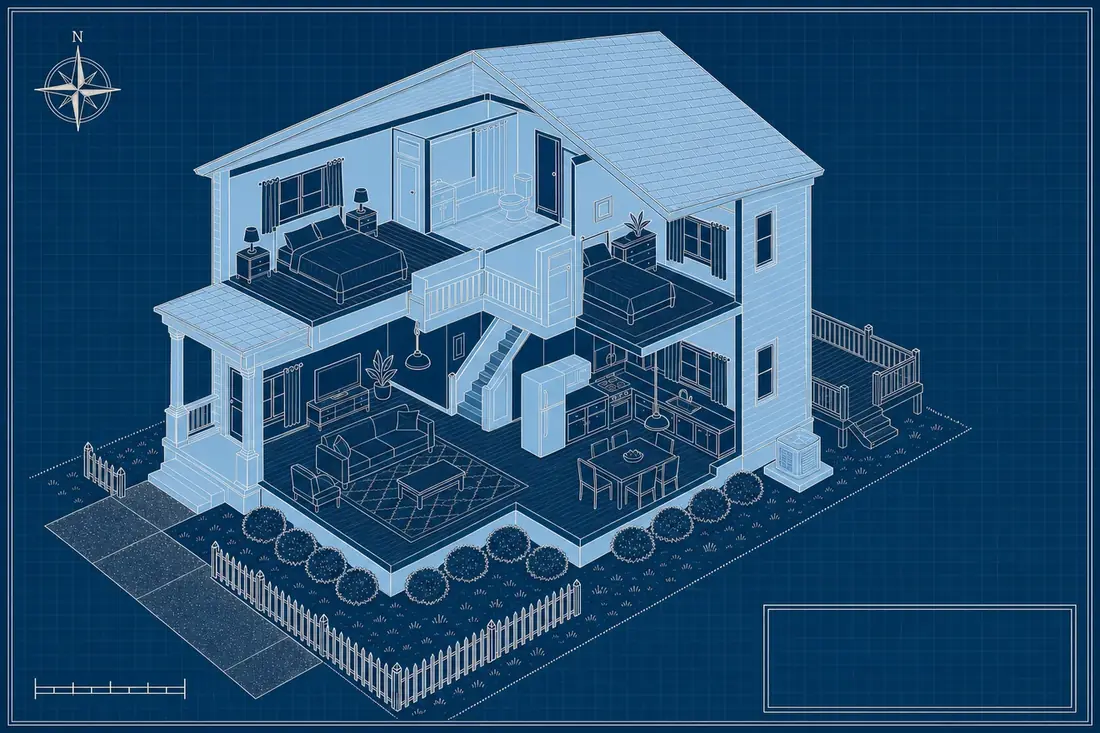
5-Year: carpet and flooring, cabinets, appliances, light fixtures, curtains 7-Year: furniture 15-Year: driveway, fencing, landscaping, deck 27.5/39-Year Shell: roof, load-bearing walls, foundation, central HVAC Get your free Preliminary Benefit Estimate See what a specific Sevierville or Wears Valley cabin's component list adds up to with the free estimate at /qualify. Request Your Free Estimate »When a cabin shares a pool with ten other cabinsSevierville's newer developments frequently sell individual cabins with access to a development-wide clubhouse, pool, or hot tub building, an arrangement closer to a homeowners association than a standalone rental. That distinction matters for a study. An engineering study on an individually owned cabin reaches everything that cabin's owner actually owns: the interior finishes, the deck, the driveway, a private hot tub if the unit has one. A shared clubhouse, a shared pool, or shared parking areas that belong to the development's HOA generally sit outside that single owner's depreciable basis, the same way a condo building's common elements sit outside a unit owner's basis in a beach market. A cabin with its own private hot tub, its own deck, and its own driveway, sitting inside a development that also happens to have a shared pool down the road, still gets the full benefit of everything it individually owns. The shared amenity simply is not part of that calculation. What a steep Wears Valley lot addsA standalone Wears Valley cabin on a steep, wooded lot tends to carry more site work than a flatter Sevierville lot in a graded subdivision. Retaining walls to hold a driveway or a parking pad on a slope, longer gravel or paved drives climbing to the cabin, extra drainage work to manage runoff on a hillside, these are common on a secluded mountain lot and generally fall into the 15-year land improvement bucket alongside fencing and landscaping, separate from the 27.5-year structural shell.
A cabin with more slope-related site work does not automatically carry more total basis than a flatter one, since a Sevierville subdivision cabin often makes up the difference in amenity-heavy interiors, game rooms, home theaters, multiple primary suites. Which property carries more reclassifiable basis comes down to the specific components on that specific cabin, not the town it sits in. The same nightly math as the rest of Sevier CountyBoth towns run the nightly booking pattern common across Sevier County: two or three-night stays rather than full weeks, which tends to keep the average period of customer use, the test under Reg. 1.469-1T(e)(3)(ii), well under the 7-day line that defines the short-term rental exception. A high volume of short bookings is naturally resistant to drifting over that line, since no single booking carries much weight in a full year's average. Whether a specific cabin's actual bookings clear the test still depends on that property's own records, a question for the owner's CPA to run. Clearing the average-stay test only opens the door to the second requirement: material participation, generally 500 hours, substantially all the participation, or 100 hours and more than any other individual, cleaners and co-hosts included. A Sevierville development that uses a shared, on-site management company for turnovers puts more hours on that company's side of the comparison, the same dynamic that shows up at any professionally managed rental. The 60-Second Qualifier Four questions. Our engineering team's model shows the estimated first-year acceleration a study of your property would target, free, before you commit to anything. Take the Qualifier »New construction and older mountain cabins side by sideSevierville's cabin developments skew newer, many built in the past decade specifically to rent, with cost records and building plans that are usually complete and recent, which makes an engineering study's classification work more straightforward. A newly built cabin can get a study the year it is placed in service, no purchase required first. Wears Valley carries more of the older housing stock, cabins bought or built decades ago before an owner ever heard of cost segregation. That is exactly what a look-back study is built for. A property owned for years is claimed through Form 3115, an automatic consent form, with the missed depreciation caught up in one section 481(a) deduction in the current tax year rather than through amended returns filed one by one. What the numbers look like at commercial scaleA recent engineered study on a free-standing restaurant produced $599,678 in first-year deductions on a $2,804,440 building basis for a $9,000 fee, a 66.6-to-1 ratio, a commercial example offered purely as a scale reference. A residential cabin runs at a different scale entirely, but the same underlying math: a study typically shifts 15 to 35% of a building's basis into faster schedules, and an amenity-dense cabin, whether it is Sevierville's shared-amenity build or a Wears Valley cabin with its own hot tub and theater room, tends to land toward the higher end of that range. Getting a study started for either townThe process does not change based on which side of the valley a cabin sits on: listing photos feed the classification, no site visit, no owner homework list. Every study is custom-priced to the property's size, age, and full component mix, with turnaround normally running 1 to 2 weeks for a residential short-term rental, 2 to 3 weeks during the busiest part of tax season. Basis guarantees at least 30 times the fee in first-year deductions on a short-term rental, or the study is free. See the neighboring Pigeon Forge and Gatlinburg pages for how the same nightly math plays out a few miles over, or the full Airbnb and short-term rental overview for the mechanics behind every market Basis studies. The 60-second qualifier at /qualify is the place to start for a specific cabin. Frequently asked questionsDoes a shared pool in a Sevierville cabin development count toward my cost segregation study? Generally no, if the pool belongs to the development's homeowners association rather than the individual owner. A study reaches what that specific owner actually owns: the cabin's interior, its private deck or hot tub, and its own driveway, not amenities shared across the development. Do steep Wears Valley lots qualify for more depreciation than flat Sevierville lots? Not automatically. A steep lot often carries more land-improvement basis, retaining walls, extended drives, drainage, but a flatter subdivision cabin can carry more interior amenity basis instead. The total depends on the specific components each property has, not the terrain alone. Does Sevier County require a short-term rental permit? Sevier County runs its own short-term rental unit permit program, confirmed on the county's official site. That permitting is separate from federal depreciation rules; check the county's current requirements before listing a property. Can a newly built Sevierville cabin get a cost segregation study right away? Yes. Cost segregation applies to new construction the year a property is placed in service. A newly built cabin does not need to be purchased or aged first; the study can be built from listing photos and the property's original construction records. Is a hot tub in a Wears Valley cabin depreciated differently than one in Sevierville? No. A hot tub is generally 5-year property in an engineered study regardless of which town or which lot type it sits on. Location changes the site work and amenity mix around it, not the depreciation class of the hot tub itself. Keep readingGet your free Preliminary Benefit Estimate Send the address or the listing link. We model the number first; you decide with it in hand. Request Your Free Estimate »Educational information, not tax advice. This page describes how federal
depreciation rules and tests work in general. Whether any rule fits your facts is a determination for
you and your CPA. Our study gives your CPA the engineering and the numbers to make that call.
Related guides: How Does Cost Segregation Work in Vacation... · Does Cost Segregation Work on a Poconos... · Cost Segregation for a Jersey Shore Rental... · Cost Segregation for a Pigeon Forge Cabin... · Cost Segregation for a Gatlinburg Rental...
More Southern Appalachians markets: Cost Segregation for a Pigeon Forge Cabin... · Cost Segregation for a Gatlinburg Rental... · Cost Segregation for a Smoky Mountain... · Does Cost Segregation Work for a Blue... · Cost Segregation in Myrtle Beach... · Cost Segregation for Hilton Head Island... · All vacation markets
|
Copyright © 2026 Basis Property Group | Philadelphia, Pennsylvania | Studies in all 50 states
Popular guides: Airbnb & STR | Do I Qualify? | What a Study Costs | Audit Risk | When to Do It | Real Examples
About | Careers | Guides | Articles | Site Map | Privacy Policy | Terms of Service
You are visitor 0148293 | Last updated: August 2026 | Best viewed at 1024x768
Content reviewed against IRS Publication 946, Treasury Regulation §1.168, and the IRS Cost Segregation Audit Techniques Guide. For educational purposes only; this site does not constitute tax advice. Consult your CPA before filing. Not affiliated with the IRS.