|
Cost Segregation for Commercial & Short-Term Rental Owners
|
Request a free estimate [email protected] |
Vacation Markets
Free Listing SEO Audit Paste your Airbnb or VRBO listing. Get a scored audit in 90 seconds. Audit My Listing »FREE Estimate Is there a first-year deduction sitting in your building? No cost, no obligation. Request Yours »Minimum ROIOur study identifies at least 20x its fee in first-year deductions on commercial property, or at least 30x on a short-term rental, or it is free. |
Cost Segregation for a Texas Hill Country Rental PropertyQuick answer Yes. A Texas Hill Country short-term rental in Gillespie, Hays, or Comal County has real components to reclassify, cabinetry, flooring, a hot tub, a covered porch, all candidates for 5-, 7-, or 15-year depreciation instead of the building's 27.5/39-year schedule. Hill Country properties often sit on more acreage than a typical rental, which makes the land-versus-building allocation, the step that excludes land value before any depreciation category applies, a bigger factor here than on a small lot. Own a Texas Hill Country rental? See the first-year deduction range a study would look for. 30 seconds, no email to see the range. Start the check ↓Key takeaways
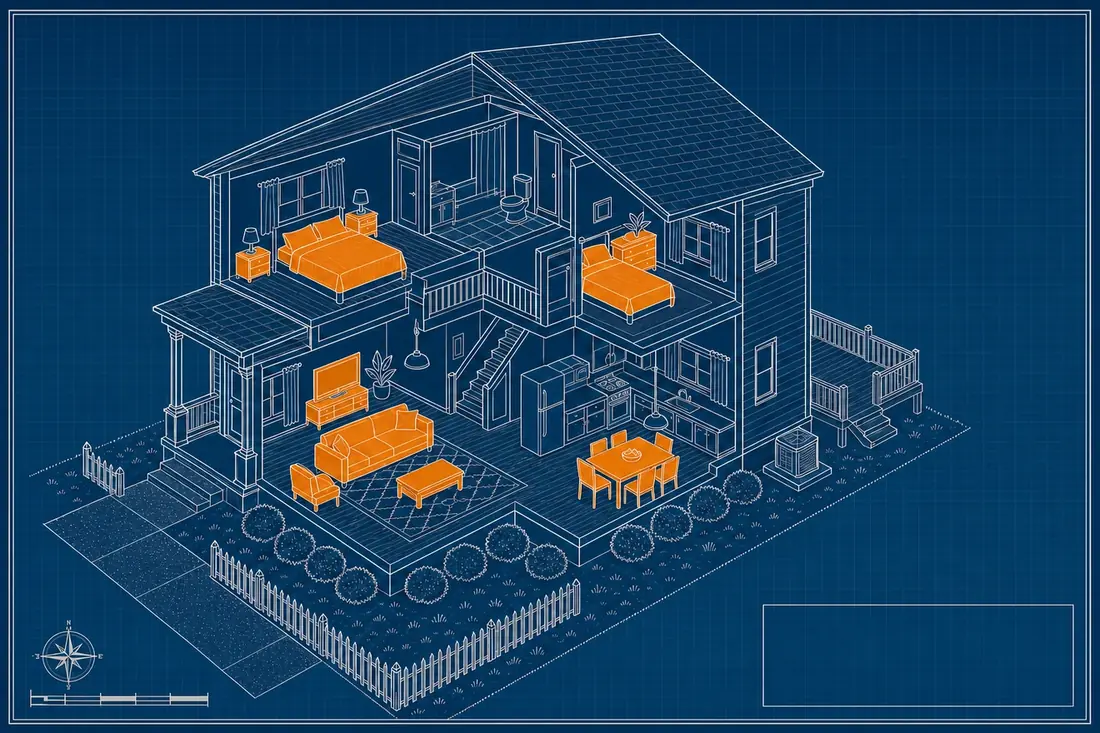
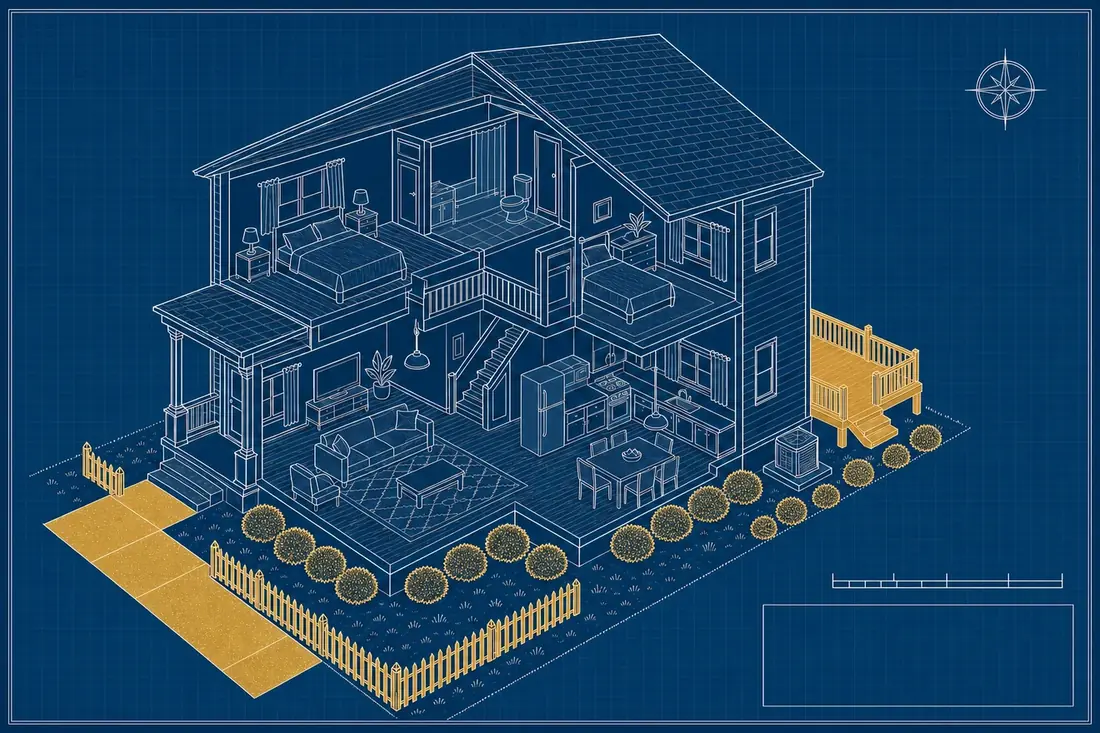
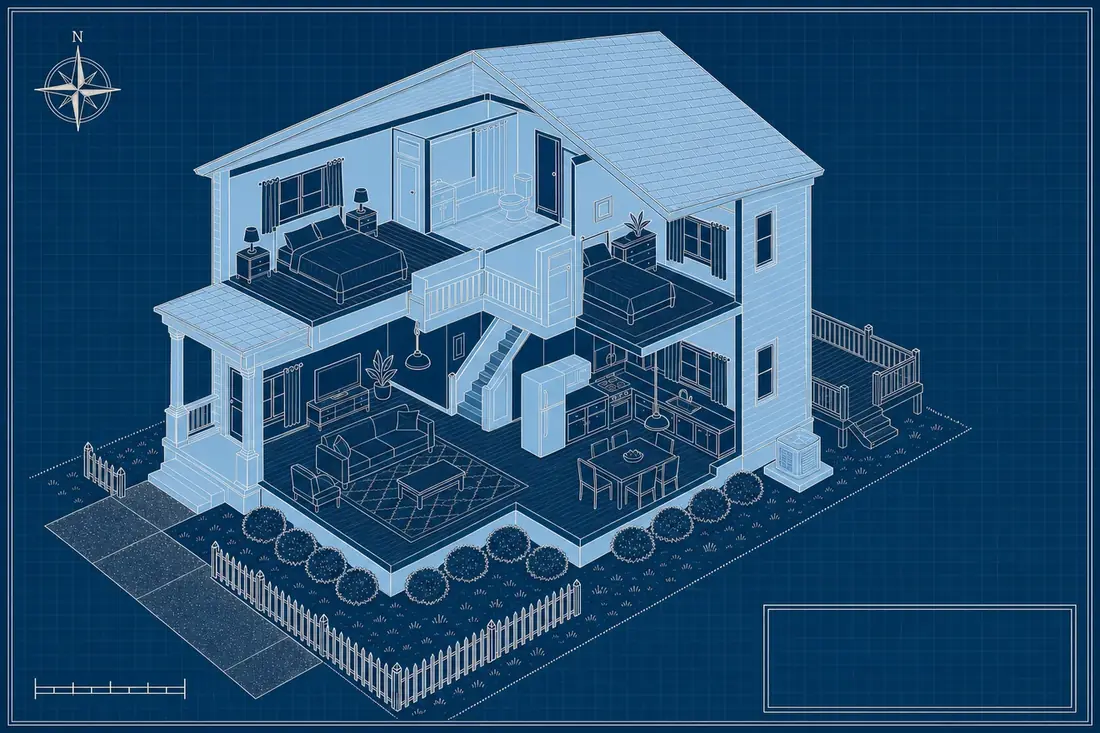
Watch a log cabin rental get built and classified A hypothetical $600,000 three-bedroom log cabin goes up floor by floor, from the gravel drive and foundation to the game loft and the hot tub on the deck. Every component lands on its depreciation schedule as it is installed, and the year-one depreciation adds up on screen. Watch the 90-second walkthrough »Hill Country's rivers, ranches, and two metrosTexas Hill Country rental property runs through Gillespie, Hays, and Comal counties, feeding drive-to traffic from both Austin and San Antonio. Two peaks define the calendar: spring wildflower season draws sightseeing traffic through the region's back roads, and summer brings river tubing season to the rivers that run through the area. Outside those two peaks, the region still draws steady weekend demand year-round, small-town trips and river access among the draws, that keeps properties booking even without a defined high season carrying the whole year. Whether the structure itself sits on 27.5 or 39 years turns on the 80% dwelling-unit test, and a short-term rental averaging stays of 7 days or less generally lands on 39 (see the 27.5 or 39 years guide). 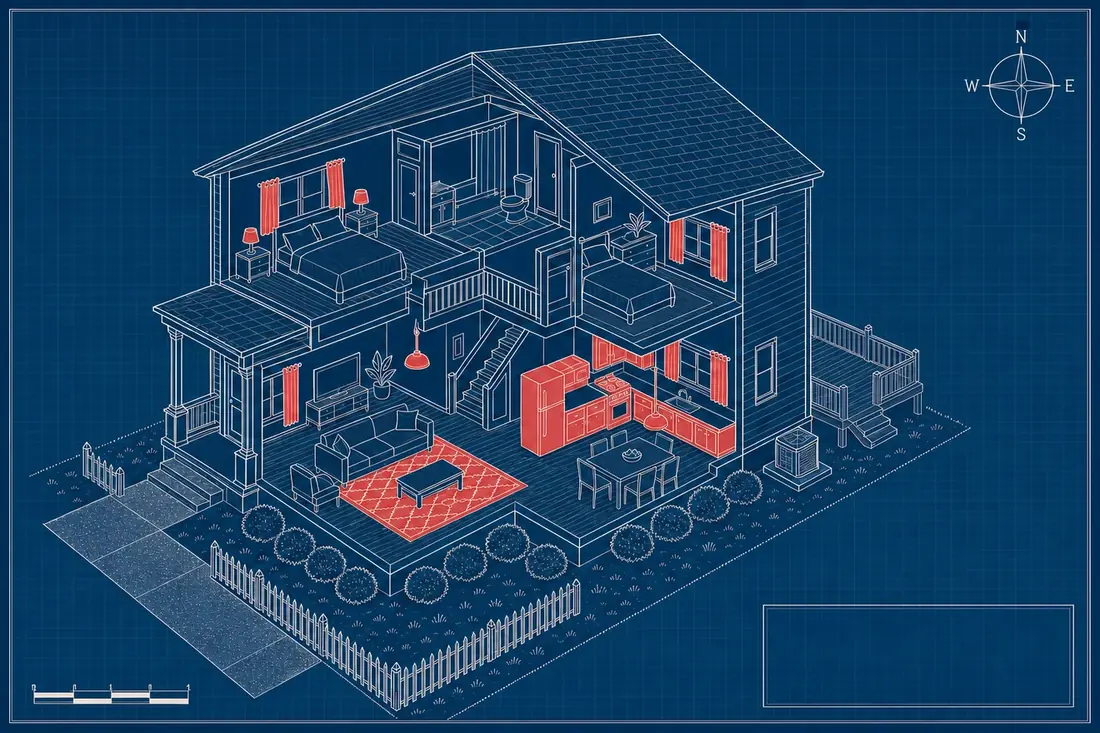
5-Year: carpet and flooring, cabinets, appliances, light fixtures, curtains 7-Year: furniture 15-Year: driveway, fencing, landscaping, deck 27.5/39-Year Shell: roof, load-bearing walls, foundation, central HVAC Get your free Preliminary Benefit Estimate See what a specific Hill Country property's acreage and components could add up to at /qualify. Request Your Free Estimate »Why acreage changes the first step of a studyLand value is always excluded first in a cost segregation study; only the building and its improvements depreciate. On a small suburban or beach lot, that allocation is usually a minor step, most of the purchase price is obviously the structure. A Hill Country ranch-style property on several acres is different: a meaningfully larger share of the purchase price can be land rather than building, especially on a property with pasture, riverfront frontage, or undeveloped acreage beyond the house itself. Getting that land-to-building split right is the foundation the rest of the study is built on, before any component ever gets sorted into a 5-, 7-, or 15-year bucket. A larger lot does not automatically mean a smaller depreciable basis; it means the allocation step matters more and has to be done carefully rather than assumed.
What a Hill Country property has to reclassify
The house's foundation, framing, roof, and central HVAC stay on the building's 27.5/39-year schedule, whether the property sits on a quarter acre or twenty. Wells, cattle guards, and long drives on working Hill Country acreageA Hill Country property is more likely than a small-lot rental to run on a private well and a septic system rather than municipal water and sewer, especially the further it sits from a town center. That site-utility infrastructure, the well and its pump equipment, the septic tank and drain field, and the site work connecting them to the house, generally falls into the 15-year land improvement bucket alongside the fencing and driveway already covered. A working or formerly working ranch property sometimes still carries a cattle guard, the grated crossing that lets a vehicle pass over a fence line without a gate, along its entry road. Where one exists as part of the property's access infrastructure, it generally falls into the same land improvement category as the fencing and gate system it belongs to. A long private drive itself, sometimes a quarter mile or more from the county road to the house on a large lot, represents more actual paving or gravel basis than the short driveway a suburban rental typically has, separate from the land-versus-building allocation question above, and it is part of why the land-improvement share of a Hill Country study can run higher than on a smaller property. Estimate the first-year deduction on a property hereA few questions and the building value give a preliminary first-year deduction range, using the same rule as our free calculator. The breakdown can be emailed to you, or you can book a 15-minute call. Step 1 of 3 What kind of property?
Who runs it day to day?
What is the average guest stay?
When did you buy it?
How many rentals do you own?
Across all of them, does your rental portfolio show taxable income overall?
Any of them likely to sell in the next few years?
Prefer to talk it through? Book straight from here. No form needed.
Weekend demand and the 7-day averageA property whose average guest stay across the tax year is 7 days or less falls under the short-term rental exception in Reg. 1.469-1T(e)(3)(ii). A Hill Country property that draws steady weekend traffic outside its two seasonal peaks tends to book mostly two- and three-night stays across most of the year, with the spring and summer peaks adding volume rather than necessarily adding length. That pattern tends to keep the yearly average toward the shorter end, though the actual number depends on that property's real booking records rather than the region's general shape. Material participation is the second half of the test: 500-plus hours, substantially all the participation, or 100-plus hours and more than any other individual, cleaners and co-hosts included. Two counties, two metros, one set of mechanicsWhether a property sits in Gillespie County toward Austin's outer reach or Comal County closer to San Antonio, the depreciation rules run identically. What changes county to county is mostly the lot size and site conditions a property happens to have, river frontage in Comal or Hays County, ranch acreage further out in Gillespie County, not the recovery periods themselves. A study accounts for whatever the specific property actually has rather than assuming a standard Hill Country layout. Getting a number for a Hill Country propertyThe process runs on listing photos, no site visit, no owner homework list, regardless of how much acreage the property sits on. Every study is custom-priced to the property's size, age, and component mix, with turnaround normally 1 to 2 weeks for a residential property, 2 to 3 weeks during tax season. On a short-term rental, Basis guarantees at least 30 times the fee in first-year deductions, or the study is free. Compare a Gulf Coast Texas market at the South Padre Island page or the Galveston page, both a very different property style from a Hill Country ranch house. See the rest of the vacation rental market pages, or get a free Preliminary Benefit Estimate at /qualify. Many Hill Country rentals are older ranch houses bought years before being converted to short-term rental use, sometimes inherited or converted from a family property rather than purchased new for that purpose. Cost segregation is not limited to a fresh purchase or new construction. A study on a property already owned for years is claimed through Form 3115, an automatic consent form, with the missed depreciation from those prior years caught up in one section 481(a) deduction in the current tax year instead of amended returns filed for each year individually. For a ranch house converted to rental use well after it was bought, that catch-up can reach back through years the property was depreciating on the standard schedule with no component study behind it. Frequently asked questionsDoes owning more land reduce how much a Hill Country property can depreciate? It changes the starting allocation, not the underlying rule. Land value is always excluded before depreciation applies, so a larger lot with more raw acreage generally means a larger land allocation and a comparatively smaller building basis, though the building itself still depreciates the same way any other rental does. Which counties make up the Hill Country rental market? Gillespie, Hays, and Comal counties are the core of the region for short-term rental purposes, feeding drive-to traffic from both Austin and San Antonio. Do river access features like steps or a dock qualify for faster depreciation? Generally yes. River access improvements, steps down a bank, a small dock, a retaining wall, typically fall into the 15-year land improvement category, the same treatment similar features get on a lake property. Does the spring wildflower season affect the tax treatment of a rental? It adds booking volume during that season, it does not change the depreciation rules or categories. It can factor into the average-stay calculation for the short-term rental exception depending on how long those spring bookings run. How long does a Hill Country cost segregation study take? For a residential short-term rental, normally 1 to 2 weeks, extending to 2 to 3 weeks during the busiest part of tax season, since the process works from listing photos rather than a site visit. Does a private well or septic system change the numbers for a Hill Country rental? It generally adds land-improvement basis rather than changing the outcome. Well and septic infrastructure typically fall into the 15-year land improvement category alongside fencing and a driveway, common on Hill Country acreage regardless of how the property is otherwise built. Keep readingGet your free Preliminary Benefit Estimate Send the address or the listing link. We model the number first; you decide with it in hand. Request Your Free Estimate »Educational information, not tax advice. This page describes how federal
depreciation rules and tests work in general. Whether any rule fits your facts is a determination for
you and your CPA. Our study gives your CPA the engineering and the numbers to make that call.
|