|
Cost Segregation for Commercial & Short-Term Rental Owners
|
Request a free estimate [email protected] |
Qualification
FREE Estimate Is there a first-year deduction sitting in your building? No cost, no obligation. Request Yours »Minimum ROIOur study identifies at least 20x its fee in first-year deductions on commercial property, or at least 30x on a short-term rental, or it is free. |
Bonus Depreciation: Residential Rental vs. Commercial PropertyQuick answer Bonus depreciation works the same way on a residential rental and a commercial property: any component with a recovery period of 20 years or less qualifies, regardless of the building type around it. What differs between the two is the shell's own schedule, 27.5 years for residential rental property versus 39 years for commercial or nonresidential real property, and the typical mix of components a cost segregation study finds in each. A restaurant's kitchen infrastructure and a single-family rental's finishes are different buckets sitting on the same rules. See this applied to your building. A few questions, 30 seconds. You see which tests matter and the first-year deduction range a study would look for. No email to see the range. Run the 30-second check »Key takeaways
The One Rule That's Identical for BothSection 168(k) bonus depreciation doesn't ask what kind of building a component sits inside. It asks one question: does the property have a recovery period of 20 years or less? A cabinet in a single-family rental and a walk-in cooler's electrical hookup in a restaurant both answer that question the same way, yes, and both qualify for the identical bonus rate. Under the 2025 OBBBA law, that rate is 100% for qualifying property acquired after January 19, 2025. Writing the rule around the asset rather than the building type keeps a classification argument, residential or commercial, from ever becoming a gate an owner has to clear before reaching the deduction that actually moves a return. A component either carries a recovery period of 20 years or less or it doesn't; the building around it never enters that particular calculation. 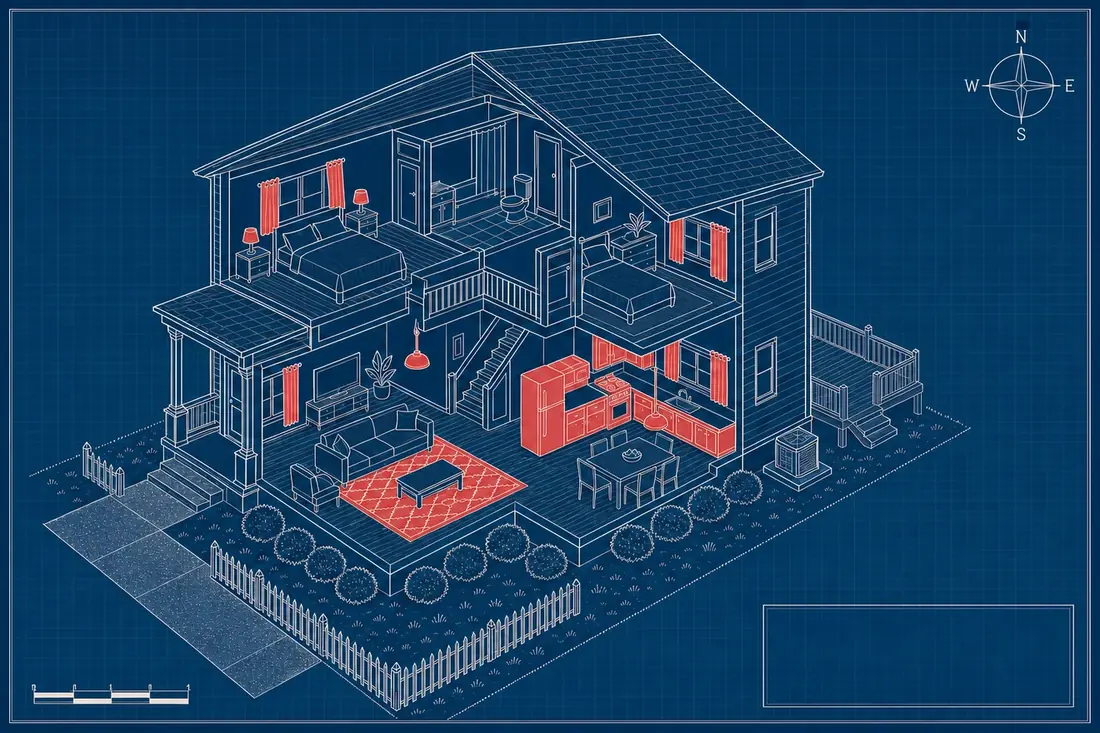
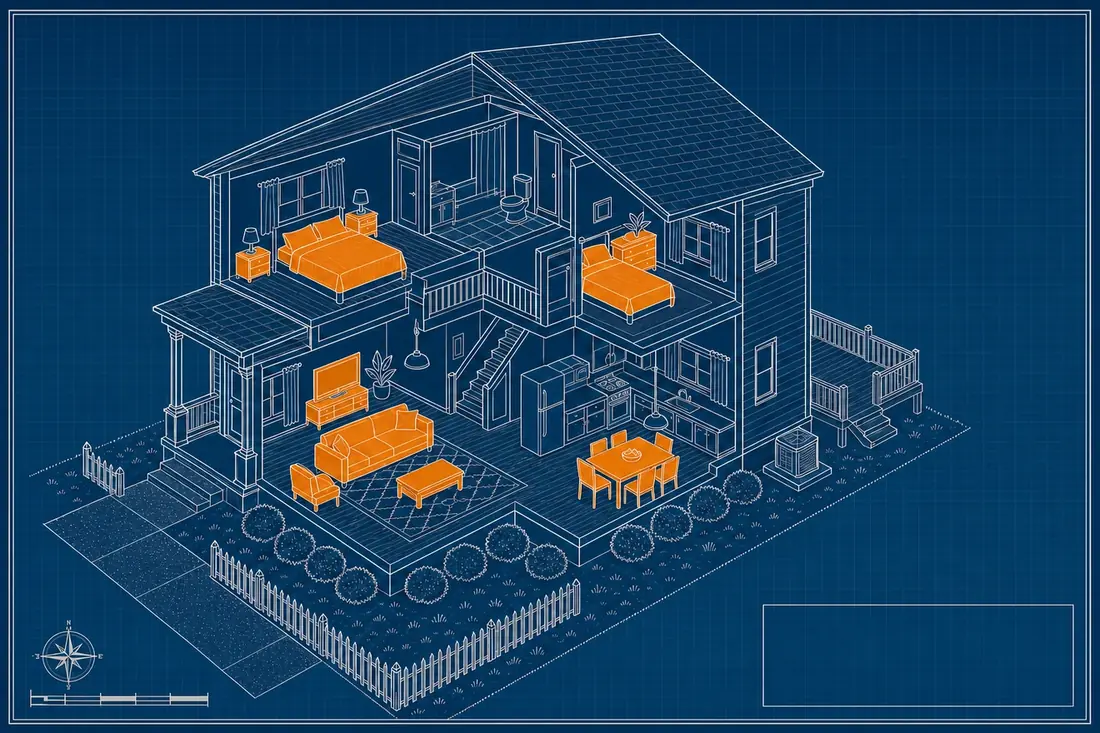
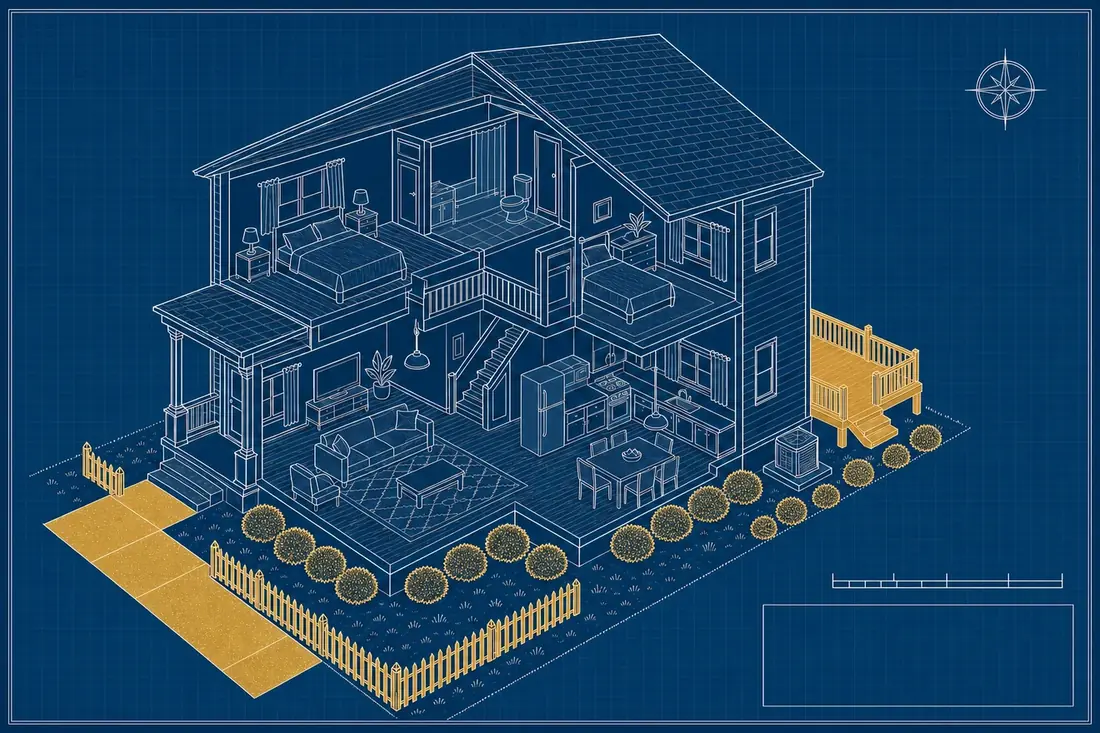
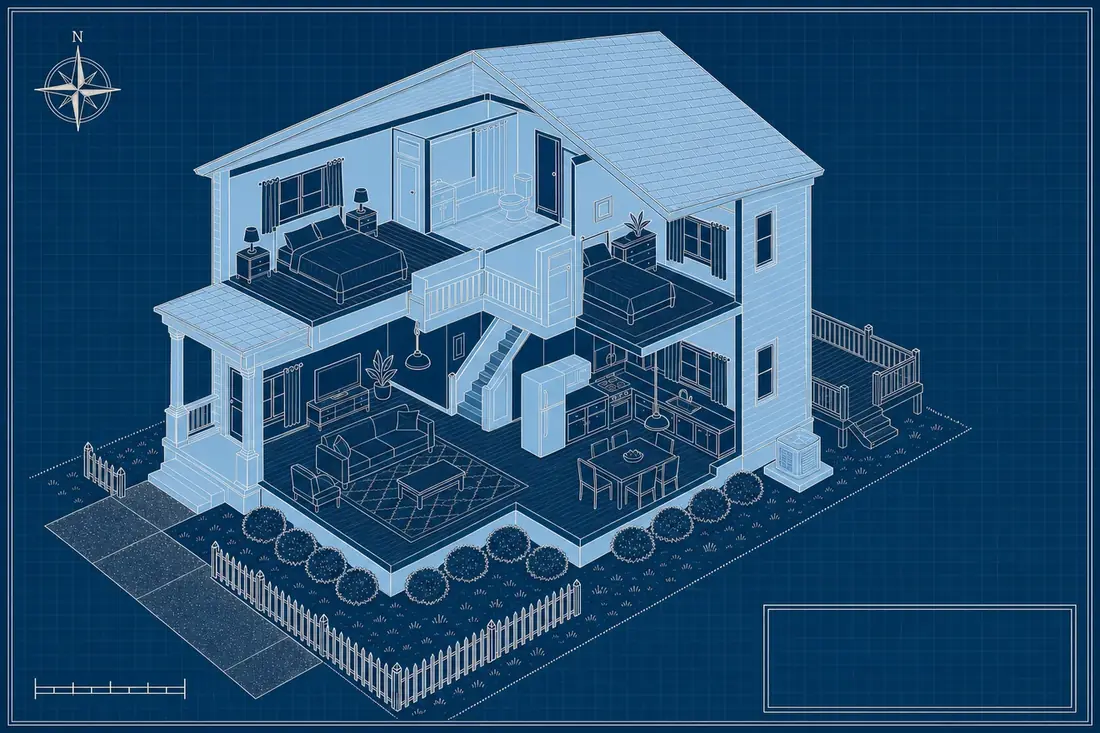
5-Year: carpet and flooring, cabinets, appliances, light fixtures, curtains 7-Year: furniture 15-Year: driveway, fencing, landscaping, deck 27.5/39-Year Shell: roof, load-bearing walls, foundation, central HVAC Get your free Preliminary Benefit Estimate Run the free estimate on either property type to see the actual first-year number our engineering team is likely to find. Request Your Free Estimate »Where They Split: The Building's Own ScheduleResidential rental property, a building where 80% or more of gross rental income comes from dwelling units, depreciates its structural shell over 27.5 years. Commercial and other nonresidential real property depreciates its shell over 39 years. That difference sits entirely outside the bonus depreciation question; it governs only the portion of the building a cost segregation study does not reclassify. The line isn't always obvious at a glance. Small multifamily properties, typically four units or fewer held as rentals, generally fall under residential rules the same as a single-family home would, while a five-unit building or a mixed-use property with ground-floor retail can shift toward nonresidential treatment depending on the specific income mix. That determination sits with the owner's CPA, working from the building's actual rent roll rather than its unit count alone. Side by Side: A Delivered Study and a Benchmark RunOne delivered study and one benchmark run show how the identical rule plays out differently across property types: a single-family rental in Montgomery County, Pennsylvania, and a commercial office/warehouse building.
Both ran the identical bonus depreciation rule against the components they found. The residential property's smaller fee against a smaller basis produced a far bigger multiple; the commercial property's larger basis produced far bigger absolute dollars on a smaller multiple, the pattern we describe as a smaller multiple, far bigger dollars, for large commercial buildings. Turnaround differs by the same split. A residential study like the one in this table normally takes 1 to 2 weeks, 2 to 3 weeks during tax season. A commercial study runs 4 to 6 weeks during tax season and typically 2 to 3 weeks in January and February, reflecting the larger site engineering a commercial building requires. Why the Bucket Mix Looks DifferentA single-family rental's reclassified basis leans toward finishes: flooring, cabinetry, appliances, decorative lighting, window treatments, plus the site work around a house, a driveway, landscaping, a patio. A commercial building, depending on type, often carries more of its reclassified basis in 15-year land improvements, parking lots, site utilities, exterior lighting, at a scale a single-family lot doesn't have, plus specialty electrical and plumbing serving commercial equipment. How the mix shifts by property type breaks this down across more categories, restaurants, medical offices, warehouses, and multifamily. A mid-rise office benchmark run shows a third pattern between those two extremes: a $2,971,345 basis producing $479,220 in first-year deductions, a 39.9:1 ratio against a $12,000 fee. A mid-rise can carry common-area finishes, elevator-serving equipment, and a parking structure, a different mix again from a warehouse's simpler shell or a single-family home's cabinetry and flooring. The 60-Second Qualifier Four questions. Our engineering team's model shows the estimated first-year acceleration a study of your property would target, free, before you commit to anything. Take the Qualifier »Why the Ratio Runs Backwards From the DollarsOur four commercial benchmark runs came in at 24:1 to 67:1 in deductions to fee. The one delivered short-term rental study we publish, at a lower residential fee, ran 135:1. That's not commercial property underperforming; a commercial study fee reflects a bigger, more complex building, and the first-year dollars it produces are correspondingly larger even at a smaller multiple. Smaller multiple, far bigger dollars: the pattern on large commercial property. Put dollars next to ratio and the pattern is easy to see: the residential property's 135:1 multiple sits on $174,905 in first-year deductions, while the office/warehouse building's 33.4:1 multiple sits on $330,674, nearly double the dollars at a quarter of the ratio. Neither number is more "correct" than the other; they're measuring different things about buildings of very different scale. The wider benchmark set shows the same pattern from a different angle. The restaurant benchmark run identified $599,678 in first-year deductions against a $2,804,440 basis, a 66.6:1 ratio on a $9,000 fee, while the medical clinic run identified $241,839 against a $1,404,500 basis, a 24.2:1 ratio on a $10,000 fee. Two similar fees, a $357,839 gap in first-year dollars. The runs differ in basis, in the component percentages entered, and in the in-service year, which sets the bonus share: 2024 for the clinic run, late 2025 for the restaurant run. What Doesn't Split: Where the Deduction Comes FromWhether the building is a single-family rental or a mid-rise office, the first-year deduction always comes from the same two sources: the current year's depreciation on newly reclassified components under bonus rules, and, on a property already owned for years, a section 481(a) catch-up for the depreciation missed in prior years, claimed through a Form 3115 look-back study. Neither source cares whether the building is 27.5-year or 39-year property, because both sources are defined at the component level described throughout this page, not at the building-classification level. The Practical Takeaway for an Owner Choosing Where to Look FirstAn owner deciding whether a cost segregation study is worth commissioning on a specific property is really asking about basis and bucket mix, not building type. A high-basis commercial building and a modest single-family rental can both produce a strong result; they just produce it on different scales and different multiples. The underlying bonus depreciation rule treats both the same way from the moment a study identifies the components. The building-type question is worth asking for a different reason: it sets expectations for what kind of result to expect, a residential rental more likely to land a triple-digit multiple on modest dollars, a large commercial building more likely to land a smaller multiple on a much bigger number. Both are the same rule doing the same job on different-sized buildings. Frequently asked questionsDoes a commercial property get a higher bonus depreciation rate than a residential rental? No. The rate is identical, 100% for qualifying property acquired after January 19, 2025 under current law, regardless of whether the building itself is residential or commercial. The rate attaches to the component's recovery period, not the building's classification. Why do residential rental studies show higher deductions-to-fee multiples than commercial studies? Residential studies typically carry a lower flat fee against a smaller building basis, which produces a bigger ratio even when the dollar total is modest. Commercial studies carry a larger fee against a larger, more complex building, producing bigger absolute dollars at a comparatively smaller multiple. Do multifamily properties follow the residential or commercial rules? It depends on the building. Small multifamily properties, typically four units or fewer held as rentals, generally follow residential rules if 80% or more of gross rental income comes from dwelling units; larger multifamily and mixed-use buildings can involve nonresidential treatment depending on the specific facts, a question for the owner's CPA. Does the type of building change which components a study looks for? The categories, 5-year, 7-year, and 15-year property, are the same list either way. What changes is which categories show up in meaningful amounts: a restaurant's kitchen-serving electrical looks different from a single-family home's cabinetry, even though both get evaluated against the identical classification rules. Is a cost segregation study worth it on a smaller residential rental if a commercial building produces bigger dollars? The two aren't in competition for the same money; each property is evaluated on its own basis and its own components. A modest residential property with a fee well under a commercial study's cost can still produce a large multiple relative to what it cost, even though the absolute dollars are smaller than a large commercial building would produce. Keep readingGet your free Preliminary Benefit Estimate Send the address or the listing link. We model the number first; you decide with it in hand. Request Your Free Estimate »Educational information, not tax advice. This page describes how federal
depreciation rules and tests work in general. Whether any rule fits your facts is a determination for
you and your CPA. Our study gives your CPA the engineering and the numbers to make that call.
|