|
Cost Segregation for Commercial & Short-Term Rental Owners
|
Request a free estimate [email protected] |
Vacation Markets
Free Listing SEO Audit Paste your Airbnb or VRBO listing. Get a scored audit in 90 seconds. Audit My Listing »Minimum ROIOur study identifies at least 20x its fee in first-year deductions on commercial property, or at least 30x on a short-term rental, or it is free. |
Cost Segregation for Banner Elk and Beech Mountain, North CarolinaBanner Elk and Beech Mountain sit in Avery County, North Carolina, a high-elevation market built around two ski resorts, Sugar Mountain and Beech Mountain Resort, rather than the college-town rhythm of nearby Boone. Ski chalets and condo units both qualify for a cost segregation study, reclassifying interior finishes and site improvements into 5-, 7-, and 15-year schedules instead of the standard 27.5-year residential shell. The market's split between winter ski traffic and a cooler summer season shapes how the 7-day average-stay test gets calculated. Key takeaways
Steven's Take A ski chalet at 4,000 feet carries a different basis than the same square footage at sea level: retaining walls, steeper foundations, more site work holding the driveway to the mountain. We built the process to run on the same photos an owner already has from a listing, because most of these owners bought a second home two states away and were never scheduling a site visit around ski season. I have seen a mountain-market page do something a call center never could: someone forwarded a link, read for ten minutes, and bought by text without ever booking a call. The photos did the convincing the pitch never got to make. Steven Ellis, Founder Watch a log cabin rental get built and classified A hypothetical $600,000 three-bedroom log cabin goes up floor by floor, from the gravel drive and foundation to the game loft and the hot tub on the deck. Every component lands on its depreciation schedule as it is installed, and the year-one depreciation adds up on screen. Watch the 90-second walkthrough »Two ski resorts, one high valleyBanner Elk sits in Avery County, North Carolina, tucked into a valley between the ski slopes of Sugar Mountain and Beech Mountain. Beech Mountain, the town, stretches across the Avery and Watauga county line and sits above 5,000 feet, among the highest incorporated towns in the eastern United States. That elevation shapes the whole market. Boone, in neighboring Watauga County, runs on a college-town calendar tied to Appalachian State's football schedule. Banner Elk and Beech Mountain run on a ski-resort calendar instead, built around two working ski areas a few miles apart, plus a cooler summer season that draws visitors escaping heat from Charlotte, the Piedmont Triad, and East Tennessee. Lees-McRae College sits in Banner Elk itself, giving the town a small, steady population base most of its rental neighbors do not have. But the rental market answers to the resorts first. A property here runs on a different calendar than the Boone and Blowing Rock market twenty minutes down the mountain, even though the depreciation rules covering both are identical. 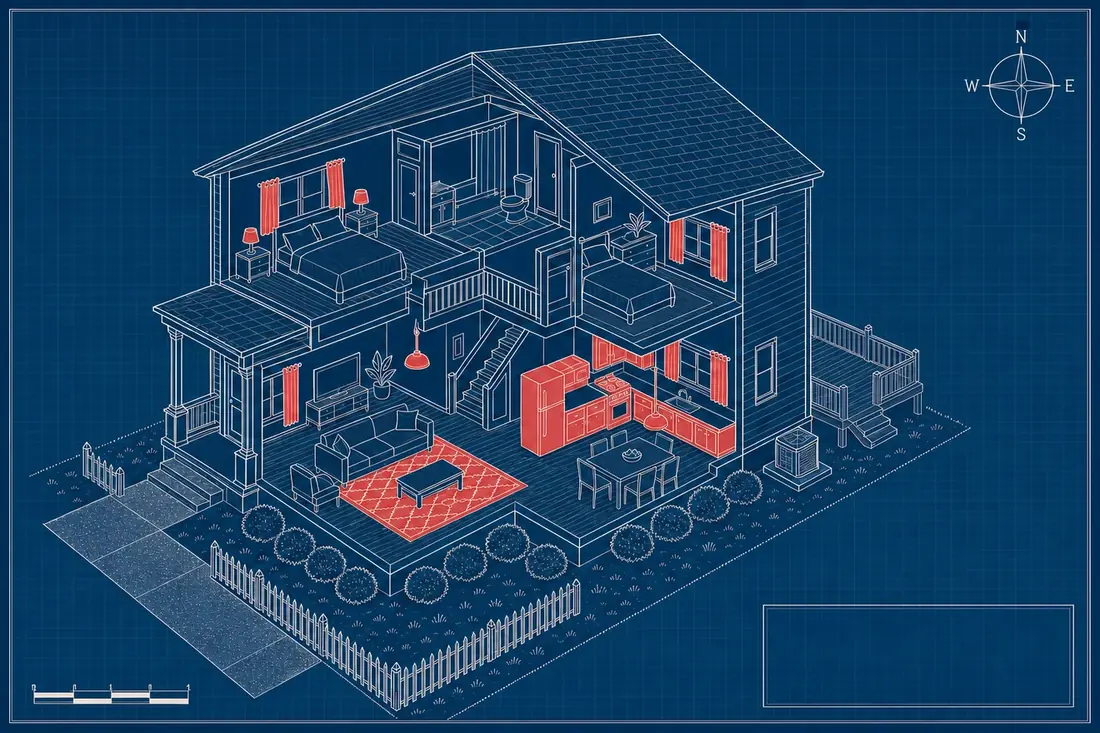
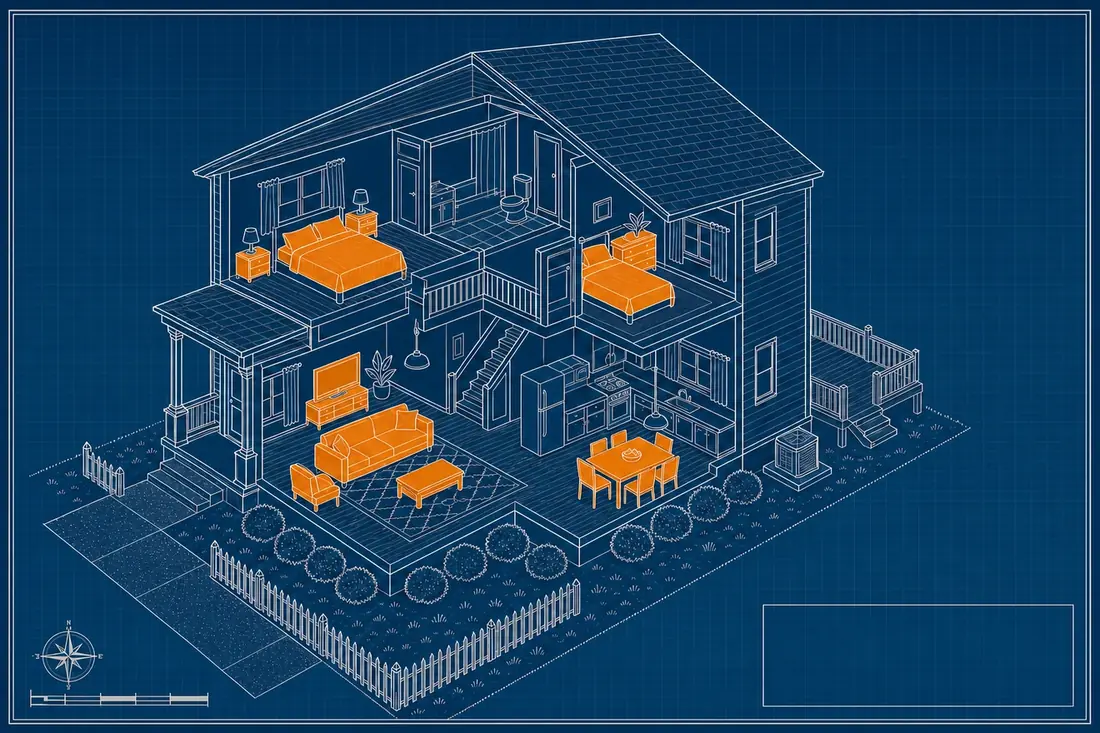
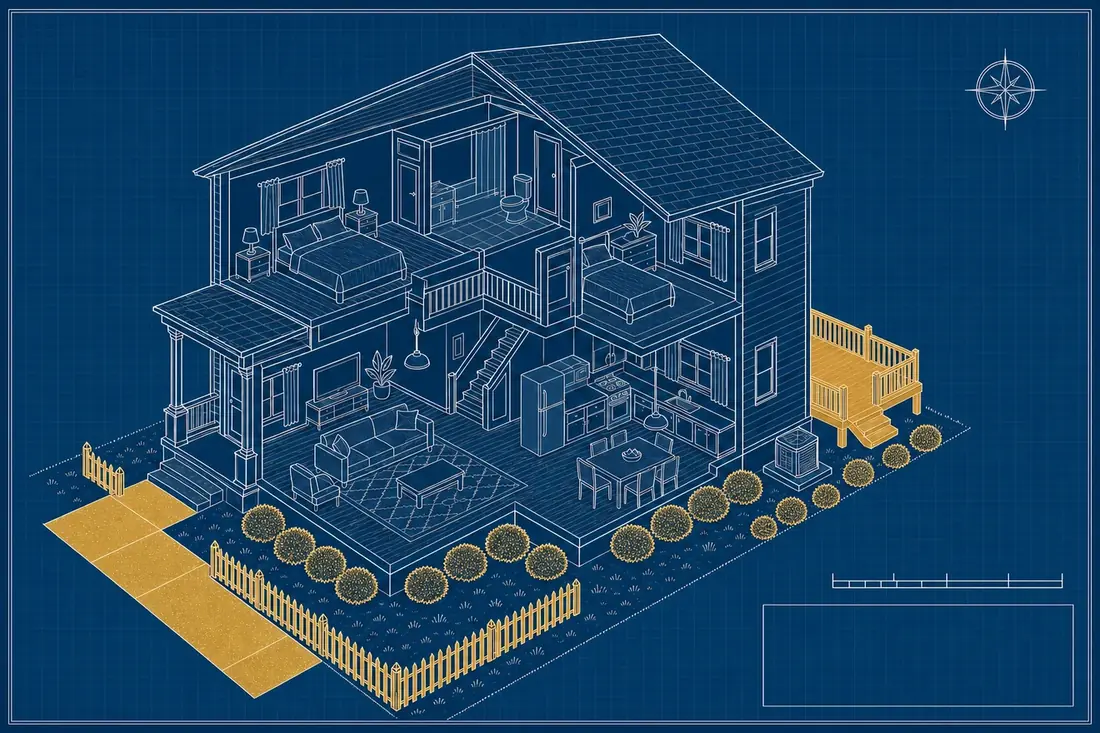
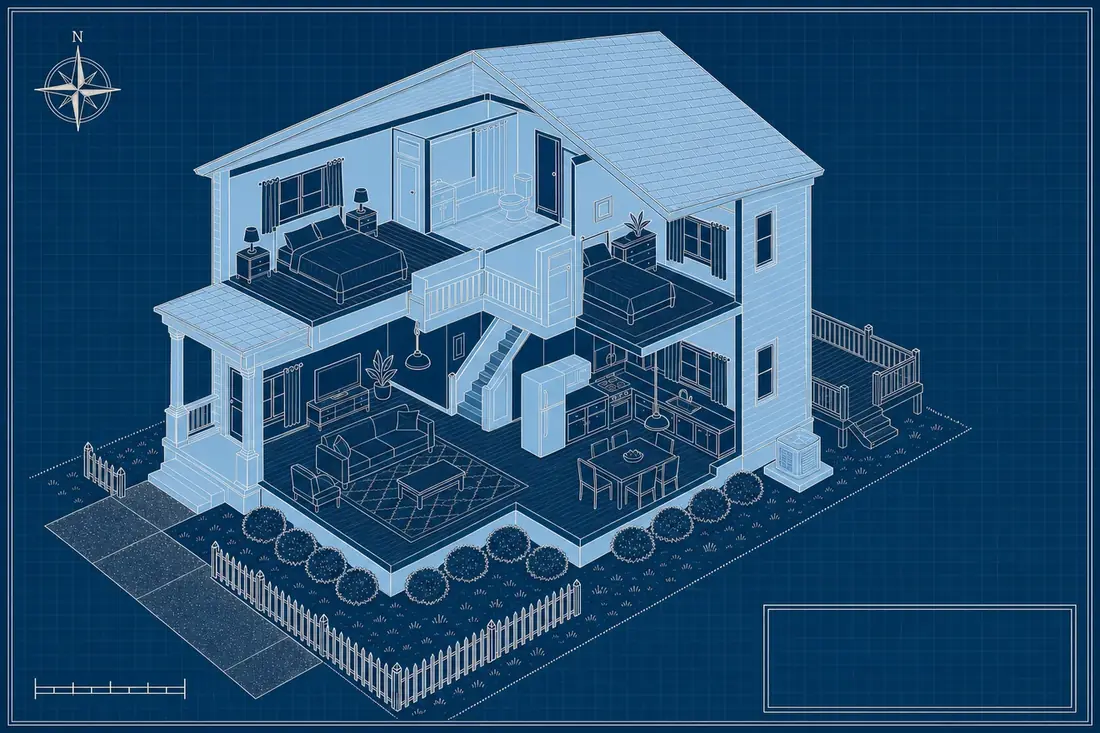
5-Year: carpet and flooring, cabinets, appliances, light fixtures, curtains 7-Year: furniture 15-Year: driveway, fencing, landscaping, deck 27.5/39-Year Shell: roof, load-bearing walls, foundation, central HVAC Get your free Preliminary Benefit Estimate See what a Banner Elk chalet or Beech Mountain condo could accelerate with the free estimate at /qualify. Request Your Free Estimate »Ski chalets, slope-side condos, and what a study coversThe rental stock here splits fairly cleanly into two types: standalone ski chalets on their own lots, often with real elevation change and mountain views, and condo units inside multi-unit buildings clustered near the Sugar Mountain and Beech Mountain slopes. A chalet's study covers the full structure top to bottom, cabinetry, flooring, and appliances as 5-year property, certain furniture and freestanding fixtures as 7-year property, and site work like decking, retaining walls, and a driveway as 15-year land improvements. A condo unit's study is generally scoped to what the owner actually holds title to, the interior finishes and fixtures, since the building's structure, hallways, and any shared parking or grounds usually belong to the homeowners association rather than the individual owner.
Steep lots add site work a flatland study never seesBuilding on a ski slope means building on grade. A chalet lot in this market commonly carries retaining walls to hold a driveway or a lower patio level, a paved or gravel driveway engineered for real elevation change rather than a flat approach, and exterior lighting sized for how early it gets dark on a mountainside in December. All of that generally falls into the 15-year land improvement bucket alongside decking and a hot tub pad, the same category a flatter market's driveway sits in, just with more of it on a steep Avery County lot than a typical rental carries. Many properties above town water and sewer service also run on a private well and septic system. That site-utility infrastructure, the septic tank and drain field, the well and its pump equipment, and the site work connecting them to the house, generally falls into the same 15-year land improvement category, separate from the plumbing fixtures inside the house itself. The 60-Second Qualifier Four questions. Our engineering team's model shows the estimated first-year acceleration a study of your property would target, free, before you commit to anything. Take the Qualifier »An older condo base, renovated in stagesSugar Mountain Resort opened in 1969 and Beech Mountain Resort followed shortly after, making this one of the older planned ski developments in the South. A good share of the condo buildings clustered near both slopes date back to that original building boom, since renovated more than once as ownership changed hands and finishes wore out. Each renovation, a kitchen gutted and rebuilt, new flooring throughout a unit, replaced appliances, creates its own set of components with their own placed-in-service dates, separate from whatever the original 1970s-era construction still standing in the unit represents. That matters directly for a property owned for years already. A cost segregation study on an older condo does not need to guess at what the original builder installed decades ago. It classifies what is actually in the unit today, generally through Form 3115's look-back mechanism, catching up any depreciation the owner missed on components separated out for the first time. A standalone chalet built more recently, and never previously studied, works through the same look-back mechanism if it has been held for more than a year. A two-season rhythm and the 7-day averageThe short-term rental exception under Reg. 1.469-1T(e)(3)(ii) turns on the average guest stay across the full tax year running 7 days or less. Winter here books in a fairly predictable pattern, weekend and week-long ski trips centered on the two resorts. Summer books differently, longer stays from visitors using the elevation as a break from Piedmont and coastal heat. Averaging a genuine two-season calendar, ski weekends against summer weeks, produces a different mix than Boone's four-overlapping-season pattern, and the actual number depends on how much of a given year's calendar each season fills. Whether a specific property's blended average across both seasons lands at or under 7 days is a calculation for the owner and their CPA, run against that year's actual booking records. Material participation is the separate test. An owner who personally handles turnovers between ski weekends and summer weeks sits in a different position under the 100-hour test than one who hands the property entirely to a local property manager who also services other chalets and condos on the same slopes. Getting a number for a Banner Elk or Beech Mountain propertyEvery study, chalet or condo, is custom-priced to the specific property, and a free Preliminary Benefit Estimate at /qualify models the likely first-year number before any commitment. On a recent engineered study, a $1,911,675 office and warehouse building basis produced $330,674 in first-year deductions for a $9,900 fee, a 33.4-to-1 ratio, a commercial example shown for scale rather than a claim about a residential chalet. Short-term rental studies work from listing photos, no site visit and no owner homework required, whether the property sits on a steep chalet lot or inside a slope-side condo building. For a property already owned for years, the study runs through Form 3115 with a section 481(a) catch-up, covered in the look-back guide. See the full short-term rental overview for how the average-stay and material-participation tests work together, or the rest of North Carolina's mountain and coastal markets on the North Carolina hub. Frequently asked questionsDoes Beech Mountain's higher elevation change how a cost segregation study works? No, elevation does not change the depreciation rules, only what the property tends to have. Higher, steeper lots often carry more retaining walls, engineered driveways, and exterior lighting, all of which can add to the land improvement category a study identifies, but the underlying 5-, 7-, and 15-year classifications work the same as anywhere else. Do ski chalets and condo units get studied the same way? No. A standalone chalet's study covers the full structure and any site work on the lot. A condo unit's study is generally scoped to the interior components the owner holds title to, since the building structure and shared grounds usually belong to the homeowners association. Does a Banner Elk or Beech Mountain property need a site visit? No, short-term rental studies use listing photos to classify components, so there is no scheduled site visit or owner homework, regardless of whether the property is a ski chalet or a condo near the slopes. How does a two-resort ski season affect the 7-day rental test? The test looks at the average guest stay across the full year. A property that mixes ski weekends with longer summer stays needs that average calculated from the actual full-year booking calendar, not from either season alone. Are Banner Elk and Beech Mountain's short-term rental rules the same as Boone's? Local registration and occupancy-tax rules can differ by town and county, and they change over time. Check the current rules directly with the relevant town or county before listing a property in either market. Keep readingGet your free Preliminary Benefit Estimate Send the address or the listing link. We model the number first; you decide with it in hand. Request Your Free Estimate »Educational information, not tax advice. This page describes how federal
depreciation rules and tests work in general. Whether any rule fits your facts is a determination for
you and your CPA. Our study gives your CPA the engineering and the numbers to make that call.
Related guides: How Does Cost Segregation Work in Vacation... · Does Cost Segregation Work on a Poconos... · Cost Segregation for a Jersey Shore Rental... · Cost Segregation for a Pigeon Forge Cabin... · Cost Segregation for a Gatlinburg Rental...
More North Carolina markets: Cost Segregation for Blowing Rock, North... · Cost Segregation for Ashe County, North... · Cost Segregation for Highlands, North Carolina · Cost Segregation for Bryson City and... · Cost Segregation for Lake Lure and Chimney... · Cost Segregation for Emerald Isle and the... · All vacation markets
|
Copyright © 2026 Basis Property Group | Philadelphia, Pennsylvania | Studies in all 50 states
Popular guides: Airbnb & STR | Do I Qualify? | What a Study Costs | Audit Risk | When to Do It | Real Examples
About | Careers | Guides | Articles | Site Map | Privacy Policy | Terms of Service
You are visitor 0148293 | Last updated: August 2026 | Best viewed at 1024x768
Content reviewed against IRS Publication 946, Treasury Regulation §1.168, and the IRS Cost Segregation Audit Techniques Guide. For educational purposes only; this site does not constitute tax advice. Consult your CPA before filing. Not affiliated with the IRS.