|
Cost Segregation for Commercial & Short-Term Rental Owners
|
Request a free estimate [email protected] |
How It Works
FREE Estimate Is there a first-year deduction sitting in your building? No cost, no obligation. Request Yours »Minimum ROIOur study identifies at least 20x its fee in first-year deductions on commercial property, or at least 30x on a short-term rental, or it is free. |
When Did Cost Segregation Start? The Full TimelineQuick answer Cost segregation as a distinct practice took shape after 1997, when the Tax Court's decision in Hospital Corporation of America v. Commissioner revived component-style classification that Congress had shut down in 1981. Its underlying tests go back further, to the 1962 Investment Tax Credit rules and, before that, to a 1942 IRS bulletin that let taxpayers depreciate a building's components separately. The IRS formalized examiner guidance afterward, and bonus depreciation later made the classification far more valuable. See this applied to your building. A few questions, 30 seconds. You see which tests matter and the first-year deduction range a study would look for. No email to see the range. Run the 30-second check »Key takeaways
Component-style depreciation existed long before cost segregation had a nameDepreciation rules did not always require every part of a building to sit on one long schedule. Bulletin "F," an IRS guide first issued in 1920 and substantially revised in 1931 and 1942, gave taxpayers a choice for depreciating buildings: a composite method, one blended rate for the whole structure, or a component method, where building equipment could be depreciated separately from the structure itself. The Tax Court upheld a taxpayer's use of that component grouping method in Shainberg v. Commissioner, 33 T.C. 241 (1959). The rules narrowed from there. Revenue Ruling 66-111 (1966) held that a used building's components generally could not be separated out and depreciated on their own, since a lump-sum purchase buys "a unified structure," not separate parts. Revenue Ruling 73-410 (1973) then reopened a narrow path: the component method could still apply to used real property, but only if the purchase cost was properly allocated to each component's value and each component's useful life reflected its actual condition at acquisition. 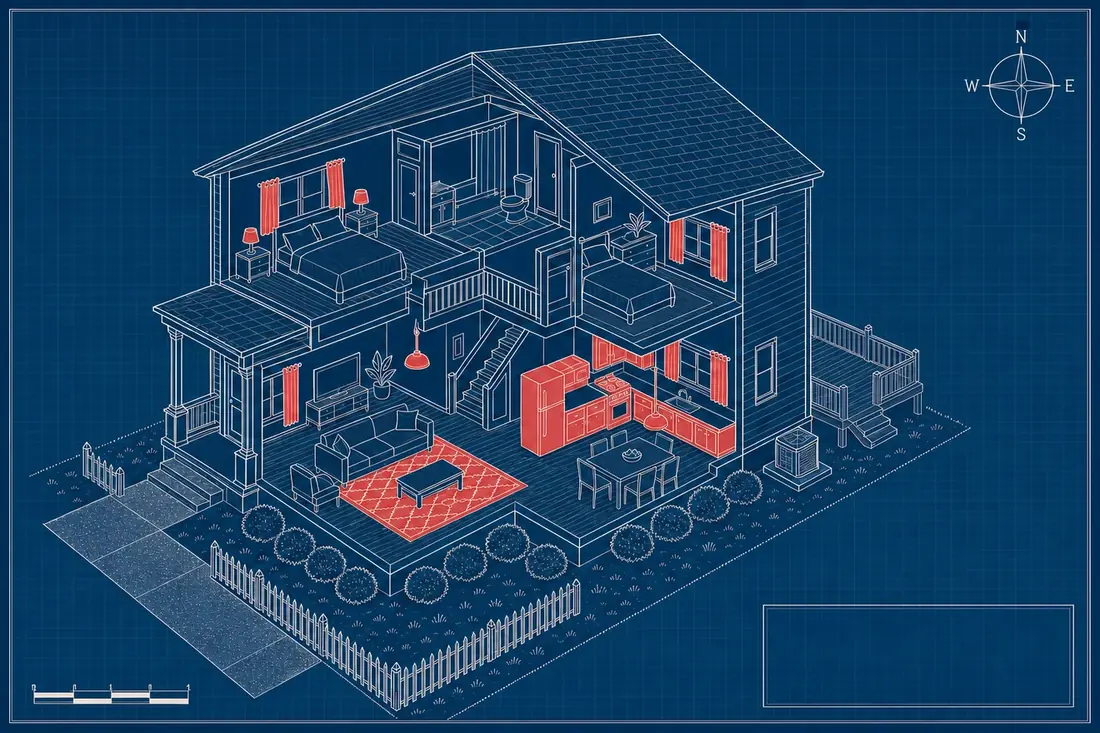
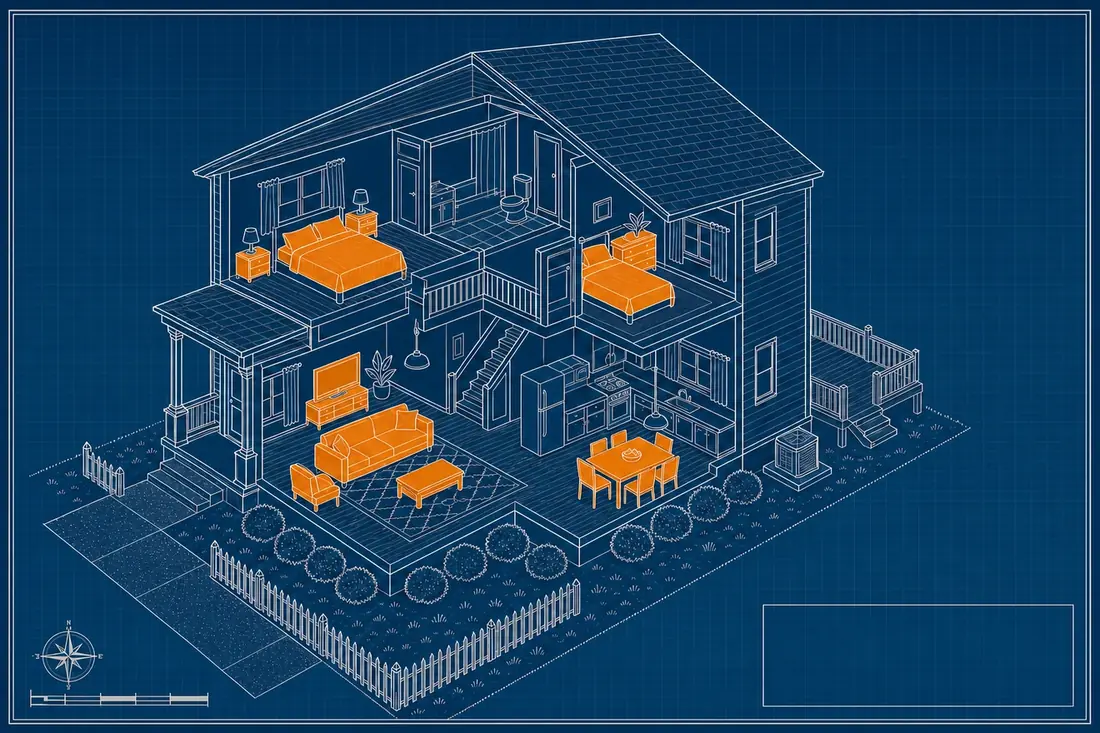
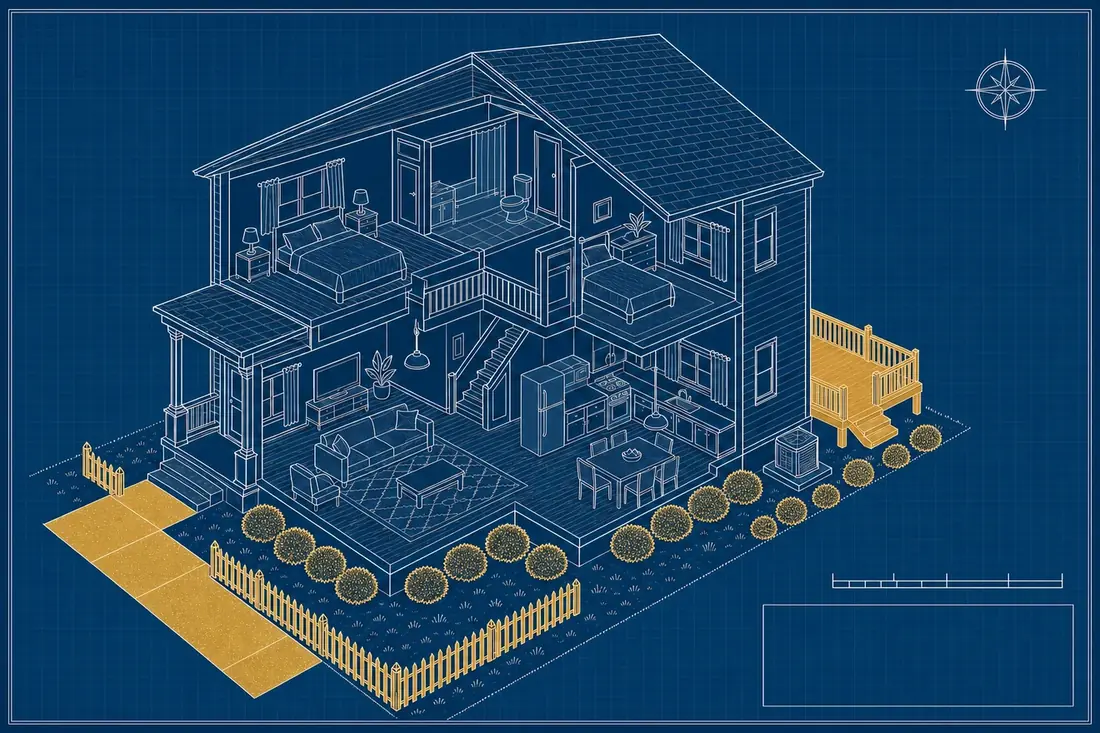
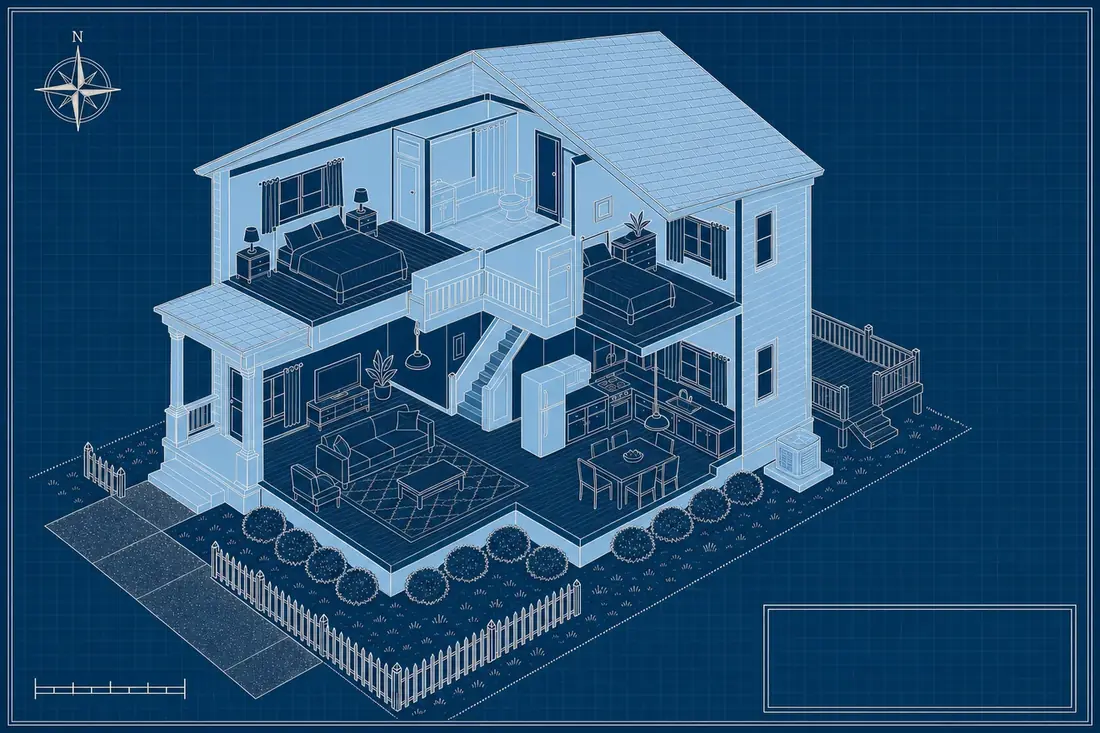
5-Year: carpet and flooring, cabinets, appliances, light fixtures, curtains 7-Year: furniture 15-Year: driveway, fencing, landscaping, deck 27.5/39-Year Shell: roof, load-bearing walls, foundation, central HVAC Get your free Preliminary Benefit Estimate See the timeline turned into a number: a free Preliminary Benefit Estimate models what today's classification and bonus depreciation rules would find in a specific building. Request Your Free Estimate »The Investment Tax Credit built the classification tests cost segregation still usesCongress enacted the Investment Tax Credit in 1962 under section 48, and with it came a real question: which assets counted as tangible personal property eligible for the credit, and which counted as a building's structural components, which did not qualify. The Tax Court's 1975 decision in Whiteco Industries v. Commissioner, 65 T.C. 664, set out six factors for that determination: broadly, how permanently an item is designed to stay in place, how it is attached, and how much damage removing it would cause. Those became known as the Whiteco factors, and they still govern how a study classifies personal property today. A related line of cases, Scott Paper Co. v. Commissioner (1980) and Morrison, Inc. v. Commissioner (1986), applied a "functional allocation approach" specifically to electrical distribution systems, splitting the cost of wiring and panels between the portion serving equipment (personal property) and the portion serving the building generally (a structural component). The Investment Tax Credit itself was repealed in 1986, but the classification tests it produced outlived it. 1981 and 1986: Congress shut the door on component depreciation of buildingsThe Economic Recovery Tax Act of 1981 created the Accelerated Cost Recovery System (ACRS) and, with it, banned component depreciation of buildings outright. Under former section 168(f)(1), every component of a building had to depreciate on the same schedule as the building itself. The Tax Reform Act of 1986 replaced ACRS with the Modified Accelerated Cost Recovery System (MACRS) and kept that prohibition, now codified at section 168(i)(6): an improvement to real property depreciates on the same recovery period as the underlying property. For roughly a decade and a half, the open question was not whether a building's components could be classified using the old Investment Tax Credit tests. It was whether those tests survived the switch to ACRS and MACRS at all. 1997: Hospital Corporation of America v. Commissioner answered that questionIn Hospital Corporation of America v. Commissioner, 109 T.C. 21 (1997), a hospital operator had classified certain items, wiring serving specific medical equipment among them, as personal property depreciable over 5 years rather than as part of the building's 39-year schedule. The IRS argued that the ban on component depreciation under ACRS and MACRS made the old Investment Tax Credit tests irrelevant. The Tax Court disagreed: it held that Congress did not intend to redefine what counts as personal property when it enacted ACRS, so the same tests used to determine Investment Tax Credit eligibility before 1981 still determine what qualifies as personal property under MACRS. The distinction is precise and worth stating plainly, see is cost segregation legal for the fuller legal reasoning. HCA did not revive component depreciation of a building's structural shell, which stays banned. It confirmed that separately classifying specific items as personal property, distinct from the building, still uses the pre-1981 tests. That is the legal foundation cost segregation studies rest on today. The 60-Second Qualifier Four questions. Our engineering team's model shows the estimated first-year acceleration a study of your property would target, free, before you commit to anything. Take the Qualifier »1999: the IRS conceded the pointIn an Action on Decision, AOD-1999-008, the IRS's Office of Chief Counsel acquiesced to the HCA ruling: it agreed that the Investment Tax Credit-era definition of tangible personal property remained applicable under both ACRS and MACRS. The concession was specific to that legal question. The IRS did not agree with every factual classification the taxpayer had made in that particular case, but it stopped contesting the underlying legal method. The Audit Techniques Guide era formalized the practiceAfter the 1997 decision and the 1999 Action on Decision, the IRS published an Audit Techniques Guide, most recently updated in February 2025 as Publication 5653, written for its own examiners and describing how a quality cost segregation study should be built and reviewed. See what the guide actually covers, including the specific elements it lists for a quality study. The guide's own text is explicit that it is not itself a legal pronouncement and cannot be cited as authority, but it reflects roughly three decades of examiner experience with the practice since HCA. Bonus depreciation turned classification into accelerationClassification alone determines a schedule, 5, 7, 15, 27.5, or 39 years. Bonus depreciation, under section 168(k), determines how much of that schedule can be taken immediately. The rate has moved considerably since it first appeared in the early 2000s, reaching 100% for property acquired after September 27, 2017 under the Tax Cuts and Jobs Act, before a scheduled phase-down took the rate to 80% for 2023 and 60% for 2024. The 2025 OBBBA law reversed that slide: 100% bonus depreciation is now restored and made permanent for qualified property acquired after January 19, 2025. Property acquired between 2023 and that date still sits on the earlier phase-down. That is the piece that changed cost segregation from a useful classification exercise into a study worth commissioning specifically for its first-year impact: the 5-, 7-, and 15-year property a study identifies is bonus-eligible, and at 100%, immediately so. Timeline at a glance
For what a modern study identifies inside a specific building, a free Preliminary Benefit Estimate at /qualify models the likely first-year number before any commitment. Frequently asked questionsIs cost segregation a new tax strategy? No. The classification tests it relies on date to the 1962 Investment Tax Credit rules, and an earlier version, letting taxpayers depreciate some building components separately, appeared in a 1942 IRS bulletin. What changed in 1997 was confirmation that those tests survived the shift to modern depreciation systems. What did Hospital Corporation of America v. Commissioner actually change? It confirmed that the tests used before 1981 to distinguish personal property from a building's structural components still apply under the modern MACRS depreciation system. It did not revive component depreciation of a building's structure itself, which stayed banned; it confirmed that separately classifying specific items as personal property remained valid. Why did cost segregation studies become more common after 2017? The Tax Cuts and Jobs Act raised bonus depreciation to 100% for qualifying property acquired after September 27, 2017. Since the 5-, 7-, and 15-year property a study identifies is bonus-eligible, a higher bonus rate made the immediate, first-year impact of a study far larger than it had been under earlier, lower bonus rates. Did the IRS ever formally agree that cost segregation is valid? The IRS's Office of Chief Counsel acquiesced to the Hospital Corporation of America ruling in 1999 through an Action on Decision, AOD-1999-008, conceding that the Investment Tax Credit-era classification tests remained applicable. It later published its own Audit Techniques Guide describing how a quality study should be built and reviewed. Is bonus depreciation part of cost segregation's history or a separate law? It is a separate provision, section 168(k), that interacts with cost segregation's classification. Classification determines a component's recovery period; bonus depreciation determines how much of that period's deduction can be taken immediately. The 2025 OBBBA law made 100% bonus depreciation permanent for qualifying property acquired after January 19, 2025. Keep readingGet your free Preliminary Benefit Estimate Send the address or the listing link. We model the number first; you decide with it in hand. Request Your Free Estimate »Educational information, not tax advice. This page describes how federal
depreciation rules and tests work in general. Whether any rule fits your facts is a determination for
you and your CPA. Our study gives your CPA the engineering and the numbers to make that call.
|