|
Cost Segregation for Commercial & Short-Term Rental Owners
|
Request a free estimate [email protected] |
Vacation Markets
Free Listing SEO Audit Paste your Airbnb or VRBO listing. Get a scored audit in 90 seconds. Audit My Listing »FREE Estimate Is there a first-year deduction sitting in your building? No cost, no obligation. Request Yours »Minimum ROIOur study identifies at least 20x its fee in first-year deductions on commercial property, or at least 30x on a short-term rental, or it is free. |
Cost Segregation for a St. George Island, Florida Beach HouseQuick answer Yes. A St. George Island beach house qualifies for cost segregation like any residential rental: an engineering review moves interior finishes, decks, stairs and site work into 5-, 7- and 15-year schedules instead of leaving them on the building's own 27.5- or 39-year schedule. Franklin County's published assessment roll shows how much of these properties' market value the appraiser assigns to land, which is the part that never depreciates, and the county's tourist development tax is a documented 3%. Own a St. George Island rental? See the first-year deduction range a study would look for. 30 seconds, no email to see the range. Start the check ↓Key takeaways
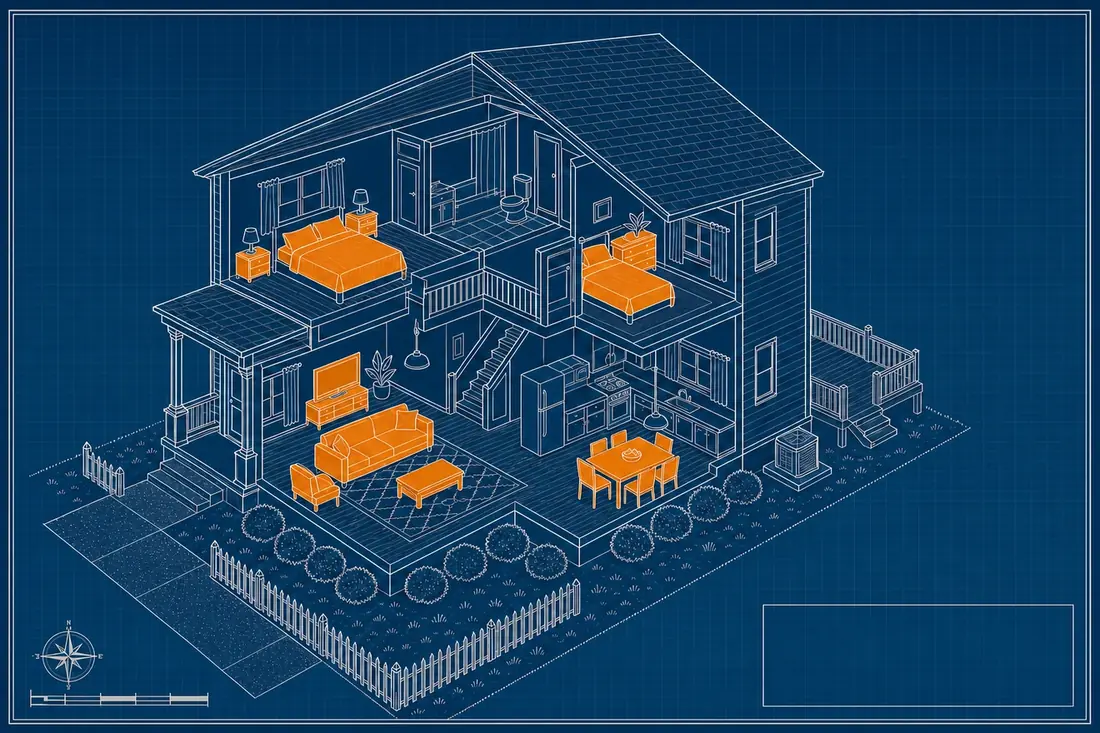
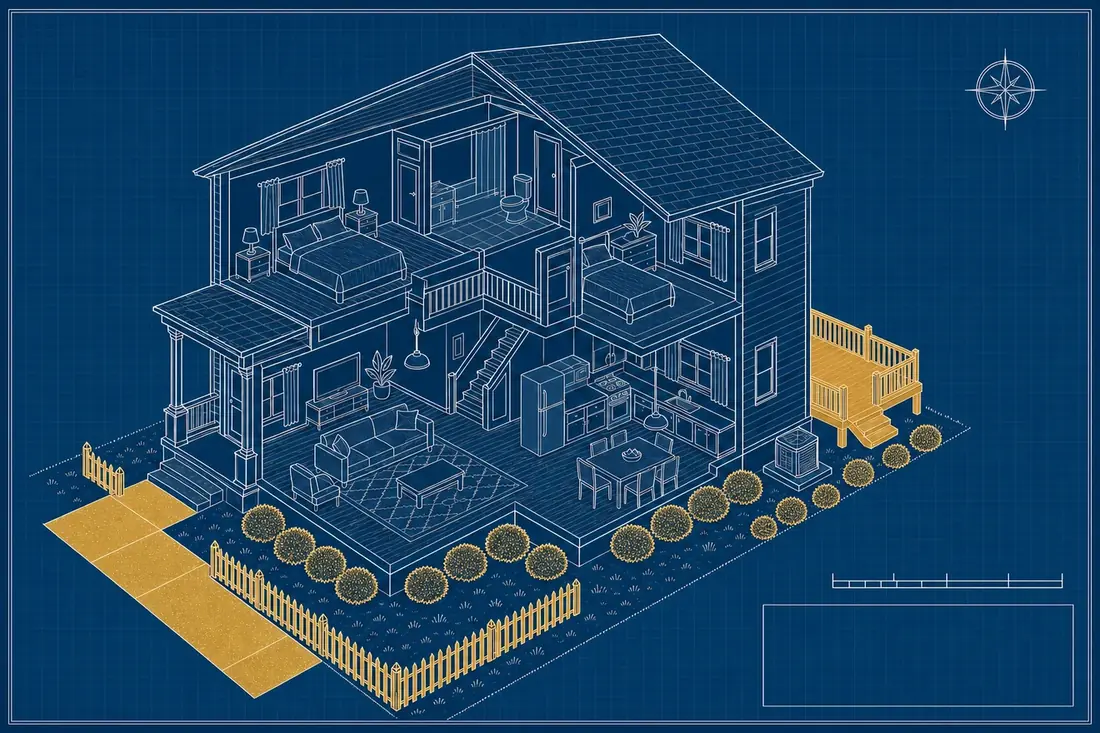
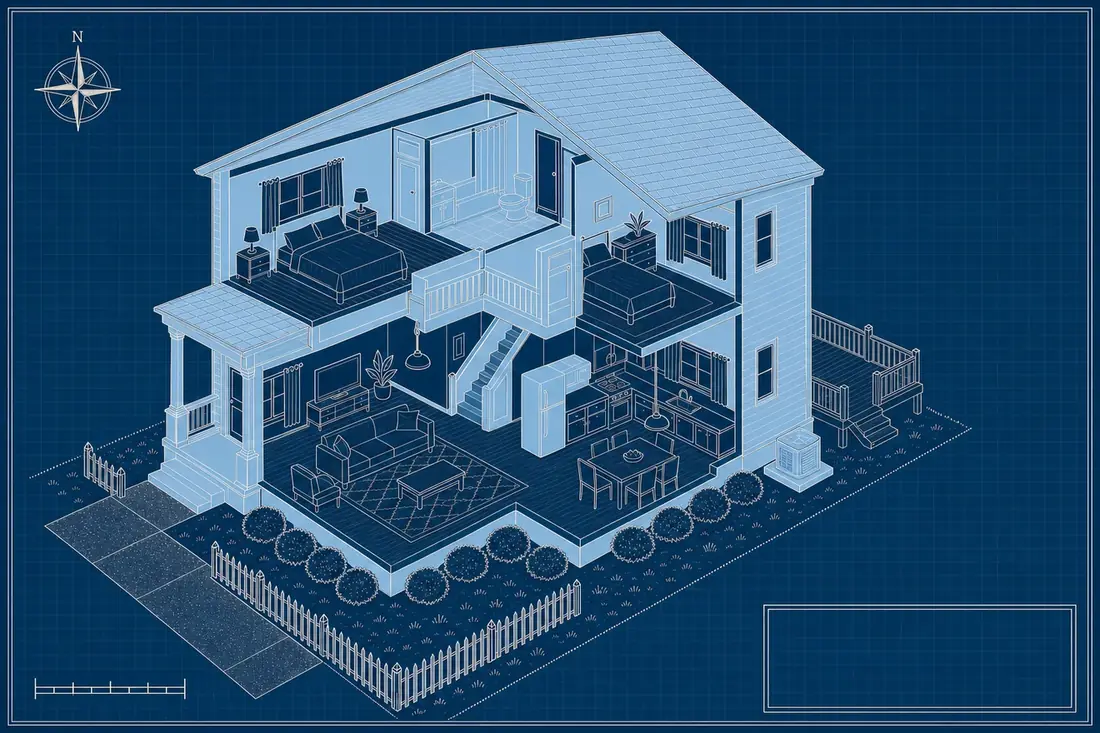
Watch a beach house rental get built and classified A hypothetical $1.4 million four-bedroom oceanfront house goes up on timber pilings, from the shell driveway and the parking level to the living floor, the porches and the terrace. Every component lands on its depreciation schedule as it is installed, and the year-one depreciation adds up on screen. Watch the 90-second walkthrough »A barrier island at the end of a bridgeSt. George Island is a long, narrow barrier island in Franklin County, on Florida's Forgotten Coast. A bridge from Eastpoint crosses Apalachicola Bay to reach it, and the county seat of Apalachicola sits just up the shore. The island holds a state park at its eastern end, a lighthouse, and a run of vacation homes, most of them raised on pilings, with Gulf-front houses on one side of the road and bay-front houses on the other. Tallahassee and Atlanta are the usual drive-to metros. It is a low-density market. There is no high-rise strip, and rental stock is mostly single-family beach houses plus some condominiums. For the stretch of coast to the west, see the Cape San Blas and Port St. Joe page, and for the busier Panhandle beaches see the Destin and 30A page. 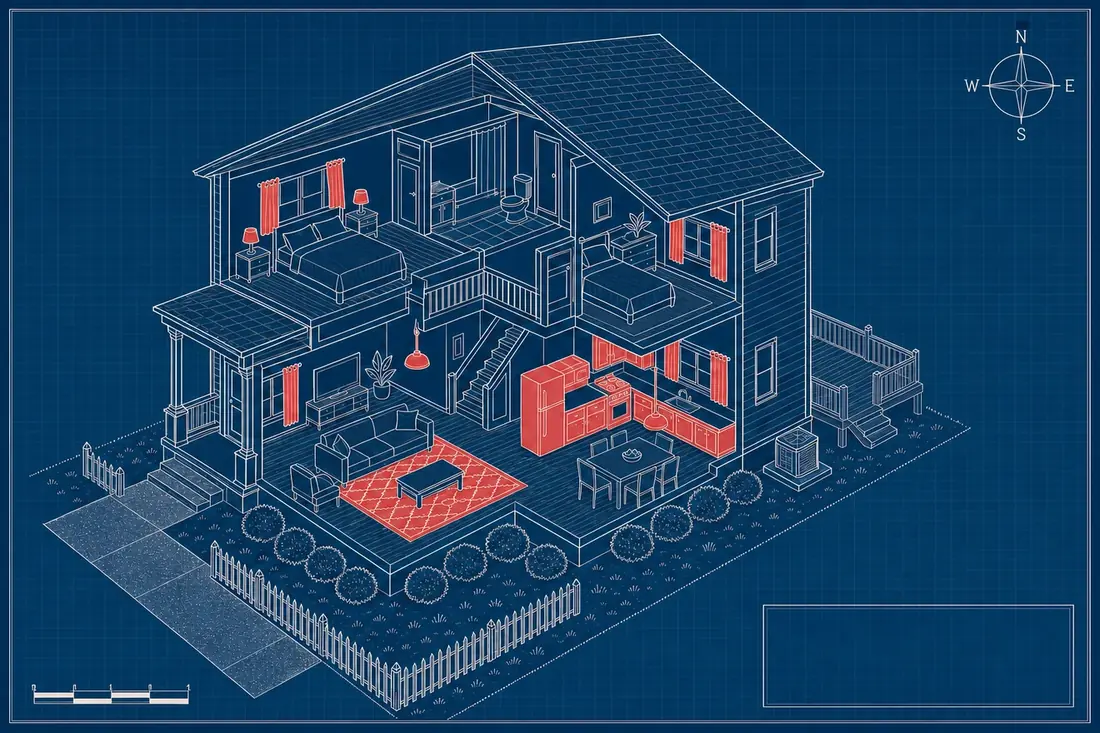
5-Year: carpet and flooring, cabinets, appliances, light fixtures, curtains 7-Year: furniture 15-Year: driveway, fencing, landscaping, deck 27.5/39-Year Shell: roof, load-bearing walls, foundation, central HVAC Get your free Preliminary Benefit Estimate Model a specific St. George Island house's first-year deduction range with the free estimate at /qualify. Request Your Free Estimate »What the assessment roll shows about land and buildingLand never depreciates, so the land share of a purchase is the first number in any report. Florida's property appraisers value land and buildings separately, and the Florida Department of Revenue publishes each county's assessment roll as open data on its assessment roll data portal. We read the Franklin County 2026 final roll file, county 29. It holds 589 single-family parcels with a living area, an improvement value above zero, and a physical address in St. George Island, in any of the spellings the file uses. Anyone can repeat the count: filter the file's physical-city field, keep use code 001, and compare the land value field to just value. Across those parcels, land is about 45% of combined just value. Just value is the appraiser's market value, and the building and special features such as pools make up the rest. The middle parcel is about 36% land. One parcel in ten is under 18% land and one in ten is over 75%, so the range is wide. The roll is an appraiser's valuation for assessment, not a purchase-price allocation, and a purchase allocation is a separate question for the owner's CPA. Here is the arithmetic our free estimate uses on a hypothetical $1,000,000 purchase price with 45% allocated to land. Building value is $550,000, and the 16% to 26% range for a short-term rental gives $88,000 to $143,000 of estimated first-year deductions. That models a deduction under a published rule, not a forecast for any property. The land-versus-building page covers where the split usually comes from. Franklin County's tourist development taxThe Florida Department of Revenue states that effective July 1, 2021, the tourist development tax rate on transient rental transactions in Franklin County increased from 2% to 3%, under Ordinance No. 2021-06. The combined rate on Franklin County transient rentals is 10%, made up of the 6% state sales tax, the 3% tourist development tax and the 1% small county surtax. That notice is Tax Information Publication 21A01-06. The county's Tourist Development Council repeats the 3% on its administration page, and lists tax collectors for Apalachicola and St. George Island. These are guest-paid taxes on transient rentals, and they are separate from depreciation. They matter to a cost segregation file only because the same booking ledger that records them records the stay lengths used in the 7-day test. Registration and collection run through the county tax collector and the Department of Revenue, and rules for a specific property are confirmed there. Estimate the first-year deduction on a property hereA few questions and the building value give a preliminary first-year deduction range, using the same rule as our free calculator. The breakdown can be emailed to you, or you can book a 15-minute call. Step 1 of 3 What kind of property?
Who runs it day to day?
What is the average guest stay?
When did you buy it?
How many rentals do you own?
Across all of them, does your rental portfolio show taxable income overall?
Any of them likely to sell in the next few years?
Prefer to talk it through? Book straight from here. No form needed.
Pilings, decks, and the raised beach houseMost island houses are raised, with parking and storage under the living floor. The pilings, framing, roof structure and central HVAC stay on the building's own schedule, 27.5 years or 39, and a short-term rental averaging stays of 7 days or less generally lands on 39 (see the 27.5 or 39 years guide). A lot of what makes an island house a rental sits outside that shell: long exterior stairs, wrap-around decks, a dune walkover or boardwalk to the beach, an outdoor shower, a pool, fencing and exterior lighting.
Where an older house has had its roof, decking or kitchen replaced, the partial asset disposition rule can apply to the removed component in the year of replacement. The 15-year site improvements page lists the outdoor items in more detail. A long weekly season and the 7-day testThe island runs a weekly-rental rhythm in summer, with Saturday turnovers in peak season. Spring and fall bring shorter trips, and Apalachicola, a short drive across the bay, gives off-season visitors a town to explore. A full season of 7-night stays averages exactly 7 days, which is the line in the section 469 regulations, and shorter shoulder-season stays pull the yearly average lower. The average-stay rule explains how the average is built. Consider an owner who lives in Tallahassee, Atlanta or farther away and hires a local rental agency to handle bookings and turnovers. The agency's hours count against that owner in the "more than any other individual" participation comparison, so that test is harder to clear with a manager in place. An owner who also uses the house personally should keep the 14-day personal use rule in view. Which tests a given owner meets is a question for the owner's CPA, using the actual records. Getting a number for an island houseA free Preliminary Benefit Estimate models the likely first-year deduction range for a specific house, built from listing photos with no site visit and no owner homework list. A house owned for years goes through a look-back study on Form 3115 with a section 481(a) catch-up. The qualifier at /qualify takes about 60 seconds. Frequently asked questionsWhat county is St. George Island in? Franklin County, Florida. The island is reached by a bridge from Eastpoint, and Apalachicola is the county seat. What share of an island property is land? On the 2026 assessment roll, land is about 45% of combined just value across the island's single-family parcels, and about 36% for the middle parcel. The roll is an appraiser's valuation, not a purchase-price allocation. What is Franklin County's tourist development tax? The Florida Department of Revenue states it is 3% effective July 1, 2021, and the combined rate on transient rentals is 10% with the 6% state sales tax and 1% small county surtax. How are dune walkovers and decks treated? Walkovers, boardwalks and similar outdoor construction are generally 15-year land improvements, separate from the house's pilings and structure. Does an out-of-town owner clear the participation test with a local manager? The manager's hours count in the comparison against the owner, so the 100-hour test is harder to clear. Other tests, like 500 hours, do not depend on comparing hours to a manager. Get your free Preliminary Benefit Estimate Send the address or the listing link. We model the number first; you decide with it in hand. Request Your Free Estimate »Educational information, not tax advice. This page describes how federal
depreciation rules and tests work in general. Whether any rule fits your facts is a determination for
you and your CPA. Our study gives your CPA the engineering and the numbers to make that call.
Related guides: How Does Cost Segregation Work in Vacation... · Does Cost Segregation Work on a Poconos... · Cost Segregation for a Jersey Shore Rental... · Cost Segregation for a Pigeon Forge Cabin... · Cost Segregation for a Gatlinburg Rental...
More Florida markets: Cost Segregation for a Destin or 30A... · Cost Segregation for a Panama City Beach... · How Does Cost Segregation Work for Florida... · How Does Cost Segregation Work on the... · How Does Cost Segregation Work in Fort... · Does Cost Segregation Work on a Florida... · All vacation markets
|