|
Cost Segregation for Commercial & Short-Term Rental Owners
|
Request a free estimate [email protected] |
Vacation Markets
Free Listing SEO Audit Paste your Airbnb or VRBO listing. Get a scored audit in 90 seconds. Audit My Listing »FREE Estimate Is there a first-year deduction sitting in your building? No cost, no obligation. Request Yours »Minimum ROIOur study identifies at least 20x its fee in first-year deductions on commercial property, or at least 30x on a short-term rental, or it is free. |
Cost Segregation for a Townsend, Tennessee CabinQuick answer Yes. A Townsend cabin qualifies for cost segregation the same way any residential rental does: an engineering review sorts the cabin's components, the cabinetry, flooring, decks, driveway and retaining walls, into 5-, 7- and 15-year schedules instead of leaving everything on the building's own 27.5- or 39-year schedule. Townsend sits in Blount County, not Sevier County, at the quiet western entrance to Great Smoky Mountains National Park, and the City of Townsend now posts its own 3% occupancy tax on short-term rentals. Own a Townsend, TN rental? See the first-year deduction range a study would look for. 30 seconds, no email to see the range. Start the check ↓Key takeaways
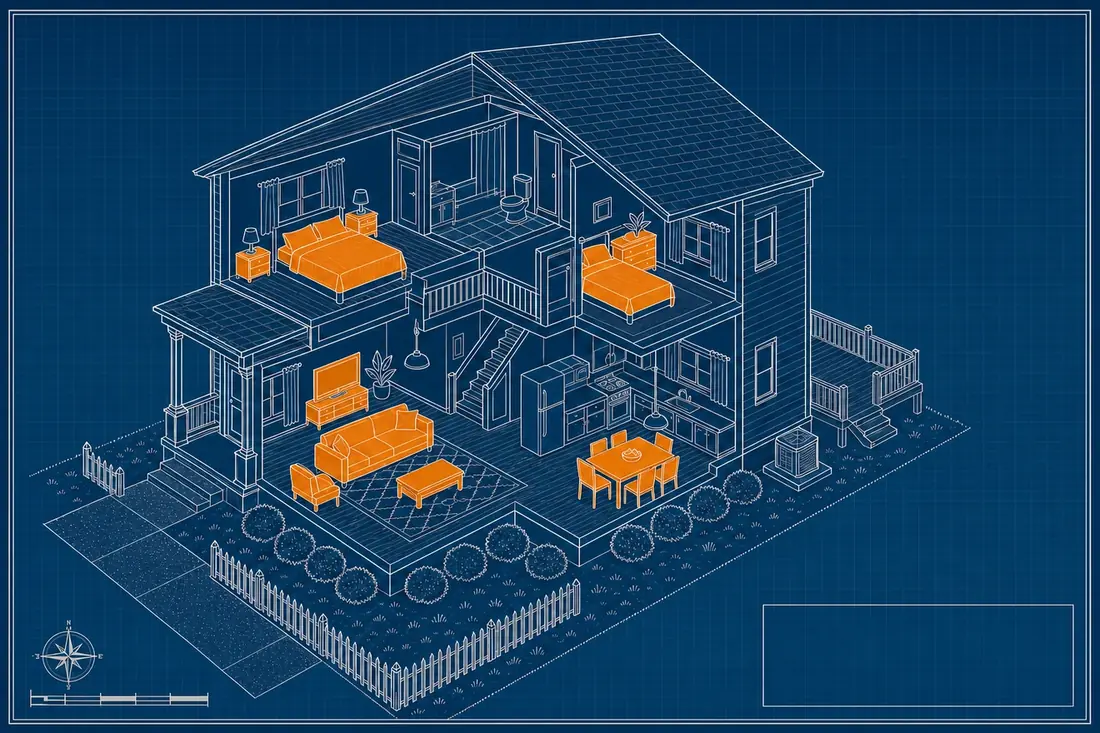
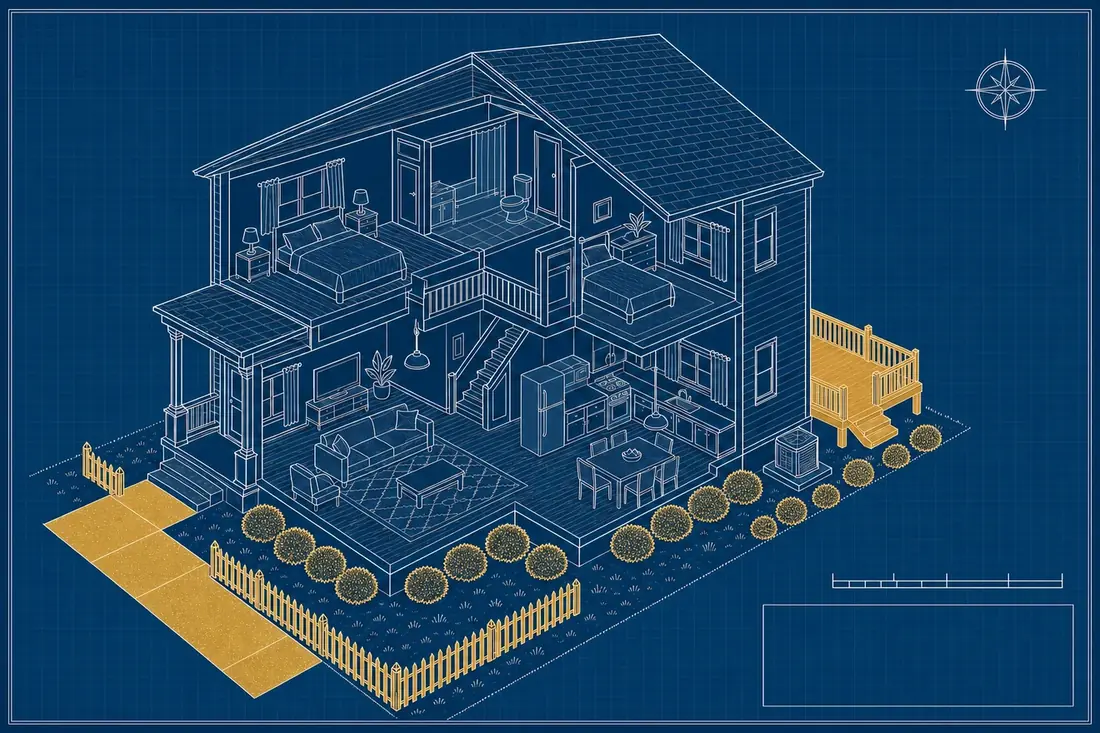
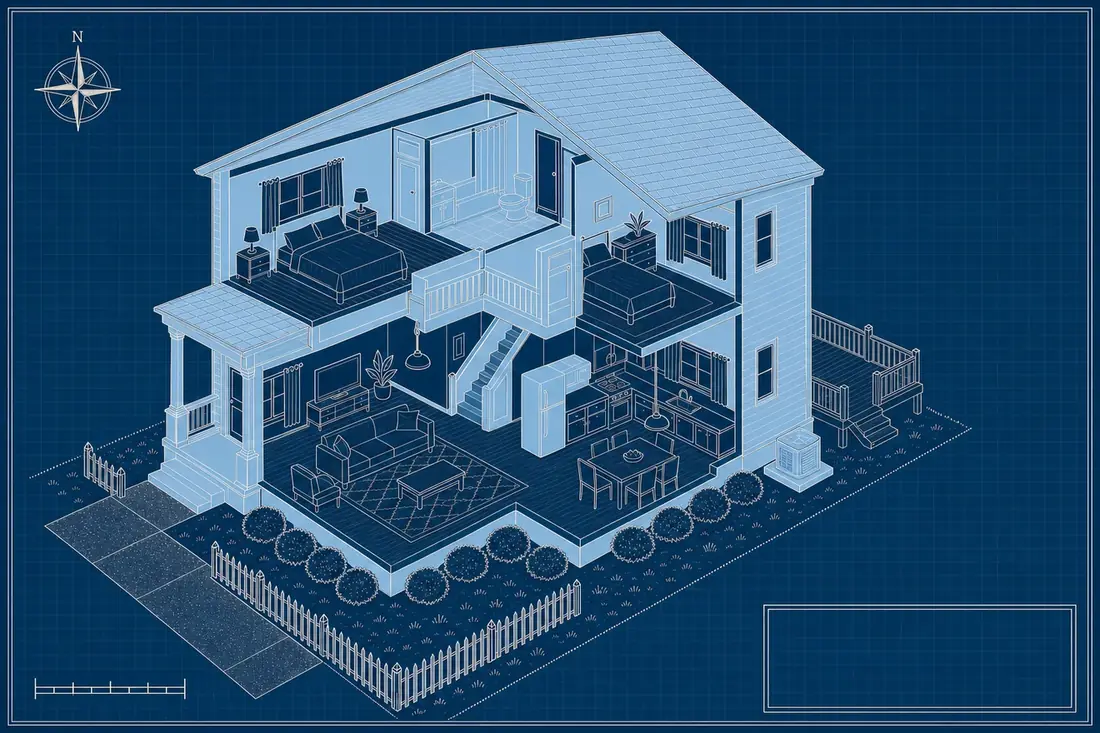
Watch a log cabin rental get built and classified A hypothetical $600,000 three-bedroom log cabin goes up floor by floor, from the gravel drive and foundation to the game loft and the hot tub on the deck. Every component lands on its depreciation schedule as it is installed, and the year-one depreciation adds up on screen. Watch the 90-second walkthrough »Townsend is Blount County, the quiet side of the SmokiesTownsend sits in Blount County, Tennessee, and the distinction matters for anyone searching the market. Pigeon Forge, Gatlinburg and Sevierville are in Sevier County, on the other side of the national park's northern edge. Townsend is the park's western gateway: the Little River runs through town, the road to Cades Cove leaves the highway nearby, and Tuckaleechee Caverns draws day visitors who stay for the weekend. Knoxville, with its airport in Blount County, is the usual drive-to metro. Demand follows the park's calendar: warm-weather river days on the Little River, fall color, and quieter winter weekends, with no single peak the way a beach town has one. That spread tends to produce short stays, which is what the 7-day test looks at. The cabin stock reflects that. Away from the attractions strip, Townsend and the ridges around it hold single-family cabins and small lodges on wooded lots, many with a creek, river frontage or a long gravel drive. For how the busier Sevier County side compares, see the Sevierville and Wears Valley page, or the broader Smoky Mountain cabin guide, which covers the five counties around the park. 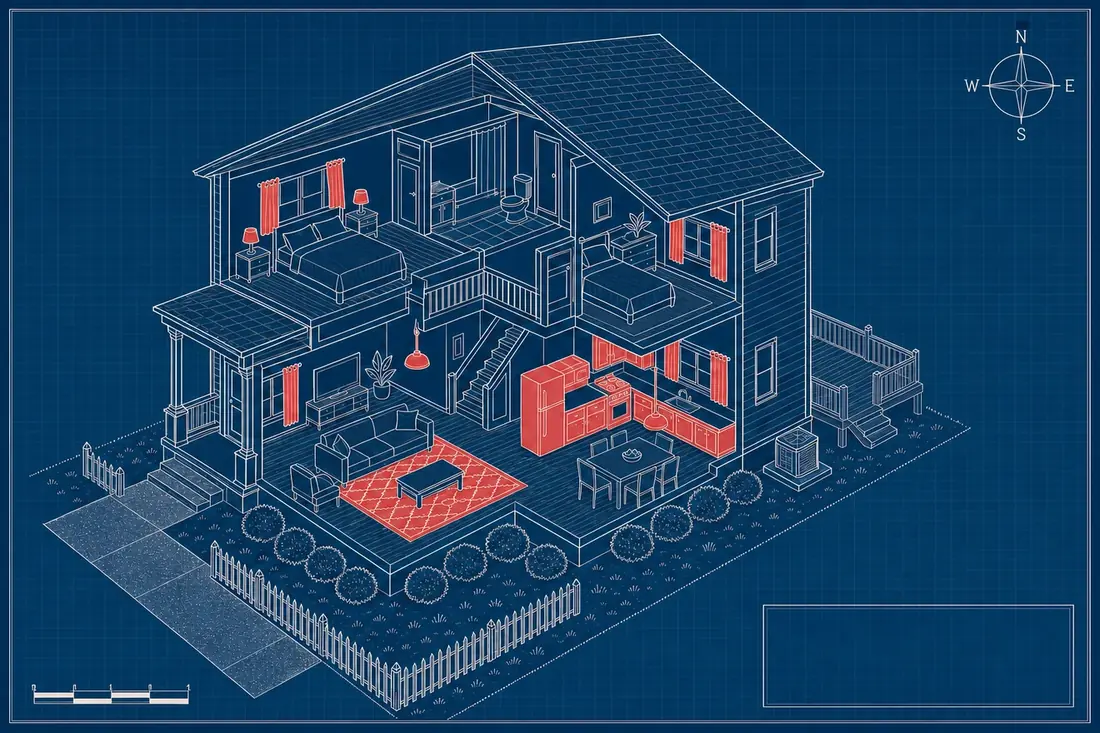
5-Year: carpet and flooring, cabinets, appliances, light fixtures, curtains 7-Year: furniture 15-Year: driveway, fencing, landscaping, deck 27.5/39-Year Shell: roof, load-bearing walls, foundation, central HVAC Get your free Preliminary Benefit Estimate Model a specific Townsend cabin's first-year deduction range with the free estimate at /qualify. Request Your Free Estimate »What the City of Townsend posts about its occupancy taxThe City of Townsend publishes a Short Term Rentals page with a notice to property owners. According to it, the Board of Commissioners enacted Ordinance 349-25-1C, which imposes a 3% occupancy tax on short-term rentals, defined as stays of fewer than 30 consecutive days. The tax applies to stays on or after May 1, 2026, is collected from guests as a line item, and is remitted to the City Recorder by the 20th of the following month. Stays of 30 consecutive days or more by the same guest are exempt. The city's notice and FAQ sit on the City of Townsend short-term rentals page. That is a public-record fact about the city, not a tax rule for an owner's return. It applies inside the city. A cabin with a Townsend mailing address can sit outside the city limits, so which jurisdiction a parcel falls in is the first thing to confirm with the city recorder. The tax is a guest-paid lodging tax and has nothing to do with how the cabin depreciates. Three day counts that do not mean the same thingCabin owners run into three separate day thresholds, and they are easy to blur together. The first is 7 days: under the section 469 regulations, a rental whose average customer stay is 7 days or less is not treated as a rental activity, which is what lets the owner test for material participation instead. The average-stay rule explains how that average is computed across a calendar year. The second is 14 days, or 10% of rented days if greater: the personal-use line in section 280A, which limits deductions once an owner's own use passes it. The third is 30 days, and that one belongs to the city's occupancy tax, not to the federal tax code at all. A cabin with mostly 3-night stays can sit comfortably under the 7-day average and still collect the city tax on every stay. A month-long guest can fall outside the city tax without that stay having any special federal meaning. None of the three changes how a cabin's components are classified. A cost segregation report sorts the building by what it is made of, whatever the booking calendar looks like. Estimate the first-year deduction on a property hereA few questions and the building value give a preliminary first-year deduction range, using the same rule as our free calculator. The breakdown can be emailed to you, or you can book a 15-minute call. Step 1 of 3 What kind of property?
Who runs it day to day?
What is the average guest stay?
When did you buy it?
How many rentals do you own?
Across all of them, does your rental portfolio show taxable income overall?
Any of them likely to sell in the next few years?
Prefer to talk it through? Book straight from here. No form needed.
River lots, decks, and what a Smokies cabin adds to the listTownsend cabins tend to have more outdoor construction than their interior square footage suggests. A creek or Little River lot brings retaining walls, stone steps, a footbridge or a stabilized bank. A hillside lot brings a graded driveway, drainage work and often a long deck. Hot tubs, fire pits, outdoor lighting and fencing round out the exterior. Most of that is site work, and site work generally sorts into the 15-year land improvement bucket.
A cabin the owner has held for years is not shut out. A look-back study, claimed through Form 3115 with a section 481(a) catch-up, picks up components that were never separated. The cabin page walks through the full component list. Land and building are valued separately, and only one depreciatesLand never depreciates, so every cost segregation report begins by splitting purchase price between land and building. County assessor records commonly list land and improvement values on separate lines, and an allocation in the closing documents or an appraisal can serve the same purpose. The land-versus-building page covers where that split usually comes from and why it moves the starting number. Here is the arithmetic our free estimate uses, shown on a hypothetical cabin with a building value of $250,000, not counting land. The estimator's rule for a short-term rental is 16% to 26% of building value, which gives $40,000 to $65,000 of estimated first-year deductions. That is a model of a deduction under a published rule, not a forecast for any particular property. Property acquired after January 19, 2025 uses the 100% bonus rate those ranges assume. Getting a number for a Townsend cabinA free Preliminary Benefit Estimate models the likely first-year deduction range for a specific cabin, built from listing photos with no site visit. Whether the owner's own hours or a property manager's hours decide the participation question is a separate matter for the owner's CPA, and it does not change what the report finds in the cabin. The qualifier at /qualify takes about 60 seconds. Frequently asked questionsIs Townsend in Sevier County? No. Townsend is in Blount County, Tennessee. Pigeon Forge, Gatlinburg and Sevierville are in Sevier County. The two sides of the Smokies run different local rules and different rental patterns. Does Townsend charge a tax on short-term rentals? The City of Townsend posts a 3% occupancy tax on rental stays of fewer than 30 consecutive days, under Ordinance 349-25-1C, for stays on or after May 1, 2026. It applies inside the city, so a parcel's jurisdiction is worth confirming with the city recorder. Does the 30-day city tax line affect the 7-day rental test? No. They are separate. The 30-day line belongs to the city's occupancy tax. The 7-day line comes from the federal section 469 regulations and turns on the average customer stay across the full year. How is a river or creek lot treated in a cost segregation report? Retaining walls, footbridges, stabilized banks, stone steps and similar outdoor construction generally sort as 15-year land improvements, alongside the driveway and fencing, separate from the cabin shell. Does a cabin owned for years still qualify? Yes. A look-back study, claimed through Form 3115 with a section 481(a) catch-up, covers a property already in service, so a cabin does not have to be a new purchase. Get your free Preliminary Benefit Estimate Send the address or the listing link. We model the number first; you decide with it in hand. Request Your Free Estimate »Educational information, not tax advice. This page describes how federal
depreciation rules and tests work in general. Whether any rule fits your facts is a determination for
you and your CPA. Our study gives your CPA the engineering and the numbers to make that call.
Related guides: How Does Cost Segregation Work in Vacation... · Does Cost Segregation Work on a Poconos... · Cost Segregation for a Jersey Shore Rental... · Cost Segregation for a Pigeon Forge Cabin... · Cost Segregation for a Gatlinburg Rental...
More Southern Appalachians markets: Cost Segregation for Chincoteague, Virginia... · Cost Segregation for a Pigeon Forge Cabin... · Cost Segregation for a Gatlinburg Rental... · Cost Segregation for a Smoky Mountain... · Does Cost Segregation Work for a Blue... · Cost Segregation in Myrtle Beach... · All vacation markets
|